short eyebrow
Your sharpest years can still be ahead
Build habits that support memory, focus and a curious, connected life.
Read the Blog

On September 23, 2026, researchers released massive single-cell brain maps revealing a major biological shift around age 60 driven by glial and immune cells.


A 12-week exploratory trial suggests the Brain-IT exergame is associated with functional brain changes in adults with mild neurocognitive disorder.

A study of 232 adults associates faster midlife biological aging with an 18% higher likelihood of prospective memory lapses a decade later. Read the findings.

A recent observational study found that social support is linked to slower attention decline but does not offset the separate effects of chronic stress.

A recent longitudinal study shows that differences in cortical thickness may appear at least seven years before individuals cross an amyloid PET scan threshold.

A 2026 Nature Medicine study identified a menopause-associated blood-protein signature linked to biological aging, cognitive change and Alzheimer's disease risk.

A new cellular atlas of the prefrontal cortex reveals that brain aging involves active molecular remodeling after 60, rather than a uniform loss of neurons.

A 2026 Epoch Times report clarifies that non-dominant-hand practice does not reverse dementia. Learn what brain imaging research actually shows for older adults.

Imperial College London researchers propose a systemic, whole-body model of Alzheimer's disease. Read what this early hypothesis means for cognitive health.
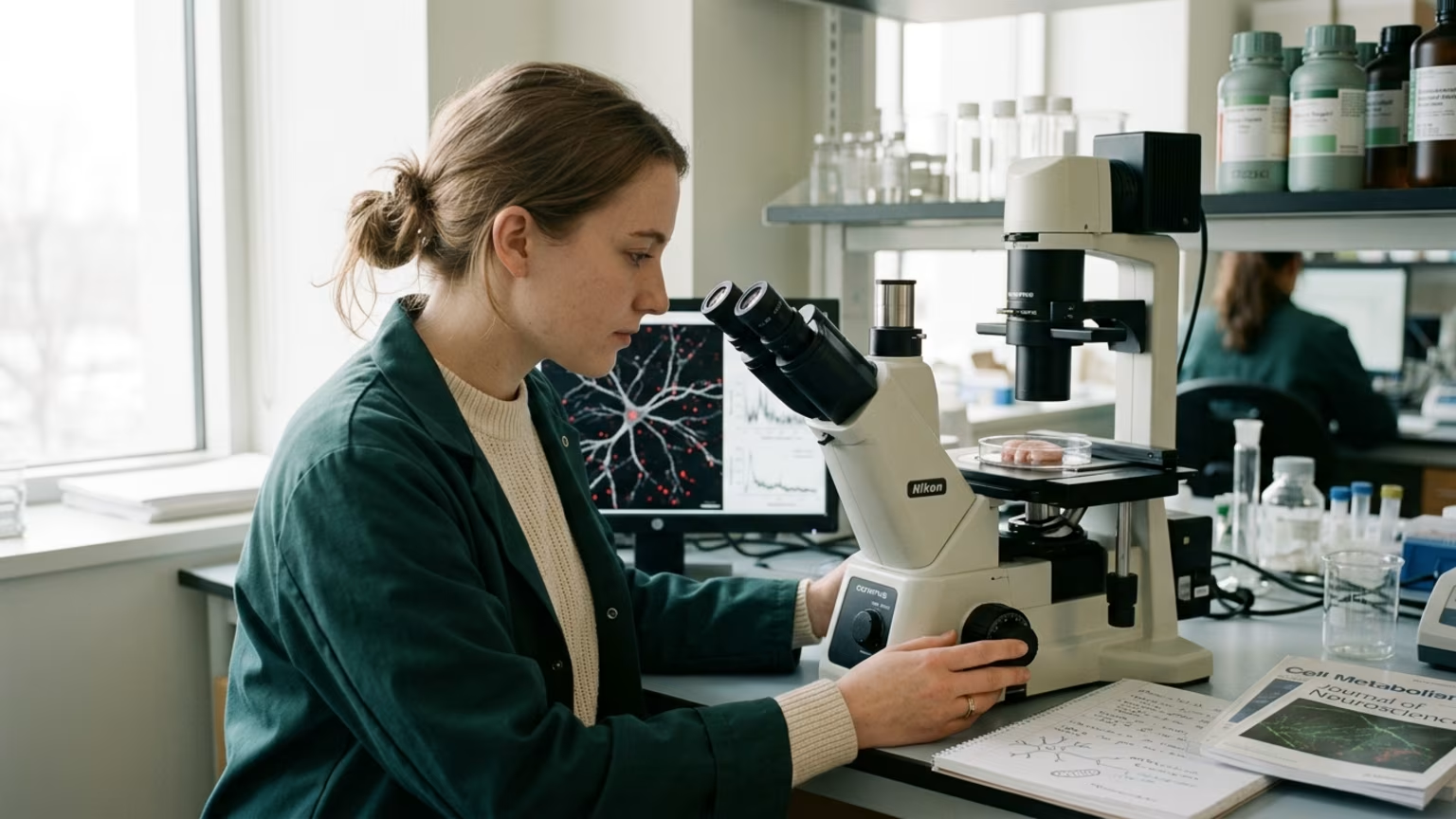
A new mouse study suggests that mitochondrial performance at specific synapses may influence cognitive flexibility. Learn why these findings require caution.

A Drexel-led study proposes that tau-associated dementia involves two phases of microtubule disruption. Learn how this lab research impacts cognitive science.

A 2026 secondary analysis of the ACHIEVE trial found that comprehensive hearing intervention may slow the rise of a blood biomarker linked to neuroinflammation.

A 2026 study links physical fitness to healthier brain structure in adults over 60, supporting long-term brain maintenance rather than immediate memory benefits.

Recent Merkin Prize coverage highlights Michael Merzenich's neuroplasticity research and examines new clinical data from BrainHQ cognitive training trials.

A Nature Aging study by the Salk Institute maps thousands of overlooked microproteins in the human brain. Learn what these findings mean for cognitive health.

Read how the Brain Years model measures functional brain aging. Learn why researchers caution against using preliminary biomarker scores as clinical advice.

An objective look at how resistance training influences aging brains. We evaluate short-term BDNF research, hippocampal volume preservation, and physical mobility.

A new Nature Aging study links the APOE4 gene to blood-brain barrier dysfunction via fibronectin. Learn why managing vascular health protects cognitive aging.
Build habits that support memory, focus and a curious, connected life.
Read the Blog