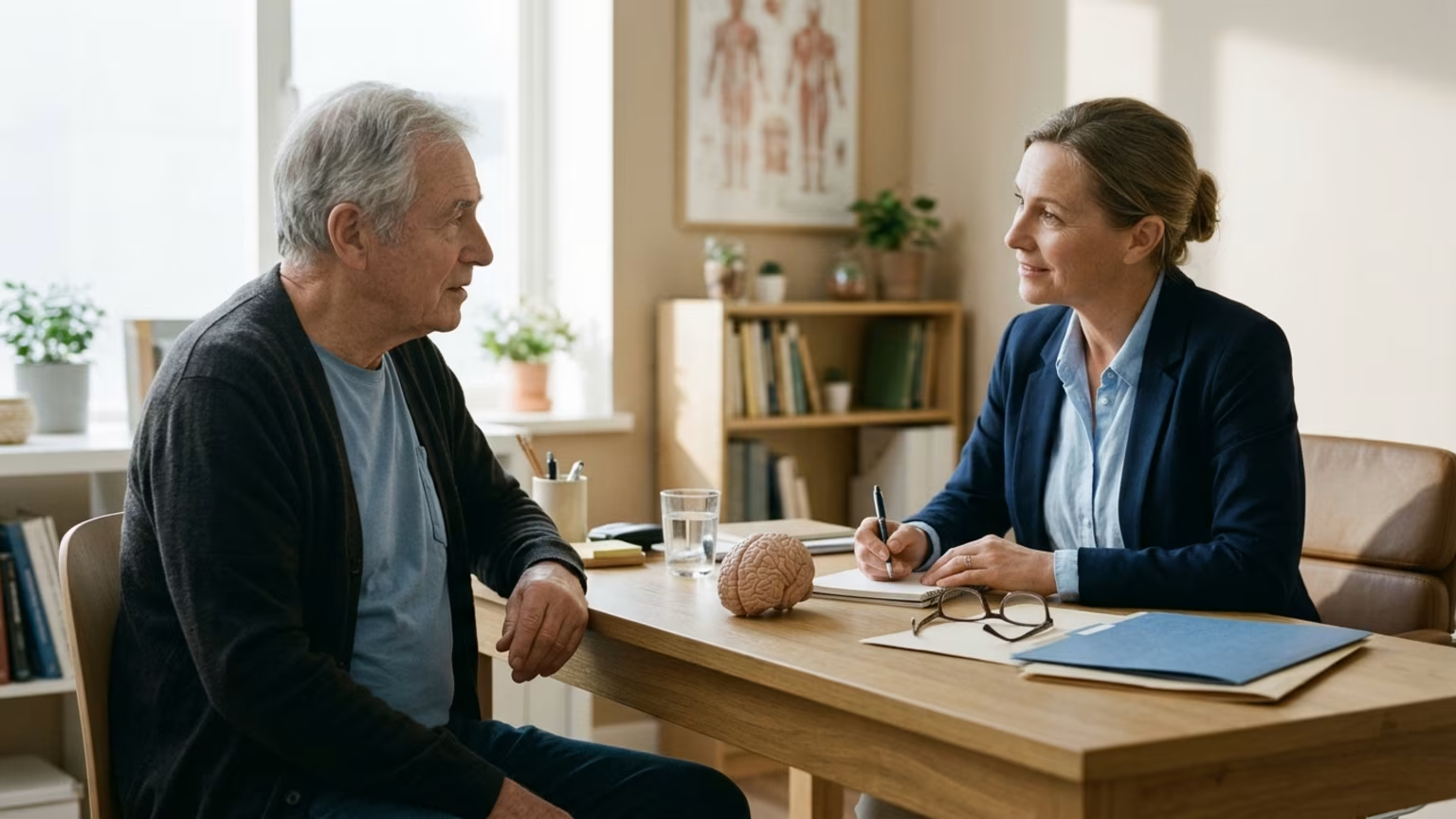

Expert advice puts memory concerns into routine care, with continued learning in context and clear limits on dementia-prevention claims.





On November 3, 2026, HuffPost published expert advice urging people to give brain health the routine attention they give heart health. Davide Cappon, director of neuropsychology at Tufts Medical Center, called for more conversations about memory and thinking during regular medical visits.
Cappon urged readers to tell a healthcare provider about changes that concern them. His recommendation places memory and thinking alongside the other health issues people bring to a clinician. It treats these conversations as part of ongoing care rather than something reserved for a crisis.
The advice also reaches beyond discussing symptoms. Cappon said several health and lifestyle factors may help reduce cognitive-decline risk. He included physical activity, sleep and nutrition. He also pointed to social connection and purpose, alongside attention to blood pressure and diabetes.
That combination gives the message a broader scope than memory exercises alone. In Cappon's framing, brain health belongs in conversations about both daily life and medical care. Learning is one part of that picture rather than its sole focus.
Neurologist Majid Fotuhi offered a related framework in the HuffPost article. He described exercise and sleep as part of his brain-health “pillars.” His list also included diet, stress reduction and brain training.
Cappon described cognitive reserve as the brain's capacity to cope with aging and disease. He said continued learning and challenge may help build that capacity. The idea gives learning a place in discussions of cognitive aging without reducing it to a test score.
His examples included learning a language or a musical instrument. The common feature was a challenge that takes someone beyond familiar routines. The recommendation was about engaging with something new rather than simply repeating an activity because it carries a brain-health label.
Neurologist Michael Stanley added a social element. He recommended doing challenging activities with friends or family and offered language learning, music and improv among his examples. That advice connects learning with participation in shared activities.
For adults over 60, the immediate implication is to give memory and thinking concerns a place in ordinary healthcare. A regular appointment can include changes that have raised questions. Decisions about whether those changes need evaluation belong with a qualified healthcare professional.
Cappon told HuffPost that earlier recognition of a developing disease can create more opportunities to intervene and optimize treatment. He also said it may create opportunities to slow progression. That was his reason for encouraging people to raise concerns rather than wait for a crisis or assume changes are simply part of aging.
The practical message is not complicated: mention the concern and ask whether it merits evaluation. Questions consistent with the experts' advice include:
These questions connect the article's recommendations to a discussion with a clinician. They also keep personal health decisions within qualified care rather than turning a news article into a treatment plan.
The goal is to make room for brain-health questions during ordinary medical visits. Memory concerns and questions about daily habits can belong in the same conversation. Neither needs to displace the other.
The learning recommendation leaves room for personal interests. A language or instrument fits Cappon's examples. Stanley's advice adds the possibility of sharing a challenge with friends or family. Choosing something meaningful or enjoyable is consistent with this practical approach.
For someone interested in languages, a practical guide to learning later in life offers a relevant starting point. The broader question is which activity offers worthwhile engagement beyond familiar routines. That question allows for different interests rather than requiring everyone to choose the same hobby.
Shared learning also brings social connection into the discussion. This is relevant to readers thinking about connection and purpose after retirement. The activity can be chosen for what it adds to daily life while keeping its proposed cognitive benefits in perspective.
The HuffPost article reported expert recommendations. It did not announce a new clinical guideline or a requirement for formal memory testing at every visit. Fotuhi's “pillars” were his way of organizing brain-health habits rather than a formal ranking of interventions.
HuffPost cited the 2024 Lancet Commission's estimate that addressing 14 modifiable risk factors could potentially prevent or delay 45% of dementia cases worldwide. The estimate concerns possible effects across a population through action on multiple risk factors.
It is not a prediction of any one person's risk. It also does not mean that an individual who follows certain habits can avoid dementia. The useful message is that modifiable factors deserve attention, not that future health is entirely under personal control.
Cappon presented continued learning as one possible way to support cognitive reserve. The article did not establish that learning a language or instrument prevents dementia. Cognitive reserve is the concept behind his recommendation, not a demonstrated disease-prevention outcome for those activities.
A separate ScienceDaily report described a 20-year follow-up of the ACTIVE study. A specific speed-of-processing training group that also received booster sessions had fewer dementia diagnoses than the control group. The other training approaches did not show the same statistically significant difference.
That result concerns a particular intervention and trial. The available report described an association in one intervention group, not a universal effect of cognitive training. It does not establish equivalent benefits from ordinary brain games, commercial apps or informal puzzles.
The distinction matters when interpreting a product claim. A program described broadly as “brain training” should not be assumed to reproduce the ACTIVE intervention. The specific training approach and booster sessions belong to the finding and cannot be removed from its interpretation.
For researchers, the result points toward a focused question about that intervention rather than a verdict on all mental activity. For readers, it keeps separate the value of an engaging learning experience and the much stronger claim that an activity prevents disease.
The practical importance of this advice is its place in ordinary life. Memory and thinking can be discussed during regular care. Health conditions and daily habits can be addressed with professional input. Learning can remain a source of challenge and connection.
For the long-term direction of cognitive health, that is a useful balance. It gives people ways to participate in their care without treating every activity as a medical intervention. It also makes space for questions about change without asking readers to reach their own diagnosis.
The central message is straightforward: bring concerns into the conversation and keep engaging with life. Evidence should guide the claims attached to those choices, while personal meaning can guide the choice of what to learn next.
Maintaining memory and focus is the goal behind routine brain-health conversations, and FitBrainLab makes the relevant research easier to understand. For adults 60+ facing conflicting advice about nutrition, sleep and brain performance, its research-led guidance separates established findings from early claims so readers can weigh practical options with greater clarity.

Follow FitBrainLab for research-led insights on memory, focus, brain aging, nutrition and mental fitness after 60. Stay connected for new articles, practical guidance and ideas for a sharper, more engaged life.





Build habits that support memory, focus and a curious, connected life.
Read the Blog

