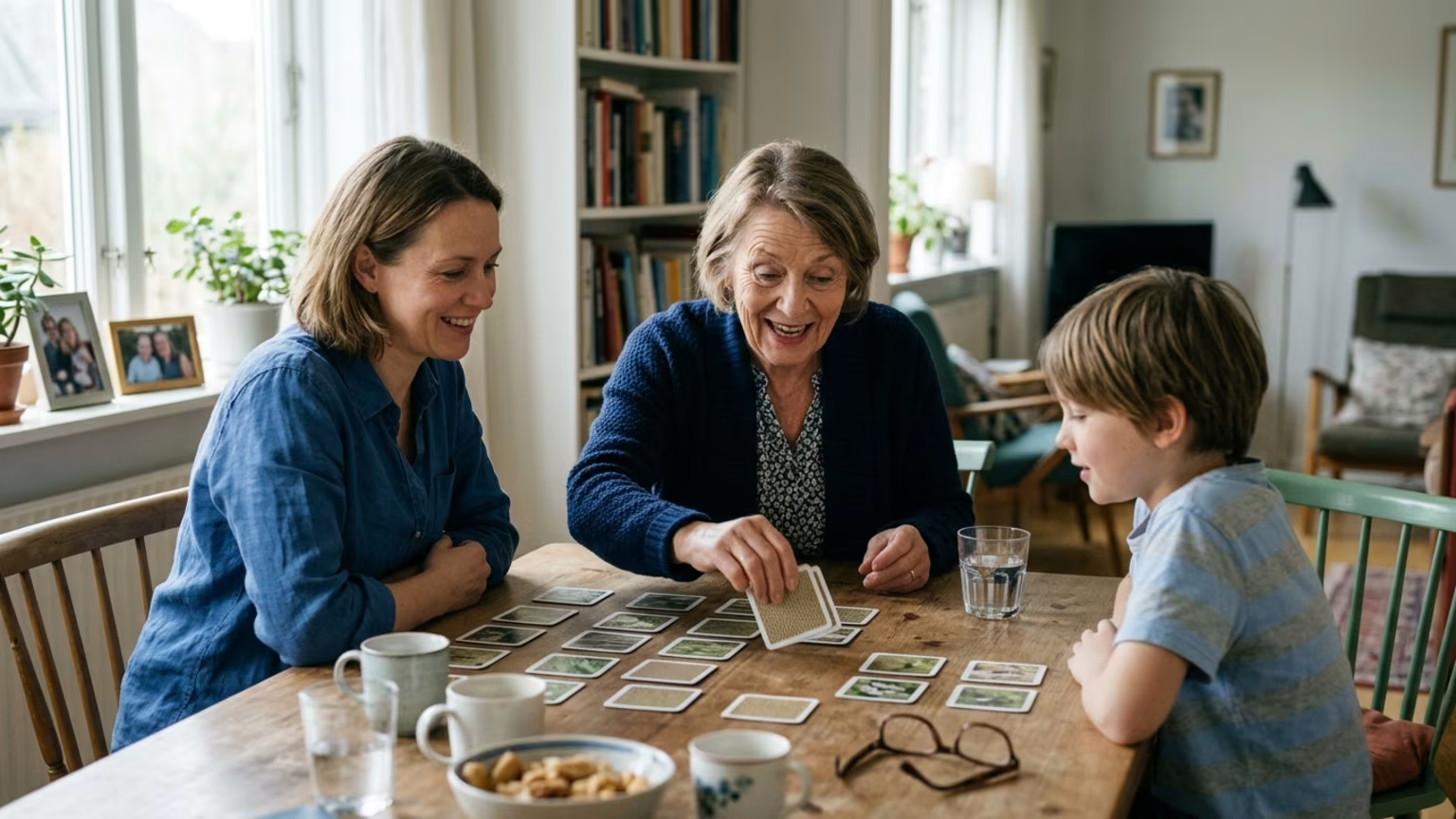
Retirement planning through WHO and NIH guidance: social connection, meaningful involvement and a clearer view of normal cognitive aging.





On October 1, 2026, the World Health Organization (WHO) used its International Day of Older Persons message to call for meaningful participation by older people in policy and decision-making. It also called for action on ageism and digital exclusion.
WHO's message places older adults in the role of participants whose views matter, rather than people whose needs are discussed without them. Its focus is wider than memory or mental performance. For retirement planning, that offers a useful starting point: think about involvement alongside ways to fill the day.
The message concerns participation in public life. Applying that idea to retirement does not require treating every activity as brain training. A shared interest or a role in a group can be valued for the connection and contribution it offers.
The National Institutes of Health (NIH) gives social connection a separate health context. NIH reports that social isolation and loneliness in older adults are associated with higher risks of depression and cognitive decline. It suggests scheduled calls and activities built around shared interests, including volunteering and walking groups.
These sources address different questions. WHO calls for older people to have a meaningful voice in society. NIH describes links between connection and health, then offers ways to stay in touch. Together, they give retirement planning a broader focus than simply keeping busy.
The immediate value of this message is a way to review retirement plans. Alongside decisions about time and activities, a useful question is where regular contact and meaningful involvement will fit. NIH's examples provide starting points for that discussion.
Scheduled calls are one option NIH names for staying connected. Their practical role in a retirement plan is straightforward: contact has an agreed place rather than being left entirely to chance.
A planning discussion can focus on which relationships a person wants to maintain and what kind of contact feels worthwhile. The aim is connection that matters to the person, rather than a target number of conversations.
This is one way to think about routine without turning retirement into another work schedule. An agreed call can provide structure while leaving the rest of the day open. The planning question is what deserves a regular place, not how to account for every hour.
NIH also suggests groups organized around shared interests. Its examples include volunteering and walking groups. These make connection part of an activity rather than a separate task to complete.
A useful way to read that advice is to begin with interests that already have meaning. The next question is whether an interest offers an opportunity to take part with other people. FitBrainLab's discussion of giving retirement days a sense of direction offers more context for thinking about structure.
Different options serve different preferences. A scheduled call centers on a relationship, while a walking group centers on shared activity. Volunteering offers another setting for involvement. These examples can help make a planning conversation concrete without turning it into a prescribed program.
WHO's call for meaningful participation makes the quality of involvement worth attention. Having a place in a group is not the same as having a voice in it. In retirement planning, that distinction supports asking whether a role reflects the older person's interests and preferences.
Volunteering can be discussed as an opportunity rather than a duty attached to age. Readers weighing different possibilities can also read about roles that give retirement direction.
The useful question is not whether a role sounds impressive. It is whether the person values the involvement and has a say in what they do. That keeps purpose connected to personal choice rather than outside expectations.
WHO also calls for action on ageism and digital exclusion. That matters when a conversation about healthy aging places all responsibility on the individual. Encouraging participation should go alongside attention to whether older people have opportunities to take part and be heard.
The message is wider than an instruction to stay busy. Personal preferences belong in retirement planning, while opportunities for participation also deserve public attention.
The central limit in the evidence is clear: an association is not proof of cause and effect. NIH's account does not show that isolation alone causes depression or cognitive decline. It also does not show that volunteering, scheduled calls or walking groups prevent dementia.
That distinction keeps ordinary activities in proportion. A meaningful routine need not become a test of whether someone is doing enough to protect the brain. Connection can be valued without turning it into a medical promise.
NIH notes that healthy aging can include slower word-finding and mild difficulties with attention or multitasking. These examples help separate a realistic account of aging from the idea that every change signals disease.
General examples cannot classify an individual's symptoms. Personal concerns about memory or mood belong in a conversation with a qualified health professional, rather than a self-diagnosis based on an article.
NIH notes that loss of interest, sleep problems or appetite changes can occur in depression among older adults. WHO describes depression as more than ordinary mood fluctuations. Its fact sheet describes a depressive episode as depressed mood or loss of interest for most of the day, nearly every day, for at least two weeks.
WHO advises seeking care for depression symptoms and states that effective treatments exist. That time description provides context for understanding depression, not an instruction to wait before asking for help. Older adults and their families do not need to settle a diagnosis themselves before raising a concern with a qualified professional.
Retirement planning and health assessment serve different purposes. A social activity offers a setting for participation, while a clinical conversation addresses symptoms. One should not be used as a substitute for the other.
The long-term importance of WHO's message lies in its wider view of healthy aging. Memory and attention deserve care, but a retirement plan also has to leave room for relationships and a voice in shared life. Participation keeps that broader picture visible.
NIH's guidance gives the connection side of that picture practical form through scheduled contact and shared interests. These are concrete topics for discussion when shaping life after work. They shift the conversation from how to stay busy toward what involvement matters to the individual.
FitBrainLab's coverage of connection and purpose after 60 offers a broader discussion of that approach. For long-term cognitive health, the useful direction is meaningful participation alongside a clear understanding of aging and appropriate attention to health concerns.
When deciding how to respond to memory changes after retirement, clear information comes before assumptions; FitBrainLab explains the evidence on brain aging. Its coverage helps adults 60+ understand normal cognitive changes and read advice about connection and purpose without mistaking supportive habits for medical promises.

Follow FitBrainLab for research-led insights on memory, focus, brain aging, nutrition and mental fitness after 60. Stay connected for new articles, practical guidance and ideas for a sharper, more engaged life.



Build habits that support memory, focus and a curious, connected life.
Read the Blog