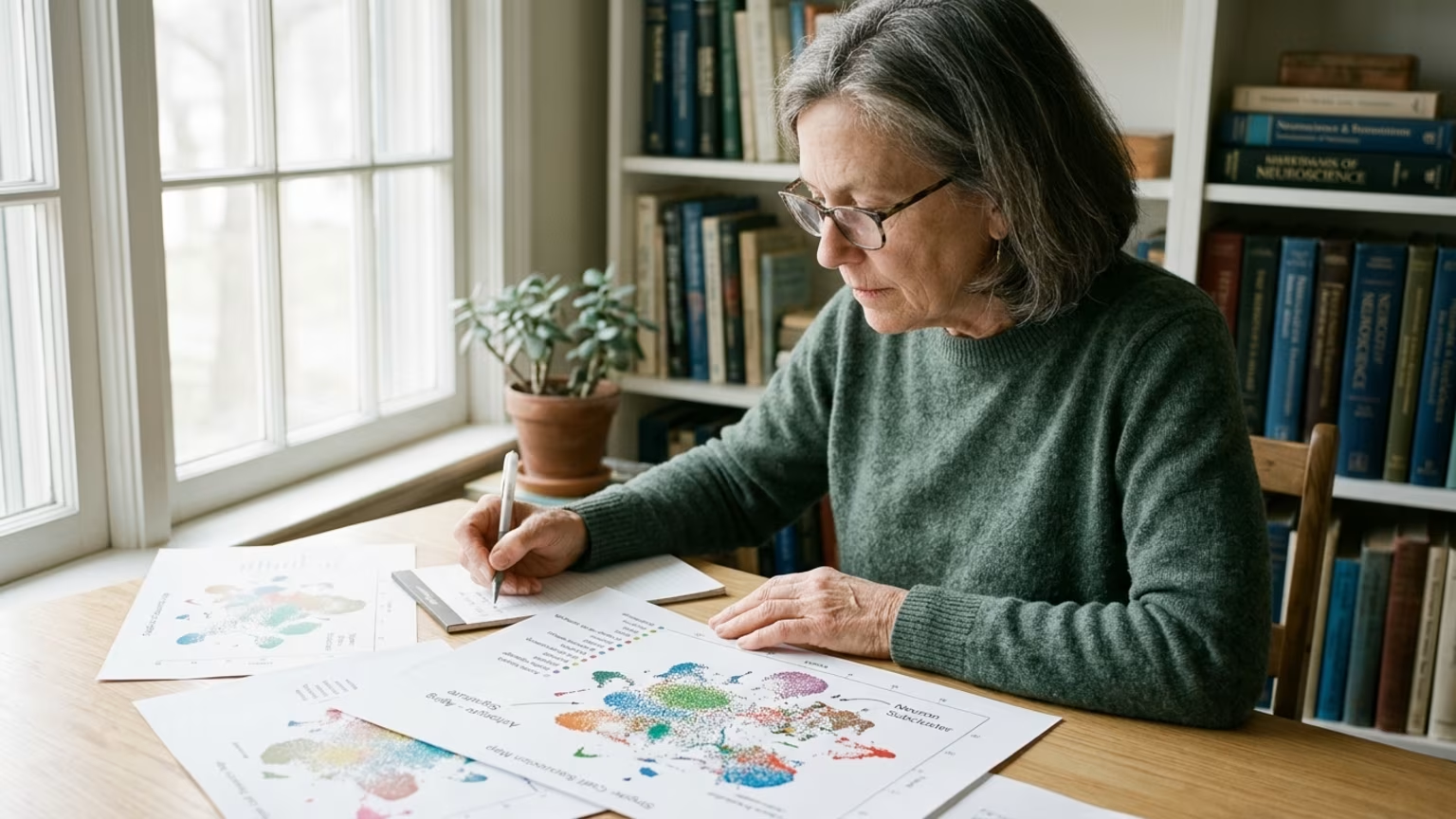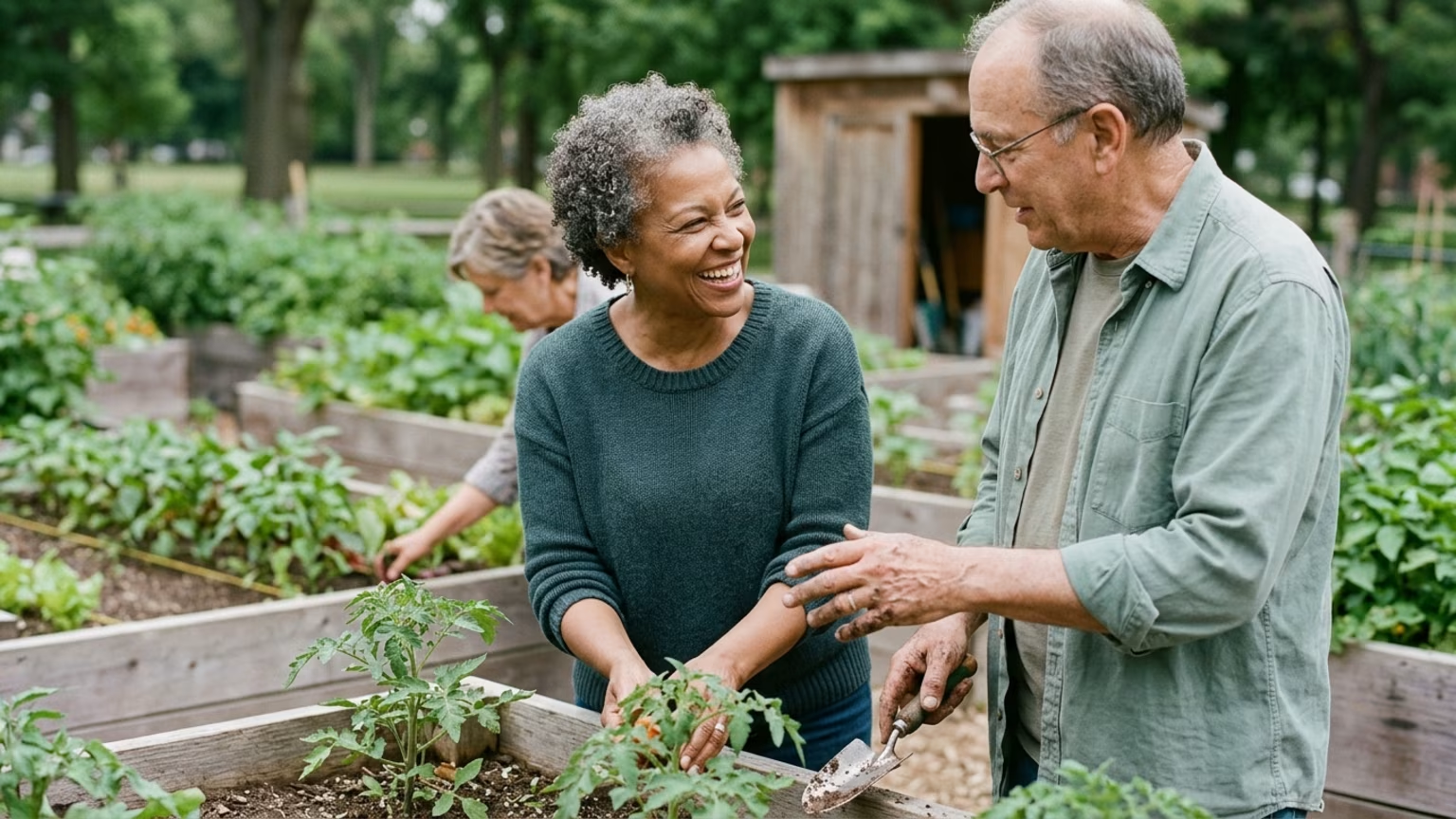

We review how everyday social connection, continuous learning and purposeful habits support memory preservation and cognitive vitality for adults over 60.





On September 23, 2026, Mumbai-based psychotherapist Sonali Gupta published a feature in Mint Lounge arguing that maintaining mental vitality requires more than physical health alone. The essay proposes that aging well depends heavily on psychological wellbeing, relationships, curiosity and purposeful contribution.
Gupta observes that an increasing number of adults in their 50s are seeking therapy to intentionally build meaningful lives rather than waiting until they face an acute crisis. Her clients in their 60s and 70s frequently navigate shifting roles involving caregiving, loneliness, emerging health fears and anticipatory grief. To address these complex life transitions, Gupta cites gerontologist Dr. Kerry Burnight's concept of a "joy span". This specific framework prioritizes the everyday quality and enjoyment of additional years over a narrow focus on simple longevity.
The article identifies close positive relationships as a primary driver of this quality of life. At the same time, Gupta cautions readers to notice relationships that consistently leave them feeling distressed or depleted. She suggests setting boundaries around these interactions to protect emotional wellbeing. Her essay points to continued learning, unlearning and adaptation as major elements of mental vitality.
To illustrate this point, she shares the example of a 75-year-old adult learner who commits to mastering one new skill every year. Another example features a woman who lost her husband at 55 and now attends a gym in her late 60s partly to secure brief everyday interactions. Burnight notes that giving is her favorite part of aging, adding that genuine contribution empowers both the giver and the recipient. She believes this mutual benefit helps counter the isolation many feel after leaving the workforce.
Gupta's practical conception of contribution is deliberately broad. A smile, listening, empathy or simple vulnerability can all represent valid ways of giving back. These small acts build a foundation for regular social contact. Gupta also argues that accepting losses and challenges may help people adapt psychologically to aging. She suggests this acceptance is more productive than remaining preoccupied with what life "should" have provided.
These observations align closely with World Health Organization guidance on cognitive health. Current WHO recommendations state that cognitive decline reduction should use a life-course approach. This approach includes healthy behaviors, management of relevant health conditions, reduced environmental risks and tailored multidomain interventions.
This guidance marks a necessary shift in how public health experts approach cognitive longevity. Current brain aging guidance is moving toward multidomain prevention rather than treating memory as an isolated medical problem. For instance, the 2024 Lancet Commission estimated that addressing 14 modifiable risk factors could potentially prevent or delay nearly 45% of dementia cases worldwide. The Commission specifically includes social isolation, hearing loss and untreated vision loss among its recognized later-life factors.
Other critical factors span earlier life stages and include physical inactivity, hypertension, diabetes, smoking and high LDL cholesterol. A recent observational study provides additional clinical context for the measurable benefits of regular social contact. Over a span of eight years, researchers tracked more than 6,800 older adults enrolled in the National Health and Aging Trends Study. They found that greater baseline social engagement was associated with noticeably less age-related decline in memory, orientation and executive function.
The study reported progressive associations, with coefficients of β = 0.14 for memory, β = 0.14 for orientation and β = 0.05 for executive function. The researchers noted that these cognitive associations grew progressively stronger across higher levels of measured social engagement. For older adults, this data means everyday social participation and lifestyle habits carry tangible weight for long-term health. Public health guidance directly links social participation with overall wellbeing, identifying social isolation as a risk factor for depression, heart disease and dementia.
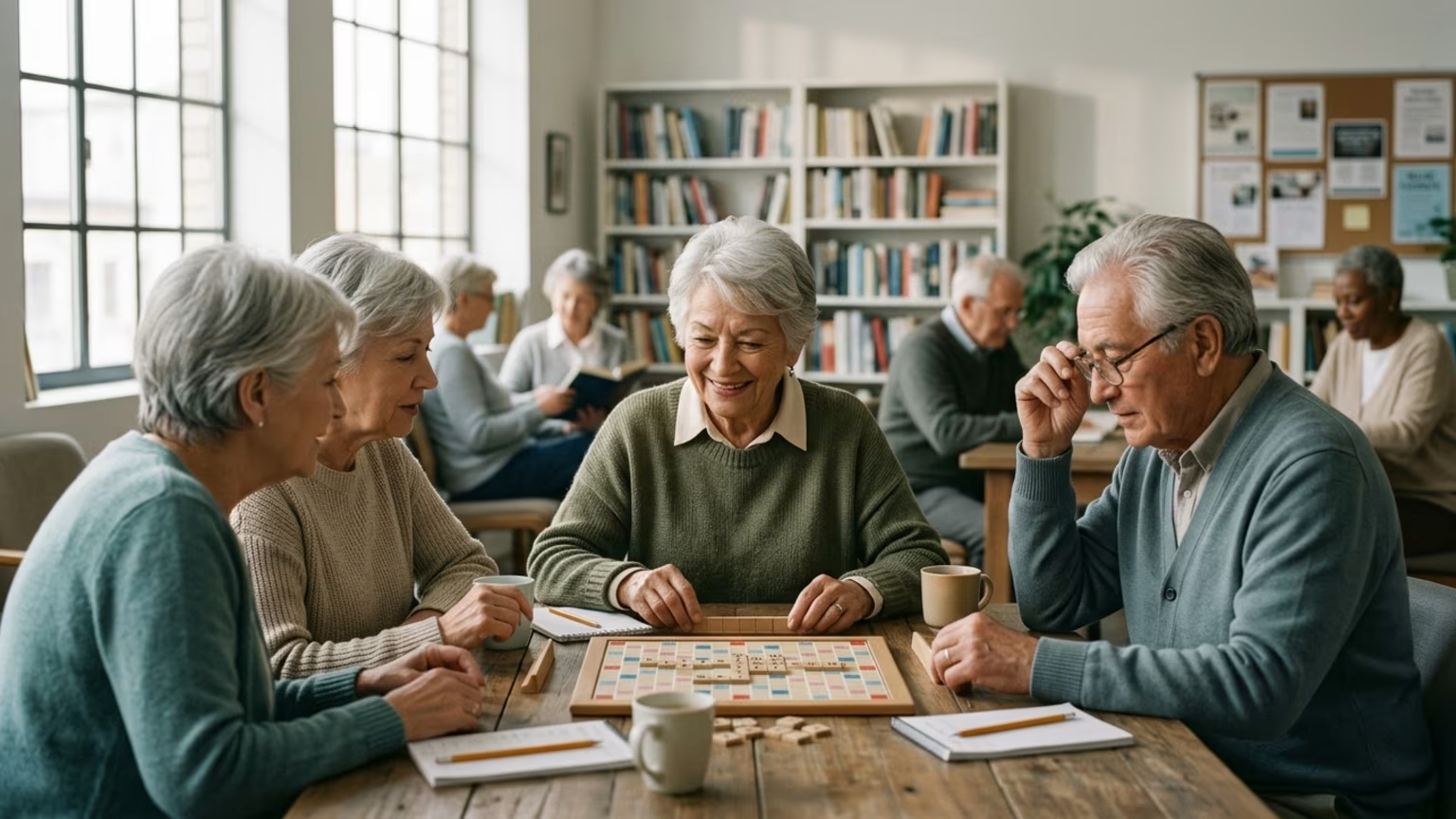
Practical social engagement can involve calling others, volunteering, visiting libraries or simply engaging in brief conversations. A simple daily contact plan can create vital structure without overwhelming an individual. This might include scheduling one phone call, a brief walk or a volunteer shift. WHO guidance also recommends cognitive training or cognitive stimulation for older adults with normal cognition or mild cognitive impairment. This stimulation can include structured group activities, reading, storytelling, games and playing musical instruments.
Choosing learning that is both cognitively engaging and personally meaningful can make these habits easier to maintain. Older adults can use learning socially where possible to maximize its benefits. A shared community class, discussion group, book club or group hobby combines cognitive stimulation with regular conversation. This dual approach provides mental engagement along with helpful accountability.
Public health guidance highlights several practical options for everyday social engagement. Calling or video-calling friends, joining local community activities and finding support groups all serve as valid points of connection. Small daily points of contact create structure and purpose. This measured approach helps individuals stay connected without the pressure of maintaining a large social circle.
While these findings are encouraging, older adults must separate observational research from guaranteed medical outcomes. The Mint Lounge article is a practitioner essay based heavily on clinical interpretation, not a controlled medical study. Its examples of a widow seeking gym interactions or an adult student learning an annual skill are illustrative cases. They are not proof that a gym membership or an annual learning target will produce identical clinical results for everyone.
At the same time, social engagement is not a guaranteed dementia prevention treatment. The eight-year observational study shows a clear association, but it does not prove that social activity alone directly causes a slower cognitive decline. Pre-existing health, education, physical mobility, hearing loss and income can all strongly influence these observational results. Furthermore, social isolation may be both a risk factor and a consequence of declining health, making direct causal interpretation difficult.
Advice to remain socially active must also respect personal barriers like recent bereavement, physical disability, transport issues or hearing loss. Forcing frequent social activity upon someone can sometimes be entirely unrealistic or emotionally counterproductive. Readers should also view large population-level statistics with appropriate caution. The 2024 Lancet Commission estimate regarding 45% of dementia cases does not mean that nearly half of all cases are individually preventable for every single person.
The message to keep learning should never be reduced to purchasing commercial brain-training products. Instead, experts strongly recommend ordinary cognitively stimulating activities like reading books, playing board games and sharing music. The most reliable current direction is a combined approach involving proactive health management, physical activity, cognitive stimulation and regular social connection. Relying entirely on a single daily habit or product will simply not deliver the same comprehensive support.
Mental health symptoms should never be dismissed as a normal part of aging. Symptoms like persistent depression, chronic anxiety or severe loneliness warrant a detailed discussion with a qualified health professional. Unexplained memory changes and severe sleep disruption also require medical evaluation. Gupta specifically notes that therapy is useful for intentional life-building, not just during acute crises.
For people with hearing loss, public health guidance recommends considering hearing aids as part of efforts to reduce cognitive risk. Addressing sensory barriers makes maintaining regular social connection far easier and more enjoyable.
The growing medical focus on relationship quality, purpose and multidomain intervention represents a mature step forward for cognitive health. Rather than relying on isolated brain puzzles or highly restrictive diets, experts now support a comprehensive life-course approach. This practical method means managing cardiovascular risks, maintaining physical activity, addressing sensory changes and staying consistently connected to others. Independent older adults can use this flexible framework to build sustainable, socially engaged routines that fit their actual daily lives.
Building a regular routine around meaningful hobbies, proactive health management and social connection can reliably help protect cognitive function over time. These daily activities do not need to be monumental or expensive to make a measurable difference. A short conversation at a local shop, a shared community class or a quiet afternoon volunteering can provide structure without requiring a large social circle. Ultimately, protecting brain health means actively preserving the vitality, independence and social connection that make those later years truly fulfilling.
Building a socially engaged routine that supports memory preservation requires accurate information on which habits actually make a difference. Feeling patronised by conventional senior wellness content makes finding meaningful lifestyle strategies frustrating, but FitBrainLab translates complex evidence on brain aging into practical guidance. Our research-led approach helps you build realistic daily habits that protect your cognitive health and preserve your independence.

Follow FitBrainLab for research-led insights on memory, focus, brain aging, nutrition and mental fitness after 60. Stay connected for new articles, practical guidance and ideas for a sharper, more engaged life.



Build habits that support memory, focus and a curious, connected life.
Read the Blog