lifelong curiosity
Your sharpest years can still be ahead
Build habits that support memory, focus and a curious, connected life.
Read the Blog

Accumulated knowledge may remain useful as memory changes. A measured look at an aging hypothesis, with practical ideas for learning and everyday tasks.


Active Brains tested online cognitive exercises with lifestyle guidance. See the 12-month results and why they do not prove puzzles prevent dementia.

A balanced look at memory, attention and experience with age, plus when changes in daily life deserve a conversation with a health professional.

A birdwatching study linked expertise with brain activity and organisation. Read the MRI findings, practical options and limits of the evidence.

The Florey’s public talk connected mental wellbeing and cognitive health. Here is what it covered and why it was not a new treatment announcement.
An epilepsy study linked abnormal immature astroglia with poorer reasoning scores. Learn how it was conducted and why the finding remains preliminary.

A walking study linked daily activity with slower tau buildup and less decline. Learn what the reported step counts mean and why they are not prescriptions.
A mouse study links neuronal micronuclei uptake with changes in microglia. Here is why the finding matters and where its relevance to memory remains open.

Murdoch University’s menopause project will combine cognitive assessments, blood biomarkers and health information. Here is what the announcement means.
A mouse study linked CXCR3 blockade to fewer brain T cells and more preserved tissue. Here is what it means for brain-health research.

A study linked neck lymph-node removal with later cognitive impairment. Learn what it found and why causation remains unresolved.

An adaptive aging hypothesis links later-life thinking with meaning and expertise. Read its practical implications and the limits of the evidence.
An MRI study found older regional brain-age estimates on the right. Learn what the findings mean and why the method remains a research tool.

SWAN’s NIH funding extends research on menopause and later-life brain health. The award supports investigation, not new clinical recommendations.
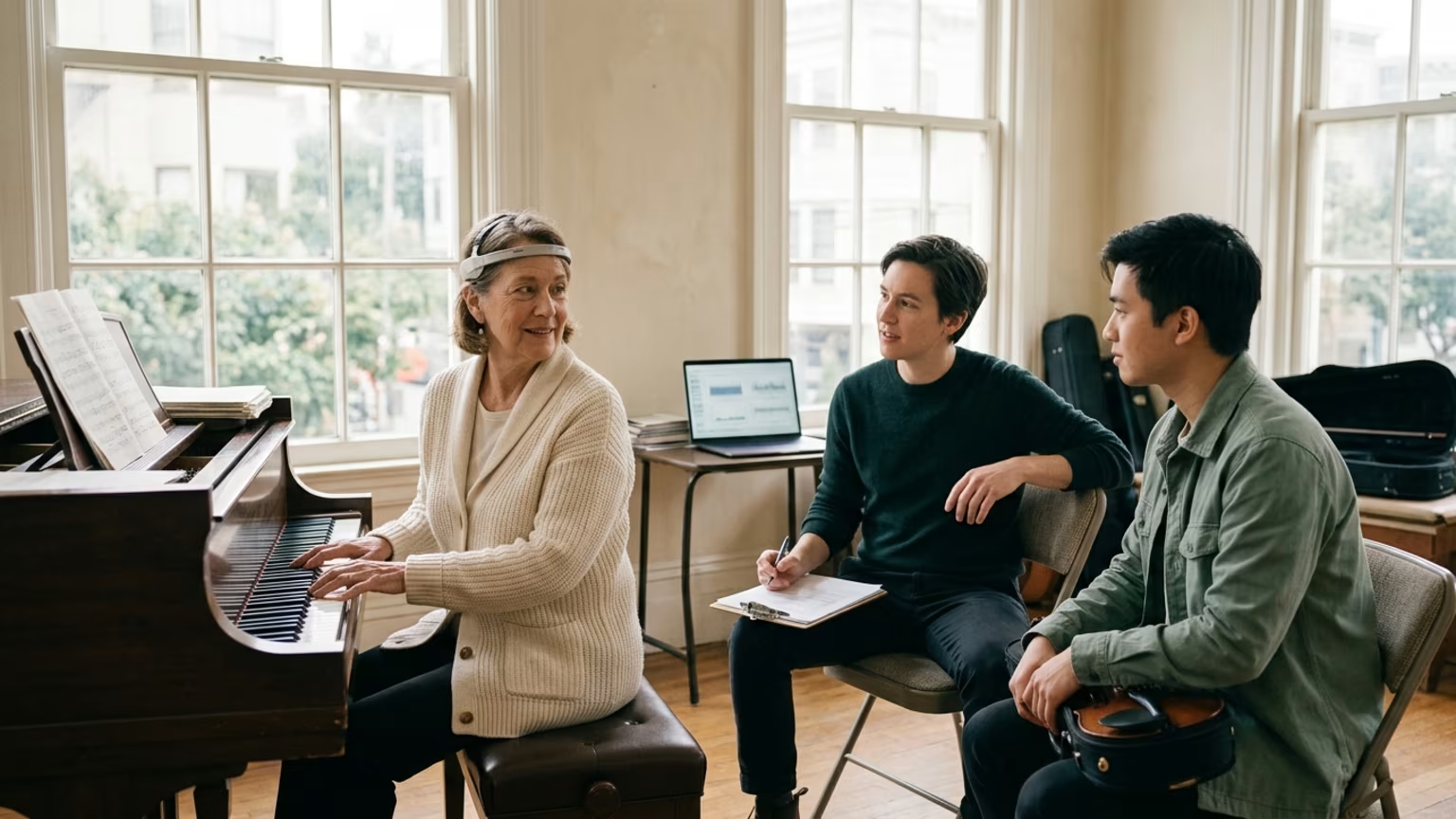
The San Francisco Conservatory of Music and UCSF are partnering to explain brain health and genetic variation through accessible public performances.

A 2026 MRI study across seven disorders highlights lifespan brain-age models as a valuable research tool for tracking group patterns, not a personal diagnostic test.

A 2026 MIDUS analysis found older adults providing support to others had younger MRI-estimated brain ages, though the study does not prove dementia prevention.

New research shows how hippocampal activity and associative memory change with age. Learn what this Binghamton University study means for older adults.
Build habits that support memory, focus and a curious, connected life.
Read the Blog




