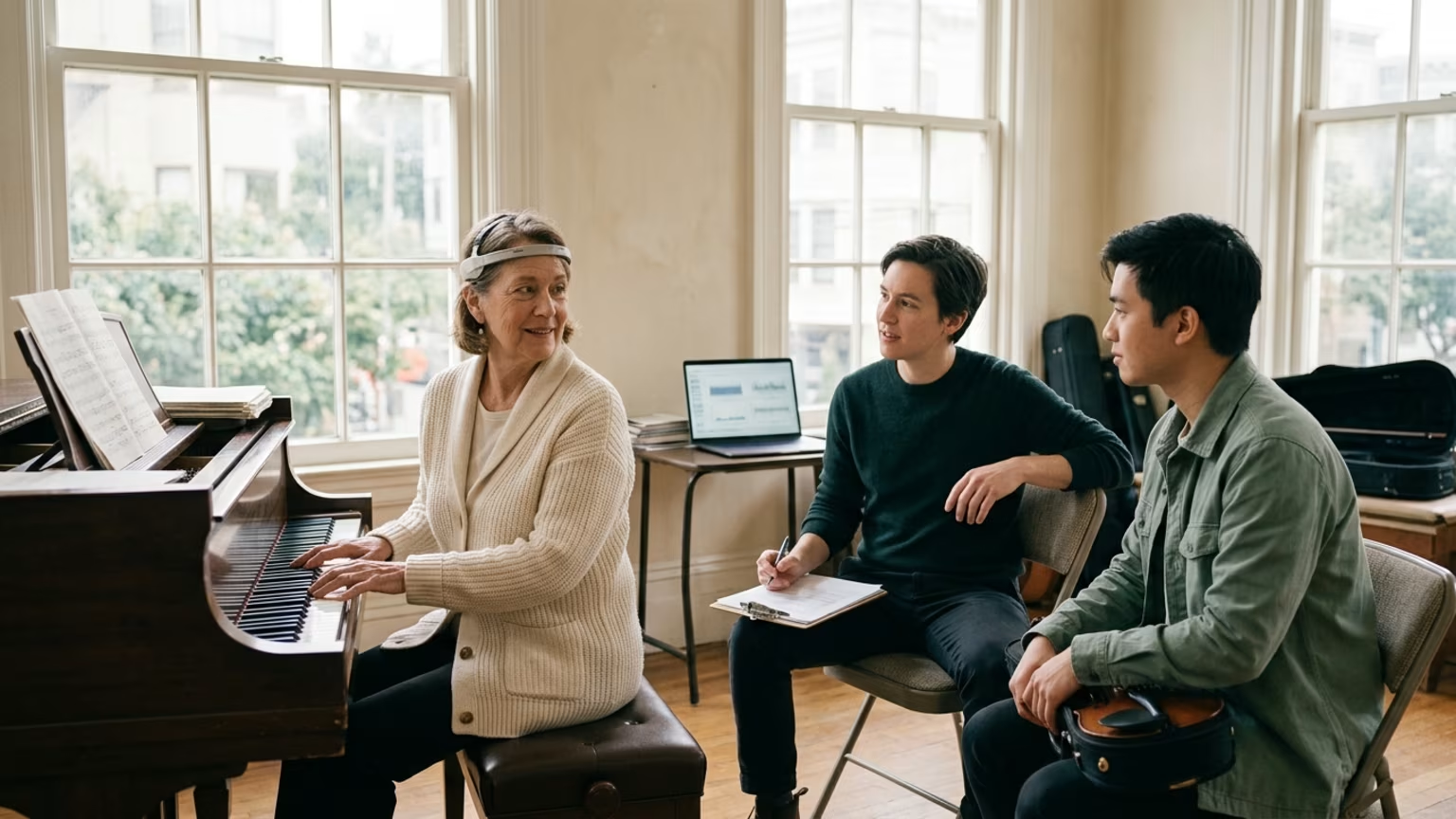

The San Francisco Conservatory of Music and UCSF are partnering to explain brain health and genetic variation through accessible public performances.





The San Francisco Conservatory of Music (SFCM) is joining the UCSF Edward and Pearl Fein Memory and Aging Center and the Global Brain Health Institute to present a unique public event on October 14, 2026. The upcoming San Francisco program is titled Art Reflects Life: Mutations, Variations and Improvisation. It uses musical performances to examine brain health and human aging.
The scheduled event combines scientific presentations with live musical demonstrations and performances. These creative elements work together to explain the concept of variation in genes and music. Presenters will discuss the deep relationship between genetic change, human evolution, aging and long-term brain health. This multidisciplinary approach aims to make complex neurological concepts easier for the general public to grasp.
The announced participants bring distinct and highly specialized backgrounds to the discussion. UCSF neurologist Aimee Kao will address how variation and genetic mutations relate to nature and human evolution. She focuses her academic work on studying the upstream molecular causes of neurodegenerative diseases. Understanding these early molecular changes is vital for the broader study of how human minds age.
SFCM Roots, Jazz and American Music Executive Director Jason Hainsworth is also a featured participant in the program. His involvement points to the specific role of improvisation in musical performance and education. Improvisation requires a performer to adapt rapidly to new auditory information in real time. This spontaneous creative process can serve as a powerful metaphor for biological variations in nature.
The history of this particular partnership demonstrates a long-term commitment to public science education. The collaboration between SFCM, the Fein Center and the Global Brain Health Institute dates back to 2019. Over the past several years, these groups have hosted multiple public talks on related subjects. They have regularly presented musical performances connecting scientific research with foundational musical principles.
This particular collaboration also highlights the importance of physical spaces dedicated to public learning. Holding the presentation at the San Francisco Conservatory of Music provides a welcoming, non-clinical environment. Visitors can engage with scientific experts in a space traditionally reserved for cultural enrichment. This shift in venue helps reframe the conversation around aging from a medical problem to a natural biological process.
This initiative offers older adults a highly effective way to learn about longevity science. Finding reliable explanations of neurobiology can be difficult without navigating dense medical jargon. SFCM Music Director Edwin Outwater notes that music can provide a lens for examining these intricate topics. By pairing art with biology, the program respects the intelligence and curiosity of adult learners.
Interdisciplinary public events provide a clear alternative to the oversimplified senior wellness content found elsewhere. Many older adults experience a distinct loss of structure or learning opportunities following their retirement. Attending sophisticated discussions helps fill that intellectual gap with meaningful new challenges. Finding engaging ways to learn about cognitive health can keep older adults invested in their own care.
SFCM President David Stull states that music can offer knowledge unavailable through other means. While this is his personal perspective on the collaboration rather than a clinical finding, it holds weight. Art can bypass the frustration sometimes caused by reading dry academic studies or medical journals. Presenting structural facts through melody and rhythm creates a highly memorable learning experience.
When scientific concepts become tangible, people can make far more informed decisions about their habits. Readers often find that this type of ongoing education supports mental engagement during retirement. Maintaining an active habit of lifelong curiosity and healthy aging requires access to mature educational resources. Clear and calm explanations of brain health empower older adults to seek out challenging new activities.
Understanding the physical changes in the brain is the first step toward building better daily habits. When researchers explain how neural networks function, listeners gain a deeper appreciation for their own minds. This appreciation often translates into a stronger commitment to maintaining a healthy lifestyle. Readers who grasp the biology of aging are often more motivated to stay physically and socially active.
For those tracking developments in cognitive health, this event offers a practical blueprint for learning. Older adults do not need a background in molecular biology to benefit from these collaborative discussions. They only need a willingness to sit, listen and think critically about the material presented. This low-barrier approach to education makes the science of aging much more approachable.
It remains critical to separate the educational value of this specific event from medical claims. Outwater states clearly that music does not explain biology or genetics on its own. The San Francisco program is an educational presentation rather than a clinical trial or treatment. It does not promise the prevention, reversal or treatment of any memory disorders.
The public media cycle often twists interesting scientific events into exaggerated health promises. For instance, a separate report covered a major Monash University study focusing on older adults. Researchers tracked an observational cohort of 10,893 adults who were aged 70 and older. They found that frequent music listening was associated with a lower dementia incidence in this group.
Many commercial wellness brands might misinterpret a finding like that as a guaranteed prevention method. However, the Monash University study does not establish that music caused the difference in dementia rates. Observational research can only highlight associations between lifestyle habits and long-term health outcomes. It cannot prove that listening to a specific type of music will physically protect the brain.
When reading news about brain health, readers must look for these important factual distinctions. Articles that promise a quick cure based on observational data rely heavily on fear-based marketing. Older adults should seek out cognitive longevity guidance without hype to make smart, informed choices. A calm analysis of the available facts prevents the frustration caused by false certainty.
The distinction between an association and a direct cause is a cornerstone of health literacy. When the media blurs this line, older adults are often left feeling confused or overwhelmed. They might wonder if they need to buy specific audio programs to protect their memories. Learning how to read the science accurately protects consumers from purchasing unnecessary wellness products.
Music remains a wonderful addition to a well-rounded lifestyle for adults over 60. It provides deep joy, emotional comfort and a fantastic reason to gather with friends. Social connection and cultural appreciation are highly valuable for their own sake at any age. People should simply avoid treating musical engagement as a direct substitute for professional medical care.
The pressure to optimize every aspect of aging can easily turn enjoyable hobbies into stressful obligations. If older adults believe that music is a mandatory medical treatment, listening loses its fundamental joy. Hobbies should remain a source of relaxation and personal fulfillment rather than another task on a health checklist. Maintaining this clear boundary protects mental well-being while still supporting a highly active lifestyle.
The collaboration between UCSF and the San Francisco Conservatory of Music models a better approach. It avoids the fear-based dementia marketing that often targets older demographics. Instead, it invites the public to learn about genetic variation through an intelligent and highly creative format. This calm tone perfectly matches the needs of adults who want straightforward, factual information.
Programs that blend art with scientific research help normalize ongoing conversations about cognitive aging. They remove the anxiety and dread often associated with mainstream memory loss coverage. Readers can approach the topic of brain health with genuine curiosity rather than fear. Engaging with new information in a supportive, public setting builds confidence for navigating the aging process.
Ultimately, lifelong learning remains one of the most powerful tools for older adults today. Taking the time to understand scientific research helps individuals separate established evidence from early claims. Maintaining an active mind through educational events supports a highly purposeful and independent life. Staying informed allows older adults to focus on practical habits rather than chasing unproven cures.
By treating the public as capable partners in education, institutions can build lasting trust. Trust is critical when communicating complex findings about neuroplasticity, memory retention and long-term cognitive health. Older adults who trust their educational sources are less likely to fall for deceptive marketing tactics. Reliable, respectful communication serves as the foundation for a truly healthy and informed aging population.
As the population ages, the demand for mature, research-led science communication will only continue to grow. Adults entering their sixties and seventies expect higher quality information than previous generations received. They want to understand the biological mechanisms behind their changing minds without feeling patronized. Initiatives that respect this desire for deep knowledge are setting a new standard for public health education.
After learning how creative engagement and science intersect at public educational events, the next step involves applying those broad concepts to your own daily habits. The loss of structure, learning opportunities or purpose after retirement can make this transition difficult, but FitBrainLab translates complex evidence on brain aging into clear guidance for a resilient mind.

Follow FitBrainLab for research-led insights on memory, focus, brain aging, nutrition and mental fitness after 60. Stay connected for new articles, practical guidance and ideas for a sharper, more engaged life.




Build habits that support memory, focus and a curious, connected life.
Read the Blog