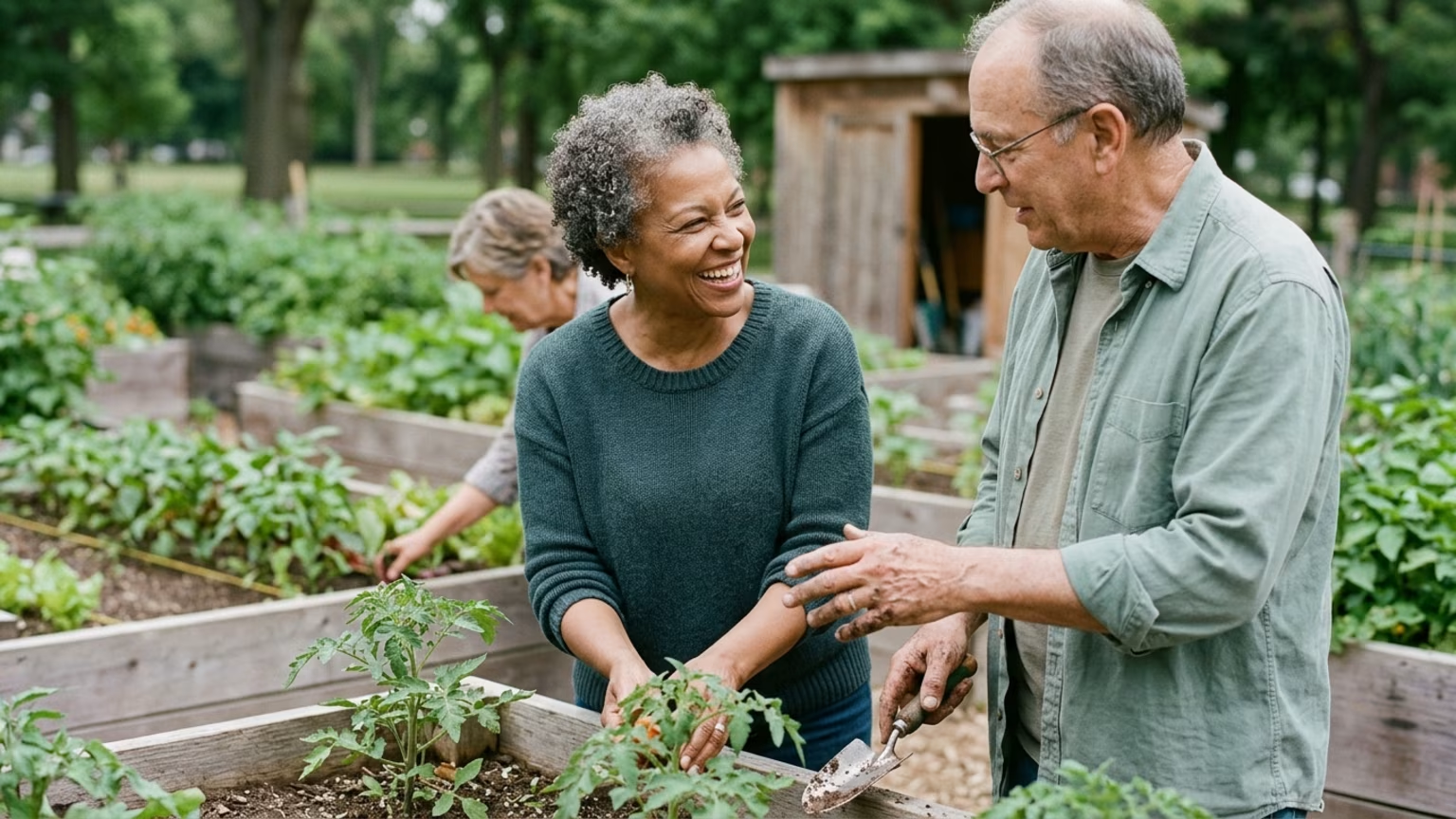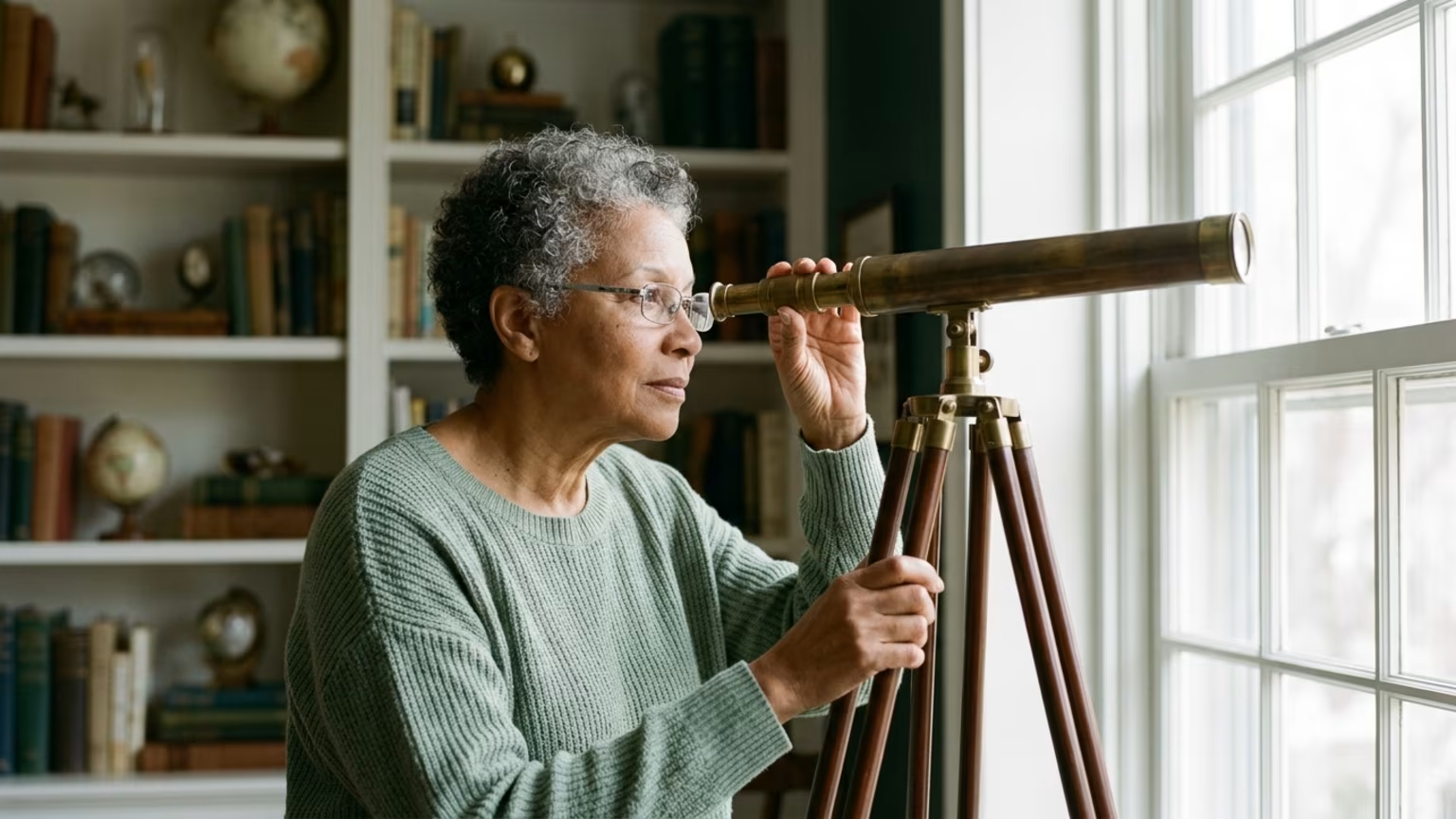

The 2026 Healthy Aging Month campaign encourages older adults to support cognitive health through practical learning, local exploration, and social connection.





In September 2026, Healthy Aging® marked the 34th annual September Is Healthy Aging® Month by launching the “Curiosity Has No Age Limit” campaign. The organization introduced this theme to encourage older adults to take responsibility for their physical, mental, social, and financial well-being through continued learning and connection.
The annual observance draws attention to the positive aspects of growing older. Healthy Aging® designed the 2026 initiative to remind older adults that they never age out of learning or new relationships. The campaign encourages people to actively ask questions, locate new interests, meet new people, and consider new possibilities. To support these goals, Healthy Aging® produced a set of 10 tips, a celebration guide, and an official 2026 poster for participating organizations.
The campaign frames curiosity in broad, accessible terms for everyday life. Suggested activities include learning to play an instrument, taking a class, trying pickleball, and visiting a nearby town. The organization also recommends learning new technology, researching family history, or asking another person to explain something they enjoy. These recommendations focus on combining active participation with new experiences rather than passive consumption.
Healthy Aging® points toward small, manageable changes rather than major lifestyle overhauls. Examples of these incremental changes include taking a different walking route, reading about an unfamiliar subject, or visiting a museum. Participants might also try learning phrases in another language, attempting a new recipe, or calling someone they have not contacted recently. Curiosity can also involve reconsidering old routines, such as finding a more enjoyable form of exercise or revisiting a past interest.
The initiative extends beyond individual actions to include community organizations and local institutions. Workplaces, healthcare organizations, senior centers, and libraries can all host events to support the campaign. Fitness facilities, educational organizations, and residential communities are encouraged to participate actively in the observance.
These organizations have multiple ways to support older adults in their communities. Groups can organize educational classes and speaker events. They can also coordinate walking groups, wellness activities, and book displays. Planners can coordinate local outings and create dedicated opportunities for participants to share something they have learned with others.
The campaign message aligns with the National Institute on Aging position that staying mentally and socially engaged may support cognitive health. The National Institute on Aging describes cognitive health as the ability to think, learn, and remember clearly. These capacities are necessary for everyday activities like driving, paying bills, taking medication, and cooking safely. The organization notes that genetic, environmental, and lifestyle factors can all influence cognitive function.
A clinical source reviewing current evidence states that sustained social and intellectual engagement may help build cognitive reserve. This review stresses the importance of complexity in daily routines and hobbies. It recommends learning new skills, maintaining meaningful relationships, and pursuing interests that require genuine mental effort. Following this guidance means choosing a challenge that requires active learning rather than merely repeating a familiar routine.
Social participation plays a significant role in this healthy aging approach. Research summarized in available literature indicates that social participation is associated with better cognitive performance and a lower risk of cognitive decline. Adding a social element to a new hobby can turn an isolated activity into an opportunity for connection. Older adults might consider joining a walking group, a community class, a volunteer role, or a shared library event.
Curiosity can serve to strengthen existing relationships and build intergenerational connections. Healthy Aging® suggests asking a friend or family member to teach you something they know. The organization also suggests offering to teach something in return. This strategy creates a two-way exchange across generations that requires active communication and sustained mental effort.
Logistical planning makes these engaging activities sustainable over time. A new walking route, a nearby town, a public library, or a community center can provide necessary novelty. These local options offer mental stimulation without the high cost or logistical demands of long-distance travel. Finding close options helps older adults build a routine that fits their schedule.
Accessibility remains a critical consideration for long-term participation. Transportation or mobility issues can create barriers to participation. Hearing and vision limitations also require careful logistical planning. Individuals facing these challenges should look for accessible, online, or small-group alternatives.
Curiosity is not a guaranteed dementia prevention treatment. The evidence supports an encouraging and balanced message about mental engagement. Meaningful engagement may support cognitive health and well-being, but no single hobby can eliminate cognitive risk. Older adults should approach new activities for their intrinsic value rather than expecting medical outcomes.
Medical supervision remains a necessary component of healthy aging. New or worsening problems with memory, judgment, or daily functioning still require immediate assessment from a qualified healthcare professional. A healthy aging campaign encourages engagement without dismissing symptoms that require proper medical evaluation and management. Seeking medical advice for concerning changes is a protective health measure.
The strongest defensible message is that mentally and socially engaging activities may contribute to cognitive well-being, quality of life, and resilience. However, the available evidence does not support claims that taking classes, completing puzzles, or travelling can guarantee protection from dementia. Current research does not point to one universally superior activity for cognitive preservation. Benefits depend on an activity's difficulty, personal relevance, and frequency.
Social context and the individual's specific health circumstances also play a role in determining how an activity supports overall well-being. A clinical review of dementia prevention research cautions against reducing brain health to a single habit. It recommends thinking in terms of sustained intellectual and social engagement rather than a single guaranteed exercise. A person who dislikes crossword puzzles does not need to force themselves to complete them for cognitive health.
Activities like learning a language, taking up photography, or mastering a new device provide more sustainable engagement when they are genuinely interesting. The healthy aging campaign must be distinguished from commercial brain training programs and their marketing promises. Evidence that an engaging activity is enjoyable is not proof that it prevents dementia. Furthermore, an association in observational research does not prove that social activity alone produces broad, lasting improvements in memory.
Meaningful engagement may support well-being, but no single hobby can eliminate cognitive risk entirely. Research and public health guidance identify social isolation as a potentially modifiable dementia risk factor. This gives the campaign focus on meeting people genuine relevance for older adults who want to protect their health. However, engaging in social activities is not a substitute for medical care or regular exercise. Adequate sleep, hearing care, and vision support also remain necessary.
The broader brain health field increasingly focuses on multidimensional lifestyle strategies over isolated games or singular habits. Available evidence highlights cognitive activity, social participation, and meaningful relationships as part of a wider, integrated approach. This approach centers on maintaining function, independence, and quality of life as people age. Small, practical steps help older adults build a routine that supports these goals consistently over time.
The most credible interpretation of current research is cumulative and practical. Curiosity helps people create regular opportunities for learning, movement, and social contact in their daily lives. These combined components may support a fuller and more engaged life during retirement. Incorporating new interests and maintaining community involvement remains a reasonable part of a broader, long-term health strategy.
Choosing a new hobby to stimulate cognitive function requires an accurate understanding of current medical data, and FitBrainLab provides the factual foundation necessary for those lifestyle decisions. Difficulty separating established evidence from early or exaggerated health claims often creates confusion, but FitBrainLab evaluates the clinical reality to help readers maintain mental sharpness without falling for unrealistic promises.

Follow FitBrainLab for research-led insights on memory, focus, brain aging, nutrition and mental fitness after 60. Stay connected for new articles, practical guidance and ideas for a sharper, more engaged life.





Build habits that support memory, focus and a curious, connected life.
Read the Blog