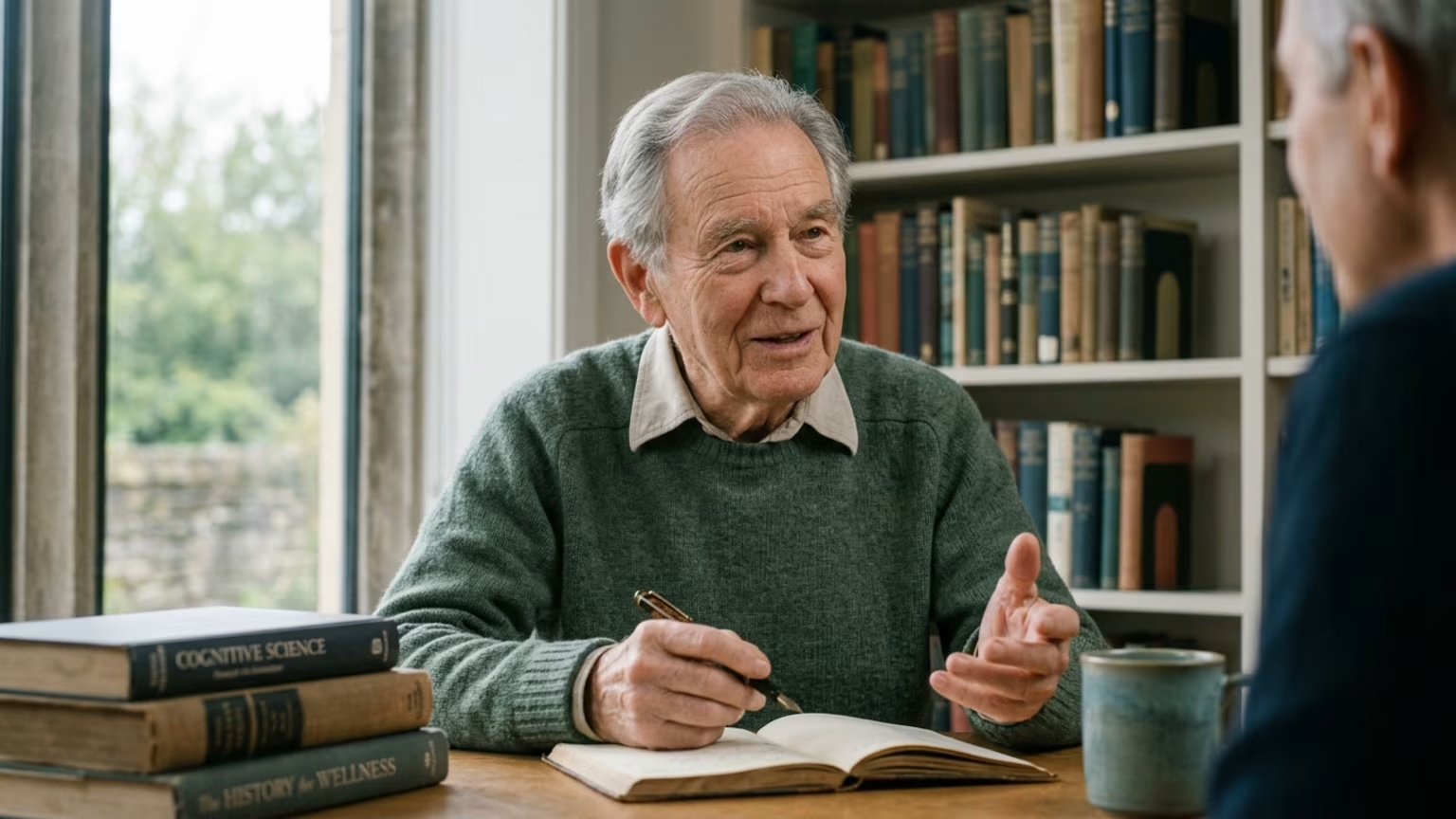

Chris Crowley shares his approach to mental engagement at 92. We review his advice on daily challenges alongside current evidence on cognitive longevity.





On September 26, 2026, Chronogram published a profile of 92-year-old author Chris Crowley about his new book, Younger Forever: A SuperAger’s Guide to Life After 50. The interview highlights his daily routine of challenging mental and physical activities as a personal model for aging.
Chronogram reports that Crowley retired from his career in law at age 56. He did not settle into a quiet routine after leaving that demanding profession. He started a completely new career by writing fiction and books on healthy aging. The publication frames this major transition as part of his wish to live more than one life.
His initial step into writing about health reached a massive global audience. In 2004, Crowley and physician Henry S. Lodge published the book Younger Next Year. The article notes that the books in this specific series have sold more than two million copies worldwide. Now, his new release with Blackstone Publishing updates his perspective for a new decade of his life.
Chronogram details Crowley's current daily schedule to show how he maintains his mental stamina. He told the publication that he still writes almost every day. These focused writing sessions typically last for three or four hours at a time. He describes writing as a highly demanding retirement activity that still gives him complete personal flexibility.
His daily routine also includes a rigorous physical component to support his overall health. The interview states that Crowley exercises six days out of seven. His physical habits still include skiing and riding a bicycle at age 92. The publication also covered his local promotional appearances for the new book release.
A local discussion featuring Crowley was set for September 29, 2026. This conversation with author Roxana Robinson took place at the White Hart Inn in Salisbury, Connecticut. Oblong Books and Scoville Memorial Library presented this public event. Keeping a public speaking schedule adds another layer of mental demand to his week.
Crowley offers his own habits as a model for maintaining mental sharpness. He characterizes the brain as a "use-it-or-lose-it device" during the recent interview. He argues that older adults must use their brains at the high end to keep them functioning well. This means selecting activities that require genuine mental effort and sustained attention.
His practical suggestions focus heavily on continuous learning and creative output. Crowley recommends writing, reading, and learning a completely new language. He also highlights the importance of getting deeply involved in something you truly care about. These recommendations show the need for personal meaning in your daily routine.
Finding a structured purpose can change how you experience the later decades of life. You can read more about building supportive habits in our Brain Aging & Neuroplasticity Articles. Casual or entirely passive hobbies do not meet his standard of engagement. He suggests older adults need to challenge themselves consistently to stay sharp.
A recent medical paper provides helpful context for these specific lifestyle choices. A 2026 review published in Psychological Medicine examined the role of engaging hobbies in older adults. The review reports that longitudinal evidence links cognitively stimulating leisure activities with slower cognitive decline. The researchers specifically pointed to reading as an activity associated with better outcomes.
The paper also linked these stimulating activities with a lower risk of dementia. For adults approaching retirement, this creates a practical framework for daily planning. You can deliberately structure your days around meaningful challenges rather than complete rest. Engaging in complex tasks provides the brain with necessary daily stimulation.
This approach shifts the focus from medical interventions to sustainable lifestyle habits. You can find more about purposeful planning in our Retirement, Purpose & Mental Fitness Resources. Taking control of your daily schedule helps maintain a sense of personal momentum. A proactive routine keeps your mind busy and your days highly structured.
The Chronogram profile presents a compelling story of one man's active life. It does not provide clinical proof that any specific routine prevents cognitive decline. Crowley’s suggestions are strictly personal advice drawn from his own lived experience. The article does not report any clinical trials testing his recommended activities.
The interview also does not quantify the exact effects of his routine on memory or overall dementia risk. His habits show what works for him rather than offering a tested medical prescription. The scientific literature requires very careful interpretation by the reader. The Psychological Medicine review reports longitudinal associations between stimulating activities and better brain health.
An association simply means that these factors frequently appear together in the studied populations. This statistical link does not establish that reading directly causes a reduction in dementia risk. People who read frequently might share other protective health factors or socioeconomic advantages. Relying on observational data means we cannot promise guaranteed medical outcomes.
Crowley himself uses the new interview to temper some of his past messaging. He tells Chronogram that he thinks they overpromised a little bit in his earlier books. He openly acknowledges that physical ability diminishes with age regardless of your efforts. No regimen or positive mindset can completely eliminate the physical realities of aging.
Readers seeking practical steps can find realistic guidance in our Lifestyle & Brain Resilience Resources. It is crucial to separate inspiring biographies from guaranteed medical outcomes. Exercising six days a week and writing daily are biographical details of Crowley's life. They are not evidence that his routine directly caused his current health status.
We must avoid assuming that another person would achieve the exact same results. Maintaining a clear view of these limitations helps prevent disappointment and medical misinformation. A grounded perspective allows you to enjoy healthy habits without expecting an unrealistic outcome. Realistic expectations form the foundation of a truly healthy aging strategy.
The core message from this interview is about maintaining personal standards for mental engagement. Leaving a primary career does not require giving up mental challenge or daily structure. Activities like writing, reading, or language learning can fill the void left by professional work. These demanding pursuits require effort and focus to provide any potential cognitive benefits.
A defensible approach to aging involves choosing activities that feel deeply meaningful and highly sustainable. You can pursue a demanding interest without assuming it is a guaranteed medical intervention. Maintaining curiosity and a consistent daily routine supports a very high quality of life. Understanding how to adapt to natural physical changes helps you stay focused on realistic goals.
A healthy mindset focuses on daily purpose rather than chasing an impossible reversal of time. This perspective encourages older adults to take ownership of their cognitive routines. You do not need a clinical trial to justify reading a challenging book. You can start writing or learning a language simply because it enriches your current week.
These habits provide immediate psychological value and structural benefits for your daily life. Finding ways to stay mentally active remains a worthwhile goal at any age. Taking inspiration from others can motivate you to build your own challenging routine. The most effective cognitive habits are the ones you actually sustain over the long term.
Translating personal aging narratives into a sustainable lifestyle requires careful attention to what medical science actually supports. Conflicting advice about nutrition, exercise, sleep, supplements and brain performance creates daily frustration for careful readers, but FitBrainLab delivers practical guidance without medical guarantees so you can focus on meaningful habits.

Follow FitBrainLab for research-led insights on memory, focus, brain aging, nutrition and mental fitness after 60. Stay connected for new articles, practical guidance and ideas for a sharper, more engaged life.






Build habits that support memory, focus and a curious, connected life.
Read the Blog