
An adaptive aging hypothesis links later-life thinking with meaning and expertise. Read its practical implications and the limits of the evidence.





On September 3, 2026, University of Arizona researchers Fabian-Xosé Fernandez, Sara N. Burke and Lynn Nadel published “Aging as a Continuation of Development: A Hypothesis and Framework” in Perspectives on Psychological Science. SciTechDaily reports that the paper introduces their “adaptive aging hypothesis.”
The central idea is that healthy older brains should not be understood only through comparisons with younger brains. According to the Association for Psychological Science, the researchers propose that later life may bring a change in cognitive priorities. Their framework gives accumulated knowledge and interpretation a larger place alongside detailed recall.
Under this account, retaining the precise details of an experience and understanding its broader significance are different demands. The hypothesis proposes relatively less emphasis on the first and more on the second. The question becomes not simply whether recall changes, but which kinds of thinking healthy aging brings into focus.
This is a shift in how the authors interpret cognitive aging. Rather than treating every difference from younger cognition as deterioration, they ask whether some changes reflect continued development. Experience and knowledge are central to that account.
SciTechDaily and the Association for Psychological Science describe the hippocampus as important for encoding detailed experiences. Their accounts describe the frontal cortex as more involved in broader meaning or “gist.” The framework proposes less reliance on hippocampal processing and greater reliance on frontal-cortex processing during healthy aging.
“Gist” here means the broad meaning of an experience rather than its precise details. The researchers are proposing a change in emphasis, not a simple replacement of one brain region by another.
The Association for Psychological Science says the framework draws on molecular biology, neuroimaging and human observations. It also draws on animal models. The authors bring these lines of evidence together to develop an account of aging as a continuation of development.
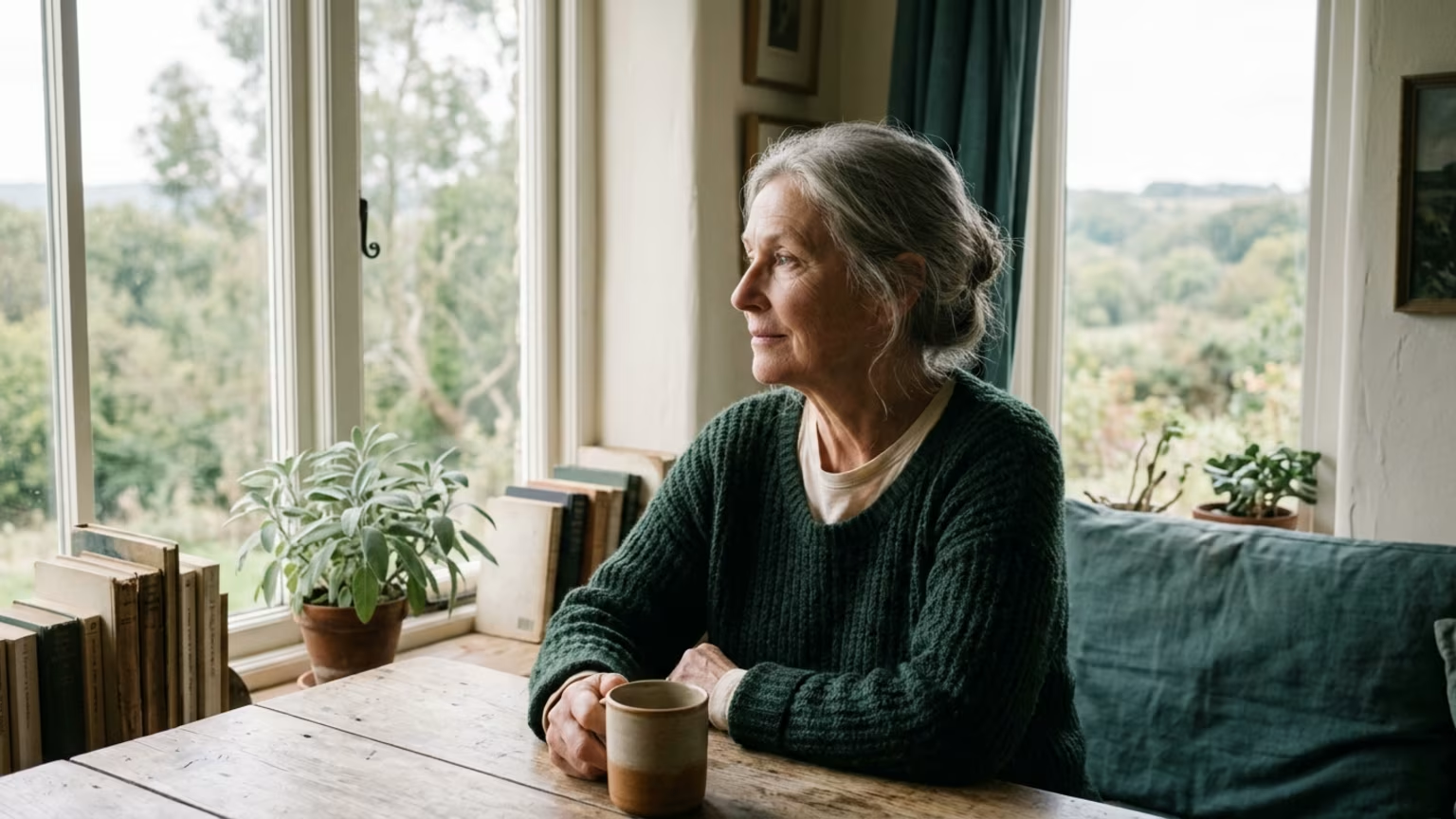
In the Association for Psychological Science’s account, Fernandez describes older brains as suited to different priorities than younger brains. He places particular attention on sharing stored expertise and maintaining social relationships.
The researchers connect this idea with teaching, mentoring and storytelling. They also discuss judgment and social relationships. The common thread is using experience in context rather than treating precise recall as the only useful cognitive ability.
That perspective belongs within the wider discussion of how thinking changes across later life. It asks what a person brings to a task through accumulated knowledge, not only what they can reproduce from memory.
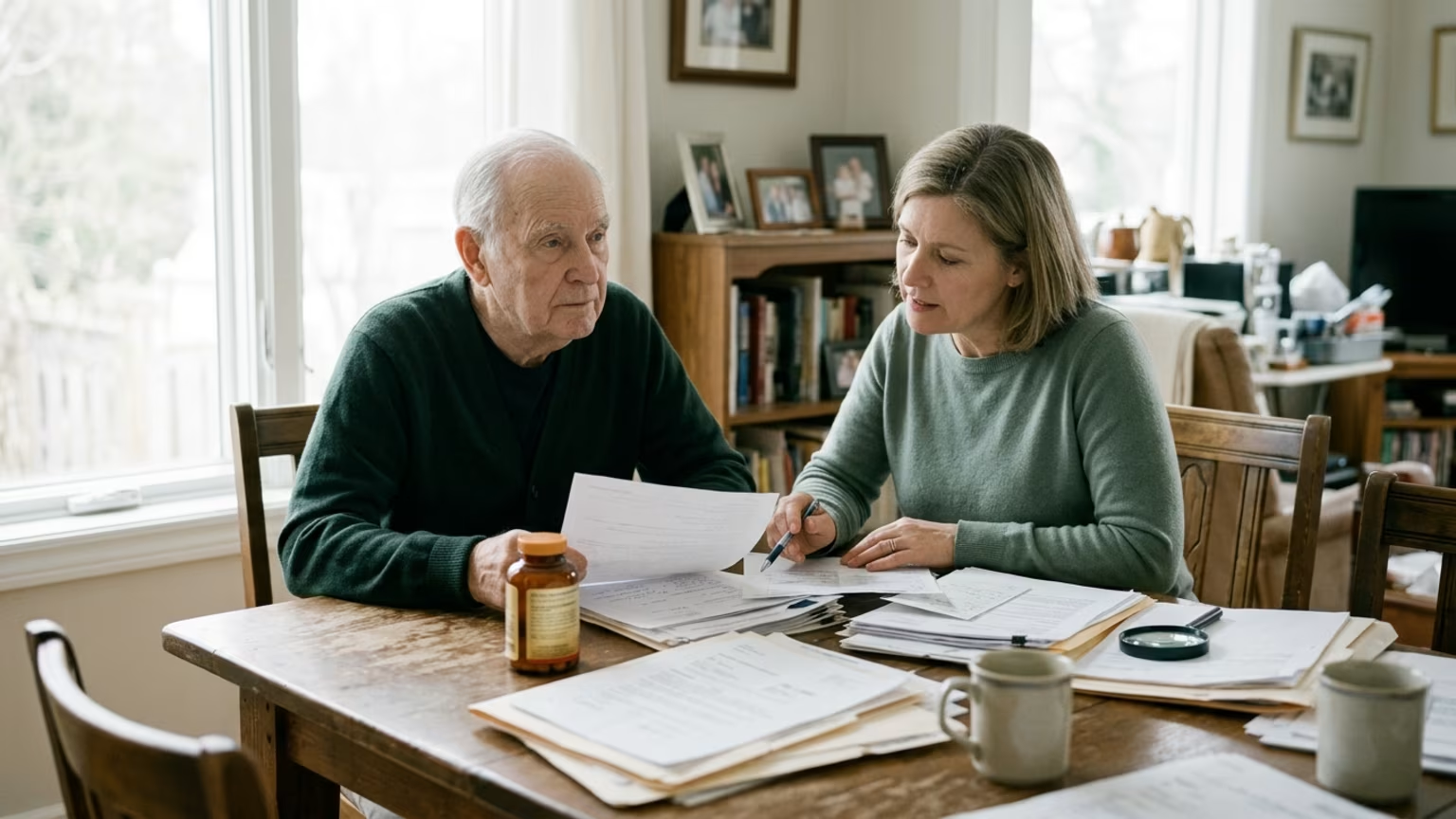
The immediate implication is a different way to frame learning and participation. A practical reading of the proposal asks whether an activity makes room for interpretation and prior experience. For adults 60+, that offers a useful question when choosing something interesting to learn or a way to contribute.
The research packet’s practical interpretation is to connect new material with prior experience and ask what the main idea means in context. This keeps attention on understanding rather than making exact recall the only measure of a worthwhile learning experience.
For example, a discussion of new material might include questions such as:
These questions bring meaning and accuracy into the same conversation. An experience-centered approach does not require treating details as unimportant. It simply gives interpretation a clear place in the activity.
The practical choice is about the purpose of learning. Someone might value understanding a subject well enough to discuss it or connect it with familiar experience. That is a different goal from reproducing every detail, and the framework gives that distinction attention.
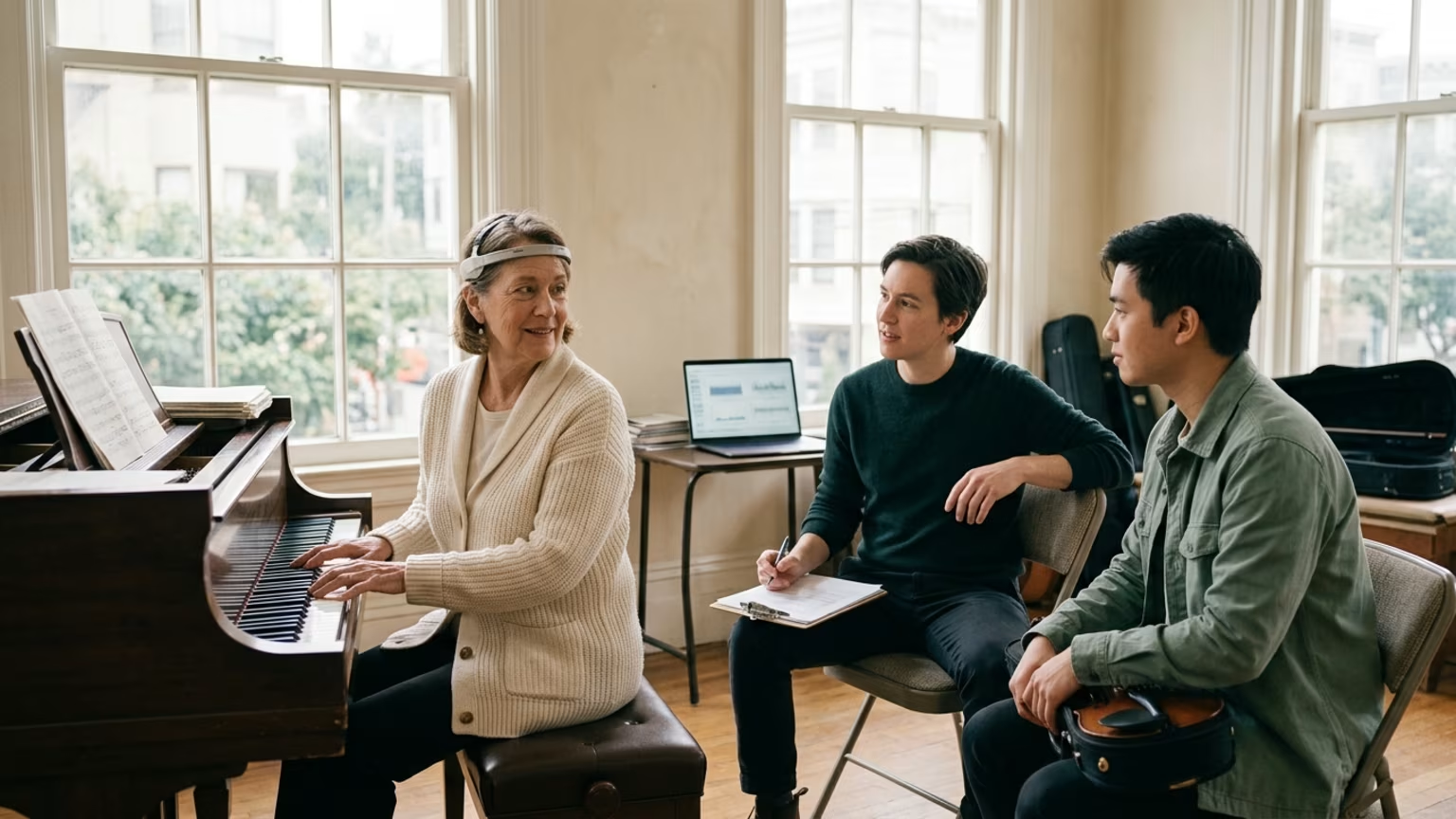
The researchers’ suggested applications include sharing skills and participating in intergenerational activities. Their account also points to discussion and storytelling as ways to draw on accumulated knowledge.
For someone who enjoys sharing experience, the appeal could be the opportunity to explain a skill or exchange perspectives. For someone who prefers discussion, it could be the chance to connect a new idea with something familiar. These are choices about interest and participation.
A useful editorial principle is to choose such activities for their meaning rather than turn every conversation into a memory exercise. The framework’s social argument is about recognizing experience. It need not become another demand to perform well on a cognitive task.
The everyday challenge is finding a place for worthwhile activity within routines that fit real life. Enjoyment and personal relevance can guide that choice without attaching a medical promise to it.
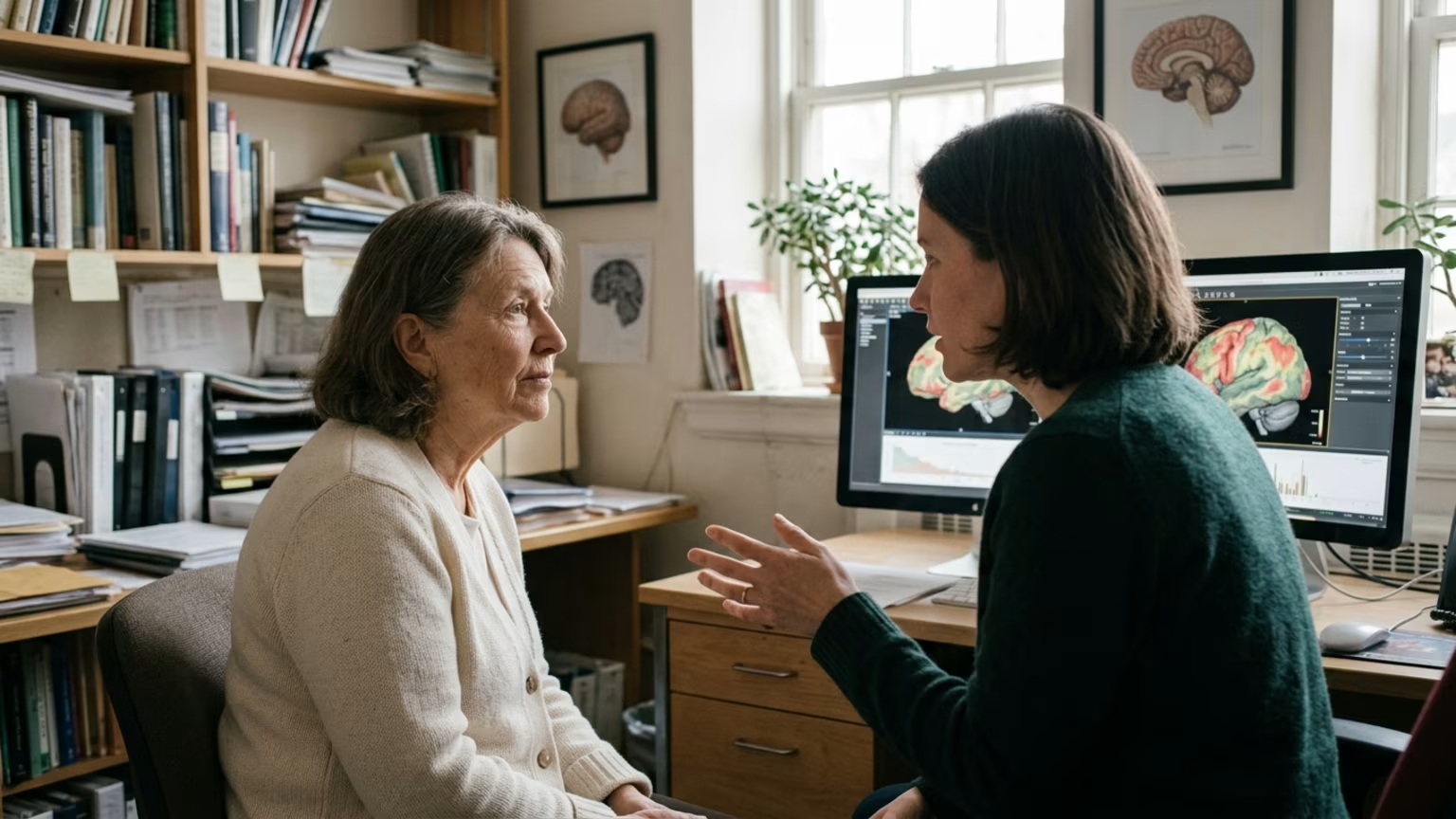
For researchers, the proposal offers questions that need testing. Does the suggested shift appear consistently across different tasks? How does accumulated knowledge relate to interpretation? What happens when a task requires both precise detail and broader meaning?
Those questions also clarify the practical issue. Choosing an interesting activity and establishing that it changes cognition are separate tasks. The framework supplies a rationale for asking new questions about learning and experience; research would need to establish the outcomes.
The reporting describes a hypothesis and framework, not a new clinical trial. The Association for Psychological Science’s public summary provides no sample sizes, effect sizes or new experimental protocol. It does not establish how consistently the proposed shift occurs or how large it might be.
The coverage also reports no intervention showing that learning through interpretation improves memory or prevents cognitive decline. Teaching and mentoring are proposed social applications, not proven cognitive treatments. A framework that organizes scientific questions is different from evidence that a particular activity changes health outcomes.
The language of “optimized” brains also needs a careful reading. Fernandez’s account is an interpretation of healthy aging, not a finding that every older adult has the same strengths. It should not create an expectation that everyone will prefer mentoring or excel at social judgment.
Personal interests still matter. A respectful interpretation makes room for different ways of participating rather than assigning people a role based on age. Experience can be valued without requiring anyone to become a teacher or storyteller.
The Association for Psychological Science reports Fernandez’s view that Alzheimer’s disease is not simply a more intense version of ordinary cognitive aging. The coverage says Alzheimer’s may disrupt the transition proposed in the framework.
That distinction is part of the authors’ argument. It is not a diagnostic test or a basis for deciding whether an individual’s memory changes are harmless. Keeping healthy aging and disease-related changes distinct matters when reading this proposal.
Concerning changes in memory or thinking belong in a discussion with a qualified health professional rather than being explained away through this theory. The framework does not provide the clinical assessment needed for personal decisions.
This development matters because it asks cognitive-aging research to look beyond a single standard of performance. Detailed recall is one part of thinking. The researchers also direct attention toward the use of knowledge and the interpretation of experience.
For cognitive health over the long term, that is a worthwhile research direction. It makes room to ask about participation and contribution alongside changes in memory. It also invites a more respectful account of later life without requiring that every age-related change be described as a benefit.
The adaptive aging hypothesis gives researchers a specific question: whether some changes in healthy aging reflect different cognitive priorities. Its lasting value will rest on how well later research tests that question. For now, its practical contribution is to make meaning and accumulated experience more visible in the conversation.
Selecting learning and social activities through this proposal requires separating an interesting idea from established evidence, a distinction FitBrainLab explains for adults 60+. For readers uncertain about useful everyday habits, its research-led guidance connects questions about memory and focus with clear accounts of brain aging rather than promises of cognitive improvement.

Follow FitBrainLab for research-led insights on memory, focus, brain aging, nutrition and mental fitness after 60. Stay connected for new articles, practical guidance and ideas for a sharper, more engaged life.




Build habits that support memory, focus and a curious, connected life.
Read the Blog