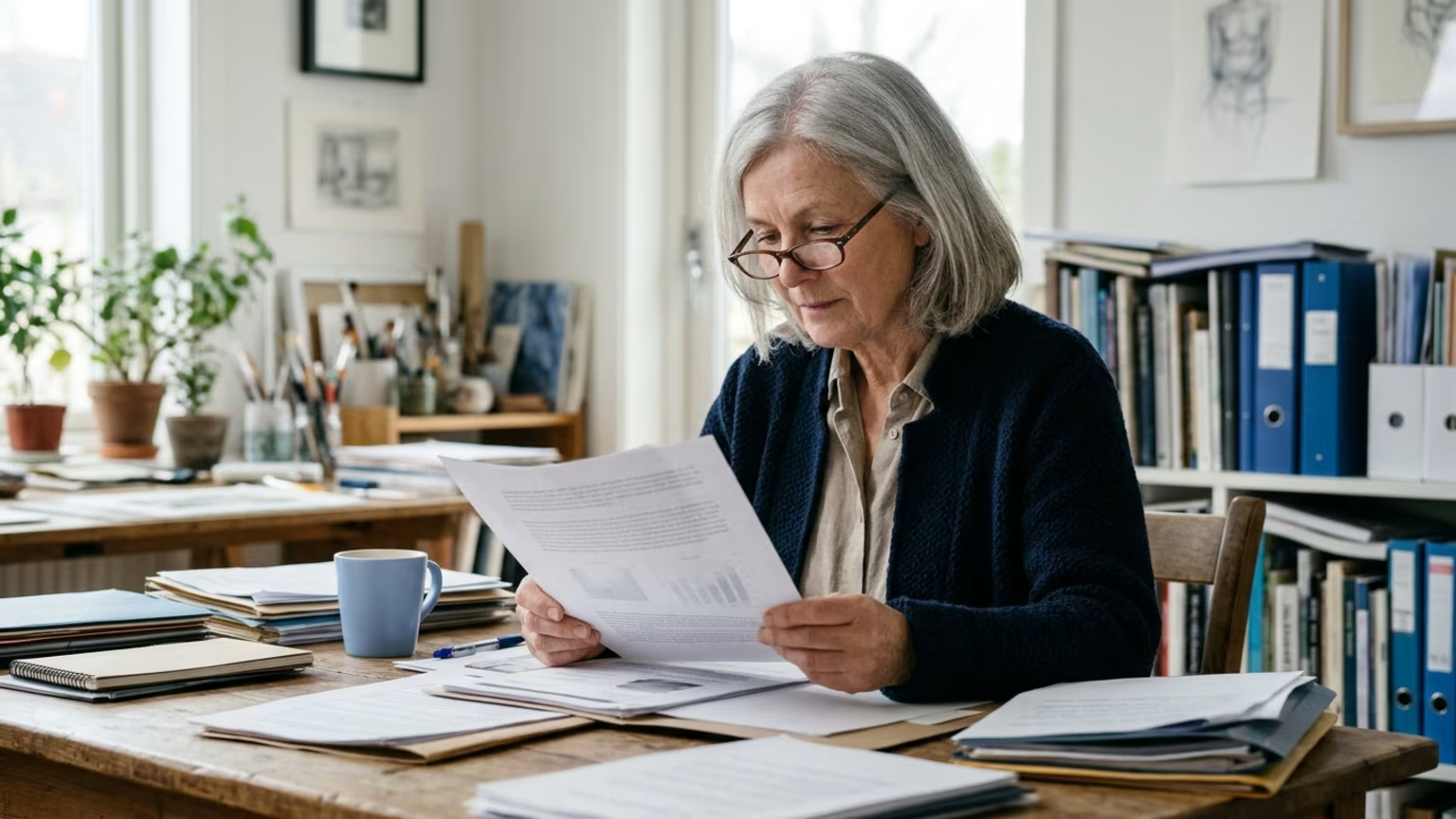

A look at creative-experience research, EEG brain-age estimates and cultural attendance, with practical context for adults over 60.





On October 3, 2025, researchers published “Creative experiences and brain clocks” in Nature Communications, reporting lower EEG-estimated brain-age gaps among creative experts than non-experts.
Real Simple’s coverage describes research drawing on data from 1,473 participants. The EEG brain-clock models were trained on 1,240 people aged 17 through 91 and then tested against groups with creative experience.
These models used EEG-derived functional connectivity, meaning patterns of connections in the data, to estimate age. The researchers compared that prediction with a person’s chronological age to calculate a brain-age gap. A negative gap meant the model predicted an age below the person’s actual age.
That distinction sets up the rest of the findings: the outcome was an estimated age based on brain patterns. Keeping the measured outcome in view makes the reported differences easier to interpret.
The word “creative” covered several kinds of expertise in this research. Artistic practice and strategy gaming were grouped within the same broader inquiry, rather than treated as identical experiences.
The study compared experts with non-experts in tango dancing, music, visual arts and strategy gaming. According to the coverage, experts had lower estimated brain-age gaps across these domains.
The overall expert versus non-expert difference was reported as about 5.5 years. Estimates varied by domain, so the headline figure describes the combined comparison rather than a single result shared by every activity.
A separate part of the research followed 24 non-experts learning StarCraft II. The authors reported an average brain-age-gap change of about 3.1 years in this pre/post comparison.
The study also reported changes in attention-task performance after training.
The expertise comparisons and the training component belong to the same research story, but they have different starting points. The former asks how established experts compare with non-experts. The latter asks whether a measure changes between assessments around a learning experience.
A later study examined a different form of engagement. A 2026 cohort study published in JAMA Network Open followed 8,274 older adults and looked at cultural attendance alongside later hospital-treated mental disorders.
The researchers reported an association between frequent cultural engagement and lower rates of hospital-treated diagnoses, including dementia. Here, cultural engagement meant attendance at cultural events and venues. It was not necessarily making art or becoming skilled at a creative practice.
The two studies therefore address different questions. One estimates brain age from EEG patterns in creative-experience groups. The other relates cultural attendance to later hospital-treated diagnoses. Placing them side by side provides context, rather than a single combined measure of benefit.
For adults after 60, the most useful response is to think about the kind of engagement an activity offers. Enjoyment, learning, routine and social connection are reasonable reasons to make room for creativity. A hobby does not need a brain-age score to have a worthwhile place in someone’s week.
The research supports a broad conversation about engagement rather than a race to choose the activity with the most striking headline. Drawing, music, dancing, games and cultural events offer different experiences. The practical question is which option feels interesting and accessible.
Someone interested in visual arts might value the act of drawing. Another person might prefer hearing music or visiting a cultural venue. Those choices reflect different interests and different kinds of participation. The studies give a reason to be clear about which experience is being discussed instead of using “creativity” as a label for everything.
Enjoyment is also a different goal from performance. A reader might want the satisfaction of learning a skill, while another might value a regular shared experience. Neither aim requires turning leisure into a competition. Keeping the purpose clear leaves room for activities that fit a person’s interests and circumstances.
That decision can stay grounded in ordinary priorities:
These are reasons for choosing an activity, not a clinical plan. For readers drawn to making things, questions about crafting, mood and memory belong in the same discussion.
An arts class or cultural outing can also be judged on its own terms. Is it enjoyable? Does it offer a chance to learn or spend time with others? Those questions keep the activity connected to real life rather than turning it into a test of whether the brain is aging correctly.
The main caution is that the brain-age gap is a statistical model output. It is not a clinical diagnosis, a direct measure of memory or independence, or a personal forecast of dementia. A younger estimate does not mean that aging has literally run backward.
The model’s reported mean absolute age-estimation error was about 8.7 years. That is the average size of its age-prediction error. The group findings are best read as research about a brain measure rather than precise personal age readings.
The expert comparisons were observational. People who become experts may differ from non-experts in ways that also relate to brain measures. The comparison therefore does not show that starting an activity will produce the same estimated difference in another person.
The training component raises a separate issue. It involved a small sample learning one strategy game, so its findings do not establish effects for community art classes or every creative hobby. A short-term model change and attention-task changes also do not establish lasting protection against cognitive decline.
The cultural-attendance cohort was observational too. Health, access, social circumstances and earlier cognitive changes may influence who participates. Adjustment for measured factors does not prove that attendance itself caused the lower rate of hospital-treated dementia diagnoses.
Together, these limits leave no basis for declaring one format superior for brain health or treating a particular class as proven dementia prevention. The same distinction between a measured result and a health promise matters when reading about cognitive training and later-life risk.
Personal questions about memory changes or medical care belong with a qualified clinician. The practical place for creative engagement is as a valued activity, not a substitute for individual assessment.
The lasting value of this research is the question it brings into view: how do sustained skills and meaningful experiences relate to the aging brain? EEG-based models offer one way to study that relationship. Cultural-attendance research approaches it through a different outcome.
A useful long-term direction is to connect these measures with outcomes that matter in daily life. A valuable research question is whether changes in brain-age estimates track changes in memory and attention over time. That would bring the discussion closer to concerns such as keeping track of daily information and maintaining independence.
Creative engagement can still deserve a place in later life for the experience itself. The strongest takeaway is a measured kind of curiosity: pay attention to the research while keeping enjoyment and meaningful participation at the center of the activity.
EEG-based brain-age gaps give this story a measured outcome; FitBrainLab interprets that outcome through clear reporting on later-life cognition. Faced with uncertainty about everyday habits, readers receive research-led explanations of lifestyle and learning that help them assess appealing creative-health claims without confusing early results with proven protection.

Follow FitBrainLab for research-led insights on memory, focus, brain aging, nutrition and mental fitness after 60. Stay connected for new articles, practical guidance and ideas for a sharper, more engaged life.





Build habits that support memory, focus and a curious, connected life.
Read the Blog

