

Sohng So-won’s comments on brain plasticity put varied activity in focus. See how expert advice differs from trial evidence.





On November 2, 2026, The Korea Daily published an interview-style feature with Sohng So-won, a Seoul National University psychology professor who studies smart aging and brain plasticity.
In the feature, Sohng argues that using the brain involves more than reading or formal study. Her account brings movement and sensory experience into the same picture as learning and social connection. The central idea is to look at the range of activities in a person’s life rather than equating mental engagement with academic work.
Sohng identifies insufficient stimulation and social isolation as concerns. She also draws attention to untreated sensory difficulties such as hearing loss or cataracts. Together, these concerns frame her discussion around opportunities to participate in everyday life.
Partnered dancing is one example she presents. It can combine learning with movement and rhythm while also involving spatial awareness and interaction with another person. In her account, its interest lies in that combination rather than in a single isolated mental task.
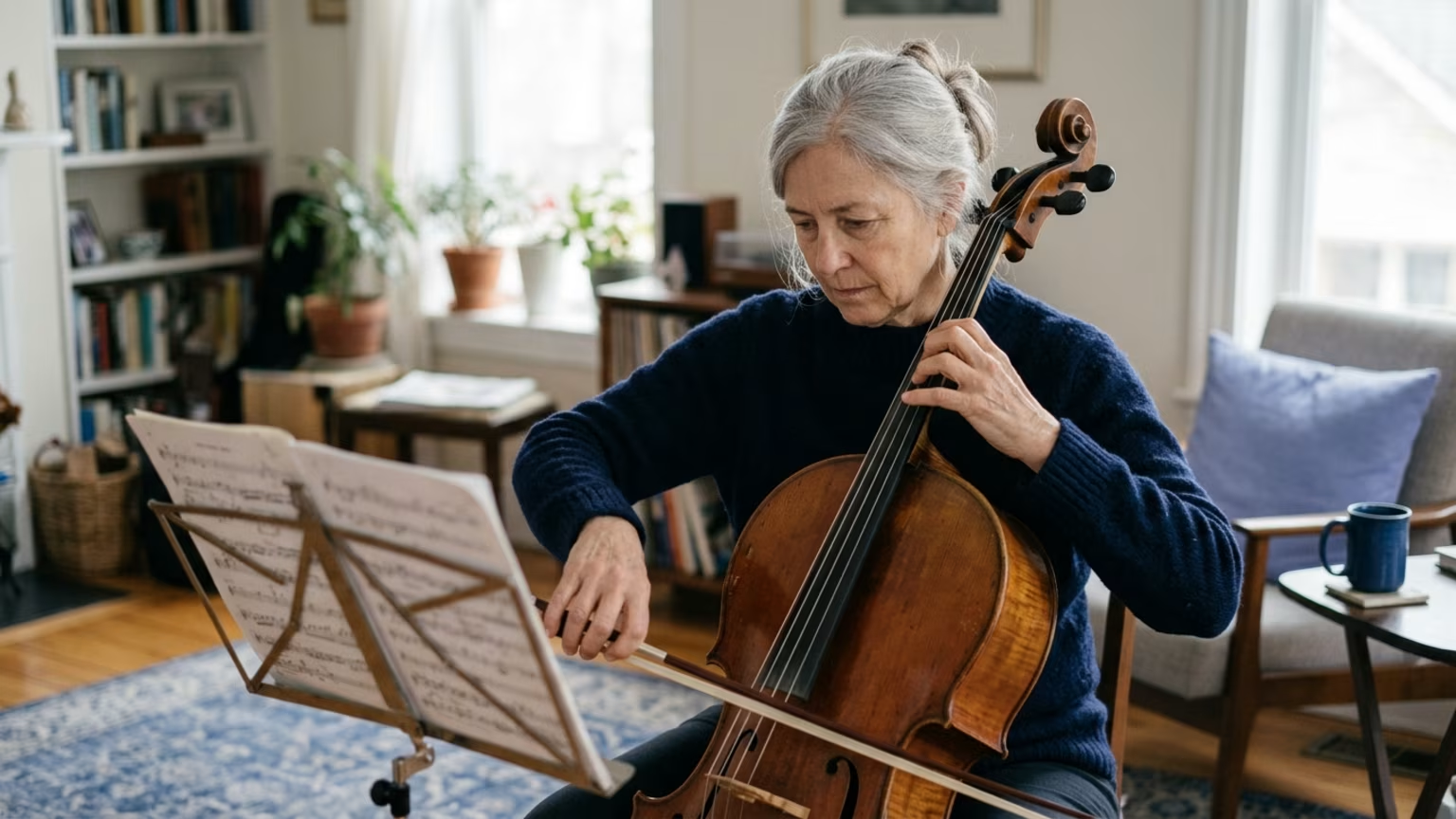
The feature also describes Sohng learning musical instruments and doing household cleaning herself. These are personal examples from the interview. They show how broadly she uses the idea of engagement: it can include a hobby or an ordinary task rather than only an activity labeled as brain training.
That distinction is useful for reading the interview. The question is not simply whether an activity looks intellectual. Sohng’s perspective asks readers to notice its different demands, including paying attention to movement or responding to other people.
For adults over 60, the immediate value of this perspective is a different way to assess familiar activities. Rather than searching for the most impressive brain exercise, the practical focus can be on enjoyable activities that bring together several kinds of engagement. This is a way to frame choices rather than a new medical plan.
Examples consistent with the interview include:
These examples are possibilities rather than a schedule to complete. Enjoyment and sustainability belong in the choice. An activity that fits someone’s interests need not be replaced simply because another sounds more demanding or appears in a brain-health headline.
A useful question is: which parts of an activity make it worth returning to? The answer might be learning a skill or spending time with others. That shifts attention toward the experience itself rather than turning every hobby into a test of future brain health.
Readers looking for context can connect this discussion with FitBrainLab’s coverage of learning in later life. The aim is a clearer understanding of engagement, not a competition to build the busiest possible week.
Sensory difficulties deserve their own practical response. If hearing or vision changes make conversation or everyday tasks harder, professional assessment can address those needs. The reason to seek help begins with the difficulty itself rather than a prediction about future cognitive health.
The feature also gives clinicians a possible starting point for conversation about participation. What activities does a person enjoy? Are hearing or vision difficulties getting in the way? Decisions that depend on an individual’s health or abilities belong with qualified care rather than a general newspaper feature.
The Korea Daily feature is expert commentary rather than a clinical trial. Its headline language about habits that rapidly age the brain goes beyond the evidence presented in the accessible article. The text provides neither methods nor quantified risk estimates to establish those claims.
Sohng’s examples therefore do not show that dancing or cleaning prevents dementia. Nor do they establish that a person with a quiet routine is experiencing rapid brain aging. A useful idea about participation should not become a judgment about someone’s current health or future independence.
The article also reports Sohng’s view that 10,000 daily steps are not necessary for everyone. It offers no specific alternative target or individualized walking guidance. That comment is not a reason to dismiss walking, and it should not be converted into a new numerical prescription.
Related trials provide context, but their findings need to remain separate from the interview. They answer questions about particular interventions and measured outcomes. They do not serve as a direct test of Sohng’s personal examples.
A summary of the 2025 U.S. POINTER report describes a trial involving 2,111 adults at increased risk. Participants were assigned to structured or self-guided lifestyle programs. Over two years, the structured-program group showed greater improvement in global cognitive scores.
This provides trial-based context for discussing programs that bring several lifestyle elements together. Yet the result concerns cognitive test scores within a particular study population and intervention. It does not establish that the program prevented dementia or identify which individual component produced the difference.
For someone choosing an activity, the distinction is practical. A result from a combined program cannot be assigned to its most appealing ingredient. It would be a mistake to credit one hobby with the outcome of an entire intervention.
Published coverage of the ACHIEVE hearing-intervention trial describes no significant overall difference in three-year cognitive decline. It also reports a benefit in a higher-risk subgroup. Both parts of that result belong in an account of the evidence.
The subgroup finding should not be generalized to all older adults. The trial summary does not support a promise that hearing aids prevent dementia for everyone. Hearing and communication needs remain a sound reason for assessment without attaching that broader guarantee.
Taken together, these studies show why the type of evidence matters. An expert interview can offer a useful perspective. A trial can test a defined intervention. Clear reporting keeps those roles separate rather than treating every sensible suggestion as an established cognitive treatment.
The lasting value of Sohng’s interview is its broad view of engagement. It places learning beside movement and sensory experience rather than reserving brain use for study. It also gives social participation a place in that discussion.
For readers, the strongest practical takeaway is to look for enjoyable activities with more than one dimension. A shared interest or a familiar activity may offer a starting point. The goal is meaningful participation rather than collecting habits to satisfy a headline.
For the long-term conversation about cognitive health, this is a useful direction: connect research with the texture of everyday life while keeping claims tied to the evidence that supports them. FitBrainLab’s broader coverage of brain aging follows that same distinction between understanding change and overstating control over it.
Appealing advice about dancing and learning still leaves a question about evidence, which FitBrainLab addresses through clear reporting on cognitive aging. For adults 60+ facing exaggerated brain-health claims, the publication separates established findings from early ideas so readers can better judge what a suggested habit actually rests on.

Follow FitBrainLab for research-led insights on memory, focus, brain aging, nutrition and mental fitness after 60. Stay connected for new articles, practical guidance and ideas for a sharper, more engaged life.





Build habits that support memory, focus and a curious, connected life.
Read the Blog

