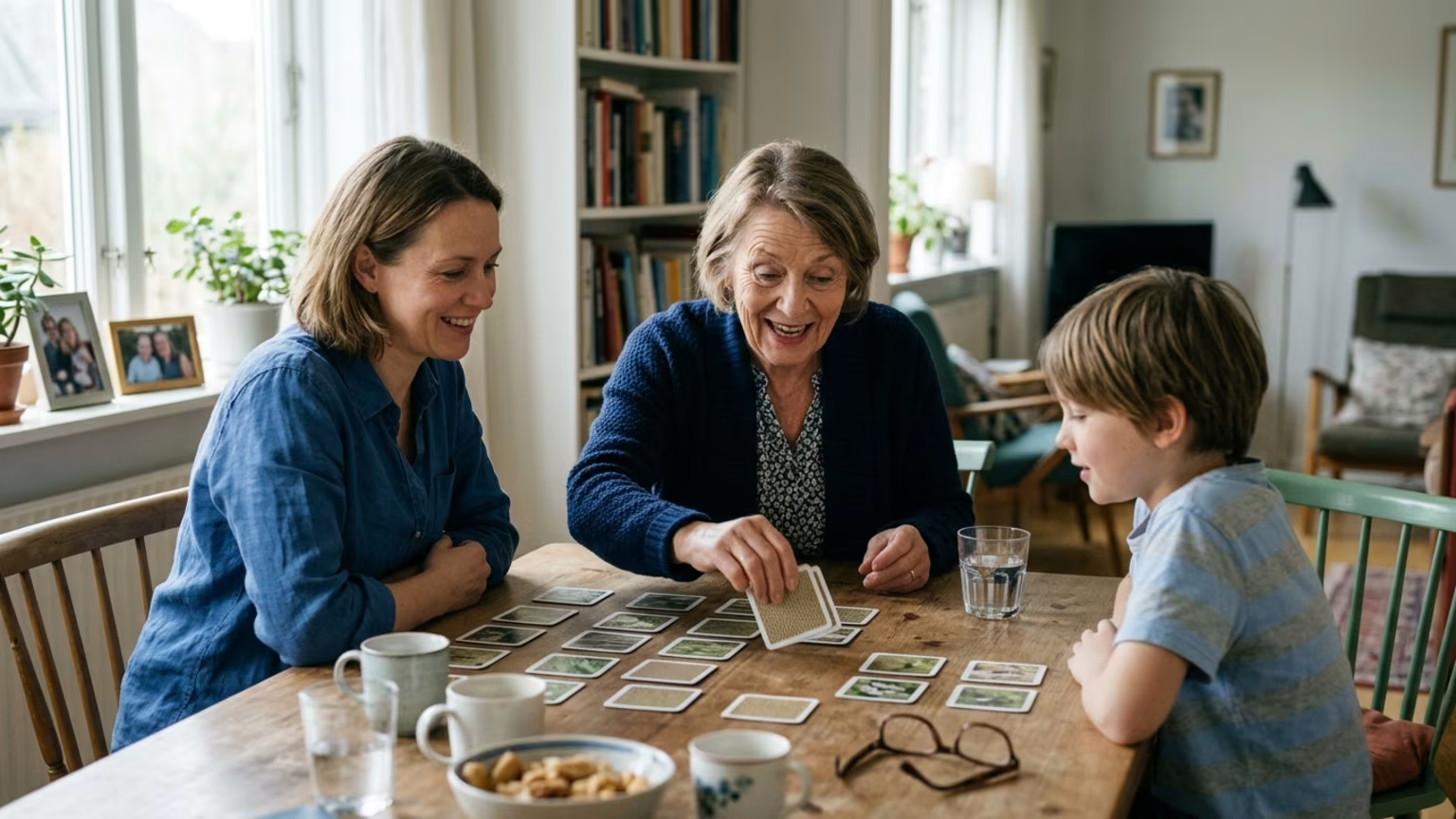
Retirement can change daily mental demands. Review the evidence and use an informal reflection to plan meaningful routines without pressure to stay busy.





Retirement is not a deadline for proving that your brain is still busy. A packed calendar is not a requirement for a worthwhile next chapter. You do not have to rebuild your working life under a new name.
The pressure to stay constantly challenged turns free time into another performance review. It treats rest as a problem and every hobby as a possible brain-health assignment. A more useful starting point is deciding which demands you value and which you are glad to leave behind.
Work can supply a structure for remembering tasks, making decisions and coordinating with other people. When that structure ends, the same abilities may find a place in household responsibilities or self-directed projects. The key change can be who sets the agenda, not whether the mind has anything left to do.
A work calendar can supply reminders and deadlines without much thought about who created them. After retirement, choosing what happens next may itself become part of the planning. That shift makes the shape of an ordinary week a useful subject for reflection.
ScienceDaily reported on a study published in the Journal of Occupational Health Psychology that followed 4,182 participants in the U.S. Health and Retirement Study over 18 years. People whose jobs involved greater mental demands tended to have better memory before retirement and slower memory decline afterward. Those demands included analyzing information and solving problems, alongside making decisions and thinking creatively.
The memory differences at retirement were not large, but they grew over time. That finding makes the content of work relevant to the discussion, rather than treating all jobs as the same experience.
A broader picture is less tidy. The New York Times summarized a 2025 analysis of 22 studies conducted between 2013 and 2023. It suggested an average association between retirement and lower cognitive functioning, together with a faster rate of decline. The account also noted that the kind of work people leave and whether retirement is voluntary may matter.
The same account described why leaving physically demanding work or poor working conditions may differ from leaving a satisfying career involuntarily. Retirement is a change in circumstances, not a single experience shared in the same way by everyone.
Social activity adds another dimension. A 2026 analysis in the Journal of Epidemiology and Community Health pooled five longitudinal surveys across 24 countries and included 57,793 participants. It found that social activity was associated with higher cognitive scores among older adults.
These findings share a limit: association does not establish cause or predict an individual's future. The job-demand researchers noted that people with stronger cognitive functioning might have entered more demanding work. The review called for stronger evidence, while the social findings do not prove that adding activities prevents cognitive decline.
The unfair part of a panicked retirement message is the standard it sets. It asks people to fill the space left by work, then to treat that activity as proof that they are aging well. That makes a quiet week seem like a failure before anyone has asked whether the week was satisfying.
Time and attention are limited resources. A commitment chosen mainly to quiet a frightening headline can take space from a relationship or project that matters more. Filling a calendar also creates responsibilities, which are not automatically valuable just because they keep someone occupied.
There is also a difference between missing a valued part of work and wanting the whole job back. Keeping a chance to solve problems does not mean keeping deadlines you disliked. Valuing conversation does not mean recreating workplace obligations.
When every interest has to justify itself as brain protection, personal preference gets pushed aside. The question becomes whether an activity sounds demanding enough, rather than whether it has a place in the life you want.
The calmer alternative is not indifference. It is refusing to judge an entire retirement by how closely it resembles paid employment. Rest and choice belong in the discussion, alongside engagement.
Shift the question from “Am I doing enough for my brain?” to “Does this week contain things I value?” A sustainable measure is whether your routine gives you worthwhile responsibilities, contact with others and room for interests. The aim is a pattern you want to return to, not a perfect score.
The following mental fitness audit is an editorial reflection exercise, not a validated assessment or a research-tested retirement protocol. It draws on the themes of job demands and social activity in the studies above. It does not measure cognitive health or diagnose a problem.
Write down the responsibilities and routines that already call on your attention. Include things you remember, decisions you make and problems you work through. Add occasions when you learn something or coordinate with another person.
Household tasks count in this reflection, alongside hobbies and community commitments. The point is to describe your actual week rather than create an impressive list. An activity does not need a job title to belong on the page.
Notice what happens regularly and what has faded since work ended. This is a description, not a ranking of your abilities.
Separate what felt meaningful from what you are relieved to leave. Perhaps planning was satisfying but the constant urgency was not. Perhaps you valued contact with colleagues without enjoying every obligation attached to it.
Make that distinction on the page. You are looking for the parts worth retaining, not reasons to recreate the whole workplace. Choosing not to replace an unwanted demand is a legitimate outcome of this reflection. The aim is to preserve what mattered about a task, rather than its old setting or level of pressure.
Look across the week for opportunities to plan, focus and remember details. Look also for learning and contact with other people. Ask which of these feels absent or less satisfying than you would like.
An activity can cover more than one part of the reflection. Organizing a shared event might involve planning and remembering details while also bringing people together. There is no need to sort each interest into a single box.
Treat a gap as a question about your life, not a failing grade. A quieter period need not trigger a rush to sign up for more. Questions about rebuilding social contact after work can sit beside questions about learning or responsibility.
Choose an activity for what it brings to your life. Taking responsibility for a community project may provide a reason to plan and solve problems. Learning a skill or organizing a shared activity offers a different kind of involvement.
You can also retain a regular social commitment that already matters to you. The choice is not between doing everything and doing nothing. This is where setting goals that fit retirement can support the planning conversation without turning every interest into an obligation.
Write down why the replacement appeals to you. A clear reason gives the later review something useful to return to.
After trying a routine, review how it fits. Is it enjoyable enough to continue? Does it support the relationships and responsibilities you value? Is it taking more from your week than you want to give?
Keep what works and revise what does not. A plan can change without becoming a failure. The useful measure is not how many activities appear on paper, but whether your week feels meaningful and sustainable.
This leaves room for a week that includes responsibility without copying a workweek. It also gives you permission to leave space unfilled when another commitment would serve the calendar more than your life.
You can take the evidence seriously, trust your judgment and leave room for a retirement that feels like your own.
Shaping the week after retirement rests with older adults and the people close to them; FitBrainLab handles the research explanation rather than the personal decisions. When work no longer supplies structure or learning opportunities, its editorial guidance puts memory research in context so readers can weigh meaningful routines without making retirement another performance test.

Follow FitBrainLab for research-led insights on memory, focus, brain aging, nutrition and mental fitness after 60. Stay connected for new articles, practical guidance and ideas for a sharper, more engaged life.




Build habits that support memory, focus and a curious, connected life.
Read the Blog