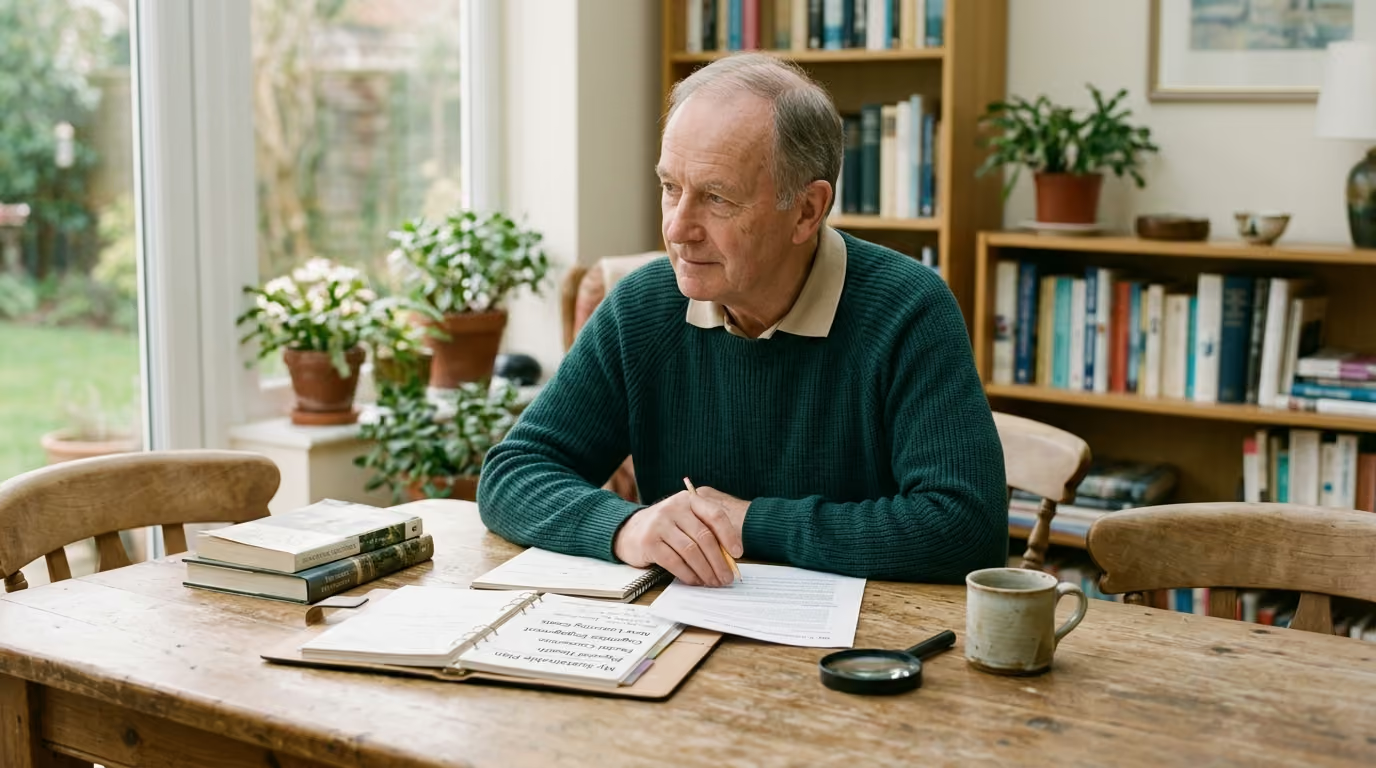

Waking up to open calendar days without a work routine can feel disorienting, but purposeful goal setting provides the gentle structure needed for lasting cognitive health.





Goal setting after retirement is not a method for turning your later years into a second career. It is a practical strategy for organizing your time, attention, and energy around personal values. When approached correctly, setting goals provides a gentle structure that supports cognitive health, emotional balance, and daily independence. It is not about measuring output, competing with peers, or packing every hour with activity.
This resource provides a comprehensive guide to building sustainable routines after full-time work. You will learn the science behind cognitive reserve, the relationship between daily purpose and brain function, and how to create adaptable routines that adjust to your physical health, family commitments, and personal preferences.
Cognitive wellbeing is the ability to use your mental capacities in ways that support personal autonomy, connection, and meaningful participation. It is broader than simply scoring well on a memory test. It includes sustained attention, practical problem-solving, emotional regulation, and the confidence to make independent choices.
The World Health Organization defines healthy ageing as the process of developing and maintaining the functional ability that enables wellbeing in older age. Functional ability depends on two distinct elements. The first is intrinsic capacity, which represents your physical and mental capacities. The second is your surrounding environment, which includes your home, transportation, and social network.
To understand how goals support cognitive health, it helps to distinguish between four related concepts:
You can experience high cognitive wellbeing even if your processing speed slows with age. When you design routines that support lifestyle and brain resilience, you strengthen your cognitive reserve. Goal setting should never be an exercise in proving your mental sharpness. Instead, it serves as a vehicle for active participation in a life you value.
Scientific research shows a clear link between having a sense of purpose and maintaining cognitive function in older adulthood. A study evaluating 11,557 adults aged 50 and older from the Health and Retirement Study found that purpose in life was positively associated with cognitive scores. The researchers observed that purpose moderated certain relationships between demographic factors and cognitive decline.
A larger coordinated analysis examined data across multiple longitudinal cohorts, including over 15,000 individuals from the Health and Retirement Study, 1,700 from the Memory and Aging Project, and over 22,000 from the Wisconsin Longitudinal Study. The analysis indicated that changes in purpose and cognitive functioning influence one another over time. Better cognitive abilities make it easier to pursue purposeful goals. At the same time, engaging in purposeful goals helps sustain mental capacities.
Retirement often disrupts the external structure that previously organized daily life. A nine-year analysis using data from the Midlife in the United States study examined cognitive performance among retired individuals and those who remained employed. The researchers investigated whether goal disengagement, which means walking away from goals without replacing them, affected cognitive trajectories.
The study found that individuals prone to goal disengagement after retirement experienced steeper cognitive declines than those who remained engaged in structured pursuits. However, this finding should not be interpreted as a claim that retirement causes dementia. Rather, it suggests that developing alternative sources of challenge and social connection supports mental health after leaving the workforce.
Physical activity and social connection are critical components of this structure. Research supported by the Centers for Disease Control and Prevention and the National Institute on Aging highlights that regular movement supports memory, attention, and task shifting. Federal physical activity guidelines recommend accumulating at least 150 minutes of moderate-intensity aerobic activity per week, along with muscle-strengthening exercises on two or more days.
Social connection is equally vital for cognitive protection. The National Institute on Aging notes that approximately 28% of older adults in the United States live alone. Living alone does not automatically cause loneliness, but sustained social isolation can negatively affect cognitive and emotional health. Meaningful social goals provide cognitive stimulation through conversation, shared planning, and mutual support.
While the evidence linking purposeful activity to cognitive health is encouraging, it is important to avoid exaggerated claims. Having clear goals and staying active reduces risk factors, but it does not guarantee complete immunity from cognitive decline or neurological conditions.
Many retirees attempt to use professional productivity methods to organize their retirement. Systems like rigid corporate goal frameworks emphasize relentless achievement, measurable output, and tight schedules. When applied to retirement, these systems often create unnecessary anxiety and exhaustion.
Workplace systems reward speed, competition, and constant growth. In contrast, healthy retirement goals focus on presence, enjoyment, learning, and physical maintenance. If you judge your retirement by how many projects you finish, you risk turning your newfound freedom into an unfulfilling checklist.
Retirement requires a transition from productivity to participation. For example, a career goal might have been to write an industry report under a strict deadline. A retirement goal based on the same skill might involve writing down family recipes or local history for 30 minutes a week. The retirement goal honors your interests without imposing external performance demands.
Retirement goals must also account for fluctuating energy levels. On any given week, your physical comfort, sleep quality, or caregiving duties may change. Rigid goal systems interpret an unfinished task as a personal failure. A sustainable retirement framework views adjustments as normal, allowing you to scale your daily activities up or down without guilt.
To establish meaningful structure without recreating career pressure, you can use the RETIRE framework. This model divides goal setting into six practical stages designed specifically for cognitive longevity and personal wellbeing.
Begin by identifying your core values rather than drafting an ambitious to-do list. Ask yourself what work provided beyond income. You might miss the social interactions with colleagues, the intellectual challenge of solving problems, or the feeling of contributing to a team.
Select three to five values that matter to you today, such as:
Rather than committing all your time to a single large ambition, build a well-rounded portfolio. A balanced portfolio includes five essential domains:
You do not need an equal number of hours in each domain. The purpose of this portfolio is to prevent overinvesting in one area while neglecting other areas of your health.
Vague aspirations often lead to inaction because they feel overwhelming. Break large desires down into small, observable actions that you can complete even on low-energy days.
These small starting points remove intimidation. Once an action feels easy, you can naturally expand the duration.
Relying purely on willpower is exhausting. Instead, attach your chosen actions to predictable daily events. For instance, you can link a balance exercise to brewing your morning tea, or read a chapter immediately after lunch.
Research on habit formation shows that the time needed to establish automaticity varies widely. A landmark study revealed that reaching automaticity takes anywhere from 18 to 254 days, depending on the person and the complexity of the task. Missing an occasional day does not derail your long-term progress. Focus on returning to your routine the following day rather than demanding perfection.
Schedule a brief weekly or monthly check-in with yourself. Do not treat this review like an employment performance review. Use it to gather honest feedback about your energy and enjoyment.
Evaluate three types of measures during your review:
Experience measures are especially valuable. If a goal looks successful on paper but leaves you feeling drained and irritable, it needs adjustment.
A sustainable plan is built to bend without breaking. When you encounter illness, family emergencies, or changing finances, you have four clear choices:
Learning how to adjust your plans is an essential part of retirement and mental fitness. Releasing an unworkable goal is not a failure; it is an intelligent response to life changes.
Several misconceptions prevent older adults from setting satisfying goals. Understanding these myths helps you create routines that support your wellbeing without unnecessary guilt.
Many people assume that a full calendar protects against cognitive decline. In reality, superficial busyness often leads to mental fatigue and chronic stress. Cognitive wellbeing flourishes through focused, meaningful activities accompanied by adequate rest and recovery.
Popular culture often claims that habits form in exactly 21 days and that missing a single day resets your progress. Rigorous habit research shows that automaticity takes between 18 and 254 days. An occasional missed session has a negligible impact on long-term habit formation, provided you resume the behavior afterward.
While computerized memory exercises can be entertaining, they are not the only way to challenge your mind. Everyday activities like learning to play an instrument, cooking unfamiliar recipes, painting, or gardening require complex planning, sensory coordination, and working memory. These real-world tasks provide rich cognitive stimulation.
Engaging in regular physical movement, continuous learning, and social connection supports your cognitive reserve. However, neurological health is influenced by genetics, vascular health, and biological factors. Healthy habits significantly improve functional ability and quality of life, but they should never be marketed as guaranteed cures or total prevention methods.
To make this framework practical, structure your routines using a three-tier system: Minimum, Standard, and Stretch. This ensures that you always know how to adapt your day based on your current physical and mental energy.
Consider these illustrative models showing how individuals apply this tiered framework to real-world scenarios:
An individual retired from an executive career immediately scheduled four committee positions, daily high-intensity workouts, and multiple study courses. Within two months, they experienced exhaustion and frustration.
Using the values-based approach, they identified that their genuine underlying values were mentorship, intellectual curiosity, and family connection. They adjusted their commitments:
An individual who relocated after retirement reported feelings of isolation and a lack of daily structure.
Rather than forcing themselves into large social gatherings that caused discomfort, they designed a manageable plan focused on belonging:
An individual wanting to preserve mobility developed joint pain after attempting a rigid daily jogging program.
Working within their intrinsic capacity, they adapted their routine:
Life in retirement is rarely static. Health conditions, caregiving responsibilities, and financial changes require flexible goal setting. Maintaining retirement, purpose and mental fitness means adjusting your routines so they remain supportive rather than stressful.
Living by yourself offers substantial autonomy, but it requires deliberate habits to prevent unintended isolation. Focus on building low-pressure community routines:
Caregivers often face unpredictable schedules and high emotional demands. Fixed appointments outside the home can quickly become unrealistic:
When dealing with fluctuating health conditions or recovering from an illness, shift your measurement from physical output to comfort and functional maintenance:
Grief demands significant cognitive and physical energy. Following a major loss, give yourself full permission to pause ambitious development goals:
Collaborating with your healthcare provider ensures that your lifestyle goals align safely with your overall medical care. When planning your routines, take these specific questions to your next appointment:
Discussing these topics helps you build a solid medical foundation for your personal routines and cognitive health and protection.
Most older adults find the greatest success by focusing on three or four meaningful commitments across different areas of life. A balanced combination includes one physical mobility habit, one intellectual or creative pursuit, one social connection, and dedicated restorative rest. Limiting your active commitments protects your daily energy and prevents goal fatigue.
Retirees often experience lingering guilt when they step away from productive tasks. Remind yourself that mental and physical rest is a biological necessity that supports cognitive processing and immune health. Schedule restorative activities on your calendar, treating rest as a legitimate component of your daily health routine.
Couples retiring together often have different interests, energy levels, and social needs. The most effective approach is to maintain separate individual goals alongside a small number of shared routines. Discuss your personal priorities openly, allowing each partner to pursue independent friendships and hobbies while preserving shared time for meals, travel, or home projects.
Yes, feeling a sense of grief or disappointment when letting go of a long-term goal is completely natural. Acknowledging that a former ambition no longer fits your physical health, finances, or life stage is a healthy step. Releasing outdated goals frees up mental energy, allowing you to invest in practical activities that match your current needs and values.

Follow FitBrainLab for research-led insights on memory, focus, brain aging, nutrition and mental fitness after 60. Stay connected for new articles, practical guidance and ideas for a sharper, more engaged life.


Build habits that support memory, focus and a curious, connected life.
Read the Blog