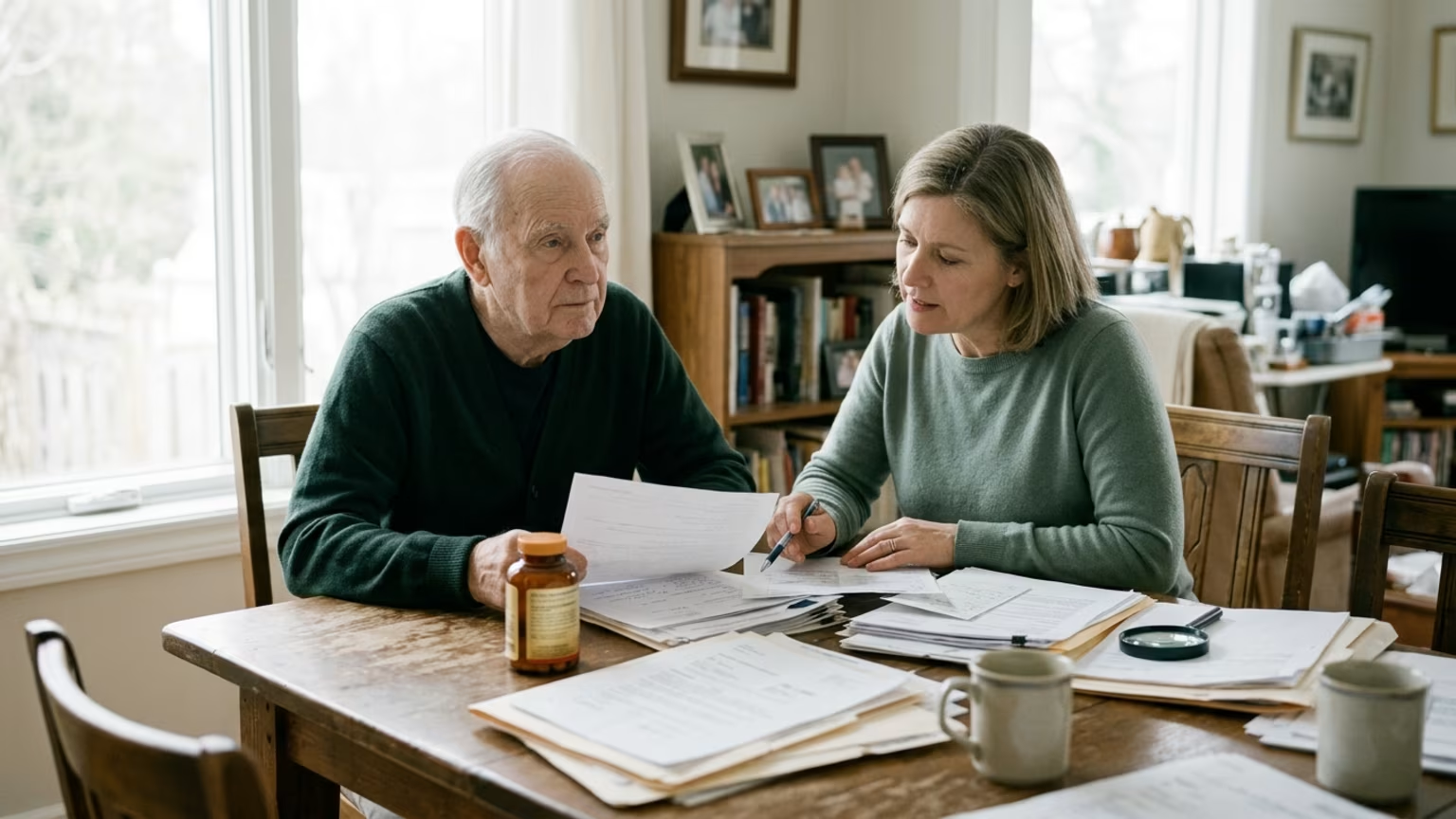

A report examines reduced activity and cognitive change. Learn why familiar routines need context and when broader concerns merit a care discussion.





On October 12, 2026, The Economic Times reported on a 2025 study linking reduced activity frequency with faster average cognitive decline in older adults. The report examined findings from researchers led by Nan Wang at the University of California, Davis and focused on why changes in familiar household routines need context.
The study was published in The Permanente Journal in 2025 and used the U.S. Health and Retirement Study. According to the report's account, the analysis included 8,141 adults aged 65 or older.
Researchers compared participants' reports of activity frequency from 2008 and 2010 with cognitive test scores collected between 2010 and 2018. The analysis therefore looked at reported activity patterns alongside cognitive performance over time.
The question concerned mildly energetic activities, with household chores given as examples. It asked about frequency rather than the number of household jobs completed. The researchers used these categories:
Participants whose reported activity frequency shifted from high to low showed faster cognitive decline, on average, than those whose frequency remained high. The comparison focused on a change in activity patterns rather than simply describing people as active or inactive.
That distinction helps keep the headline precise. The activity question was broader than housework alone, and the finding concerned average cognitive change in the compared groups. The report's focus on chores offers a familiar way to discuss that result.
For researchers and others communicating the finding, the wording matters. Replacing the activity question with a statement about housework alone narrows what was measured. Keeping the original categories visible makes the report easier to interpret accurately.
The report described executive functions as mental processes involved in purposeful action. It used familiar chores to illustrate how activities may involve working memory and cognitive flexibility. In this framing, a household task has a thinking component rather than being only physical work.
This helps explain why everyday routines belong in a discussion about cognition. The report connects familiar activities with the mental work involved in carrying them out. Its practical value lies in bringing attention to changes in those activities without reducing cognitive health to a household workload.
For adults 60+ and those close to them, the useful shift is in how a change gets discussed. The Economic Times advises asking what changed and looking at the wider pattern of everyday activities. The starting point is the person's familiar routine rather than an expectation about how much housework an older adult should do.
A household task may become less frequent because someone else has taken it over. A physical difficulty may also make it harder to do. The report treats these practical circumstances as part of the meaning of a change, not details to set aside.
That points toward a respectful conversation about the task itself. Has responsibility for it changed? Is there a concrete obstacle to carrying it out? These questions keep attention on the person's circumstances rather than on a household standard that the research never set.
The distinction is between noticing a change and deciding what explains it. Reduced participation describes what is happening. Understanding the circumstances asks why it is happening and what kind of response fits the actual problem.
The report gives trouble carrying a laundry basket as an example of a concrete difficulty. Practical support with that problem may address why the task is happening less often. The useful response is help matched to the obstacle, not pressure to complete more chores.
Recognizing a physical barrier and recognizing a memory concern are different tasks. The report's advice is to look at the broader pattern rather than interpret reduced participation in isolation. A change in one routine gains meaning from what else has changed and why.
This also keeps the conversation focused on the person rather than the task list. The purpose of noticing a change is to understand a need. Completing more household jobs is not the outcome the report recommends pursuing.
When reduced participation comes alongside noticeable memory or thinking problems, the report advises discussing those concerns with a health professional. A professional can help assess possible causes. Personal decisions about symptoms and care belong in that conversation.
A useful description keeps the familiar activity and the thinking concern together. It explains what has changed in everyday life rather than starting with a label. FitBrainLab's guide to how cognitive assessments fit into an evaluation offers related background on that process.
For a reader preparing to discuss concerns, the report supports a straightforward focus: the change in routine and the broader memory or thinking difficulty. It does not require turning ordinary household participation into a personal performance score.
The study reports an association. It does not show that doing less housework causes cognitive decline or dementia. It also cannot diagnose an individual. An average difference between groups is not a test result for a person whose routine has changed.
Emerging cognitive difficulties may themselves make familiar tasks harder to organize or complete. This possibility is known as reverse causation. The report notes that measuring activity before later cognitive scores does not fully rule out cognitive changes that were already developing.
The sequence of measurements matters, but it does not settle why activity changed. Reading the finding as a simple chain from fewer chores to poorer cognition would skip that unresolved question.
The finding does not establish that taking on more housework protects cognition. The frequency categories describe the study's analysis, not a recommended schedule for brain health. There is no basis here for treating more chores as a preventive intervention.
The report also raises cognitive reserve as a possible explanation for the connection between everyday activity and cognitive function. The study did not measure cognitive reserve directly. That explanation remains a possibility rather than a demonstrated mechanism.
The report provides no numerical cognitive scores or decline rates for the comparison. It also does not give effect sizes or confidence intervals. Nor does it say how many participants were in the compared groups.
Those omissions limit how precisely the reported association can be described. The account supports saying that one group declined faster on average. It does not support a numerical estimate of how much faster or how large the difference was.
The report distinguishes occasional forgetfulness in normal aging from memory problems that interfere with everyday activities. It also notes that health conditions and medication effects can be relevant to memory difficulties. Emotional problems can matter too.
Readers seeking language for these differences can find related context in FitBrainLab's guide to recognizing changes in everyday cognition. The practical direction remains a discussion of noticeable concerns with a qualified health professional.
The lasting value of this report is its attention to daily function. Alongside cognitive test scores, the research brings familiar activities into view. Those activities are part of how people carry out purposeful actions in ordinary life.
The takeaway is to notice meaningful changes without turning household participation into a scorecard. Ask about the circumstances, respond to practical barriers and bring broader memory or thinking concerns to a health professional. This keeps the focus on understanding a person's needs rather than assigning a label.
For the long-term study of cognitive aging, the finding raises a useful question about how changing activity patterns and changing cognition fit together. For readers today, it supports careful attention to everyday life and a measured response when something familiar becomes different.
Changes in activity frequency and cognitive test scores are the outcomes at issue, and FitBrainLab explains the evidence behind them in accessible language. The challenge is judging an association without accepting an exaggerated health claim; its editorial guidance gives adults 60+ a clearer basis for thinking about memory and cognitive longevity.

Follow FitBrainLab for research-led insights on memory, focus, brain aging, nutrition and mental fitness after 60. Stay connected for new articles, practical guidance and ideas for a sharper, more engaged life.





Build habits that support memory, focus and a curious, connected life.
Read the Blog