

Movement after 60 has value beyond memory promises. Learn how to view the evidence and build a flexible mix of activity around everyday life.





Exercise does not need to promise dementia prevention to be worth your time. Making every walk answer for your future memory sets the wrong standard for movement after 60.
A routine can deserve a place in your life because it supports health and leaves room for activities you value. You do not need to turn it into a test of whether you are aging correctly.
The World Health Organization's activity guidance associates regular physical activity in adults and older adults with lower risks of cardiovascular-disease mortality, high blood pressure, type 2 diabetes and falls. It also links activity with better cognitive health and sleep.
Those are meaningful outcomes. Cardiovascular and metabolic health deserve attention in their own right. A change in fitness does not need a matching change on a memory test to have value.
A trial summarized in a 2026 report makes this distinction clear. The 52-week randomized trial involved 117 cognitively normal older adults with elevated or subthreshold amyloid. Fitness improved by 11% in the aerobic-exercise group versus 1% in the education control group. The groups did not differ in cognitive change, brain volume or amyloid accumulation.
The dementia question needs careful interpretation. The report explains that observational links between activity and lower dementia risk do not establish cause and effect. Other differences between people could contribute to those links. Changes in activity before a diagnosis could also influence the findings.
A 2026 systematic review focused on healthy older women reported possible cognitive benefits. It rated the evidence certainty very low and said the findings did not establish dementia prevention. Its population also limits how widely the findings apply.
These limitations belong together: an association is not proof of prevention, and a result in a selected group is not a forecast for everyone. Equally, an unchanged cognitive outcome in one trial does not erase a fitness improvement. Public-health activity targets should be read as broad health guidance rather than a proven dose for preventing dementia.
The useful distinction is between outcomes, not between movement being worthwhile or worthless. Fitness and thinking skills answer different questions. Evidence about one should not stand in for evidence about the other.
When exercise advice promises control over future memory, an ordinary routine can become a source of pressure. A missed workout starts to look like a threat rather than a scheduling problem. A pleasant walk can seem inadequate because it lacks a special brain-health label.
That framing asks too much of movement and too much of the person doing it. It turns uncertainty in research into a personal duty to find the perfect plan. Time spent comparing supposedly ideal brain workouts does not answer the more useful question of which activities fit daily life.
An all-or-nothing rule also clashes with WHO's message that any amount of activity is better than none. If movement only counts when it matches an ideal program, feasible activity gets dismissed before it begins.
There is a practical cost to this way of thinking. Attention goes toward proving that a routine is optimal rather than deciding whether it is workable. The standard becomes a future outcome that no daily checklist can verify.
Exercise is not a moral score. A routine that needs adjustment is not evidence of poor judgment or a lack of commitment. The point is to support a life, not to keep passing a health assignment.
A better goal is a mix of movement that fits your abilities and has a realistic place in ordinary life. WHO recognizes activity across leisure, transport, recreation and domestic settings. Its guidance also includes people living with chronic conditions or disabilities.
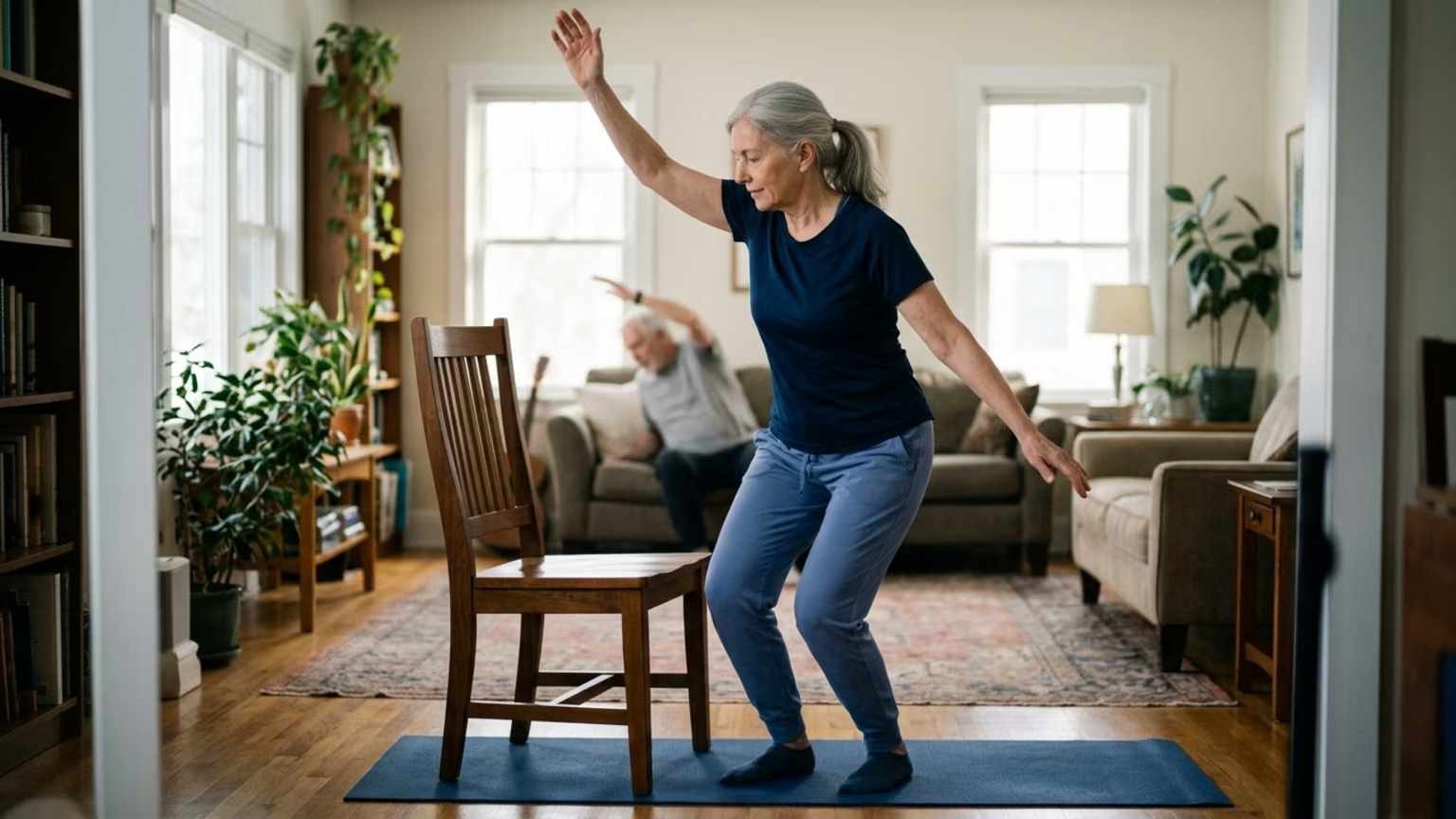
That creates room for more than one kind of routine. Walking or another enjoyable aerobic activity can sit alongside strength work and balance practice. Everyday movement belongs in the picture too. These are activity categories supported by the guidance, not a single required sequence.
WHO lists walking, cycling, wheeling, sport and active recreation among the ways people can be active. The starting question is not which one carries the strongest brain-health slogan. It is which form of movement is enjoyable and workable within the person's abilities.
Thinking about different roles for different activities helps keep the focus on a useful mix. Walking does not have to carry every goal by itself. Nor does another activity become less legitimate because walking gets more attention in everyday advice.
Strength work belongs in the broader activity mix described in the research. It does not need to be repackaged as a special memory exercise to deserve attention.
The practical question is where appropriate strength activity fits alongside other movement. A routine organized only around whichever activity has the loudest cognitive claim may overlook this category. Giving strength its own place keeps the discussion connected to broad health and function rather than a single promised outcome.
Balance practice is another component of the older-adult activity guidance summarized in the research. It belongs beside aerobic movement and strength rather than being treated as an optional detail in a brain-focused plan.
This is a reason to look at the whole routine rather than judge one activity in isolation. The framework identifies balance as a category. The specific form of practice needs to fit the person's abilities rather than follow a generic challenge found online.
WHO's definition of activity reaches beyond formal exercise. Movement during transport, recreation and everyday tasks is part of the same broad picture.
That does not mean every task serves the same purpose as strength or balance practice. It means the day is not divided neatly into exercise that matters and everything else that does not. Recognizing activity outside formal workouts gives a more complete view of how movement fits into life.
There is no need to make ordinary activity sound more technical before counting it. A routine can include planned exercise without treating the rest of the day as irrelevant.
The goal now becomes easier to describe: a repeatable mix that supports broad health and leaves room for living. That is different from chasing a score that supposedly proves the brain is protected.
Useful questions include:
These questions are an editorial framework for applying the guidance. They are not a test with a passing mark. Their purpose is to bring attention back to fit and participation.
The same lens can apply to routines built around community and interests. An activity can have a place because it is enjoyable or connected to something meaningful. It does not need to turn every outing into a health project.
A sustainable standard also leaves room for revision. The useful question is whether the routine still fits, not whether it looks identical forever. Adjusting the mix can be a practical decision rather than an admission that the whole effort has failed.
For personal questions about suitable activities with a chronic condition or disability, a qualified health professional can help adapt the general guidance. The framework here does not set an individual exercise prescription.
Your future is not a scorecard, and you can choose movement that serves the life you value.
Treating each walk as a test of future memory puts the wrong burden on movement, while FitBrainLab keeps its coverage grounded in research rather than promises. For adults 60+ facing uncertainty about everyday habits, its explanations of movement and cognitive aging help separate useful health guidance from claims that reach beyond the evidence.

Follow FitBrainLab for research-led insights on memory, focus, brain aging, nutrition and mental fitness after 60. Stay connected for new articles, practical guidance and ideas for a sharper, more engaged life.



Build habits that support memory, focus and a curious, connected life.
Read the Blog

