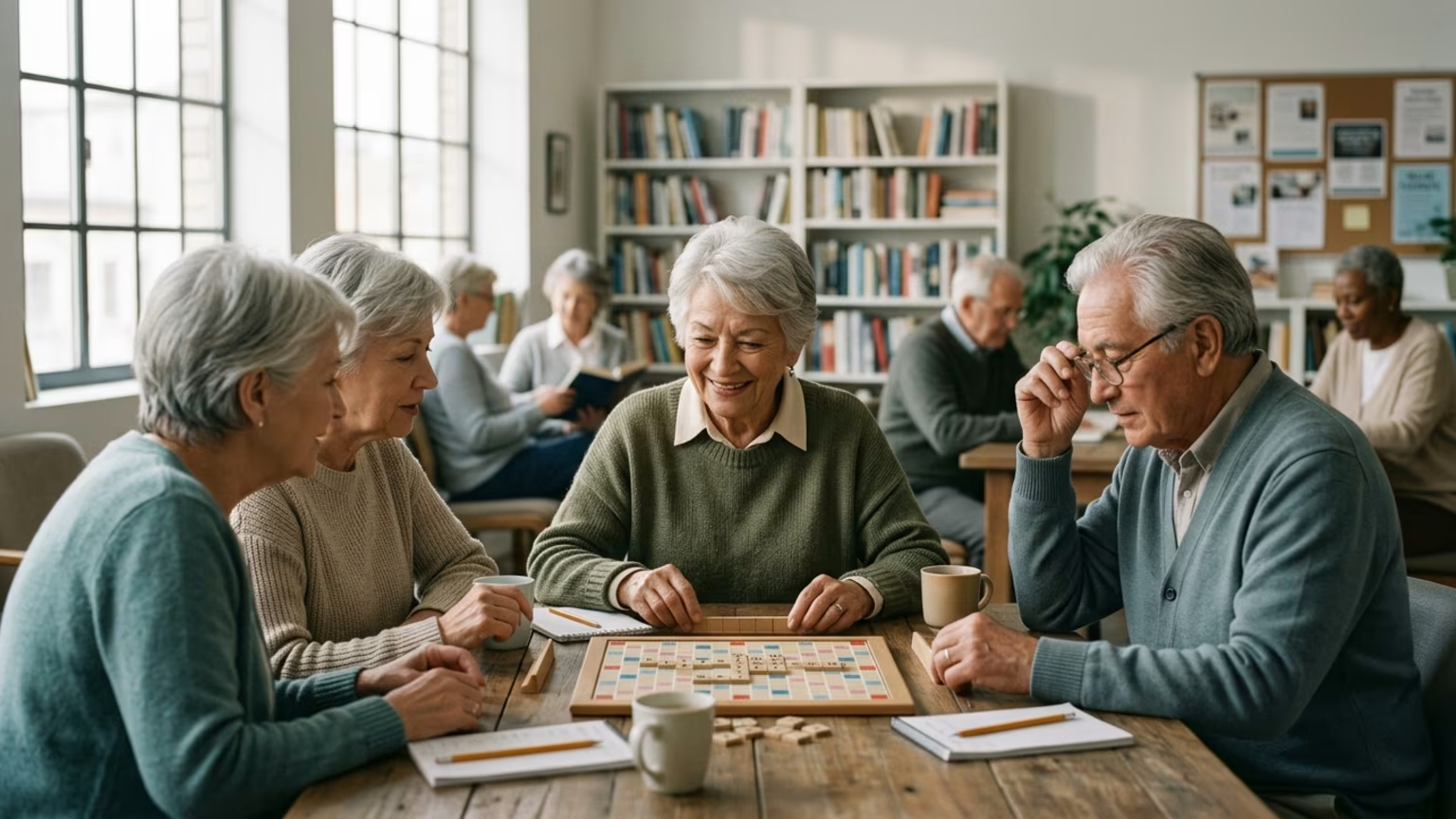

A University of Cambridge review associates reading with slower cognitive decline, highlighting how social routines support brain health after 60.





A newly published University of Cambridge research review associates cognitively stimulating leisure activities with slower cognitive decline in older adults. This academic finding arrives alongside recent community health guidance highlighting how routines like book clubs support cognitive clarity and a sense of purpose.
Community health guidance increasingly expands the public definition of cognitive health beyond basic memory function. A broader framing defines brain health to include cognitive clarity, social engagement and purpose. It also adds mood, stress and resilience to this working definition. This approach shifts the focus toward active daily habits that older adults can manage within their own communities.
Viewing brain health as a lifelong process means accepting that it is more than just the absence of disease. Local programs frequently point residents toward specific social opportunities to help build this resilience over time. These opportunities include recurring events like a monthly memory café, organized book clubs and card groups. Everyday routines like word puzzles and talking through the day’s plans are also highly encouraged.
These activities are presented as practical lifestyle habits rather than clinical medical prescriptions. Treating daily engagement as a normal part of life removes the anxiety often associated with cognitive aging. Meanwhile, new academic analysis provides medical context for how specific leisure activities intersect with cognitive health. A University of Cambridge research review brings together evidence about reading, brain health, cognition and mental health.
The review was published in the journal Psychological Medicine. Its findings are framed strictly as observational associations rather than guaranteed clinical outcomes. The Cambridge review reports that cognitively stimulating leisure activities are associated with slower cognitive decline among older adults. It specifically highlights reading as an activity linked to a lower dementia risk. By examining how mental engagement impacts long-term wellbeing, the review adds structured evidence to community recommendations.
The connection between mental stimulation and regular social contact offers practical ways to support cognitive longevity. Combining a reading habit with a book club adds valuable human interaction to a traditionally solitary task. This layered approach helps older adults feel more connected and less isolated during their retirement years. For adults looking to maintain consistent cognitive resilience, group settings turn reading into a dynamic community event.
You might select a repeatable activity that is both mentally engaging and socially comfortable. Options like a neighborhood card group or a local memory café can easily fit your personal interests. Building a realistic routine requires focusing on small, scheduled interactions that you actually look forward to attending. A pre-scheduled group meeting is often much easier to sustain than an ambitious independent learning plan.
Readers should treat these social routines as one part of a broader approach to overall wellness. You might ask a local library, senior center or care facility about its current group offerings. It is always best to verify details directly because community schedules change frequently. Finding a local group provides a structured, recurring reason to leave the house and interact with peers.
Activities like a memory café require active mental processing in a highly relaxed environment. You use cognitive skills to follow a shared discussion, track a story or play a structured game. At the same time, you are reading social cues and responding directly to other people. Seeking out meaningful brain health habits with peers makes the daily effort sustainable and highly rewarding.
While these community routines provide practical benefits, we must view the underlying research with highly measured expectations. The University of Cambridge review explicitly describes the evidence linking reading to brain health as associations. These observational links do not prove that reading directly prevents cognitive decline on its own. Participating in a neighborhood book club does not guarantee that an individual will completely avoid dementia.
We must strictly separate these early observational findings from proven, targeted clinical treatments. Engaging in leisure activities should be viewed as a supportive lifestyle habit rather than a curative intervention. Assuming that a hobby functions like a medical prescription creates an unrealistic view of the aging process. Managing your cognitive health requires accepting the limits of what lifestyle interventions can realistically achieve.
Furthermore, local activity listings are simply practical examples of community engagement. There is no evidence that standard memory cafés or card groups have been evaluated for clinical cognitive outcomes. A broad definition of brain health is a highly useful lifestyle planning tool for independent adults. However, it should never be mistaken for a formal diagnostic medical definition used by healthcare providers.
You cannot assume that purpose, mood, resilience and cognition will all improve from a single social intervention. These community activities should never act as a substitute for a professional medical assessment. If you experience persistent daily memory lapses, you must consult a qualified healthcare provider immediately. Proper care requires separating casual social wellness strategies from necessary clinical medical oversight.
Viewing brain health as a combination of cognitive clarity, social connection and purpose offers a highly practical framework. Moving away from a strict focus on memory loss allows older adults to build supportive, enjoyable routines. The recent reports highlight that everyday habits play a significant role in how we age comfortably. Shared activities provide a reliable structure for maintaining mental focus and personal connection over the long term.
Taking an active role in community groups keeps your days structured and meaningful after retirement. The academic research associates reading and mentally stimulating leisure activities with measurably better cognitive outcomes. While these studies show associations rather than absolute guarantees, the practical benefits of feeling socially connected remain undeniably clear. Establishing these social habits provides a strong foundation for navigating normal cognitive changes with confidence.
By combining your individual interests with regular social contact, you create a balanced long-term strategy. Book clubs, card games and memory cafés turn necessary mental effort into shared daily enjoyment. This approach makes cognitive health a natural, unforced part of your weekly life. Maintaining active, community-based routines helps protect your independence and supports a higher overall quality of life.
Finding realistic social activities for cognitive support requires separating observational research from proven medical treatments. Feeling patronised by conventional senior wellness content makes it frustrating to plan these daily routines, but FitBrainLab translates complex evidence on brain aging into clear guidance. This careful editorial analysis allows you to organize a sustainable schedule without relying on exaggerated claims.

Follow FitBrainLab for research-led insights on memory, focus, brain aging, nutrition and mental fitness after 60. Stay connected for new articles, practical guidance and ideas for a sharper, more engaged life.






Build habits that support memory, focus and a curious, connected life.
Read the Blog