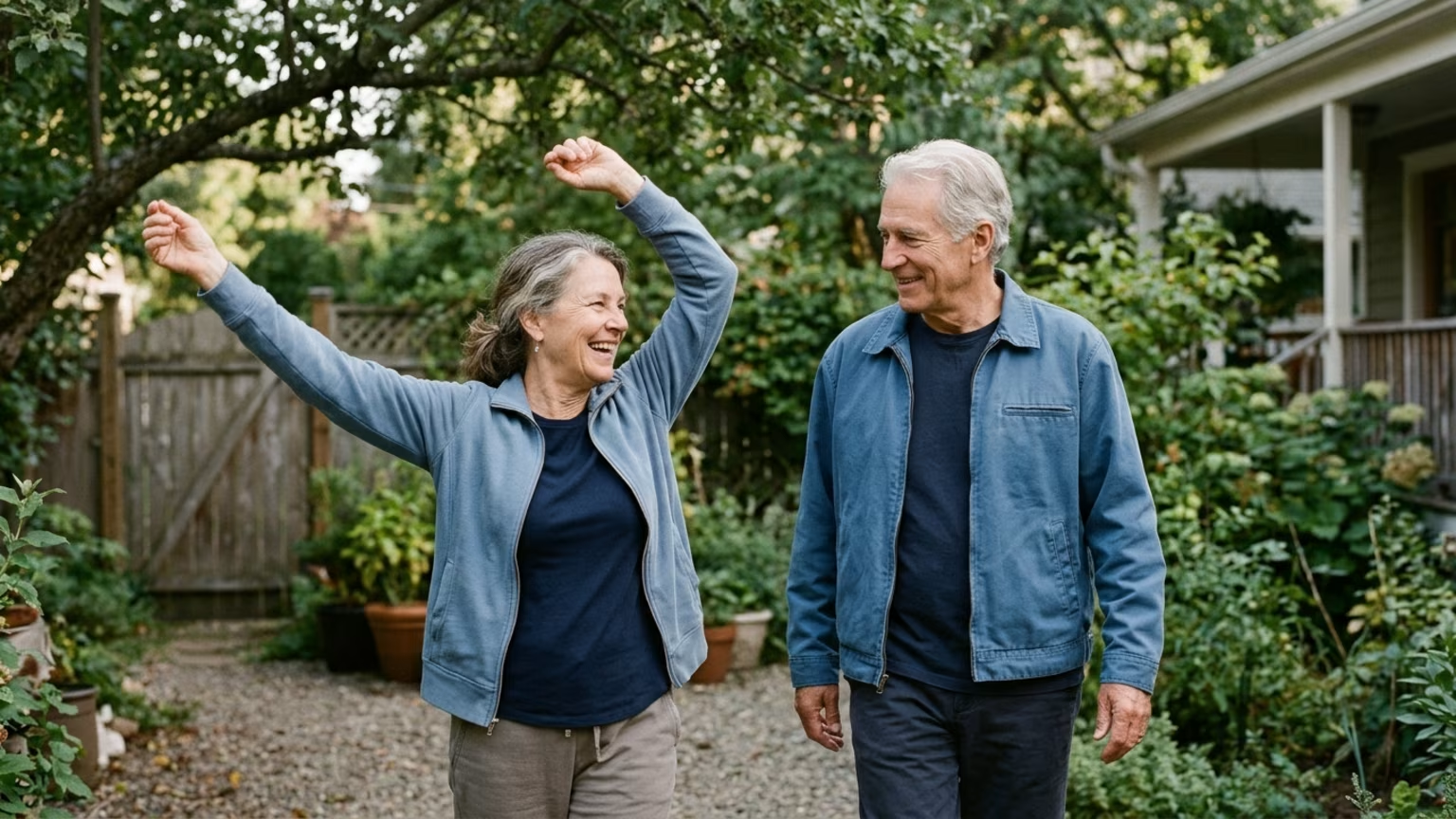

A calm look at mentally engaging movement after 60, with research on dancing and walking plus practical context on enjoyment, balance and adaptation.





The most mentally demanding activity is not automatically the best choice. A familiar walk does not become second-rate because you know the route. A movement class does not need a promise of memory protection to deserve your time.
The idea that every activity should train the brain can turn an ordinary choice into an exam. Remembering steps or deciding where to go may be enjoyable. The better question is whether an activity suits your interests and circumstances, not whether it packs the most thinking into every minute.
Researchers use the term “dual-task performance” to describe doing two tasks together. In this research, that can mean moving while also handling a thinking task. Measuring what happens during that combination helps researchers study how thinking and movement interact.
A systematic review indexed by PEDro examined 14 studies of programs built around dancing for middle-aged and older adults. The programs lasted 8 to 52 weeks. They involved one to three sessions weekly, with sessions of 40 to 90 minutes.
The review’s pooled estimate suggested improvement in motor-cognitive dual-task performance. That means the combined results pointed toward better performance when movement and thinking were tested together.
A study in BMC Public Health shows another side of the interaction. Its 2026 walking experiment involved 164 participants, including 82 older adults. Performing a verbal-fluency task while walking altered gait performance.
Researchers reported a greater cognitive dual-task cost in the older group than in the younger group. This is a reason to pay attention to the demands of an activity and its setting. Adding a thinking task changes the situation rather than simply adding a benefit.
It helps to separate three ideas that often get blended together:
These are different standards for judging an activity. Enjoyment matters when choosing a pastime. A test score matters when evaluating a study. Neither should silently become a claim about a person’s future memory.
The PEDro review cautioned that its small evidence base contained studies that differed from one another. Both the review and the walking experiment concern performance under particular test conditions. They do not establish that mentally demanding movement prevents cognitive decline or improves every thinking skill. The varied program lengths also do not identify a routine that everyone should follow.
The practical problem with the popular narrative is the burden it adds to ordinary choices. If every walk must include novelty and every class must challenge memory, familiar activities begin to look inadequate. That is an unfair standard to attach to leisure.
For older adults already sorting through conflicting health advice, this framing offers another reason to question whether they are doing enough. An enjoyable afternoon becomes something to score. A preference for a comfortable route starts to feel like a missed opportunity.
There is also a resource question. Paying for a class can be reasonable when the activity appeals to you. Making that decision mainly because of a brain-performance label puts the marketing claim ahead of the experience itself.
A more useful way to judge a class is through concrete questions. Does the activity interest you? Is the setting suitable? Can the format accommodate your circumstances?
The calmer position is not to dismiss mentally engaging movement. It is to stop requiring a special brain-health justification for every worthwhile activity. There is room to value movement beyond a promise about dementia.
A sustainable goal is participation that fits your life. That leaves room for interest and challenge without making the hardest version the preferred version.
Instead of asking whether an activity is the best possible workout for memory, ask what you want it to contribute to your week. The answer might be movement you enjoy or time spent learning something interesting. It might also be an activity shared with other people.
Those are practical goals you can judge through your experience. They do not require turning every session into a test.
Dancing may appeal because of the music or the pleasure of learning steps. Gardening may be the activity you look forward to. Walking may fit naturally into the shape of your day.
These are choices about participation, not a ranking of hobbies by brain value. Start with the activity’s place in your life rather than its label.
For retirement in particular, it can help to think about making room for interests and engagement. A movement activity can belong within that broader picture without carrying the entire responsibility for cognitive well-being.
Learning unfamiliar steps in a class is different from adding a word-generation task while navigating an unfamiliar route. Both involve thinking and moving. They also place those demands in different settings.
The walking experiment offers a practical reason not to treat added mental effort as an automatic upgrade. Choosing an activity and choosing how difficult to make it are separate decisions.
A useful planning question is: what is the main purpose of this session? If the purpose is learning a movement pattern, that challenge can be part of the activity. If the purpose is getting somewhere comfortably, there is no need to turn the journey into a cognitive test.
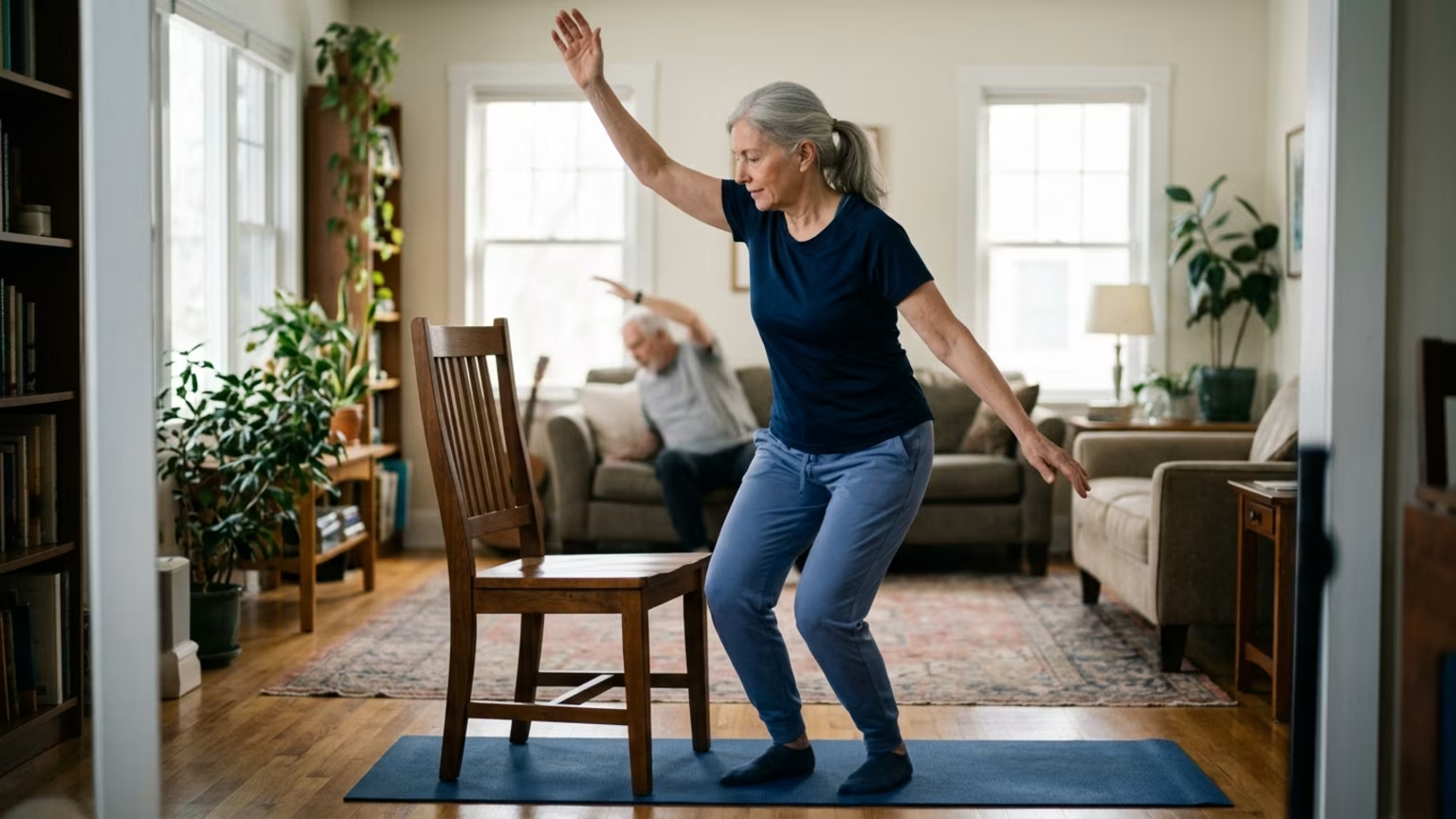
Balance, pain or mobility concerns should not be treated as a contest of determination. The choice is not limited to doing the most demanding version or giving up the activity altogether.
For personal health concerns, a qualified clinician can help assess a suitable adaptation. Questions can focus on which parts of an activity are difficult and what changes would fit the person’s circumstances. That is more useful than treating difficulty itself as the target.
A broader discussion of movement that fits health limitations can help frame those questions. The aim is a workable form of participation, not matching someone else’s version of the activity.
The World Health Organization’s guidance on falls provides a practical reference point. It recommends varied physical activity emphasizing functional balance and strength on three or more days a week for older adults. The stated aims are improving functional capacity and preventing falls.
WHO also recommends tailored, progressively challenging exercise for balance and functional strength. This supports a distinction: progression has a place, but the challenge should fit the person. It is not a recommendation to keep adding mental demands to every activity.
For people at elevated fall risk, WHO recommends home-hazard assessment. It also recommends individualized assessment for people at high risk or with recurrent falls.
That guidance puts daily function and personal circumstances at the center. Mentally engaging movement can sit within a varied activity plan rather than displacing attention to balance and strength. Enjoyment and thoughtful adaptation belong in the same conversation.
You can choose movement with curiosity and good judgment without making every enjoyable activity prove its value to your brain.
Deciding whether to add mental demands to movement calls for more than a training label, and FitBrainLab brings the relevant research into plain language. Its coverage of cognitive aging and daily habits helps adults 60+ sort through uncertainty about memory and focus while keeping practical choices separate from inflated brain-health claims.

Follow FitBrainLab for research-led insights on memory, focus, brain aging, nutrition and mental fitness after 60. Stay connected for new articles, practical guidance and ideas for a sharper, more engaged life.





Build habits that support memory, focus and a curious, connected life.
Read the Blog

