Compare aerobic, strength and balance activity after 60, with adaptable planning and a clear distinction between physical benefits and dementia claims.





You do not need a dementia-prevention promise to make movement worth your time after 60. A useful routine serves your present life rather than turning every activity into insurance against a feared future.
That is not a reason to dismiss exercise. It is a reason to judge it by a fairer standard. Cardiovascular fitness, muscular capacity and stability are meaningful goals. A plan built around those functions leaves room for your abilities and preferences without demanding control over every aspect of brain aging.
Penn State Extension’s activity guidance includes aerobic activity, muscle-strengthening work and balance practice. These categories overlap, but they are not interchangeable. Thinking about their different roles offers a clearer starting point than searching for one exercise that does everything.
Brisk walking, cycling and swimming are examples of aerobic activity. Their main role is to challenge the heart and lungs and support cardiovascular fitness.
UC Irvine’s Mind and Memory program describes broader benefits associated with regular physical activity. These include help managing blood pressure and blood sugar, better sleep, and maintaining strength and independence. Those are worthwhile outcomes in their own right.
The practical question is not whether walking is better than every other activity. It is what walking contributes to the overall routine. Our discussion of giving different activities different jobs develops that distinction.
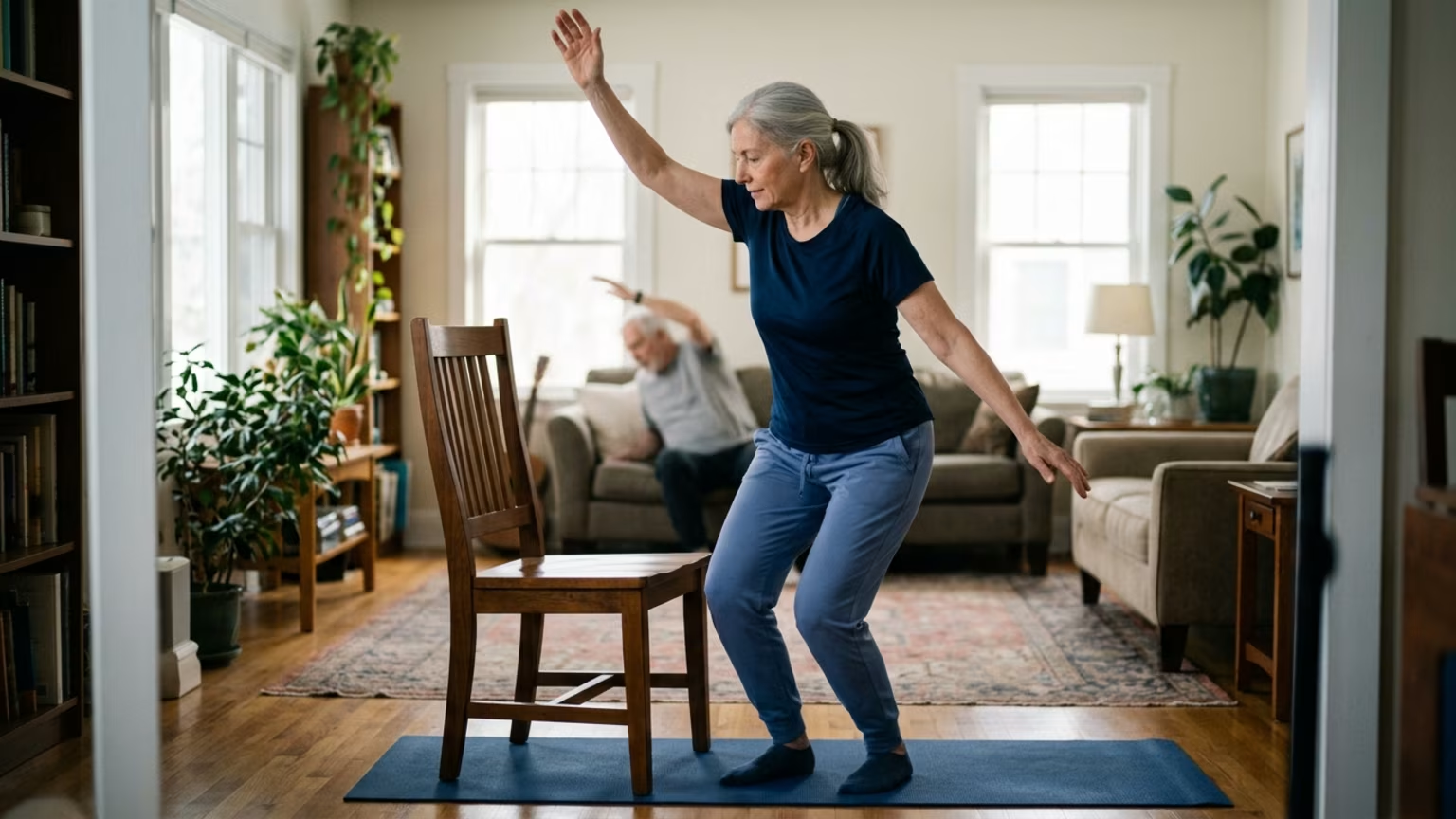
Strength work addresses the muscular capacity needed for daily tasks. Penn State Extension includes body-weight activity among strengthening options and describes examples such as chair stands and heel raises.
An aerobic activity does not automatically fill the same role as work that challenges muscles. This is why a routine can include regular walking while still having a reason to include strengthening activity. The categories describe different demands rather than competing claims about which exercise is superior.
Balance and functional-movement practice focus on stability during tasks such as standing from a chair or changing direction. Penn State Extension includes stepping in different directions among its examples.
The World Health Organization recommends tailored exercises that challenge balance and improve functional strength for older people. WHO also reports that a Cochrane review found exercise reduced the overall rate of falls by approximately 23% in trial populations. That finding concerns falls rather than dementia, and it is not a promised reduction for any individual.
UC Irvine notes that research has found more active people are somewhat less likely to develop dementia. It also states that no single lifestyle intervention or combination of lifestyle changes has been definitively demonstrated to prevent dementia. That distinction sets the boundary for this plan: its foundation is physical health and everyday function rather than a guaranteed cognitive outcome.
The problem with making dementia prevention the main reason to move is the standard it creates. If a walk matters only when it promises protection from dementia, an otherwise useful activity can start to look insufficient. If a routine must be perfect, a missed session can feel like a failure rather than an ordinary disruption.
That framing can also turn a personal routine into a competition. Someone else’s longer walk or harder session becomes a reason to discount an activity that fits your own circumstances. From a practical standpoint, this comparison asks the wrong question: whose routine looks most impressive rather than what a particular activity contributes.
The same logic can make a costly or inaccessible setting seem necessary. Yet the source examples include walking, gardening and chair exercise alongside swimming and cycling. The range of options leaves room for more than one setting or style of participation.
A prevention promise is also a poor reason to push through pain or accept a fall hazard. For personal decisions about symptoms, fall concerns or activity limits, a qualified clinician is the appropriate source of guidance. Exercise advice should not make caution feel like a lack of commitment.
A sustainable goal is to give movement a workable place in life while covering different physical needs. That is more useful than trying to prove that every session is protecting memory.
The following framework draws on the activity categories and adaptable examples in the cited guidance. It is a way to think about a routine, not an individual exercise prescription.
Penn State Extension summarizes weekly adult benchmarks of 150 to 300 minutes of moderate-intensity aerobic activity or 75 to 150 minutes of vigorous activity. It also describes muscle-strengthening activity on at least two days and includes balance activities in its guidance.
These targets are reference points rather than a pass-or-fail test. They do not establish that one fixed schedule is appropriate for every adult over 60. Ability, access and personal clinical advice belong in the discussion about how a routine takes shape.
The benchmarks answer a question about overall activity. The activity categories answer a different question: what does the routine ask the body to do? Looking at both avoids treating an aerobic total as a complete description of physical function.
A function-focused review can use three questions:
The point is not to assemble the largest possible collection of exercises. It is to recognize what is already represented and what deserves discussion. A familiar activity can remain part of the routine without being asked to meet every need.
This also changes how a plan is judged. Instead of asking whether an activity carries the strongest brain-health claim, ask which physical role it serves. That is a more concrete basis for comparing options.
UC Irvine includes chair exercises among possible aerobic activities. WHO recommends tailoring balance and functional-strength exercise for older people. Together, these examples support adaptation rather than a single model that everyone must copy.
The available options also include walking, swimming, cycling and gardening. Preference and access can shape which of these has a place in a routine. A pool-based activity need not become the standard against which every other choice is judged.
For readers managing ongoing health conditions, our guide to adapting movement to personal circumstances offers a related framework. Questions about the suitability of a particular activity remain matters for qualified personal guidance.
Standing from a chair and changing direction are ordinary actions, but they are meaningful examples of physical function. Cardiovascular fitness and muscular capacity matter beyond how a workout looks. These goals give movement a purpose that does not require a prediction about future dementia.
This is a reframing of what the routine is for, not a home test or a demand for constant improvement. A person can value participation and independence without turning daily life into an assessment.
Movement can also sit within a broader view of well-being rather than carrying the entire burden of brain health. Our whole-life approach to cognitive longevity places it alongside other areas of an engaged life.
You can make informed choices about movement without asking your routine to settle every uncertainty about the future.
Finding a place for movement among other daily habits is the next task; FitBrainLab brings clear research reporting to questions about lifestyle and brain aging. For adults 60+ who are uncertain which habits support cognitive health, its editorial guidance distinguishes established evidence from early claims and helps readers judge everyday advice on its merits.

Follow FitBrainLab for research-led insights on memory, focus, brain aging, nutrition and mental fitness after 60. Stay connected for new articles, practical guidance and ideas for a sharper, more engaged life.



Build habits that support memory, focus and a curious, connected life.
Read the Blog