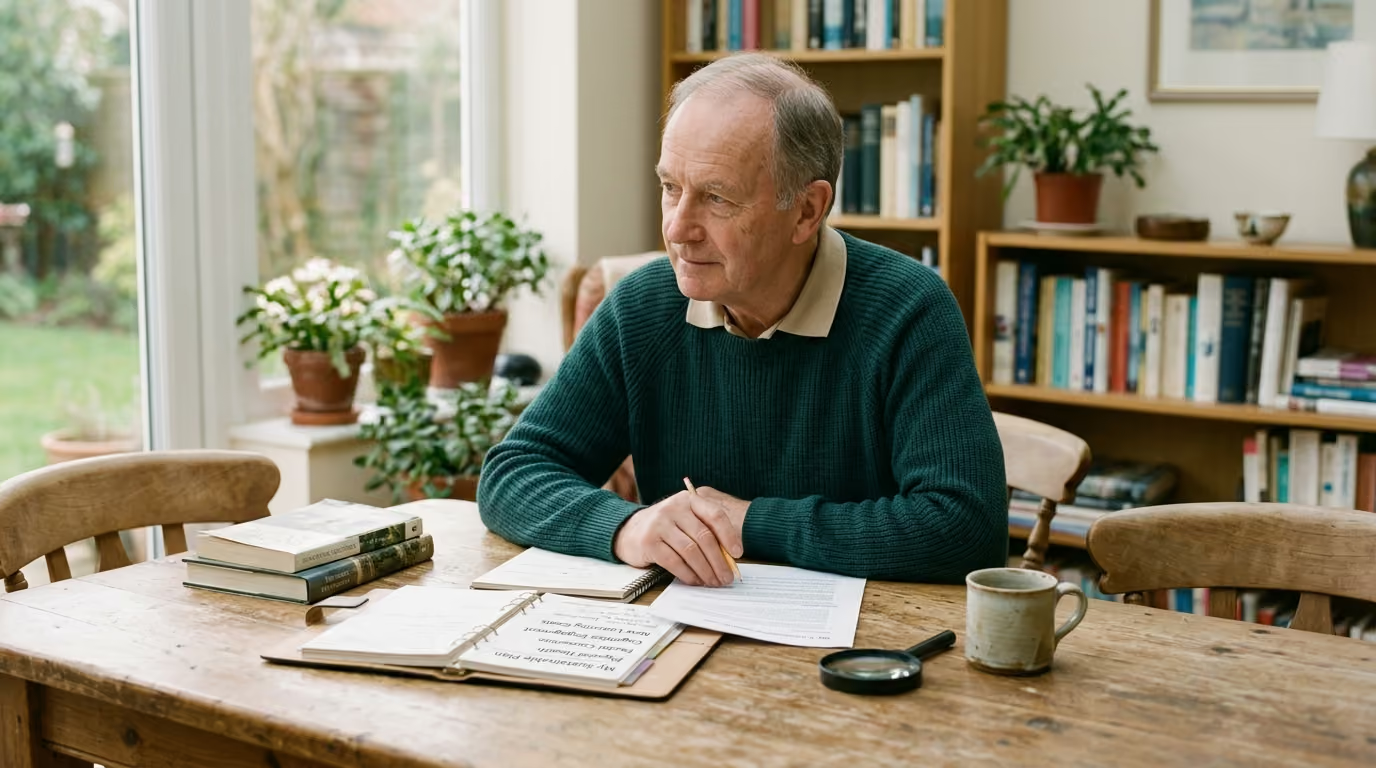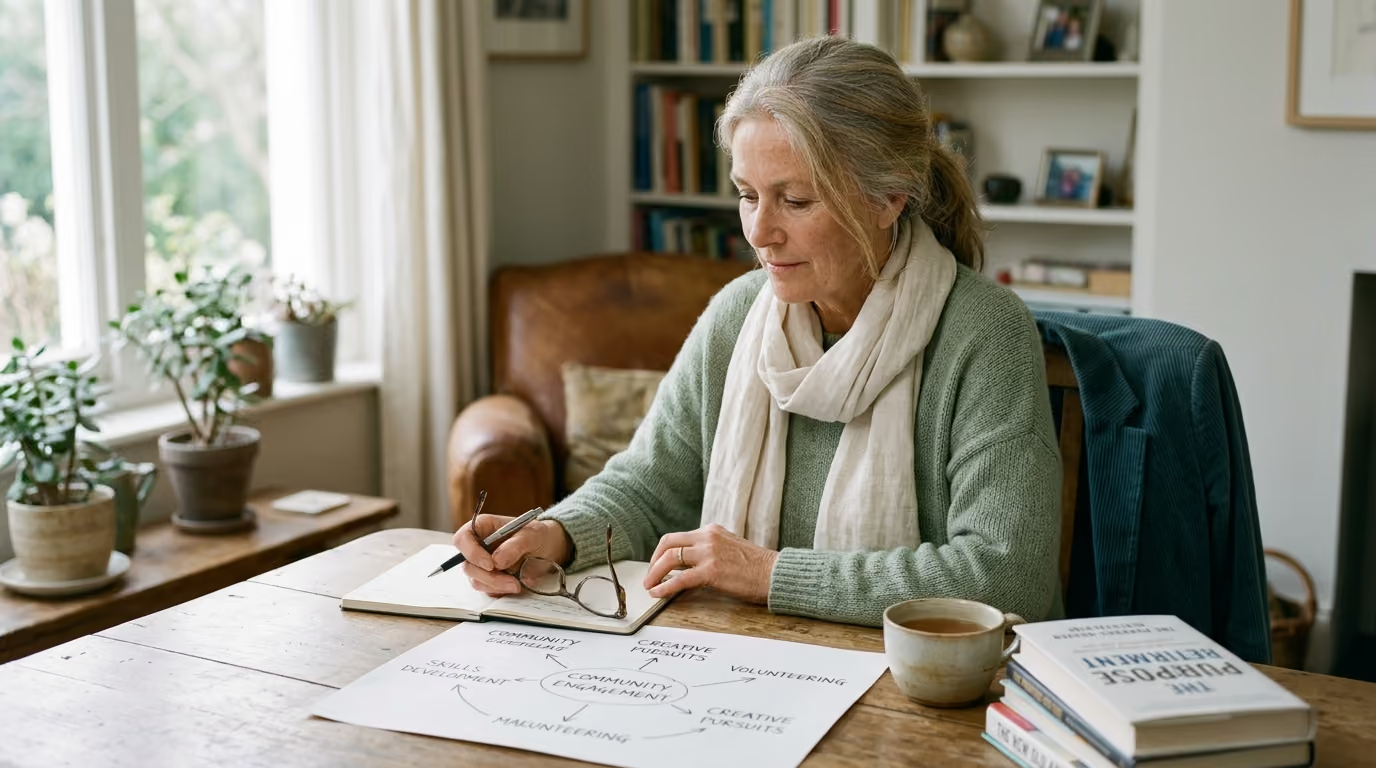

Waking up to an empty calendar after leaving the workforce offers a chance to build a balanced routine that protects cognitive health.





A quiet Tuesday morning often brings the first realization that work life has ended. The morning alarm is silent. The work inbox is clear. There are no client meetings, project deadlines, or urgent phone calls waiting on your calendar. For many people, this shift brings deep relief. Yet after a few weeks, that open calendar can raise unexpected questions about how to fill the hours.
Retirement is often described as a permanent vacation or an open space with no obligations. Some people respond by filling every hour with volunteer committees, travel plans, classes, and social appointments. Others find themselves drifting through long days of television, household chores, and passive screen time.
Neither extreme supports long-term well-being. Turning retirement into another high-pressure productivity project creates unnecessary tension. Letting routine disappear completely can lead to isolation, physical inactivity, and a loss of mental clarity.
Designing a mentally engaging retirement means creating a life that balances rest, purposeful contribution, active learning, movement, close relationships, and unhurried time. The goal is not to stay busy for the sake of busyness. The goal is to build an adaptable environment that preserves your independence, supports your brain health, and honors your personal autonomy.
The brain retains the ability to adapt, learn, and form new neural connections across the entire lifespan. This quality is called neuroplasticity. When you acquire a new skill or solve unfamiliar problems, your brain recruits neural pathways to process that information. Over decades, complex mental activities build what researchers call cognitive reserve.
Cognitive reserve refers to the brain's resilience against age-related changes or physical damage. Think of cognitive reserve as a network of alternative roads on a map. If one road is blocked by normal aging changes, a brain with rich cognitive reserve can use alternate routes to reach the same destination.
Mental engagement works best when activities demand active processing rather than passive observation. Passive consumption occurs when you absorb information without making decisions, such as watching several hours of broadcast television. Active participation happens when you make choices, correct mistakes, recall facts, or create something new.
Learning to play a musical instrument, planning a driving route through unfamiliar towns, or tending a complex garden requires judgment and working memory. These tasks challenge the brain in varied ways. You can find more foundational reading on these topics in our brain aging and neuroplasticity section.
Cognitive stimulation does not require constant mental strain. Rest, quiet reflection, and low-demand hobbies are necessary partners to active learning. Mental clarity emerges from a healthy cycle of focused effort followed by deep recovery.
Scientific studies on retirement show that leaving the workforce does not cause a sudden or uniform decline in mental abilities. A systematic review published in recent years examined age-related cognitive change after retirement. The researchers found only weak evidence of accelerated decline in crystallized abilities, which include vocabulary and general knowledge. This pattern appeared primarily among individuals who retired from jobs that involved high levels of complex social interaction.
How a person adapts to free time plays a major role in their cognitive trajectory. Research on psychological transitions during retirement indicates that developing novel activities and adjusting well to open time correlate with stronger cognitive performance. The loss of workplace structure does not harm the brain if a person replaces work functions with meaningful personal routines.
Physical activity stands out as one of the most reliable lifestyle factors for supporting brain health. The World Health Organization points to strong evidence that regular physical activity improves processing speed, executive function, and memory in older adults. Movement also lowers the risk of cognitive impairment. A longitudinal study spanning eight years found that engaging in moderate physical activity at least six days per week was associated with a slower rate of cognitive decline.
Social relationships also show strong connections to long-term cognitive health. Data from public health agencies shows that social isolation affects nearly one in four adults aged 65 and older. Chronic loneliness is linked to higher rates of depression, cardiovascular issues, and cognitive difficulties. Regular contact with friends, family, and community groups provides vital emotional support and complex cognitive stimulation.
Volunteering and community service offer real benefits, but the research reveals a nuanced picture. A randomized controlled trial following older adults over 12 months showed that participants who engaged in formal volunteering experienced improvements in life satisfaction and a stronger sense of purpose. Longitudinal data indicates that older adults who volunteer around 100 hours per year show greater optimism and lower rates of loneliness.
Research also demonstrates that more volunteering is not always better. One longitudinal study noted that excessive volunteer hours could lead to lower life satisfaction if the commitments felt burdensome or forced. A balanced approach respects personal energy limits and avoids overcommitment.
A sustainable retirement routine draws from six primary domains. You do not need to spend equal hours in every domain each day. Instead, these areas form a balanced portfolio that you can adjust over weeks and seasons.
Rest is the foundation of attention, emotional balance, and physical vitality. Leaving the workforce gives you the chance to align your daily schedule with your natural biological clock.
Healthy recovery includes the following practices:
Rest is not wasted time. True recovery refreshes your cognitive capacity so you can engage fully in demanding tasks later.
Learning in retirement should be driven by personal interest rather than external performance demands. The best learning pursuits share four main characteristics. They spark your curiosity, require active effort, grow progressively more complex, and provide immediate feedback.
Helpful learning pursuits include:
A practical guideline is to choose activities that feel challenging without feeling humiliating. If an activity is too simple, your attention wanders. If it is too difficult, frustration sets in. Finding the sweet spot keeps your mind alert and motivated.
Human beings have an enduring need to feel useful and connected to something larger than themselves. In retirement, you can redefine purpose without relying on a professional title or corporate hierarchy.
Ways to contribute include:
Start with bounded, small commitments. Agreeing to help for two hours on a specific morning each week is much more sustainable than taking on an open-ended role that expands without limits.
Social connection means having relationships where you feel valued, respected, and heard. It is not about knowing hundreds of people or attending large, noisy gatherings every weekend.
A well-rounded social life includes several layers of contact:
Creating predictable connection points makes socializing easier. A standing Friday morning walk with a neighbor or a monthly lunch group removes the friction of constantly coordinating schedules. You can read more about connection and healthy routines in our lifestyle and brain resilience articles.
Regular movement supports brain structure, improves blood flow to neural tissues, and maintains physical independence. The World Health Organization recommends that adults aged 65 and older aim for at least 150 to 300 minutes of moderate-intensity aerobic activity per week, or 75 to 150 minutes of vigorous activity.
A balanced movement routine combines three elements:
If you have been sedentary, start slowly and increase your activity step by step. Any amount of movement is better than staying seated. Walking around the block twice a day or doing simple chair stands while watching the news provides genuine health value.
Unstructured time is open space on your calendar with no predetermined outcome or assigned task. It provides the breathing room where new ideas, spontaneous decisions, and personal freedom thrive.
Unstructured time allows you to:
Unstructured time acts as an antidote to decades of workplace deadlines. It helps you practice living without the constant urge to produce measurable output.
Designing a practical retirement routine requires simple systems that guide your days without trapping you in a rigid schedule. The following five steps will help you create a sustainable weekly rhythm.
Employment provided many invisible structures beyond a regular paycheck. Before organizing your retirement days, identify which work functions you miss and which ones you are happy to leave behind.
Reflect on these practical questions:
Understanding these distinctions prevents you from making hasty commitments. If you miss solving technical problems, you might enjoy repairing mechanical items or writing code for an open-source project. You do not need to take on a stressful administrative role just to feel capable again.
Rather than starting with a long list of specific hobbies, identify four or five central qualities you want your retirement to embody.
Examples of core qualities include:
When an opportunity arises, ask yourself if it matches your chosen qualities. If a volunteer role promises to be chaotic and bureaucratic, but you value calm and craftsmanship, you can decline the offer without hesitation.
A minimum viable structure is the smallest amount of routine necessary to keep your days from blurring together. Too much structure feels like employment, while too little structure can lead to aimless drift.
A reliable baseline structure includes:
This framework creates predictable markers across the week while leaving plenty of room for flexibility and rest.
Projects provide a sense of visible progress and creative direction. Unlike ongoing jobs, good retirement projects have a manageable scope and flexible completion dates.
Examples of engaging retirement projects include:
Focus on one or two projects at a time. Breaking a project into small, enjoyable tasks makes the process rewarding on its own, regardless of how quickly you finish.
At the end of each month, take ten minutes to reflect on how your routine felt in practice.
Ask yourself these four reflection questions:
Use this reflection to adjust your calendar. Retirement design is an ongoing experiment, not a permanent contract. You can find comprehensive worksheets and related guides in our mental fitness resource section.
Many people encounter predictable hurdles during the transition from full-time work. Recognizing these common pitfalls helps you adjust your habits early.
Rushing through an overfilled calendar of dry-cleaning runs, bank errands, and casual appointments can leave you exhausted. Yet these tasks provide very little cognitive stimulation or emotional fulfillment.
A quiet day spent reading challenging history, working on a complex woodworking joinery project, and having a deep conversation with a friend is far more mentally engaging than a frantic day of administrative chores. Focus on the quality of your attention rather than the number of crossed-off checklist items.
Community service is often presented as the single best solution for retirement boredom. While volunteering offers meaningful connection, it can also lead to burnout if the organization is disorganized or overly demanding.
Treat volunteering as an option to test carefully. Choose roles with clear boundaries and supportive leaders. If a volunteer position creates resentment or fatigue, give yourself permission to step back and seek a better fit.
Living alone or spending long hours in quiet solitude is not inherently harmful. Solitude allows for reflection, creative focus, and deep physical rest.
Loneliness occurs when there is an unwanted gap between the social connection you desire and the connection you experience. Pay attention to how your time alone feels. If solitude feels peaceful and restorative, enjoy it. If you feel isolated or forgotten, reach out to an acquaintance, join a walking group, or call a relative.
Staying mentally active and exercising regularly supports brain resilience, but no lifestyle habit guarantees total protection against illness or dementia. Suggesting that crossword puzzles or language apps can completely prevent cognitive changes creates false guilt.
Engage in mentally stimulating pursuits because they enrich your daily life, build confidence, and bring genuine enjoyment. Focus on living well today rather than treating your hobbies as medical insurance. You can explore broader perspectives on long-term cognitive health in our retirement and mental fitness articles.
After spending forty years in achievement-oriented workplaces, many retirees feel guilty whenever they sit down with a cup of tea on a weekday morning. They feel an internal pressure to justify their time through measurable output.
Rest is biologically necessary for memory consolidation and emotional regulation. Learning to enjoy an unplanned afternoon without guilt is one of the most valuable skills you can develop in retirement.
Retirement looks different for everyone. Health status, finances, family responsibilities, and living situations shape what is possible. Here is how to adapt this framework to specific circumstances.
Leaving work unexpectedly due to health challenges, corporate restructuring, or caregiving duties can trigger grief and anxiety. When retirement is involuntary, jumping immediately into a structured self-improvement routine is often unrealistic.
Begin by prioritizing emotional recovery, financial stabilization, and gentle daily routines. Focus on small, predictable comforts: regular meals, gentle stretching, restful sleep, and short conversations with understanding friends. Give yourself time to process the transition before taking on major new learning projects.
Living alone or managing chronic joint pain requires deliberate adjustments to maintain connection and physical activity.
Practical adaptations include:
Focus on functional strength and balance exercises that help you move safely around your home. Small, steady efforts preserve mobility and build daily confidence.
Couples who retire at the same time often discover they have different visions for daily life. One partner may want to travel and host social gatherings, while the other craves silence and solitary hobbies.
Healthy partner routines rely on three boundaries:
Discuss your expectations openly. Retirement does not require you to spend every hour in the same room or share every single interest.
Your primary care provider is an important partner in designing a safe, active retirement. Bring these specific questions to your next wellness visit:
Return to this framework whenever your daily routine starts to feel either overly chaotic or uncomfortably stagnant. Life shifts such as moving to a new home, recovering from an illness, ending a volunteer commitment, or experiencing a change in family needs all call for a gentle reset of your weekly rhythm.
Retirement is not a fixed destination where every detail must be figured out on day one. It is an evolving season of life that flourishes with light structure, ongoing curiosity, meaningful connection, and plenty of room to rest.

Follow FitBrainLab for research-led insights on memory, focus, brain aging, nutrition and mental fitness after 60. Stay connected for new articles, practical guidance and ideas for a sharper, more engaged life.


Build habits that support memory, focus and a curious, connected life.
Read the Blog