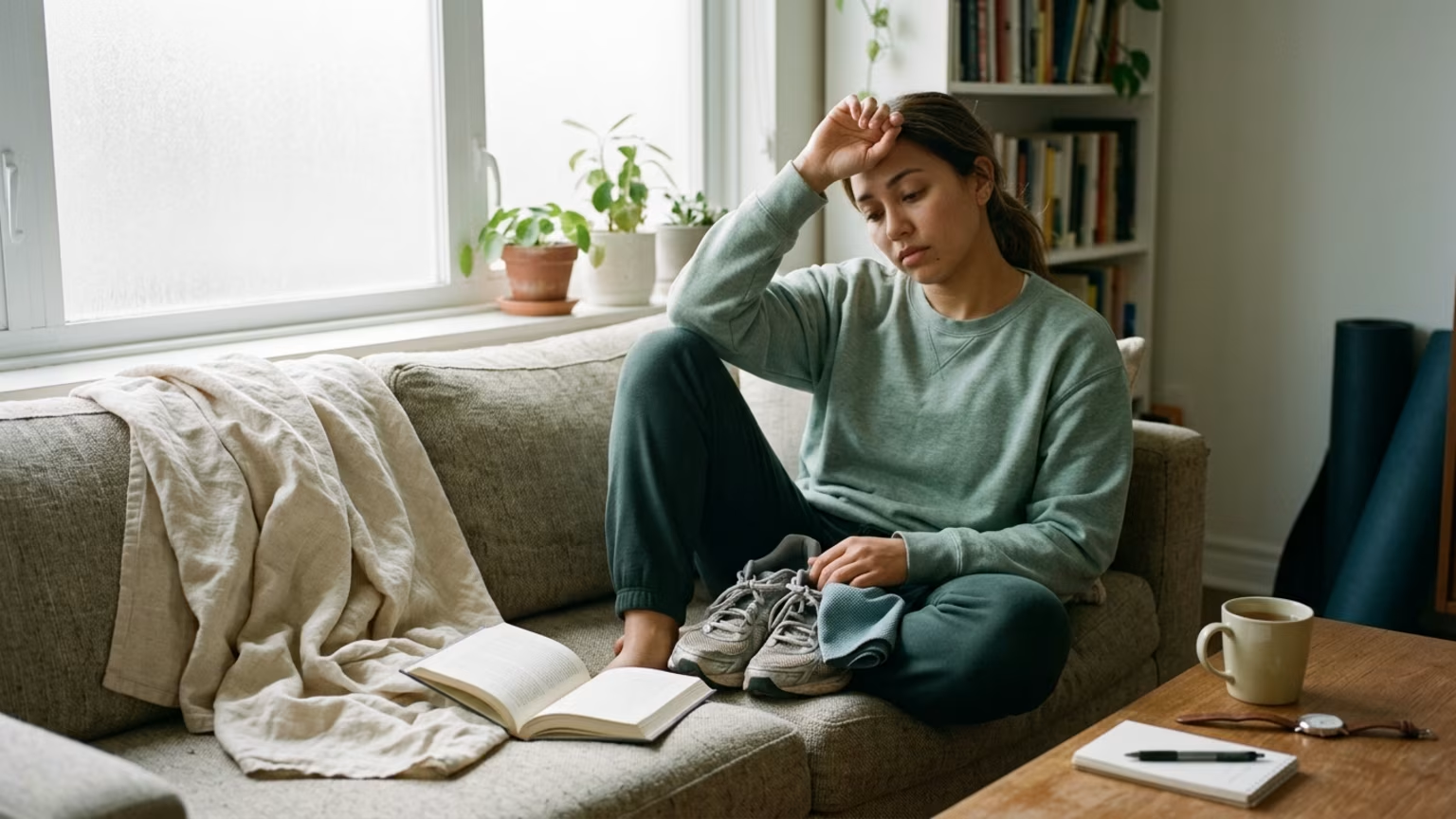

A McGill University study tested whether a nap or a short cycling session best protects visual memory after sleep loss. Read the findings for older adults.





A recent study led by McGill University examined 54 healthy young adults to see if a short workout or a nap could protect visual memory after 30 hours without sleep. Published in the Proceedings of the National Academy of Sciences, the research found that a 20-minute cycling session and a 90-minute nap opportunity offered similar memory benefits compared to a control group.
The researchers investigated how different interventions affect memory retention following acute sleep loss. They recruited 54 healthy adults between the ages of 18 and 35. These participants were kept awake for a full 30 hours in a controlled laboratory setting. The prolonged wakefulness was designed to test how tired brains process visual information.
After the 30-hour period, researchers randomly assigned the young adults to one of three specific groups. One group completed a 20-minute moderate-to-vigorous cycling session on a stationary bike. A second group received a 90-minute opportunity to take a nap. The control group simply sat on a stationary bike without exercising or sleeping.
Following these interventions, the participants viewed a series of images to test their visual episodic memory. The true assessment of their memory processing happened three days later. This delay meant the participants had fully recovered their normal sleep patterns before being tested on what they remembered.
The follow-up visual-memory test showed notable improvements for both active and rested participants. The exercise group accurately recognized 56% of the images they had viewed. The nap group performed similarly by recognizing 57% of the images. The control group recognized only 46% of the images during the final assessment.
According to the published findings, these results represent a substantial relative improvement over the control group. The researchers reported an improvement of about 21% after exercise and 23% after napping. They noted no significant difference between the memory outcomes of the cycling group and the napping group. However, the study proposed that cycling and napping supported memory through entirely distinct neural processes.
Interestingly, the two interventions produced different immediate physical feelings among the participants. CNN reported that the young adults who napped felt markedly fatigued afterward. The exercise group reported fatigue levels similar to the control group.
The immediate practical application of this research relates to managing short-term cognitive demands after a poor night of rest. A University of the Sunshine Coast explainer recommends regular sleep and wake times for general brain health. The university also notes that most adults need around seven to nine hours of sleep nightly. This foundational requirement remains the absolute priority for healthy aging.
Sometimes, older adults face a situation where sleep loss precedes a demanding cognitive task. CNN wellness expert Dr. Leana Wen suggests a practical approach for these isolated moments. If a nap is appropriate and available, it remains a sensible choice to change the sleep-deprived state of the brain. The daytime rest can physically alter the brain's processing state before complex learning occurs.
If a nap is not an option before a learning or memory task, a brief bout of aerobic activity might be useful. Many people already look for habits that support cognitive longevity on a daily basis. The news coverage suggests that physical activity might help memory processing continue while a person is tired. Discussing this short-term strategy with a healthcare provider could be beneficial for active older adults.
It is critical to remember that the specific experiment tested moderate-to-vigorous cycling rather than casual walking. The practical guidance reported by CNN mentions considering brief aerobic activity like a brisk walk. However, readers should recognize that a brisk walk might not replicate the exact cardiovascular intensity of the 20-minute cycling session used in the laboratory.
Maintaining reliable memory and focus requires consistent rest above all else. This study merely offers a secondary option to discuss for isolated difficult days. It highlights the value of having flexible routines when ideal sleep schedules fall apart unexpectedly.
This experiment was small, highly controlled, and limited to young adults. Because the 54 participants were healthy individuals aged 18 to 35, the study does not establish whether older adults would experience the same memory benefit. It also remains unknown if the findings apply to people with chronic sleep restriction or underlying health issues.
The research focused strictly on visual episodic memory using specific image recognition tests. CNN reported that the study did not establish benefits for other abilities affected by sleep loss. Critical cognitive functions like attention, reaction time, and judgment were not proven to improve after the cycling session. Readers should not assume that a short workout fully restores normal brain function.
The results should not encourage anyone to replace their nightly rest with physical activity. Dr. Wen emphasized that exercise does not substitute for sleep. Sleep serves multiple biological functions in the body beyond the single memory outcome tested in this specific scenario. The study was not designed to test if exercise makes chronic sleep loss harmless over the long term.
Safety is another crucial consideration following acute sleep deprivation. CNN cautioned that a quick workout does not make it safe for a severely sleep-deprived person to drive. It also does not make other potentially hazardous activities safe to perform. These findings apply to a specific laboratory memory task, not to complex real-world safety decisions where reaction time is critical.
Finally, the follow-up assessment took place after participants had already recovered their sleep. The reported result should not be described as proof of sustained protection from ongoing sleep deprivation. The memory preservation occurred under very specific conditions that do not mirror chronic insomnia or age-related sleep disturbances.
The McGill University findings provide interesting context about how different interventions temporarily support visual memory after acute sleep loss. The suggestion that exercise and napping use distinct neural processes to protect memory is scientifically valuable. Still, the long-term trajectory of cognitive health relies on consistent, sustainable habits rather than emergency interventions.
Readers reviewing current brain health resources will see that general guidance emphasizes broader lifestyle patterns over short-term fixes. The University of the Sunshine Coast recommends maintaining regular sleep and wake times alongside consistent daytime physical activity. This type of broad, structural advice is designed to support daily mental clarity and overall brain health for older adults.
These broad lifestyle recommendations exist independently of this single laboratory experiment. While a short workout might offer a temporary cognitive lift after a poor night of rest, it cannot perform the broader biological roles of sleep. Balancing regular physical activity with sufficient nightly rest remains the most reliable strategy for protecting mental clarity.
Older adults should view this research as a reminder of the brain's resilience under temporary stress. The body has multiple mechanisms to compensate for acute sleep loss in the short term. However, supporting those mechanisms requires a strong foundation of regular sleep habits and consistent daytime physical activity. Focusing on these daily pillars is the best way to support cognitive longevity over many years.
Determining whether brief physical exertion or daytime rest best protects visual recall demands a clear look at the underlying evidence. Readers frequently report feeling patronised by conventional senior wellness content when seeking practical guidance, which is why FitBrainLab objectively outlines these acute memory experiments to help you establish a sustainable routine.

Follow FitBrainLab for research-led insights on memory, focus, brain aging, nutrition and mental fitness after 60. Stay connected for new articles, practical guidance and ideas for a sharper, more engaged life.




Build habits that support memory, focus and a curious, connected life.
Read the Blog