

The LatAm-FINGERS trial shows that structured lifestyle programs improve cognitive test performance in older adults more than basic health advice alone.





In late 2026, researchers published findings showing that a structured lifestyle program improved global cognition among older adults significantly more than standard health education. The Alzheimer’s Association funded this comprehensive trial. The results were presented at the Alzheimer’s Association International Conference in London. The Lancet published the full study under the title “Multidomain lifestyle intervention for the prevention of cognitive decline in at-risk older adults in Latin America.”
The LatAm-FINGERS trial involved 1,065 adults at risk of cognitive decline or dementia. The research team ran this single-blind multicentre randomised controlled trial over a two-year period. Participants were recruited at 12 research sites. These clinical locations spanned 11 Latin American countries.
The participating nations included Argentina and Bolivia. Brazil and Chile also hosted research sites for the trial. Other clinical locations operated in Colombia and Costa Rica. The Dominican Republic and Ecuador joined the research network.
Mexico and Peru contributed participants to the study. Uruguay completed the list of 11 countries. Local researchers adapted the program for each specific location. This cultural adaptation was a central part of the methodology.
Participants were assigned to one of two different lifestyle approaches. The Systematic Lifestyle Intervention group included 539 participants. This group received supervised exercise and computerised cognitive training. They also received nutrition counselling based on a modified MIND diet.
Clinicians monitored cardiovascular risk for the structured intervention group. The participants received ongoing coaching and attended 38 group meetings. The Flexible Lifestyle Intervention group included 526 participants. This second group received periodic health education and general recommendations.
The general advice covered diet, exercise, cognitive engagement and vascular risk management. They also received advice regarding social engagement. This flexible group attended just four group meetings over two years. Both groups received guidance rather than no care at all.
After two years, the structured group achieved a 55% greater improvement in global cognition. This composite measure compares their progress directly against the flexible group. The structured group also demonstrated significantly larger improvements in memory. Researchers measured additional gains in executive function and processing speed.
The trial builds on the U.S. POINTER and Finnish FINGER research programs. These earlier studies also combine several lifestyle domains together. The LatAm-FINGERS trial is part of the wider World-Wide FINGERS network. This global network investigates multidomain strategies for preserving cognitive function.
The program was culturally adapted rather than simply translated. Local researchers helped modify food guidance and study materials. They also adjusted technology support and delivery methods for each participating country. The food adaptations included locally available items like avocado, quinoa and chia.
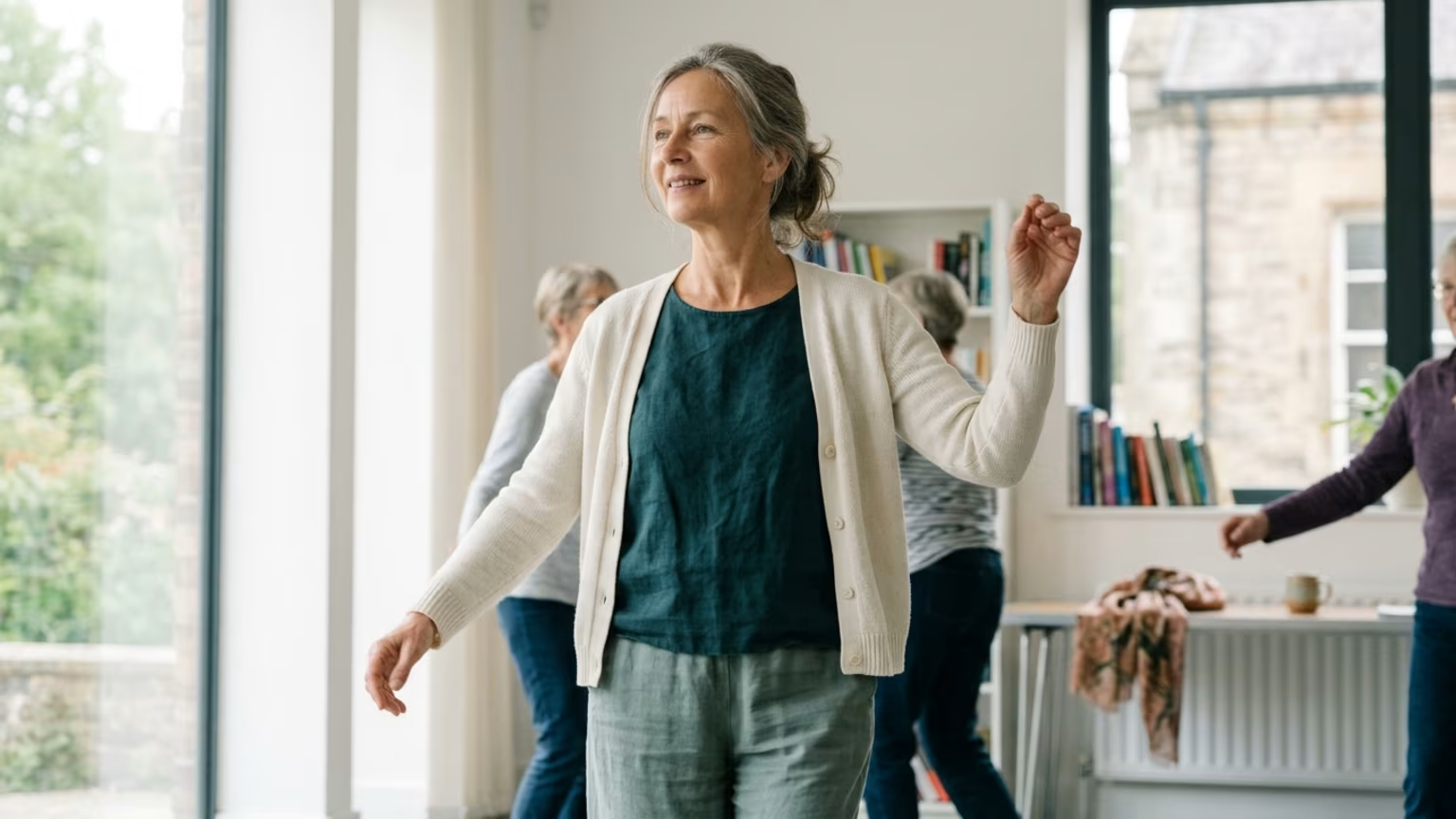
Other approved foods included açaí, aguaymanto and pumpkin seeds. Researchers also modified the exercise activities for the participants. These physical routines included familiar forms of movement such as salsa and tango. Outdoor group exercise helped maintain physical activity levels in local communities.
The most defensible takeaway is not to search for one perfect brain exercise. Readers should look for a program combining several established health behaviors. A solid program must provide accountability and regular social contact. Finding structural support is critical for maintaining long-term habits.
When evaluating a local program, look for regular physical activity. The movement should be appropriate for current fitness, mobility and medical conditions. The program should also feature a generally brain-healthy eating pattern. This nutrition plan must adapt to familiar foods and cultural preferences.
Cognitively demanding activities require attention, learning or problem-solving. Passive entertainment does not offer the same mental challenge. Programs should also include monitoring of cardiovascular and metabolic health. Issues such as blood pressure should be managed with a clinician.
Readers should discuss new exercise or dietary plans with a healthcare professional first. This conversation is highly recommended for people managing heart disease or diabetes. Individuals with balance problems or medication concerns must prioritize safety above all else. Modifying intense physical activities prevents unnecessary injuries while maintaining long-term mobility.
Regular social contact should be built directly into the routine. Ongoing support from a peer network makes a measurable difference. A structured program helps people turn general advice into consistent habits. You can read more about building routines that support cognitive longevity through our articles.
Evaluating clinical trials requires understanding what the numbers actually represent. The reported 55% figure is a relative comparison between the two groups. It measures the difference in cognitive improvement between the structured and flexible interventions. It does not mean participants achieved a 55% absolute increase in memory.
The trial does not establish that the program prevented Alzheimer’s disease or dementia. Outcomes were measured by cognitive changes rather than a reduction in dementia diagnoses. The available report does not provide absolute cognitive scores. It also lacks confidence intervals and p-values for the headline figure.
The trial tested a comprehensive lifestyle package rather than isolated variables. It cannot show whether coaching, exercise, diet or cognitive training was the dominant ingredient. The current evidence does not support claims that a single supplement prevents Alzheimer’s disease. Promoting a brain detox protocol as a dementia cure remains entirely unproven.
Access to these intensive interventions may present a significant practical barrier for many. The tested intervention required repeated coaching, supervised activities and group meetings. Cost, transport, technology access and staffing affect whether this approach is feasible. You can read our articles on protecting long-term cognitive health for more accessible strategies.
Lucia Crivelli, Ph.D., served as the study’s lead author and principal investigator. She operates out of Fleni in Buenos Aires. She said the results were the first evidence of this kind from Latin America. She noted the culturally adapted intervention delivered cognitive benefits across diverse communities.
Crivelli said researchers adapted the U.S. POINTER model to local cultures and habits. They preserved its core elements to make the program practical and affordable. Laura D. Baker, Ph.D., a U.S. POINTER principal investigator, also reviewed the trial. Baker described LatAm-FINGERS as a “second strong finding” in a different region.
Baker said the results suggest the model can be adapted for different communities. Heather M. Snyder, Ph.D., is the Alzheimer’s Association’s senior vice president of medical relations. Snyder said the results extend evidence for multidomain lifestyle interventions to Latin America. Snyder identified structure and social support as key messages from the study.
These comments represent expert interpretations of the recent findings. They are not proof that the program will work equally well for every person. The study report does not provide subgroup results by country, ethnicity or socioeconomic status. Results were not broken down by sex or education level.
A 2026 review of exercise research provides additional context for these findings. It found structured exercise was associated with better global cognitive performance in older adults. The effects for individual cognitive domains were generally small, heterogeneous and statistically uncertain. This context means exercise is a sensible component of brain health planning.
The long-term trajectory of cognitive health relies on realistic daily routines. The trial highlights how ongoing guidance and social accountability shape behavior change. Older adults do not need to reproduce a research trial exactly to benefit. They simply need to become more active, socially connected and cognitively engaged.
Combining movement, nutrition and mental effort creates a strong physiological foundation. Support systems help transform general health education into permanent daily habits. Finding a community provides the accountability needed over the long term. Reviewing resources for maintaining focus and memory over time can help outline a sensible plan.
When news reports highlight structured lifestyle programs for cognitive health, reading beyond the headlines helps clarify what the evidence actually proves. Confusion about what normal brain aging looks like often makes interpreting these clinical trials difficult, but FitBrainLab translates complex research into practical guidance so you can build supportive daily habits with confidence. Explore Resources

Follow FitBrainLab for research-led insights on memory, focus, brain aging, nutrition and mental fitness after 60. Stay connected for new articles, practical guidance and ideas for a sharper, more engaged life.





Build habits that support memory, focus and a curious, connected life.
Read the Blog