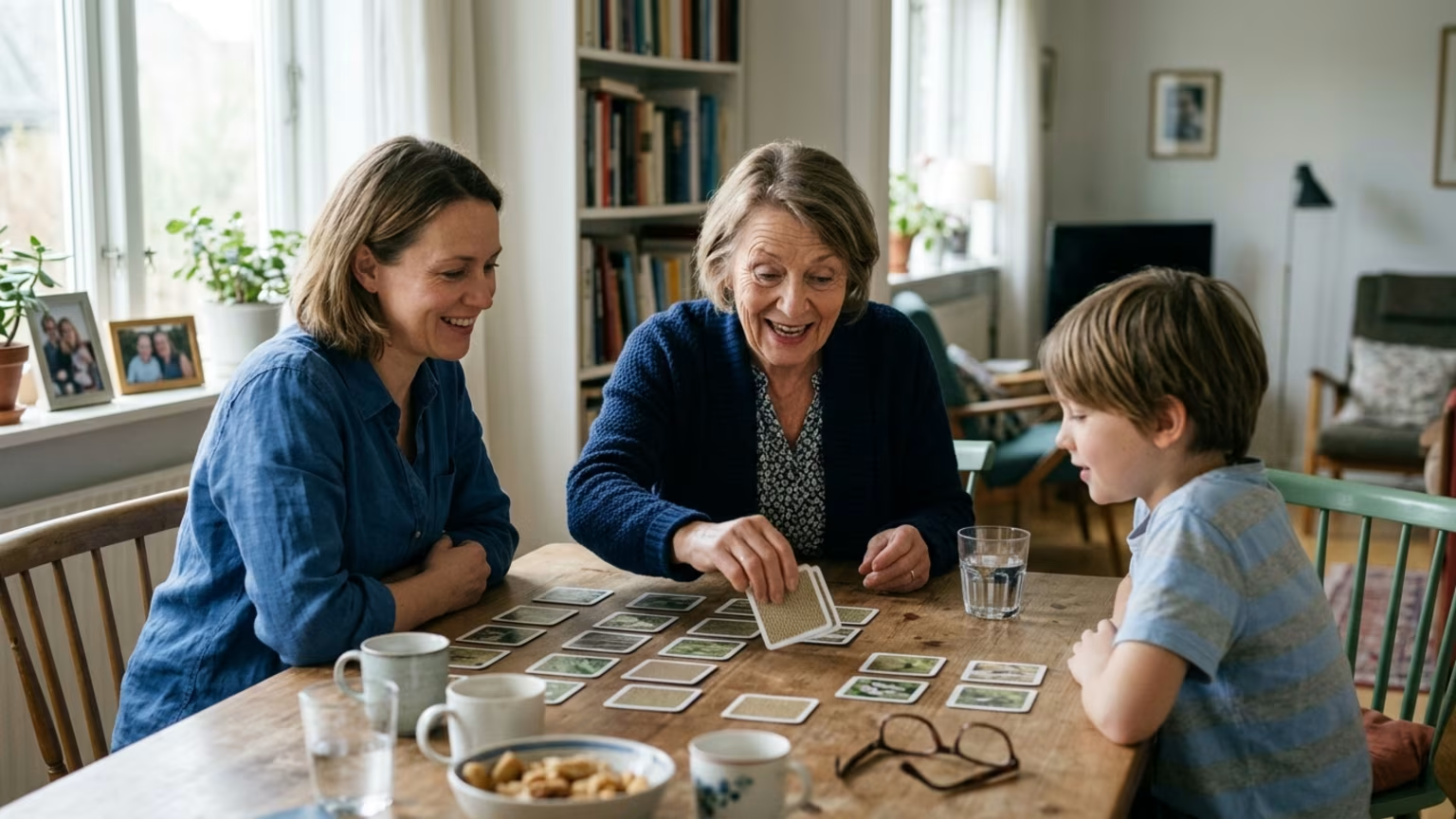
A large international study linked varied social participation with better cognitive scores. Here is how to read the results and their limits.





On October 20, 2026, researchers writing in the Journal of Epidemiology & Community Health reported that more varied social participation was associated with better cognitive performance in older adults.
According to the research article, the study pooled five longitudinal surveys covering 57,793 participants in 24 countries. The median follow-up was six years. A longitudinal survey follows participants over time, allowing researchers to examine patterns rather than only a single snapshot.
The surveys covered the United States, England, China, Mexico and European countries. Researchers assessed memory, executive function and overall cognitive performance. The tests included word recall, animal naming, serial subtraction and date-naming tasks.
Social participation was recorded over the preceding month in two surveys and over the preceding year in the other three. The analysis brought together information about both social involvement and performance on cognitive tests.
The central finding was an association between more varied participation and cognitive scores. For readers, that puts the focus on the range of activities in a person's social life rather than on one named activity alone.
The study also connects a research question about cognitive aging with a familiar part of life: taking part in activities with other people. Its findings give that participation a place in conversations about long-term cognitive health.
The immediate value is a wider set of options for discussion. The coverage identifies volunteering, a sports club and a training course as activities readers might look into. The choice can start with what is accessible and personally appealing.
That approach keeps the activity itself at the center of the decision. An opportunity might appeal because it involves contributing to a shared task or learning alongside others. Those reasons give participation a purpose beyond the hope of a better cognitive score.
The practical questions are straightforward:
These questions leave room for different preferences. A training course need not suit the same person who enjoys a sports club. Volunteering may appeal for different reasons again. The useful starting point is a good fit rather than an impressive-looking list of commitments.
For readers thinking about how participation fits into ordinary routines, FitBrainLab's guide to making social connection part of everyday life offers a related planning resource. The focus can stay on opportunities that are workable and worth doing.
Health, mobility or safety concerns belong in a discussion with a relevant professional. That keeps personal decisions grounded in the individual's situation rather than in a headline.
For clinicians, the paper offers a starting point for conversations about community participation. For researchers, it raises a further question: which features of social involvement deserve closer measurement? Those are distinct uses of the same findings.
The study was observational. It cannot establish that social participation caused better cognition or slower decline. The authors' interpretation is not evidence of a proven preventive treatment, and the findings should not be presented as proof of dementia prevention.
One possible explanation is reverse causation: people with stronger cognition may be more able to take part socially. The authors also identify residual confounding and selection bias. These terms describe the possibility that other differences between participants or the way people enter a study may influence the findings.
The researchers primarily counted activities. They did not fully measure the quality of participation, the person's initiative or the emotional experience involved. A count therefore leaves out details that could matter greatly to the person taking part.
That distinction is especially relevant to headlines about three activities. The findings do not establish that everyone needs exactly three types of participation. Nor do they establish that adding another commitment will produce a particular cognitive benefit for an individual.
The authors also caution about comparisons across countries. The cohorts differed in how they measured social activities and executive function. Those differences mean the pooled analysis should not be read as though every participant answered identical questions and completed identical tests under one shared system.
The Telegraph reported that associations were more pronounced in women, people over 60 and people living alone. The research article also reported subgroup differences while flagging the exploratory nature of some findings. Those patterns are questions for further research rather than a basis for assigning personal benefit according to someone's age or living arrangements.
Taken together, these limits support a clear distinction: the study identifies a relationship worth investigating rather than a personal formula for brain health. The planning questions above are general guidance, not a procedure tested by the study. They help translate interest in the findings into a discussion about suitable social opportunities.
The study matters because it brings varied social participation into a large international analysis of cognitive health. Its scale gives researchers a substantial base for asking more detailed questions about how people take part in community life over time.
The next useful questions go beyond activity counts. What does participation mean to the person involved? How much initiative does it require? How does the experience differ between settings? These are research priorities suggested by what the current analysis left unmeasured.
For adults 60+, the constructive message is to give social opportunities thoughtful attention without turning leisure into a performance target. The findings belong within a broader conversation about lifestyle and brain resilience, where everyday life remains relevant to the questions researchers ask about cognition.
The long-term value of this work lies in a fuller understanding of cognitive aging that includes how people live and participate. For readers today, a grounded response is to look for social involvement that fits their circumstances and has value in its own right.
Judging social-activity headlines falls to readers and those supporting them; FitBrainLab brings a research-led editorial perspective to that task. Its explanations of memory and aging help adults 60+ judge whether a social-participation claim rests on established findings or an early signal, reducing confusion without promising a health outcome.

Follow FitBrainLab for research-led insights on memory, focus, brain aging, nutrition and mental fitness after 60. Stay connected for new articles, practical guidance and ideas for a sharper, more engaged life.





Build habits that support memory, focus and a curious, connected life.
Read the Blog