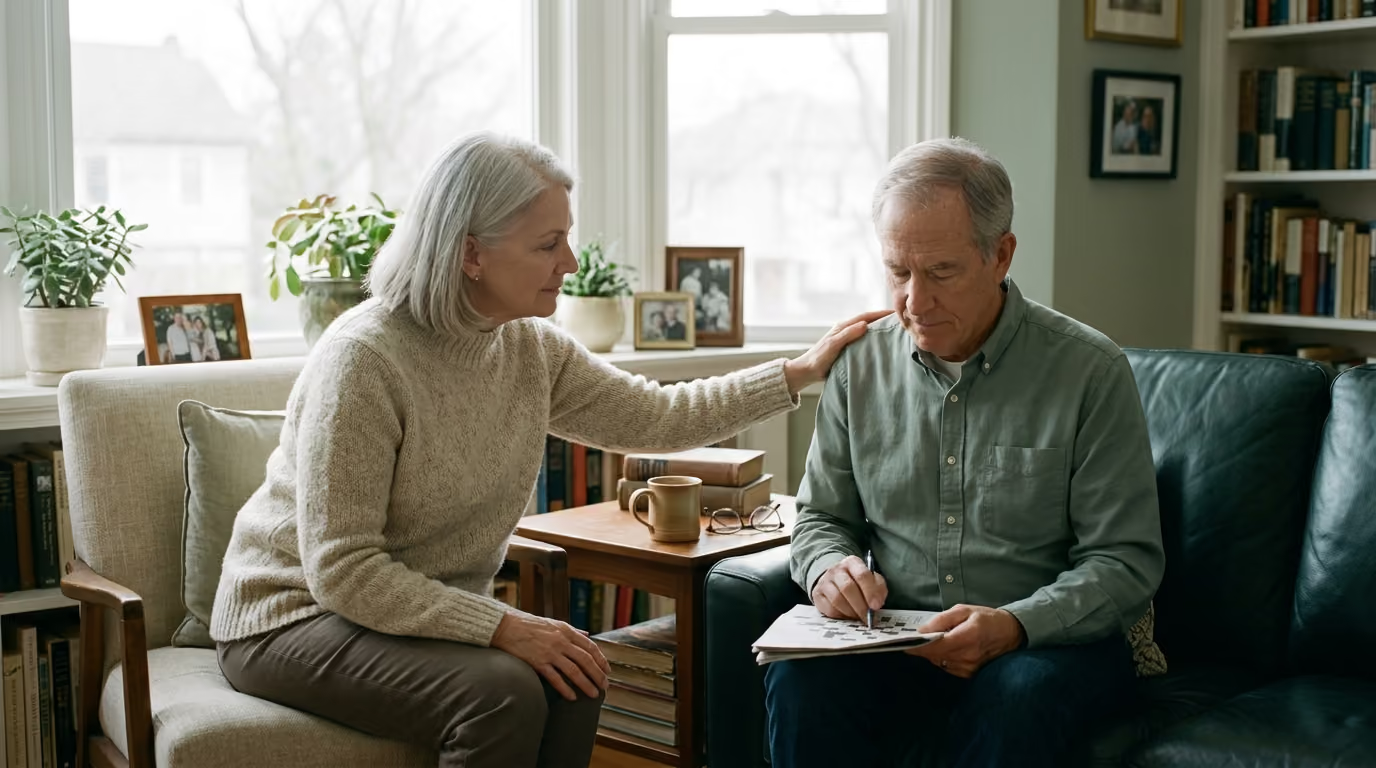

One in three older adults experiences social isolation, making intentional connection essential for protecting memory, reducing dementia risk, and building cognitive resilience.





A quiet Tuesday morning can feel peaceful. You enjoy your coffee, read the news, and tend to your plants without any rush. Later that evening, however, the silence in the house might feel heavy. You wonder when you last had an engaging, spontaneous conversation that left you energized.
This balance between quiet independence and meaningful human contact is common after 60. Major life changes like retirement, children moving away, relocation, or the loss of friends shift our daily routines. Building a supportive social life does not require becoming an extrovert or attending endless social events. It means creating regular, satisfying opportunities for connection, purpose, and support that fit your personality.
Human brains evolved to process complex social environments. When you converse with another person, your brain performs dozens of tasks simultaneously. You listen to words, read vocal tone, interpret facial expressions, and monitor body language. At the same time, you retrieve relevant memories, form responses, and regulate your emotions.
These rapid mental operations activate multiple brain networks at once. Social interactions stimulate areas responsible for executive function, such as the prefrontal cortex. This region manages planning, decision-making, and working memory. Conversations also draw heavily upon language networks and memory systems in the temporal lobes.
Social activities provide a form of complex cognitive exercise. Interacting with others requires real-time problem-solving and flexible thinking. When you navigate a shared task, tell a story, or understand someone else's perspective, your neural circuits actively adapt. This mental engagement supports cognitive resilience by encouraging the brain to build and maintain neural pathways.
Experiencing prolonged, distressing disconnection triggers physiological stress responses. When you feel chronically lonely, your body may produce higher levels of stress hormones like cortisol. Over time, persistent stress can increase systemic inflammation and disrupt restorative sleep patterns. These biological changes can interfere with healthy brain function, making supportive relationships a meaningful component of long-term wellness.
Researchers around the world have examined how human connection influences cognitive aging. Large health reviews demonstrate clear patterns between social engagement and cognitive outcomes in older adults.
According to data summarized by the World Health Organization, social isolation affects up to one in three older adults globally. The WHO Commission on Social Connection notes that loneliness and isolation correlate with higher risks of stroke, cardiovascular disease, diabetes, cognitive decline, and premature mortality. In the United States, reports from the National Academies indicate that roughly one-quarter of community-dwelling adults aged 65 and older experience social isolation.
Longitudinal studies show a strong relationship between social disconnection and long-term cognitive changes. Meta-analyses published in medical literature indicate that social isolation and chronic loneliness are associated with an estimated 30% to 50% increased risk of developing dementia. Research tracking older adults over time shows that persistent isolation correlates with faster declines in global cognitive function, memory, and executive performance.
The 2024 Lancet Commission report on dementia prevention identifies social isolation as one of several modifiable risk factors across the lifespan. This places social health alongside physical factors like hearing loss, high blood pressure, physical inactivity, depression, and diabetes. Addressing these factors together offers a comprehensive approach to cognitive protection.
Intervention studies provide practical insights into how structured social programs influence brain function. A randomized controlled trial in Finland examined lonely adults aged 75 and older who joined a three-month socially stimulating group program. Participants in the social intervention demonstrated greater improvements on cognitive assessment scales than those in control groups, with benefits persisting at a 12-month follow-up.
Other trials have evaluated multicomponent programs. A study involving older adults with mild cognitive impairment paired regular physical and cognitive exercises with social activity sessions over 24 weeks. The participants showed measurable gains in spatial working memory and maintained their physical activity levels better than control participants. Another randomized study combining dual-task physical movement with social activities reported modest improvements in cognitive performance and daily health habits.
Observational studies looking at long-term lifestyle patterns show similar trends. A prospective cohort study tracking older adults found that participation in volunteering-focused social groups correlated with maintained cognitive abilities over a 12-year period. Engaging in shared goals appears to provide a unique combination of mental challenge and emotional reward.
While these findings are encouraging, scientific restraint is necessary. Most available studies are observational, which means they demonstrate associations rather than direct cause-and-effect relationships. Social isolation can be a risk factor for cognitive decline, but early, unnoticed brain changes can also lead a person to withdraw from social settings. Furthermore, factors like chronic pain, depression, sensory loss, and financial limits often influence both social participation and mental performance. Social connection is an important piece of overall health, but it should not be viewed as a standalone guarantee against neurological change. You can read more about broad lifestyle habits in our guide to lifestyle and brain resilience resources.
To build a healthy social routine, you must first understand the terms used to describe social connection. People often use words like solitude, isolation, and loneliness interchangeably. In reality, they describe very different human experiences.
Solitude is the state of being alone by choice or acceptance. It is restful, restorative, and mentally grounding. When you enjoy solitude, you might read, pursue a hobby, garden, or simply enjoy a quiet afternoon. Solitude does not cause emotional pain. It allows your nervous system to recharge without pressure or expectation. Preferring time to yourself is a normal personality trait, not a health problem.
Social isolation is an objective measurement of your daily contact with the world. It refers to having few relationships, rare visits, minimal phone calls, or little community involvement. A person living in a remote rural area with few neighbors might be socially isolated in an objective sense. However, if they feel content, maintain contact with loved ones by phone, and have support available when needed, they may not experience distress.
Loneliness is the subjective emotional distress that occurs when your relationships do not meet your emotional needs. It is the feeling of being disconnected, unseen, or lacking meaningful belonging. Loneliness is not determined by the number of people around you. You can feel deeply lonely in a crowded room or at a busy family dinner if you feel misunderstood or emotionally distant from others. Loneliness is a natural biological signal, much like hunger or thirst, letting you know that your need for connection is unmet.
Belonging means feeling recognized, valued, and accepted as part of a group or relationship. It gives you a sense of shared identity and safety. Social support, meanwhile, represents the practical and emotional help available to you. This includes having someone who can drive you to an appointment, listen when you are worried, or share practical information.
Understanding these differences removes shame from the conversation. Feeling lonely does not mean you have failed socially. It simply highlights an emotional gap that you can begin to address thoughtfully.
Assessing your social health requires honest self-reflection. You do not need a clinical diagnosis to evaluate how well your current social routine supports your well-being. Consider these five core dimensions to understand your personal strengths and identify areas you might want to adjust.
Evaluating these areas will help you see where your social network is already strong. It will also highlight specific gaps, such as wanting more intellectual stimulation, needing more practical local help, or seeking deeper emotional conversations. For broader strategies on maintaining brain function, explore our collection of dementia and cognitive protection resources.
Improving your social health does not require an overhaul of your daily life. Small, consistent actions are far more sustainable than attempting to join multiple new organizations at once. Use these practical steps to build a network that fits your personality and cognitive goals.
The most direct way to enhance your social life is to add intention to the connections you already have. Many people maintain casual relationships that could easily become sources of regular support and engaging conversation.
Throughout adulthood, people accumulate meaningful relationships that fade due to busy schedules, career changes, or relocations. These dormant ties often hold substantial shared history and trust. Reconnecting with old friends requires far less emotional effort than building a relationship from scratch.
One-time community events can be entertaining, but they rarely create lasting friendships. Building familiarity and trust requires repeated, predictable contact. Joining groups that meet on a set schedule allows you to get to know people naturally over time.
Passive attendance can sometimes leave you feeling disconnected even in a room full of people. Taking on a modest, well-defined role provides a clear sense of purpose and simplifies social interactions.
Combining multiple healthy habits into single activities is an efficient way to support long-term brain health. Multicomponent activities stimulate various brain networks simultaneously.
Digital tools should support your relationships rather than replace meaningful human contact. Remote communication helps you maintain bonds across long distances and provides access to community when weather, transportation, or mobility makes leaving home difficult.
Misconceptions about social life and aging can prevent people from making positive changes. Clearing away these myths helps you build a social routine that works for your personal circumstances.
Experiencing loneliness is often viewed with unfair stigma. In truth, feeling disconnected is a normal human response to significant life changes. Events such as retirement, the loss of a spouse, moving to a new neighborhood, or health limitations naturally disrupt social patterns. Treating loneliness as useful feedback rather than a character flaw makes it easier to take constructive action.
A packed social calendar does not guarantee cognitive health or emotional well-being. Attending numerous events can lead to fatigue, superficial interactions, and sensory overload if the activities do not match your interests. A brain-healthy social life is defined by relationship depth, safety, and mutual support, balanced with adequate time for personal rest.
Choosing to spend time alone is entirely healthy. If you feel peaceful, pursue creative or intellectual interests, and know who to contact when you want companionship or help, solitude is protective and restorative. Health risks arise from unwanted, chronic disconnection and lack of support, not from an introverted personality.
While strong observational evidence links social engagement to better cognitive outcomes, claims that social activity alone will prevent dementia are inaccurate. Cognitive health is influenced by genetics, vascular conditions, physical activity, sleep, and nutrition. Engaging with others is a valuable lifestyle habit, but it should be understood as one part of a comprehensive health strategy.
Simply sitting in the same room with others while practicing a hobby does not automatically generate close relationships. Friendship requires shared attention, consistent conversation, and small steps toward vulnerability. To turn a shared activity into a friendship, you must make intentional efforts to connect with people outside the formal task.
Video calls and messages are excellent tools for maintaining relationships across distances. However, research reviews indicate that in-person interaction generally provides stronger cognitive stimulation and emotional grounding than digital interaction alone. Use technology to support your connections, while prioritizing face-to-face contact whenever practical.
Real-world challenges can complicate efforts to stay connected. Physical changes, life transitions, and caregiving duties require tailored approaches. Addressing these barriers directly ensures that your social plan remains realistic and achievable.
Untreated sensory changes make social environments exhausting. Straining to follow conversations in noisy rooms causes mental fatigue and often leads people to withdraw from group activities. The Lancet Commission highlights hearing loss as a significant modifiable risk factor for cognitive decline.
The loss of a spouse, partner, or lifelong friend fundamentally alters daily routines and emotional security. Grieving individuals often face both profound emotional pain and the sudden loss of their primary social companion.
Giving up driving or dealing with mobility challenges can restrict your physical access to the community. Relying entirely on others for rides can feel uncomfortable, but practical solutions exist.
Caring for a spouse or family member with chronic health conditions can lead to social isolation. Caregivers often dedicate their full time and energy to another person, leaving little room for personal connections.
Social activities should not cause financial strain. Fixed incomes can make expensive dinners, ticketed events, or costly club memberships unsustainable.
Your healthcare provider can be an important resource for managing health factors that influence your social life and cognitive well-being. Consider discussing these questions at your next appointment:
Revisit this guide whenever you experience major life transitions, such as a change in your living situation, retirement, the loss of a close friend, or new physical health challenges. It is also helpful to review this framework annually to assess your personal sense of belonging and ensure your daily social routines continue to support your cognitive vitality and personal comfort.
Building a brain-healthy social life is a gradual, personal process that allows you to cultivate rich relationships while honoring your need for quiet independence.

Follow FitBrainLab for research-led insights on memory, focus, brain aging, nutrition and mental fitness after 60. Stay connected for new articles, practical guidance and ideas for a sharper, more engaged life.


Build habits that support memory, focus and a curious, connected life.
Read the Blog