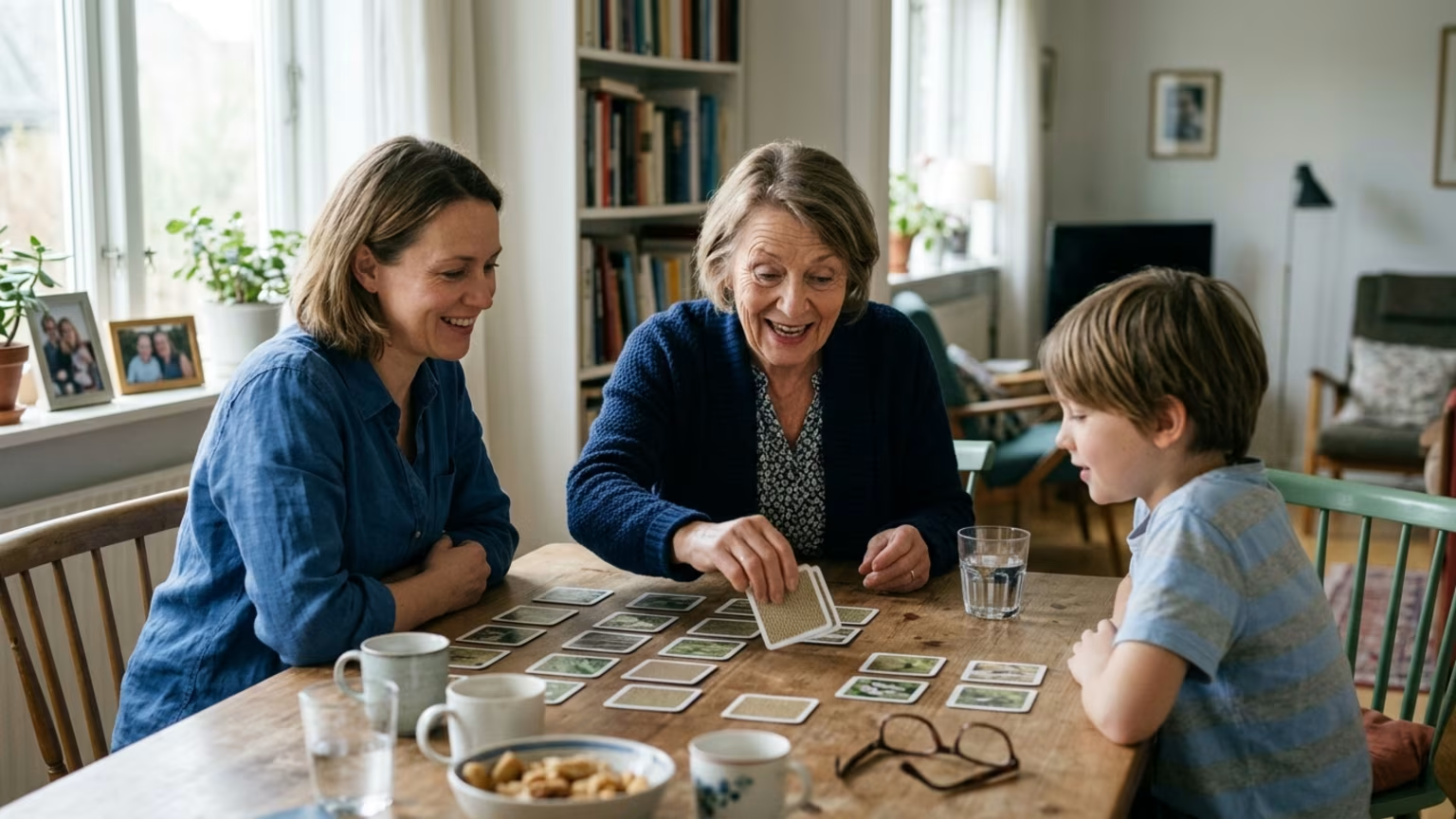
Compare new skill learning with familiar hobbies after 60, then weigh interest, time, cost and access without overstating the memory evidence.





Choosing between familiar activities and an unfamiliar skill after 60 means deciding whether to keep a valued routine or add a learning challenge that fits your life.
A familiar activity is one whose basic skills you already know. It may still be enjoyable or offer time with other people. Keeping it can be a choice about pleasure or connection rather than a plan to improve memory.
The useful distinction is not between a worthy hobby and a wasted afternoon. It is between using skills you already have and working to acquire unfamiliar ones. A craft does not belong permanently in either group; the demands change with the person and the task.
Evidence about repeated mental practice also needs careful labeling. A research brief summarizing a meta-analysis of 52 randomized trials involving 4,885 cognitively healthy older adults reports a small overall benefit from computerized cognitive training. Results varied across cognitive domains.
That evidence belongs to a different category from research on everyday skills. The practical point is to ask what an activity involves rather than assuming that any familiar puzzle or hobby has the same effect.
For practical comparisons, look at what an activity asks you to learn rather than its label. Repeating a known pattern and learning an unfamiliar technique are different tasks within what might be called the same hobby.
A secondary account of the Synapse Project reports that 259 older adults enrolled and 221 completed a 14-week program.
The learning groups took up digital photography, quilting or both. Comparison groups took part in social activities or more passive activities at home.
According to that account, the skill-learning groups improved more on episodic-memory tests than the less demanding comparison groups.
The practical feature worth noticing is the combination of instruction and assigned practice. Participants were working to acquire skills rather than only spending time on an activity. That makes the learning process a more useful point of comparison than the hobby's name.
A language, instrument or craft may each offer a learning curve, but the course description should make the new skill clear. Asking what participants will be able to do helps turn a vague promise of mental stimulation into a concrete learning goal.
The course name is not a ranking of its cognitive value. Personal interest can guide which kind of work feels worth returning to.
What both approaches share is the possibility of a meaningful activity, not a proven common biological effect. The cited findings do not establish a shared brain mechanism or an extra cognitive benefit from combining familiar routines with new learning.
The Synapse account also has clear limits. Photography showed the most robust memory gain, while other measured outcomes did not show the same consistent pattern. The study did not separate the effects of novelty, difficulty, instruction and practice. Its findings do not establish an ideal activity or show that hobbies prevent dementia.
The research brief adds a separate caution: improvement on practiced tasks does not necessarily carry over to unrelated skills or daily functioning. The available findings also leave questions about how long benefits last.
The University of Maine is examining a useful related comparison. Its announcement describes two 12-week programs for older adults: soprano recorder instruction and music listening and appreciation. Planned outcomes include cognition alongside social connection and emotional well-being. These are study plans rather than reported results.
That question matters because active learning and a related receptive activity need not serve identical purposes. For a personal choice, enjoyment and connection can be goals in their own right. They need not be presented as evidence of a change in memory.
These limits leave a practical direction: choose an activity for what it asks you to learn and what it contributes to your life. The study results can inform that choice without making it for you.
The questions below are planning tools rather than tested prescriptions for cognitive health.
Start by naming what you hope to gain. Enjoyment, company or making something are all reasonable goals. Practical competence may matter more than a memory-test result. Ask whether the activity would still appeal if nobody described it as good for the brain.
This also helps separate your own interests from somebody else's idea of a suitable retirement hobby. The choice does not need to impress anyone.
Look for skills you do not already have, then ask how beginners are taught. A useful class description should tell you what will be introduced and how practice fits in. Difficulty is not an end in itself. The practical aim is a challenge you can return to rather than one that leaves no room for the rest of your life.
According to the Synapse account, the learning groups averaged roughly 16 hours a week including instruction and assigned practice. That was the study's intensity, not a recommended target for ordinary learners.
Ask about class hours and work between sessions. Add travel time to the picture. Compare that full commitment with the space actually available in your week rather than with an ideal week in which nothing else happens.
Check tuition and any separate charges for materials or equipment. Transport and software may add other costs. Ask whether a sample lesson or short course is available before making a larger commitment. These questions also matter when looking for meaningful activities on a modest budget.
Check how the activity fits your stamina, eyesight, hearing and dexterity. Ask about the teaching pace and whether transport is workable. A format that fits one person may not fit another. Health-related decisions about participation belong with qualified care.
An introductory session offers a chance to judge the teaching style and your interest before signing up for more. Afterward, ask whether you want to return and whether the demands fit your life. Changing the course or the format is a practical adjustment rather than a failure to learn.
FitBrainLab's editorial verdict is to make room for unfamiliar learning without discarding familiar pleasures. When the goal is to learn, choose an activity with a real learning curve and support for practice. When the goal is relaxation or company, a known activity may be exactly what you are looking for.
For long-term cognitive health, do not make the choice a contest between the most impressive hobbies. Compare the actual demands with your interests and resources. A course that fits your week is a more realistic commitment than one chosen only because it sounds difficult.
Start with a commitment you can revise and judge whether you want to return. Learning can have a place alongside activities you already value. The aim is an engaged life with room to keep learning, not a weekly performance test.
Treating every hobby as a memory exercise can obscure the reasons for learning after retirement, a problem FitBrainLab approaches through clear explanations of the evidence. For readers missing the structure or purpose of working life, its coverage connects learning and everyday engagement with cognitive health so choices can rest on personal meaning rather than inflated claims.

Follow FitBrainLab for research-led insights on memory, focus, brain aging, nutrition and mental fitness after 60. Stay connected for new articles, practical guidance and ideas for a sharper, more engaged life.



Build habits that support memory, focus and a curious, connected life.
Read the Blog