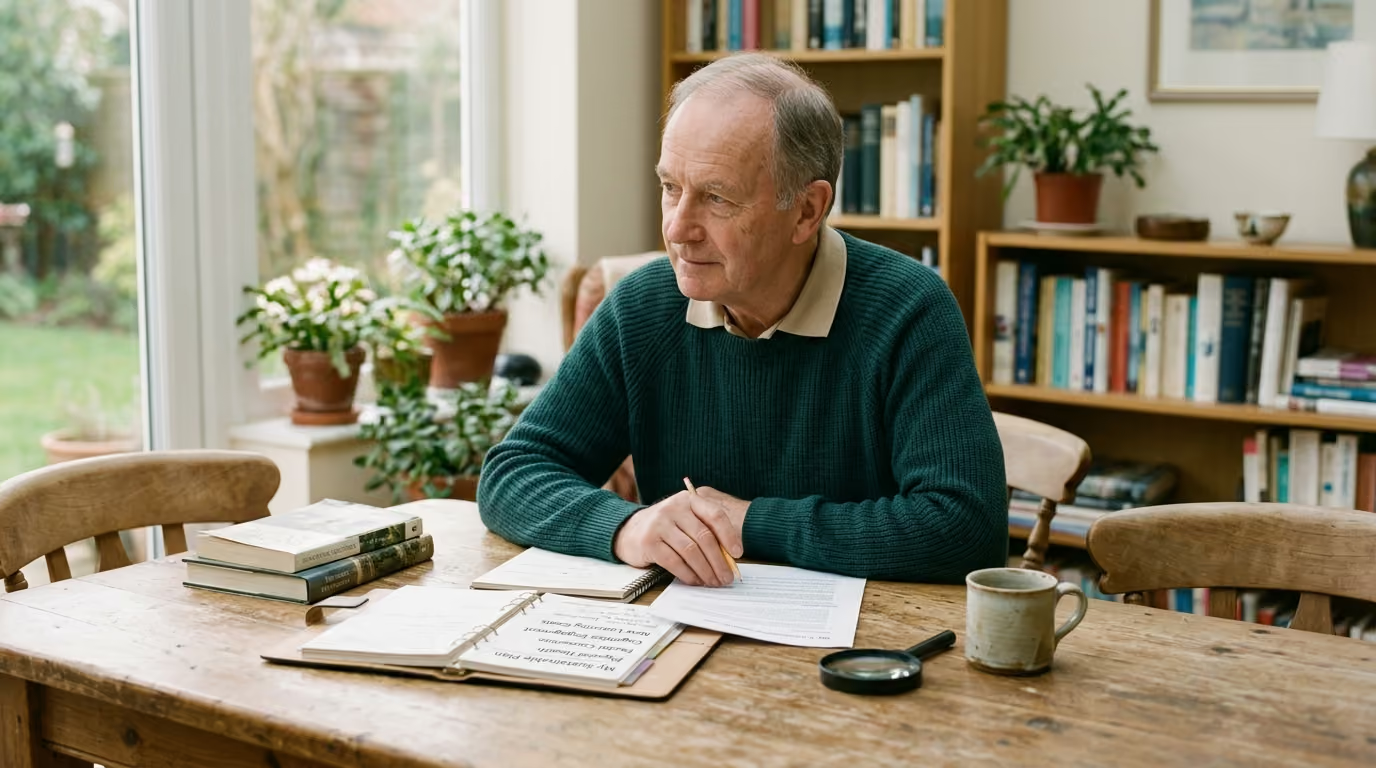

Quiet mornings at home offer excellent opportunities to strengthen memory and focus through purposeful, budget-friendly activities that fit your everyday routine.





Many people search online for ways to keep their brains sharp after 60 without spending large sums on commercial programs, subscriptions, or expensive classes. Fixed incomes, transportation limits, rural locations, and shifting energy levels often make commercial brain health products unrealistic. This guide provides a research-backed, practical approach to building an engaging daily routine using free and low-cost community resources.
Mental fitness is often confused with memory testing or dementia prevention. The National Institute on Aging defines cognitive health as the capacity to think, learn, and remember clearly. Cognitive health is just one component of overall brain health. Brain health also includes motor function, emotional balance, and sensory processing.
The World Health Organization uses a healthy-aging framework centered on functional ability. Functional ability means having the capabilities that permit older adults to be and do what they value. This model focuses on maintaining independence and meaningful participation even when physical or cognitive capacity changes. You do not need to match the pace of a younger adult to keep your brain actively engaged.
Neurological health in later life relies on everyday stimulation. When you learn a new skill, navigate an unfamiliar problem, or participate in a lively conversation, your brain forms and maintains neural connections. These activities stimulate the brain across multiple regions at once. Reading a book engages language, visual processing, and working memory. Gardening combines motor planning, sensory feedback, physical effort, and spatial awareness.
Mental fitness also differs from mental health, social connectedness, and purpose. Mental health refers to your emotional and psychological well-being. Social connectedness describes the quality and frequency of your personal relationships. Purpose is the feeling that your daily life has direction and meaning beyond immediate comfort. Whole-person mental fitness connects all of these parts into a unified system.
Understanding these concepts helps you choose activities with real substance. Commercial memory games often train you only on the specific task in the game. Real-life activities like organizing a project, discussing current events, or learning a musical instrument challenge the brain in practical, useful ways. You can review neuroplasticity and aging research to understand how everyday habits support brain structure over time.
Social connection is a recognized determinant of health for older adults. The World Health Organization reports that regular social activities improve mental health, life satisfaction, and quality of life while reducing depressive symptoms. Research links social isolation and loneliness with adverse physical outcomes, cardiovascular disease, stroke, cognitive decline, and higher mortality rates.
Loneliness and social isolation are distinct experiences. Loneliness is the subjective feeling that your relationships are inadequate. Social isolation is an objective lack of contact with other people. The Centers for Disease Control and Prevention measures isolation through specific indicators like infrequent telephone contact, rare messaging, low religious attendance, and absent club participation.
A 2024 CDC analysis showed that 32.1 percent of American adults reported feeling lonely. The same report found that 24.1 percent lacked adequate social and emotional support. These feelings were much higher among adults with household incomes below $25,000, reaching 47.9 percent for loneliness and 39.8 percent for lack of support. A 2023 national poll published in JAMA found that 37 percent of adults aged 50 to 80 experienced loneliness, and 34 percent felt socially isolated.
The National Institute on Aging highlights data from studies tracking more than 7,000 older adults. This research shows that high social engagement, such as visiting neighbors and participating in community groups, correlates with better cognitive health. Low social engagement in late life is associated with an increased risk of cognitive decline.
These research findings represent population-level patterns rather than direct cause and effect. An individual does not develop cognitive impairment simply because they live quietly or experience limited mobility. Instead, social engagement serves as a natural source of mental stimulation and emotional support.
Volunteering provides a structured way to stay connected while contributing to the community. A six-month randomized controlled trial examined older adults who volunteered as telephone peer counselors. The volunteers experienced measurable reductions in loneliness, stress, and depressive symptoms compared to the control group.
Longitudinal research tracking adults over 12 years found that volunteering more than 100 hours per year was associated with a 45 percent lower risk of loneliness compared to non-volunteers. This protective association did not appear among individuals who volunteered fewer than 100 hours annually. The 100-hour mark equals roughly two hours per week, suggesting that regularity and routine matter.
Another long-term study linked 100 annual hours of volunteering with higher optimism, stronger purpose, and lower depressive symptoms. That same study found no direct association between volunteering and reductions in physical illnesses like diabetes, hypertension, stroke, or heart disease. Volunteering supports psychological well-being and life satisfaction, but it is not a medical cure for physical conditions.
Physical movement directly supports cognitive function. The World Health Organization recommends that adults aged 65 and older accumulate at least 150 minutes of moderate-intensity aerobic physical activity throughout the week. WHO also recommends balance-focused activities at least three days per week for those with reduced mobility, alongside muscle-strengthening activities on two or more days.
Regular physical activity helps reduce symptoms of anxiety and depression while supporting learning, memory, and executive function. When health limitations prevent you from meeting standard targets, any movement is better than none. Adapting movement to your personal capability protects physical function without creating unnecessary physical strain. You can explore lifestyle habits for brain resilience to see how physical routines fit into daily schedules.
A balanced mental fitness routine does not require an expensive schedule. You can organize your week around five core categories: learning, connecting, contributing, moving, and making.
Learning new information creates fresh neural pathways and keeps your mind flexible. Low-cost learning relies on curiosity and accessible community materials rather than paid enrollment.
Human interaction provides dynamic cognitive stimulation because conversations require quick processing, emotional interpretation, and memory recall. Focus on reciprocal interactions where you both listen and share.
Contributing your time and attention creates a sense of usefulness and social integration. Contribution should fit your physical stamina and schedule.
Physical activity increases blood flow to the brain and supports coordination. Integrating movement into everyday tasks reduces the need for expensive fitness memberships.
Creative production engages fine motor skills, planning, focus, and aesthetic judgment. Finishing tangible projects builds confidence and personal satisfaction.
Public libraries are among the most versatile civic resources for cognitive health. They offer free access to information, quiet spaces, and structured community programming.
Major systems like the New York Public Library provide dedicated programs for adults over 50, including technology workshops and creative arts classes. The Toronto Public Library provides one-on-one technology coaching, telephone assistance, and tailored reading services. You can visit your local branch to ask about their monthly calendar, home delivery options, and volunteer roles.
Municipal departments offer low-cost or free services designed for older adults. Senior centers often provide educational workshops, lunch programs, health screenings, and transportation support.
Parks and recreation departments maintain accessible walking trails, community gardens, and fitness classes. Community colleges frequently offer tuition waivers or reduced auditing fees for older residents. Cooperative extension offices provide free agricultural, nutritional, and financial guidance through local workshops.
In the United States, the Administration for Community Living operates the Eldercare Locator. This service connects older adults and caregivers with local Area Agencies on Aging, meal programs, and transportation options. The Accessible Transportation Resource Center also works to improve transit accessibility for individuals with mobility challenges.
Online learning offers flexible mental stimulation without travel requirements. When you have access to a device and internet connection, free programs provide structured education.
Senior Planet, an initiative affiliated with AARP, provides free online classes covering technology, fitness, finance, and creative pursuits. Their programs include live digital literacy sessions, book clubs, and virtual discussion rooms. AARP also hosts free interactive virtual events through its community platforms.
Digital learning works best when broken into manageable steps:
Peer-led digital programs are particularly effective. The Charlotte Mecklenburg Library utilizes a peer-to-peer training model where older adults teach digital skills to other older adults. This method reduces intimidation and creates a supportive learning environment.
You do not need an official organization to create an engaging group. Peer-led circles are free to run and draw directly upon the wisdom of the participants.
A sustainable peer group should meet for 60 to 90 minutes in an accessible location like a library room or community center. Rotating the host role keeps responsibility shared among members. Keeping attendance flexible and providing quiet space for those with hearing difficulties helps everyone stay involved. You can read more about structured peer engagement in our retirement mental fitness resources.
Living on a tight income requires careful attention to hidden costs like transit, materials, and fees. You can structure high-quality mental fitness routines without spending money.
Losing access to a vehicle or reliable transit can lead to isolation if routines are not adjusted. Focus on home-based activities and neighborhood networks to stay engaged.
Chronic health conditions often cause variable energy levels. Using a three-tier activity plan prevents fatigue and helps you stay consistent without guilt.
Normal physical aging and sensory changes can make certain activities frustrating. Simple environmental adjustments keep participation comfortable.
Digital tools expand access to learning, but safety concerns and technical hurdles can cause hesitation. Working with patient helpers builds practical confidence.
The following illustrative examples show how different individuals can build low-cost routines tailored to their specific resources and limitations.
An individual with limited mobility and no access to a car focuses on home-based engagement. They arrange for library audiobooks to be delivered monthly. They join a weekly telephone conversation group hosted by a local senior initiative. Every morning, they complete a gentle 10-minute chair mobility routine near a window.
This approach demonstrates that geographical limitations do not prevent mental stimulation. Regular phone contact, daily physical movement, and audio learning provide consistent cognitive engagement.
A retired office worker misses the structured problem-solving of their former career. They volunteer two hours each month to help a neighborhood non-profit organize their paper files. They also join a weekly history discussion group at the public library.
This model shows how repurposing existing skills creates a renewed sense of purpose. It provides intellectual challenge and social connection without the stress of full-time employment. Readers looking for structured transitions can consult guides on purpose after work to explore similar models.
An older adult attends several weekly social gatherings but feels unfulfilled and intellectually bored. They decide to start a neighborhood history project. They interview longtime residents, collect old photographs, and compile the notes into a binder for the local historical society.
This scenario highlights the difference between casual socializing and purposeful action. Combining research, writing, and community history adds mental depth to an existing social routine.
An adult living entirely on a basic pension avoids commercial clubs due to membership costs. They visit the public library twice weekly to read newspapers and use the internet. They take daily walks in a nearby park and exchange weekly handwritten letters with an old friend.
This model shows that an active mental routine does not require money. Public resources and personal correspondence provide consistent cognitive challenge and emotional connection.
A person providing daily care for their spouse cannot easily leave the home for classes or volunteering. They set aside 20 minutes each afternoon to write short family stories in a notebook. They also participate in a monthly telephone caregiver support circle and maintain a brief daily check-in call with a sibling.
This pattern demonstrates how caregivers can preserve their personal identity. Short creative projects and scheduled phone contact provide necessary mental rest and personal validation.
An individual who recently lost their partner finds large social gatherings overwhelming. They choose smaller, quieter activities. They join a three-person memoir writing group at a local center and take quiet morning walks with one supportive neighbor.
This approach shows that quiet, small-scale activities are often best during times of transition. Gentle creative expression and low-pressure company support healing without causing emotional exhaustion.
A common misconception is that computerized brain games are necessary to keep the mind sharp. Many commercial programs only improve performance on the specific task being trained. Broader real-world activities like reading, playing music, learning a craft, and engaging in deep conversation provide more practical cognitive benefits at zero cost. For targeted strategies on concentration, see our guide on memory and daily focus techniques.
Some older adults believe that a healthy retirement requires a packed calendar every day. Over-scheduling can cause physical exhaustion, financial stress, and burnout. A sustainable routine balances meaningful activity with quiet rest, reflection, and solitude.
Volunteering is often presented as a universal solution for loneliness. Volunteering only supports well-being when the environment is safe, supportive, and matched to your abilities. Poorly managed volunteer roles that cause physical strain or emotional stress can diminish well-being.
Living alone or spending time in solitude does not mean a person is lonely. Chosen solitude allows time for reading, contemplation, gardening, and creative work. Loneliness occurs when there is an unwanted gap between desired and actual social connections.
It is incorrect and unfair to assume that cognitive decline happens because someone failed to exercise their brain enough. Cognitive changes stem from complex biological factors, including vascular health, genetics, sleep patterns, medications, and systemic illness. Mental fitness activities support quality of life, but they do not guarantee immunity from disease.
Lifestyle activities support daily well-being, but they do not replace medical evaluation. You should consult a healthcare provider if you notice significant changes in memory, mood, or physical function.
Tracking your activities helps you see what supports your well-being and what causes unnecessary fatigue. You do not need complicated apps. A simple notebook works well.
At the end of each week, reflect on a few basic questions:
Once a month, review your regular activities and divide them into four practical categories:
You can build a low-cost mental fitness routine using small, practical steps. Pick two or three items from this checklist to complete over the next seven days.

Follow FitBrainLab for research-led insights on memory, focus, brain aging, nutrition and mental fitness after 60. Stay connected for new articles, practical guidance and ideas for a sharper, more engaged life.


Build habits that support memory, focus and a curious, connected life.
Read the Blog