
Compare new skills with targeted cognitive training after 60, including the evidence, time demands and ways to choose meaningful practice.





Learning a real-world skill and using targeted cognitive training offer different kinds of mental challenge after 60, so the choice starts with what you want your effort to achieve.
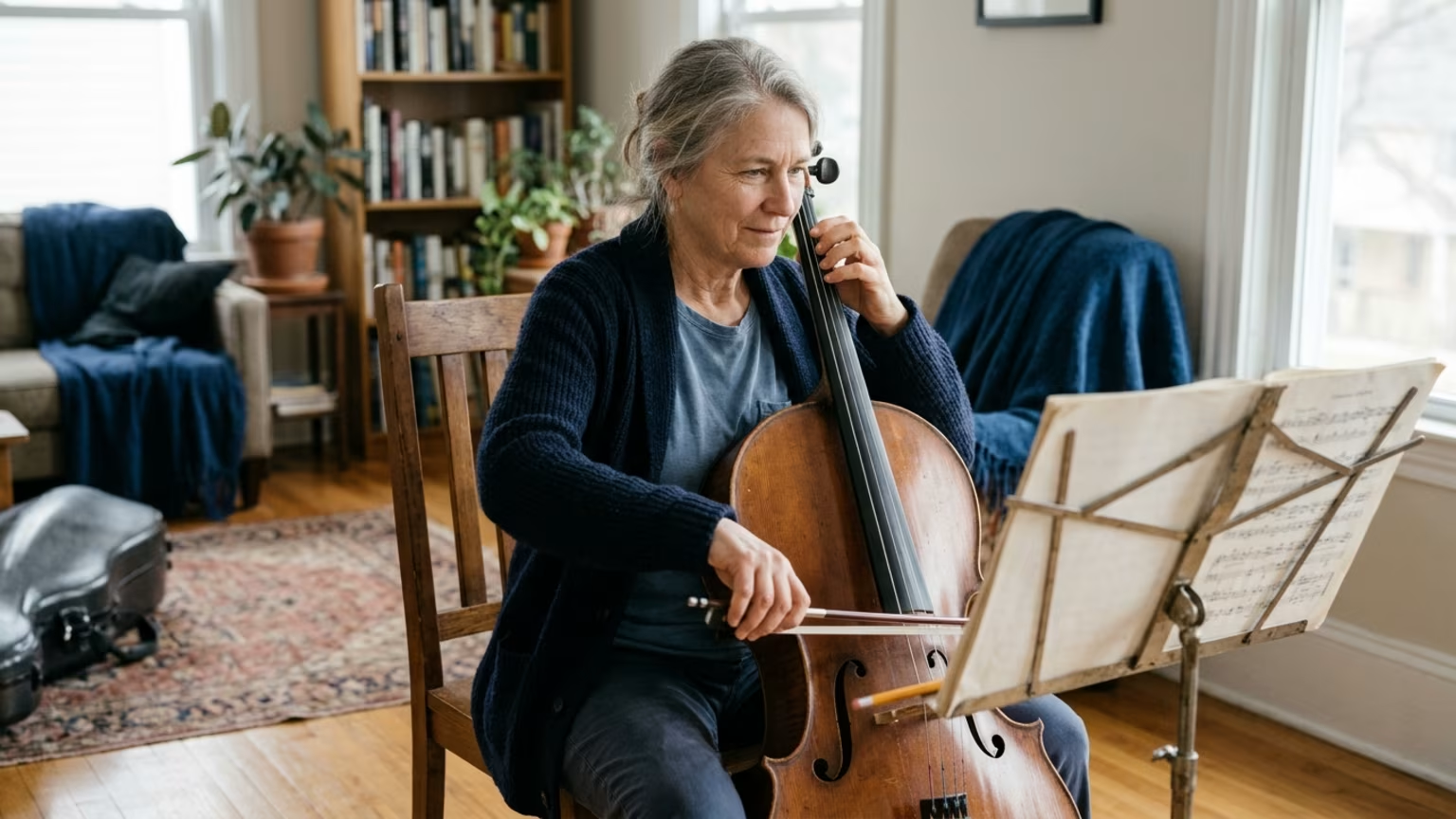
Real-world learning gives practice a purpose beyond a test score. The aim might be communicating in another language or playing an instrument. It might mean understanding photography or completing a useful project. The activity itself provides something worth learning.
The strongest direct example in the supplied research is the Synapse Project. An account of the study reports that older adults learned quilting or digital photography, or both, over three months. Participants in those learning groups averaged 16.51 hours a week.
At post-test, the learning groups had better episodic-memory results than groups doing less demanding activities. The comparison activities included social engagement and low-demand cognitive tasks. Episodic memory was the particular memory outcome behind this finding.
The researchers interpreted their results as support for sustained engagement in unfamiliar and cognitively demanding activities. The promising feature was not simply having a hobby. It was continuing to learn skills that required effort.
That gives readers a useful starting point: look at what an activity asks you to learn, not just whether it carries a brain-health label. Our guide to matching mental challenge to your interests develops that practical question.
The following comparisons concern the experience of learning rather than rankings of cognitive benefit:
These choices also overlap. A language or practical skill can be learned in a class. A class is a format rather than a separate kind of cognitive challenge, so it helps to distinguish the subject from the way you learn it.
For language learners, the next question is often how to make practice meaningful, not whether they have chosen the winning activity.
Targeted cognitive training takes a different route. Rather than beginning with a skill you want to use in daily life, it begins with tasks aimed at particular cognitive abilities. Its evidence is therefore best understood through the specific program and outcome tested.
A 2026 randomized trial published in JMIR Aging assigned 72 cognitively unimpaired older adults to chatbot-based cognitive training or no intervention. Training involved 30 minutes a day for five days a week over 12 weeks. The study reported improvement on a paired-associates learning measure in the training group.
That finding gives this approach a concrete evidence base: a defined program was tested against a comparison group using a defined learning measure. For someone interested in structured cognitive exercises, those details are more useful than a broad claim that a product keeps the brain young.
There is also longer-term research on a different form of training. In a 2026 report on the ACTIVE follow-up, ScienceDaily described fewer recorded dementia diagnoses among participants receiving speed-of-processing training plus booster sessions than among controls.
These are distinct interventions. Chatbot-based training and speed-of-processing training should not be treated as interchangeable names for a single method. The evidence belongs to the activity researchers actually tested.
The practical attraction of targeted training is its clearly specified task. Someone may prefer that format to choosing a subject or planning a project. The decision is about whether that kind of practice feels worthwhile, not whether it sounds more scientific than learning something useful.
Both approaches involve repeated mental engagement. The Synapse Project and the chatbot trial also reported benefits on particular memory or learning measures. That is a meaningful overlap, but it is not a direct comparison of the two approaches.
The evidence boundaries belong together here. The Synapse Project tested quilting and digital photography rather than directly comparing languages with instruments or classes. Its episodic-memory finding does not establish broad or lasting memory improvement from any hobby. The social-activity group did not show the same benefit on that measure, which does not make social connection unimportant to wellbeing.
The chatbot trial was small and concerned one program and its measured outcomes. The ACTIVE finding concerned a particular speed-of-processing intervention and participants who received booster sessions. Neither result can be transferred to hobbies or learning activities in general.
Taken together, these studies do not establish a universally best challenge. They also do not show that taking up a language or instrument prevents dementia. The useful common ground is sustained engagement and specific measured outcomes rather than a proven shared biological explanation.
The practical message is still constructive. Novelty and continued effort are promising features when choosing something to learn. A worthwhile activity does not need a disease-prevention claim attached to it.
It also helps to keep two questions separate: “Am I learning something I value?” and “Did a study find a change on a cognitive measure?” Both are reasonable questions, but an answer to one does not automatically answer the other.
The study schedules make time a real consideration. The Synapse participants made a substantial commitment to learning. The chatbot trial used a specified daily schedule across a defined period.
Those schedules describe the research rather than set a personal requirement. The evidence supplied here does not identify a minimum amount of hobby practice that delivers a cognitive benefit. There is no reason to turn the Synapse average into a weekly target for everyone.
For a practical comparison, ask:
These are editorial questions about fit rather than a tested formula for memory improvement. They help bring attention back to the choice the research leaves open: which activity is meaningful enough to keep learning?
For readers drawn to skill development, thinking through how learning will fit into daily life is a sensible next step.
FitBrainLab’s editorial verdict is to start with a learning goal rather than a prevention promise. If the aim is an engaged life with something worthwhile to work toward, a real-world skill offers a clear reason to practise. Choose the language or project for what learning it would add to your life.
Targeted cognitive training is a separate option for someone who prefers defined exercises. Judge its claims by the specific program and outcome studied. A finding about one intervention is not a reason to treat every training product as equivalent.
There is no research-based requirement here to combine both approaches. Nor does choosing a class over an instrument amount to choosing a better or worse future for your memory. The evidence supports interest in sustained challenge without turning ordinary learning decisions into high-stakes health tests.
The most useful balance is to take the research seriously while keeping the learning itself at the centre. Look for something genuinely new and worthwhile. Make room to practise it, and let growing knowledge or skill remain a valuable outcome in its own right.
A higher score on a memory test is one outcome of learning research; FitBrainLab explains how such findings relate to cognitive aging. For adults 60+ facing alarming claims about memory loss and dementia, its research-led reporting turns complex evidence into clear guidance on learning and purposeful living.

Follow FitBrainLab for research-led insights on memory, focus, brain aging, nutrition and mental fitness after 60. Stay connected for new articles, practical guidance and ideas for a sharper, more engaged life.



Build habits that support memory, focus and a curious, connected life.
Read the Blog
