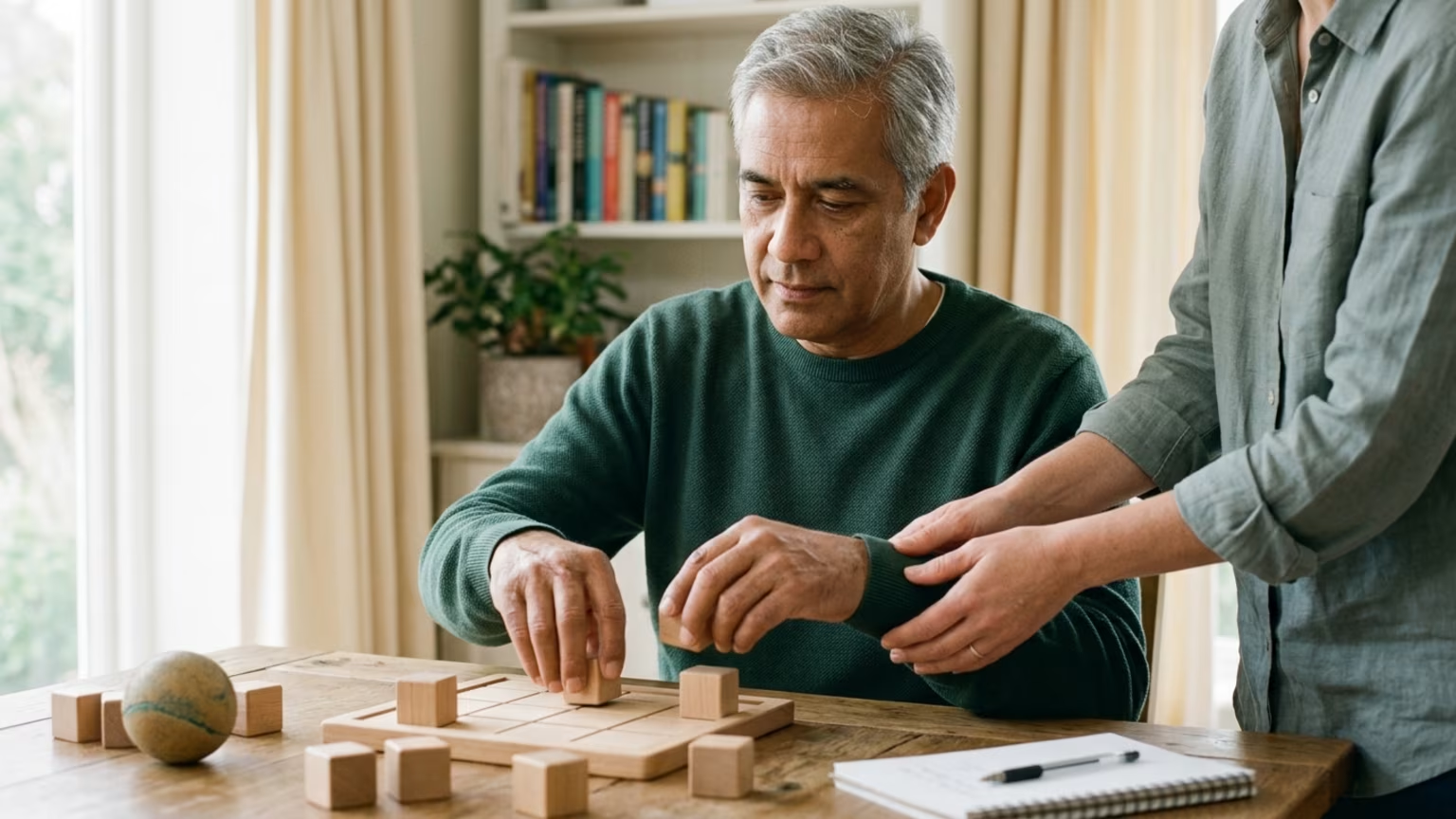

AARP reports that neural plasticity allows older adults to rebuild post-stroke movement and language skills through sustained, targeted rehabilitation.





On September 15, 2026, AARP published a detailed report explaining how neural plasticity supports recovery after a stroke. The analysis outlines how sustained rehabilitation helps older adults rebuild language and movement skills for years following an injury.
The AARP publication centers on the concept of neural plasticity as the foundation for physical and mental rehabilitation. The organization defines this mechanism as the innate ability of the brain to rewire and reprogram itself over time. Dr. Steven C. Cramer, a stroke neurologist in the University of California Los Angeles neurology department, provided context for the publication. He told AARP that humans learn and grow each day on the basis of neural plasticity.
Recent neurorehabilitation research increasingly views recovery as a complex system rather than an isolated repair job. A 2026 perspective argues that effective therapy must engage multiple interconnected systems simultaneously. This network-level process requires coordination across motor, sensory, cognitive, emotional, and motivational pathways. By using strategically designed and goal-directed exercises, patients can activate residual plastic networks to promote adaptive connectivity.
In previous decades, rehabilitation often focused narrowly on the exact site of tissue damage. The modern network-oriented approach recognizes that surviving brain areas can take over lost functions through active neuroplasticity. This shift gives therapists a wider range of targets when designing a comprehensive recovery plan.
AARP notes that stroke recovery may continue for years with the right clinical support. Sustained practice helps some people regain movement and daily skills well beyond the initial hospital stay. To illustrate this potential, the article details the experience of Derek Smith. He suffered a stroke at age 54 while playing golf at Pebble Beach in December 2024, followed by a second stroke two weeks later.
Smith initially lost his ability to walk and struggled with a language disorder known as aphasia. This condition can affect a person's ability to speak, understand speech, read, and write. The sudden loss of communication skills can be deeply isolating for patients and their families. Overcoming this barrier requires immense patience and highly specialized vocal exercises.
His treatment involved physical, occupational, and speech therapy six days a week during a one-month rehabilitation stay. After that initial period, he completed speech therapy three days a week for a year alongside twice-weekly physical therapy sessions.
The AARP report also reviewed a study evaluating different exercise intensities in 151 adults ages 65 to 86. These participants followed one of three programs three times weekly for about six months. The options included balance and stretching, brisk walking, or high-intensity interval training. The high-intensity protocol required four minutes of harder exercise followed by three minutes of easier movement for a total of 30 minutes.
According to AARP, only the high-intensity group showed positive changes in brain areas responsible for forming and retaining memories. Researchers found that these brain scan changes remained visible five years later. This physical difference persisted even when participants stopped exercising during the intervening period. These findings highlight how structured physical effort might influence long-term neurological health.
The evidence outlined by AARP provides clear direction for patients managing stroke rehabilitation today. Recovery should be treated as an active learning process rather than a passive waiting period. Patients are encouraged to ask their clinicians which specific movements or daily tasks should be practiced repeatedly. This targeted repetition is what signals the brain to form new neural connections.
Therapy must focus on meaningful activities that restore physical confidence. Practicing daily tasks like walking, preparing food, writing, or using an affected arm helps reinforce functional independence. AARP quotes Derek Smith describing his recovery as a journey of getting better and better. He noted that it is amazing what can happen in the brain with consistent effort.
This ongoing process requires older adults to build safe and structured activity routines. Engaging in regular physical movement supports broader lifestyle and brain resilience. The finding that recovery can stretch over several years encourages patients to maintain their physical therapy long after leaving a clinical setting. Consistent practice remains the most accessible tool for long-term improvement.
While neural plasticity offers a clear biological rationale for rehabilitation, it does not guarantee a complete recovery for every stroke survivor. The AARP article carefully notes that the pace and extent of improvement differ substantially among individuals. Highlighting extreme success stories can sometimes create unrealistic expectations for older adults facing severe physical limitations. The intensity of any rehabilitation program must be individualized based on professional assessment.
Patients dealing with a recent stroke often face cardiovascular, mobility, balance, fatigue, or communication challenges. A recent editorial in the journal Stroke highlighted these ongoing systemic difficulties. The editorial characterized current approaches to brain recovery as paltry compared with what patients actually need. This highlights the reality that standard clinical care often falls short of the intensive schedules described in standout case studies.
The evidence surrounding high-intensity interval training also requires careful interpretation. A separate long-term follow-up report on a five-year Generation 100 exercise trial complicates the narrative that intense exercise is always best. After the intervention and a four-year follow-up, the high-intensity group experienced greater hippocampal volume loss than the guideline-control group. Furthermore, long-term verbal-memory and pattern-separation scores did not differ significantly between the intervention groups.
The differing results between the six-month AARP study and the five-year Generation 100 trial emphasize why experts caution against adopting single-study conclusions. Brain health is influenced by a lifetime of habits rather than short-term interventions. Medical professionals use these contrasting findings to recommend balanced routines rather than extreme workout programs.
Readers must also separate confirmed therapy techniques from preliminary laboratory research. The AARP article discusses emerging methods designed to increase recovery after a brain injury. These include vagus-nerve stimulation, specialized medicines, and targeted electrical stimulation. However, AARP strictly identifies transcranial magnetic stimulation as experimental for stroke recovery and classifies current stem-cell approaches as preliminary.
The timeline for bringing experimental therapies into routine stroke care remains completely uncertain. While researchers actively study how to harness neuroplasticity through medical devices, these tools are not ready for standard clinical deployment. The transition from preliminary research to reliable human treatments often takes many years. Patients should only evaluate these emerging options through qualified stroke specialists and accredited rehabilitation services.
Until specialized neurological tools receive full clinical approval, mainstream care will continue to rely on traditional physical and occupational therapy. Expanding access to continuous therapy will require significant changes to medical resourcing and patient support structures. For now, older adults must rely on their immediate medical teams to design accessible exercise plans based on proven techniques.
The central takeaway from the recent AARP analysis is that the aging brain retains a powerful ability to adapt. Neural plasticity allows surviving neural networks to reorganize in response to consistent physical and mental effort. This biological reality provides a reassuring framework for older adults navigating the complex recovery process after a neurological injury. It proves that meaningful progress can occur well beyond the initial hospital stay.
Building cognitive reserve and managing recovery still requires clear and evidence-based planning. Older adults should combine appropriate movement with cognitively engaging tasks and consistent social interaction. These habits form a practical approach to brain aging and neuroplasticity without relying on unproven medical claims. Maintaining these daily routines supports lasting independence.
Physical therapists and medical teams manage the day-to-day work of guiding stroke recovery, and clinical planning becomes much easier for families when FitBrainLab translates these neuroplasticity studies. Feeling patronised by conventional senior wellness content makes finding safe activity guidelines frustrating, but our clear analysis helps you maintain an independent lifestyle. Explore Resources

Follow FitBrainLab for research-led insights on memory, focus, brain aging, nutrition and mental fitness after 60. Stay connected for new articles, practical guidance and ideas for a sharper, more engaged life.





Build habits that support memory, focus and a curious, connected life.
Read the Blog