
A Chicago physician's new book highlights movement as a multidimensional health practice, though clinical evidence on dementia prevention remains inconclusive.





On September 28, 2026, Axios Chicago reported on Evanston-based physician Geeta Maker-Clark and the release of her new book. The publication frames rhythmic movement alongside community and nature as everyday lifestyle practices for long-term well-being.
Axios Chicago profiles Maker-Clark as an integrative physician, educator and movement practitioner. She is actively affiliated with Endeavor Health in the Chicago area. Her new book is titled Medicine For All People. It outlines a broad perspective on what constitutes meaningful health and wellness.
The book structures its guidance around nine specific “medicines” or “remembrances” for readers to incorporate into daily life:
By grouping physical expression with elements like service and gratitude, the book positions well-being as a broad ecosystem. It encourages older adults to look beyond the pharmacy for ways to stay active and engaged.
Maker-Clark describes this type of movement in her book as one of the “most powerful lifestyle factors for reducing dementia risk.” This is a strong personal characterization of the activity. Axios reports these concepts specifically as the author’s framework rather than as settled science. Her perspective reflects a deep belief in the power of physical expression.
Maker-Clark told Axios that the book grew from “decades of quiet observations” over the course of her career. She built this perspective working as a physician and community advocate. Her writing brings together formal science, ancestral wisdom, personal relationships and lived experience. The goal is to present health as a holistic practice rather than just a clinical pursuit.
The local book launch was planned as a multidimensional event at Hewn Bakery in Evanston. Axios reported that tickets for the gathering cost $95. The ticket price included a question-and-answer session, an autographed copy of the book, food and drinks. A cooking demonstration also highlighted the food aspect of her nine medicines.
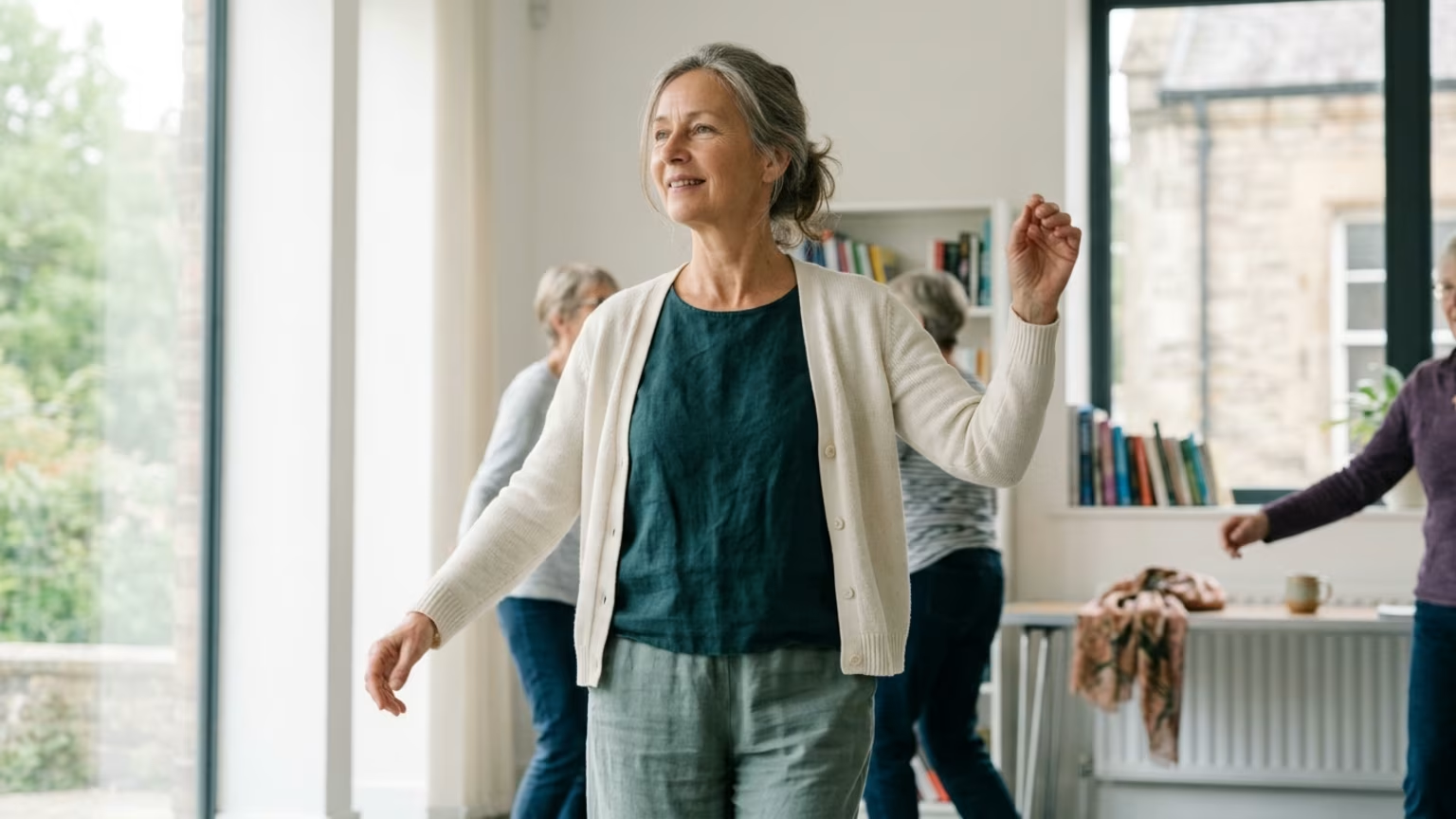
For older adults, this framework highlights how everyday movement can serve multiple practical functions at once. Rhythmic movement offers a unique way to combine physical activity with musicality, physical coordination, learning and social participation. These are all reasonable and highly accessible features of active living. You can pursue this enjoyable activity without needing a formal medical prescription.
People considering a new physical activity can look for a setting that suits their own abilities. A local class or community group might provide the social interaction that many older adults value deeply. Others might prefer moving to familiar music at their own pace in their living rooms. This flexibility makes the activity highly adaptable to different schedules.
Viewing rhythmic movement through a multidimensional lens changes how we measure success in physical activity. You do not need to reach a specific heart rate to benefit from the effort. Simply stepping to a rhythm and coordinating your motions engages various physical systems. Finding a sustainable routine that you actually enjoy is a highly practical approach to long-term health.
Readers can review more about lifestyle and brain resilience to build these positive daily habits. This approach also removes the pressure of treating exercise strictly as a medical intervention. When movement is framed as play or community participation, it becomes easier to maintain over the years. The focus shifts from preventing disease to enjoying the present moment.
While rhythmic movement is a highly engaging activity, readers must separate the enthusiasm of a new book from established medical consensus. Maker-Clark’s description of this activity as a powerful factor in reducing dementia risk is her own assessment. The evidence available to researchers currently presents a much more complex picture. Finding enjoyment in movement is very different from proving that an activity prevents cognitive decline.
Current global health guidance addresses a much wider lifestyle context than a single activity alone. The World Health Organization issued a second edition of its guidelines on risk reduction of cognitive decline and dementia in 2026. This release updated the previous 2019 edition to reflect newer evidence and advances in the field. Notably, the 2026 WHO executive summary presents updated recommendations on reducing dementia risk without specifying rhythmic movement as a distinct intervention.
Clinical research on this specific activity as a treatment remains limited and mixed. A 2026 Frontiers review summary examined cognitive outcomes in older adults participating in movement therapy. Researchers looked at specific outcomes including cognition, memory, executive function and attention. The review described a small, 12-week group-based trial among older adults with mild dementia.
The summary stated that cognitive and neuropsychiatric improvements from this 12-week trial were inconclusive. Researchers concluded that the trial was insufficient to support robust clinical recommendations. Furthermore, structured movement therapy studies and community participation are not necessarily interchangeable. A formal group-based trial operates differently than simply moving socially or at home.
It is also vital to understand that general physical activity evidence does not automatically validate rhythmic movement specifically. A separate review of guidance notes that physical activity is widely recommended for overall health. However, evidence specifically for preserving cognitive function is described as somewhat inconclusive. These distinctions are critical for maintaining a realistic view of what lifestyle habits can actually achieve.
This cautious perspective is a core theme in our brain aging and neuroplasticity articles. Findings from one small trial or a limited review should not be translated into sweeping medical promises. The retrieved sources do not provide a tested movement prescription, safety protocol or dementia-prevention dose. A specific regimen cannot be inferred from this recent reporting. Older adults should be wary of any claims that guarantee cognitive preservation.
The release of Medicine For All People offers a helpful reminder that health encompasses everyday activities. Rhythmic movement is an appealing way to integrate physical coordination and social connection into your routine. Treating it as a form of play and community participation can make physical activity much more enjoyable and sustainable.
However, no single activity serves as a guaranteed shield against cognitive decline. A measured takeaway is to choose movement that is enjoyable and to treat it as one option within a broader approach. It should be viewed as part of general health rather than as a stand-alone brain-protection strategy. We will continue tracking these developments on our memory and focus blog as global research evolves.
Balancing the enjoyment of social movement with the reality of inconclusive clinical trials requires a measured approach to physical activity. Confusion about what normal brain aging looks like can make evaluating new health frameworks difficult, and FitBrainLab translates complex evidence on lifestyle habits to help older adults make informed decisions.

Follow FitBrainLab for research-led insights on memory, focus, brain aging, nutrition and mental fitness after 60. Stay connected for new articles, practical guidance and ideas for a sharper, more engaged life.





Build habits that support memory, focus and a curious, connected life.
Read the Blog