

A varied movement routine after 60 can address endurance, strength and balance. Weigh cognitive-health evidence without perfect-workout pressure.





You do not need a perfect workout to make movement worthwhile after 60. The idea that brain health rests on finding the right exercise formula asks more of the evidence than it can deliver.
An aerobic session does not have to prove itself better for memory than strength work to deserve a place in a routine. Nor does ordinary movement become meaningless because it happens outside a formal workout.
The useful question is not which activity wins a brain-health contest. It is how different kinds of movement can support an active life without turning that life into an exercise exam.
The World Health Organization's physical activity guidance identifies improved cognitive health, mental health and sleep among the benefits associated with physical activity in adults and older adults. It also links activity with lower risks of falls and several major health conditions.
That is a broad health case for movement. A varied routine adds a practical idea: different activities address different parts of physical function.
A summary of WHO recommendations describes aerobic activity, muscle-strengthening work and balance-focused activity for adults 65 and older. It also describes varied multicomponent activity focused on functional balance and strength on at least three days a week. These are population-level recommendations rather than an identical schedule for every person.
Aerobic activity is one way to build endurance. That gives it a clear role when looking at what a routine is meant to support.
Endurance is a worthwhile aim in its own right. It does not have to compete with balance or strength for permission to matter.
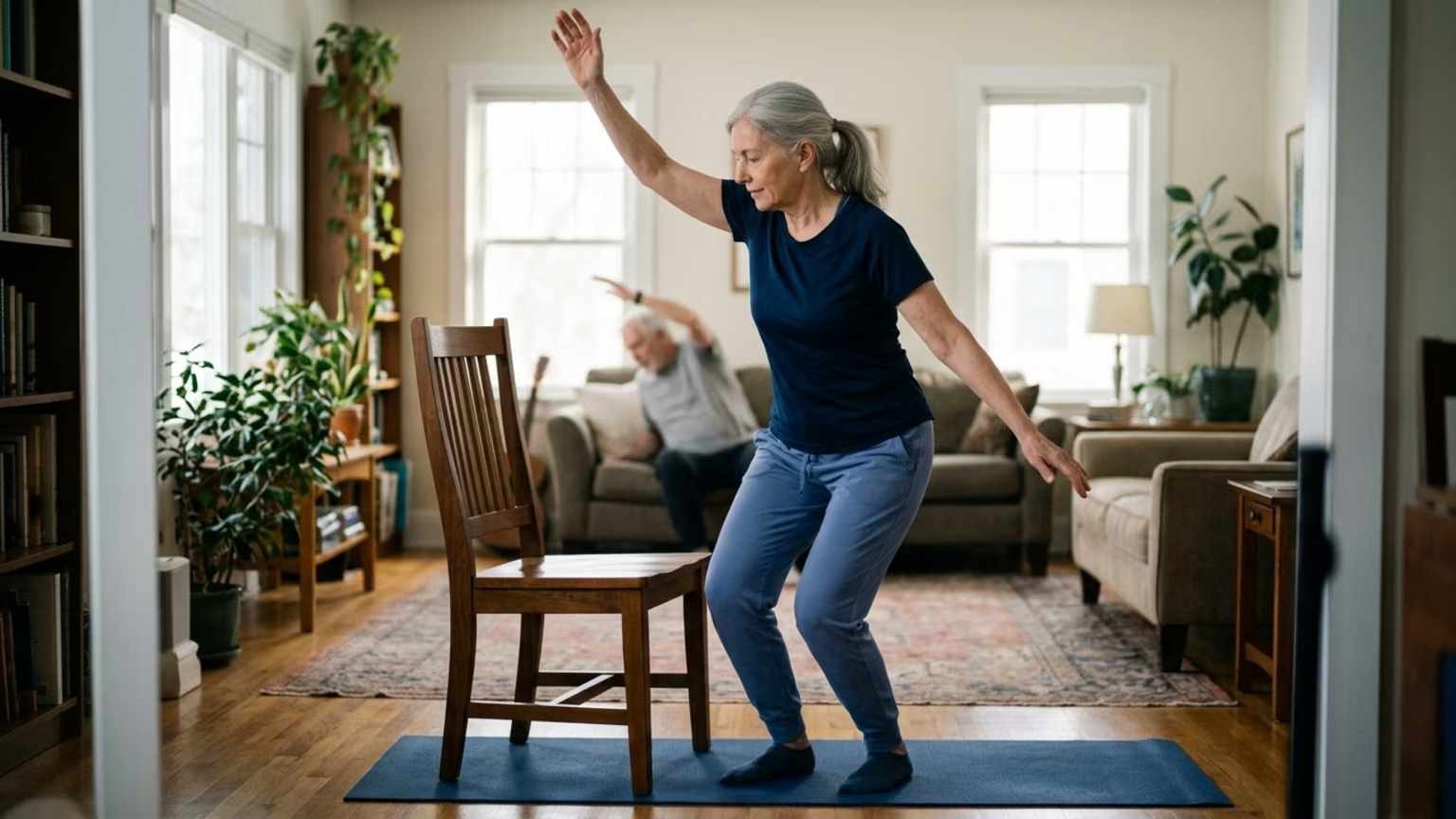
Strength work is relevant to maintaining the capacity to move and do everyday tasks. Balance practice addresses a separate part of physical function. The recommendation summary supports treating both as complements to aerobic activity rather than substitutes for it.
Variety here means covering different needs. It does not mean collecting the largest possible number of activities or changing exercises constantly.
WHO also says that all activity counts, that some is better than none and that sedentary time should be limited. Formal exercise is not the only movement with a place in an active day.
That gives ordinary activity a legitimate place alongside purposeful sessions. Our guide to recognizing movement outside a workout uses that broader frame. Counting everyday movement does not require treating it as a replacement for every kind of planned activity.
The distinction between physical function and cognition matters. WHO's broad cognitive-health statement does not establish that a particular routine prevents dementia or guarantees better memory for an individual.
A 2026 systematic review in BMC Geriatrics included 17 independent randomized-trial datasets and 1,691 participants with cognitive frailty. Its authors reported substantial differences between studies, imprecise estimates and mostly moderate-to-low certainty. Those problems limited confidence in rankings of exercise types. Its findings also concern cognitive frailty rather than all adults over 60.
A magazine summary of the EXERT trial reports that aerobic training and lower-intensity stretching and balance produced no significantly different cognitive-score changes after 12 months in older adults with mild cognitive impairment. Cognition remained relatively stable in both groups.
That account is a secondary summary rather than the trial's primary report. The comparison was between active programs, not exercise and no activity. It therefore establishes neither that exercise has no value nor that exercise caused the reported stability.
Taken together, these findings support a measured conclusion: do not choose a routine on the promise that one exercise type has won the memory contest.
The pressure to get exercise exactly right can turn broad guidance into a pass-or-fail test. If only the supposedly best workout counts, then a manageable activity starts to look like a poor substitute.
That is an unhelpful way to read the evidence. It can leave an older adult asking whether an activity is optimal before asking whether it fits their abilities, interests and daily life.
Words such as “best” also hide the question of best for what. Endurance, balance and cognitive-test performance are not the same outcome. A headline that moves between them can sound more decisive than the underlying comparison. Reading the outcome first helps avoid giving weight to a ranking that does not answer your question.
It can also create unnecessary demands on time and money. A class or program may be worthwhile for its structure or personal appeal. The problem begins when a claim of superior brain protection becomes the reason to pay for it.
For readers weighing competing messages about sleep, food and exercise, that adds another standard to meet. The better editorial test is whether a claim matches what was measured. That question keeps attention on the evidence instead of the force of the sales message.
There is no need to turn a missed session into a verdict on future memory. WHO's message that some activity is better than none offers a calmer starting point than treating an imperfect week as a failed week.
A more sustainable goal is to make room for different kinds of movement while keeping ordinary life in view. That means looking at purpose and fit rather than demanding an ideal program.
The following questions translate the guidance into a planning frame. They are not an exercise prescription or a test that everyone must pass.
Does the routine include movement for endurance? Is there room for strength work and balance practice? What ordinary activity already belongs in the day?
These questions keep the categories visible without requiring every session to do everything. A single session does not need to stand for the whole routine.
They also make it easier to describe a routine in plain language. Instead of labeling a week good or bad, it is possible to identify where endurance, strength and balance are represented. Ordinary movement belongs in that description too.
The purpose is to see the pattern rather than judge each day in isolation. A week can be discussed as a whole without demanding that every activity serve every goal.
The goal is not constant novelty. Keeping an activity that fits is compatible with making room for another kind of movement that serves a different purpose.
Preferences, mobility and health circumstances belong in the discussion. A routine that looks varied on paper still needs to suit the person doing it.
For individual decisions shaped by health conditions or movement limitations, a qualified healthcare professional can help with personal guidance. FitBrainLab's discussion of adapting movement around chronic conditions offers broader reading on this issue.
A useful plan makes room for those differences from the start. Adaptation is part of applying broad guidance rather than a sign that someone has failed to meet it.
Planning can focus on participation, practical function and activities a person is willing to keep in their life. That is a more useful standard than expecting every week to produce proof of better cognition.
It also leaves room for movement to sit alongside other parts of living. Our whole-life perspective on cognitive longevity puts movement within a wider discussion of brain health rather than making it the only task.
A varied plan need not be elaborate. Its value as a planning tool lies in noticing different needs and finding a workable place for them.
You can value the evidence, choose movement that fits your life and leave the search for perfection behind.
Choosing varied movement means balancing broad health guidance with personal circumstances, a trade-off FitBrainLab addresses through research-led explanations. The publication addresses contradictory advice on exercise, sleep and nutrition by separating established findings from early claims, helping older readers assess brain-health options without fear-based messages.

Follow FitBrainLab for research-led insights on memory, focus, brain aging, nutrition and mental fitness after 60. Stay connected for new articles, practical guidance and ideas for a sharper, more engaged life.





Build habits that support memory, focus and a curious, connected life.
Read the Blog

