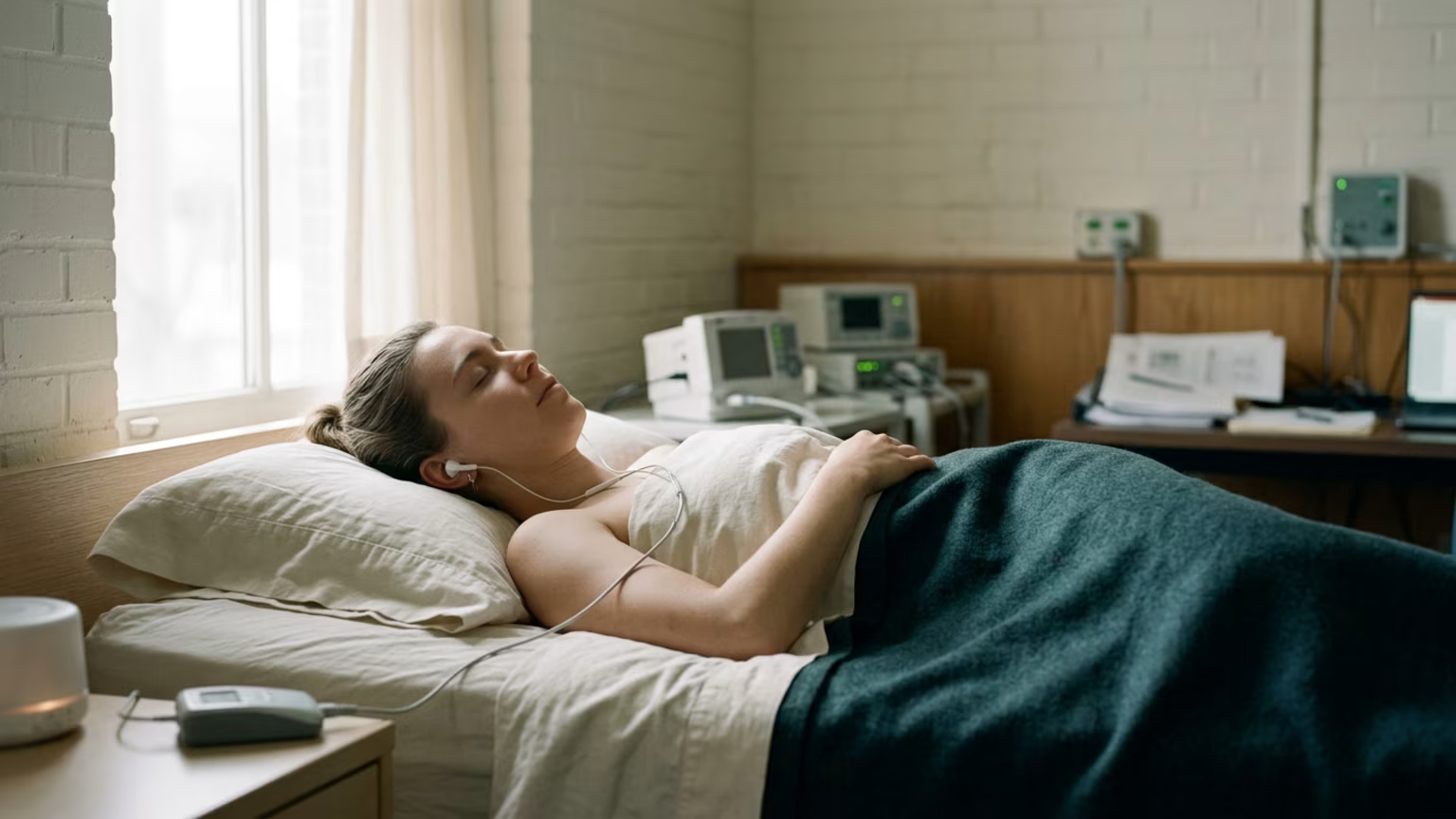

An MIT-led study found timed pink noise increased sleep-related brain waves in 14 adults. Learn what this experimental research means for cognitive health.





On September 9, 2026, researchers published a study in Science Translational Medicine demonstrating that carefully timed bursts of pink noise increased the amplitude of specific brain waves during sleep in 14 healthy volunteers. The experiment was led by MIT researcher Laura Lewis and included lead author Joshua Levitt, a Boston University-trained researcher who worked as a visiting graduate student in the MIT laboratory.
The research focused on how specific auditory signals might influence the brain's overnight clearance system. Cerebrospinal fluid naturally helps cushion the spinal cord and provides necessary nutrients to the brain. According to MIT's explanation of the study, this fluid also removes waste products produced by brain cells throughout the day. The researchers wanted to measure whether precise auditory stimulation could physically influence this natural biological process during rest.
To test this hypothesis, the researchers utilized a specific type of sound known as pink noise. This sound profile contains the full range of audible frequencies, but its lower frequencies are noticeably louder than its higher frequencies. The researchers compared the resulting audio to the sound of steady rain or a distant waterfall. The chosen sound volume was intentionally kept low, preventing the audio from waking the participants during the experiment.
The delivery method was highly targeted and required precise timing. The sound stimulus lasted exactly 50 milliseconds and was not played continuously throughout the night. Instead, researchers delivered the brief sound burst at the predicted peak of each participant’s slow brain waves. The team used simultaneous electroencephalography and functional magnetic resonance imaging to monitor brain activity and fluid movement at the exact same time.
Operating these two measurement tools together presented a significant technical challenge for the research team. Because the magnetic resonance imaging environment creates severe signal interference, the team had to develop a specialized rapid signal processing system. They built a mathematical prediction algorithm to identify exactly when a slow-wave peak was about to occur. This sophisticated technology allowed them to trigger the short sound burst at the precise moment required.
The published findings showed that the physiological effect on cerebrospinal-fluid flow depended completely on accurate phase timing. When the auditory stimulation aligned perfectly with slow-wave peaks, the fluid waves visibly increased in amplitude. The sound is intended to reinforce an existing slow wave rather than simply provide continuous background noise. Laura Lewis compared this precise timing requirement to pushing a child on a swing at the exact right point in their physical motion.
When the timing was deliberately misaligned, the physiological effect was not apparent in the recordings. MIT researchers reported that this biological sequence suggests a clear physical mechanism for fluid movement. Their observations showed that slow electrical waves are predictably followed by blood-vessel constriction and dilation. These rhythmic blood-vessel changes may act as a physical pump that actively supports fluid movement through the resting brain.
The clearest practical message from this research is that sleep quality remains a highly reasonable part of any long-term cognitive strategy. A 2026 scientific review noted that aging brings well-documented reductions in both non-REM sleep and slow-wave activity. These normal age-related changes may present specific challenges for the brain's overnight waste-clearance systems. The pink-noise study is highly relevant to cognitive-longevity research precisely because it examines these exact biological clearance mechanisms.
Since the published report does not provide age-specific outcomes for adults over 60, older individuals must focus on established sleep hygiene first. Protecting your nightly rest actively supports normal biological brain function over time. Other recent research highlights this exact biological connection in different age groups. A separate 2026 study examined 17 healthy adults aged 35 to 65 to see how interrupted rest affects specific brain proteins.
The researchers found that experimentally disrupting slow-wave activity was directly associated with higher next-morning levels of cerebrospinal fluid amyloid-beta40. They also reported that poorer home sleep efficiency was directly linked to higher levels of the tau protein. For adults over 60, these distinct physiological findings reinforce the lasting value of established daily sleep habits. You should prioritize maintaining a regular sleep schedule and discuss persistent insomnia with a qualified medical doctor.
Readers looking for practical guidance can visit our brain health and memory blog for sensible behavioral strategies. Medical conditions like sleep apnea can severely disrupt the slow-wave sleep required for daily brain maintenance. If you experience loud snoring or excessive daytime sleepiness, you should bring these specific symptoms to a clinician immediately. Proper evaluation remains the safest path forward for addressing persistent nighttime awakenings.
These everyday clinical measures do not replicate the experimental pink noise technology tested in the laboratory. Instead, they provide a medically proven foundation for achieving restorative nighttime rest. You can read more in our brain aging and neuroplasticity articles about how daily routines support lasting cognitive resilience. Proper sleep remains an accessible and highly practical tool for protecting long-term brain health.
This study represents an early step in sleep research rather than a final medical treatment protocol. The experiment involved only 14 healthy volunteers, meaning the clinical sample size was quite small. The findings absolutely require replication in larger and more diverse human groups before they become broadly applicable to the general public. The available MIT summary does not provide specific participant demographics or detailed long-term clinical health outcomes.
The study successfully changed physiological signals rather than proven cognitive health outcomes in the participants. The experiment exclusively measured short-term increases in slow-wave and fluid-wave amplitude during sleep. It did not establish that participants had better memory, attention, cognitive performance, or measurable protection from Alzheimer’s disease. Joshua Levitt noted that improving brain-waste clearance could eventually relate to Alzheimer’s disease, but this remains a research hypothesis rather than a proven medical result.
The technical demands of the method highlight why this is not a simple at-home intervention. The researchers needed simultaneous recording devices, rapid removal of signal interference, and custom software to predict brain waves. Readers must clearly distinguish between ordinary pink noise and the study’s highly specific clinical intervention method. A standard phone app or household speaker playing continuous pink noise does not reproduce these strict scientific test conditions.
The researchers used a sophisticated closed-loop system that actively monitored brain activity and delivered a 50-millisecond burst at an exact peak. A consumer device playing background noise cannot target slow brain waves with this necessary level of technical precision. The researchers have not shown that people should use pink noise to treat clinical insomnia or memory loss. People with sleep problems should never delay medical evaluation for treatable causes merely because a sound-based experimental approach is making news.
Medical professionals still rely on established clinical evaluations for managing suspected sleep disorders. Those interested in foundational support can browse our lifestyle and brain resilience resources for objective clinical guidance. Treating the underlying causes of poor sleep remains far more effective than purchasing untested audio equipment. Readers should focus on medically verified treatments while the scientific community continues testing auditory stimulation.
The authors stated that the next logical step is to investigate this targeted approach in actual clinical populations. The published findings currently come exclusively from healthy adults rather than individuals with underlying medical conditions. Researchers have not yet tested the intervention on adults with insomnia, mild cognitive impairment, Alzheimer’s disease, or other specific neurological conditions. Future studies must test whether these physiological changes translate to measurable daytime benefits in older populations.
There is a parallel technology development effort currently underway connected to this specific neuroscience research. Lead author Joshua Levitt has started a company hoping to develop a practical device that could deliver this auditory stimulation at home. The proposed technology would potentially take the form of a wearable headband capable of monitoring human sleep stages accurately. However, this product remains in the early stages of commercial development and is not currently available for routine clinical medical treatment.
This MIT-led research clearly highlights how precise biological mechanisms connect deep sleep to daily brain maintenance. The ability to measure and physically influence fluid flow during rest offers a fascinating direction for future cognitive longevity research. While the exact pink-noise intervention remains experimental, the underlying science strongly confirms that restorative sleep plays a meaningful role in human brain health. Protecting your nightly rest continues to be a highly sensible strategy for maintaining mental clarity as you age.
Fear created by alarmist memory loss and dementia coverage frequently leads older adults to misinterpret early sleep experiments as immediate cures, and FitBrainLab translates these physiological studies so you can maintain a clear perspective. Misinterpreting laboratory sound technology often causes people to purchase unproven consumer devices, and our objective analysis helps you focus on verified behavioral rest strategies. Explore Resources

Follow FitBrainLab for research-led insights on memory, focus, brain aging, nutrition and mental fitness after 60. Stay connected for new articles, practical guidance and ideas for a sharper, more engaged life.






Build habits that support memory, focus and a curious, connected life.
Read the Blog