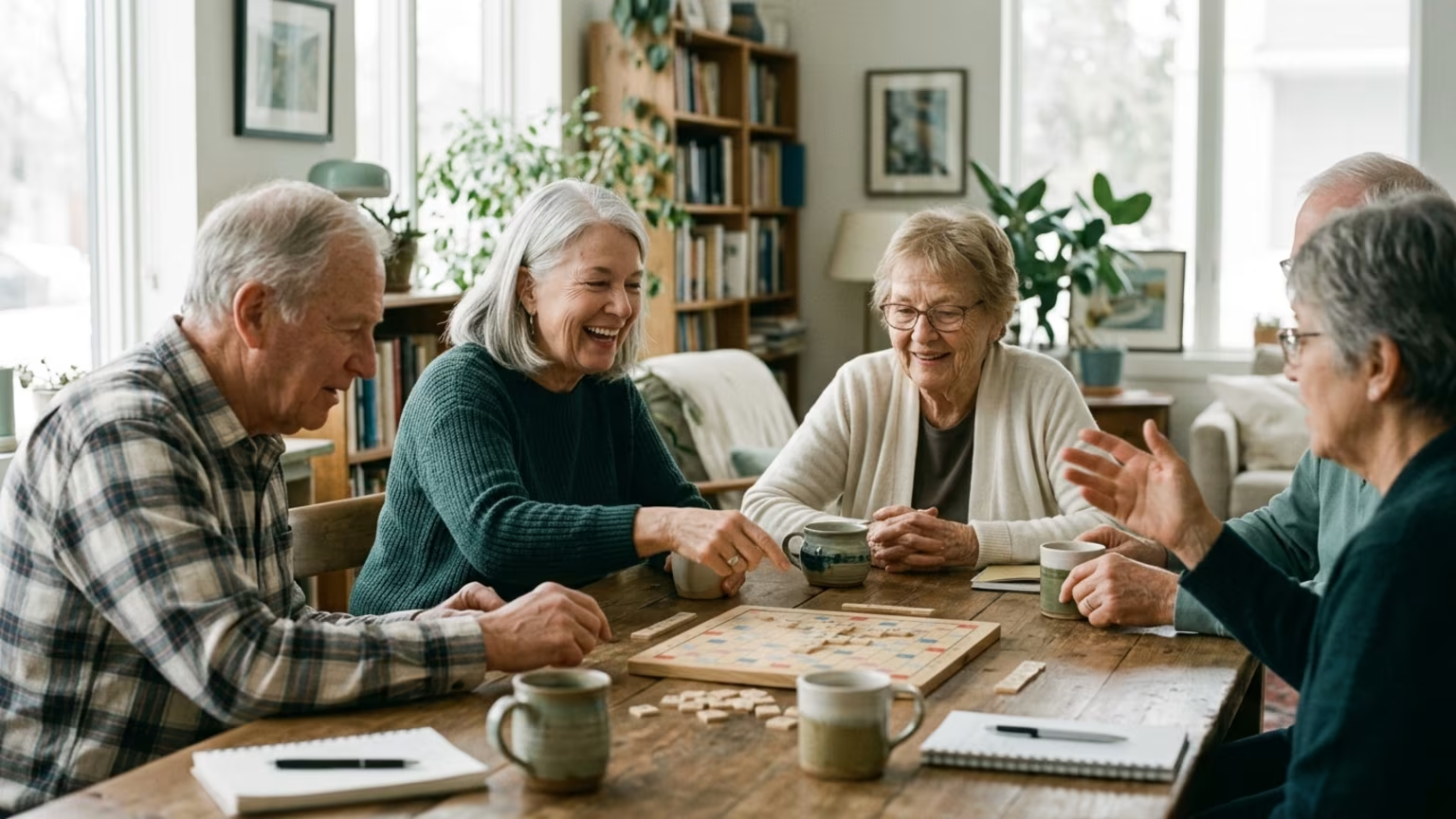

A long-term study linked sustained helping with slower cognitive decline. Learn what the finding means and how to approach social connection without pressure.





On October 13, 2026, the University of Texas at Austin reported that a study of nearly 18,000 U.S. adults followed over 22 years linked sustained volunteering or other helping outside the home with slower cognitive decline. The report highlighted this association among people at higher genetic risk for Alzheimer's disease.
According to the university's report, people who began and sustained these helping activities showed slower cognitive decline. The finding brings attention to continued participation rather than a single outing or occasional good deed. For readers thinking about life after retirement, that makes an ongoing role in the community a useful subject for discussion.
The long follow-up is also relevant. Researchers examined patterns across 22 years rather than reporting only how participants were doing at one point. The reported connection concerned changes in cognition over time, which makes the study relevant to questions about long-term brain aging.
The focus was helping other people outside the home. That is more specific than social engagement as a whole, which might include conversations or shared interests without a helping role. Keeping that distinction clear allows readers to understand the activity behind the headline rather than treating every form of social contact as the same research finding.
The report also drew attention to participants at higher genetic risk for Alzheimer's disease. This makes the relationship between everyday activity and cognitive aging a research question worth following. It does not require readers to view a volunteer role mainly through the lens of disease risk.
For adults thinking about their routines, the practical question is which forms of participation feel worthwhile and workable. A useful starting point is interest rather than obligation. Helping can have a place in that conversation without becoming the only acceptable way to spend time with others.
The National Institutes of Health offers broader healthy-aging guidance on staying connected. Its suggestions include scheduling calls or video chats and finding groups built around shared interests. Gardening groups, volunteering and walking groups are among its examples.
These suggestions provide several different starting points:
These are options for connection rather than a list to complete. Someone interested in volunteering might begin by thinking about the kind of contribution they would enjoy. Someone more drawn to conversation might prefer arranging contact with a friend. The purpose is to identify a form of participation that has personal meaning.
Practical fit deserves attention too. Interests and energy are part of that decision. So are mobility and transportation, along with any costs involved. Thinking about those factors keeps the discussion grounded in ordinary life rather than in an idealized image of an active retirement.
There is also no reason to make sociability a personality contest. FitBrainLab's discussion of social ties for people who identify as introverted offers a related perspective for readers who prefer a quieter social life.
A helpful question is not simply, “How can I do more?” It is, “Which connections or contributions would I value enough to continue?” That shifts attention from filling a calendar to choosing a role or relationship that fits the person living it.
The central limit is the difference between an association and cause and effect. The university reported a link between sustained helping and slower cognitive decline. That finding should not be read as proof that volunteering caused the difference or as a promise that helping will prevent Alzheimer's disease in an individual.
The genetic-risk finding needs the same careful interpretation. A reported association in people at higher genetic risk is not an individual forecast. It is not a recommendation to seek genetic testing or change medical care. Decisions about personal risk belong in a conversation with a qualified health professional.
The report should not become a required number of volunteer hours or a rule that everyone must help outside the home. The responsible practical response is to keep participation flexible. A research result is not a basis for assigning someone a social workload or judging whether their routine is sufficient.
The university's finding and the NIH's guidance also serve different purposes. The study report concerns a link between particular helping activities and cognitive change. NIH's suggestions describe practical ways to stay connected. Its advice about calls and shared-interest groups is not a claim that those activities prevent cognitive decline.
This distinction matters for readers facing limits on outside activities. A headline should not become a source of guilt for someone whose circumstances make volunteering difficult. Personal preferences and access deserve respect, rather than being treated as failures to follow a brain-health formula.
Memory concerns need their own attention. New or troubling changes are a reason to speak with a qualified health professional, not simply add another social activity. FitBrainLab's background article on memory changes in later life addresses a related topic, while individual concerns call for individualized assessment.
For cognitive-health research, this report keeps attention on the relationship between meaningful activity and aging over a long period. Its focus on people who began and continued helping also makes sustained participation a useful subject for further study. The finding contributes to a broader discussion of how an engaged life relates to cognitive health.
For readers, its value is more grounded than a dramatic prevention headline. A community role can be assessed for its purpose and personal fit, not only for a hoped-for effect on memory. The long-term direction worth supporting is research that takes everyday life seriously while keeping the line between an observed connection and a demonstrated health benefit clear.
Deciding whether a volunteering headline should reshape a weekly routine calls for context, which FitBrainLab supplies through clear explanations of brain-aging evidence. Its research-led reporting addresses the anxiety caused by alarming dementia stories and helps adults 60+ understand cognitive health without inflated claims or medical promises.

Follow FitBrainLab for research-led insights on memory, focus, brain aging, nutrition and mental fitness after 60. Stay connected for new articles, practical guidance and ideas for a sharper, more engaged life.





Build habits that support memory, focus and a curious, connected life.
Read the Blog