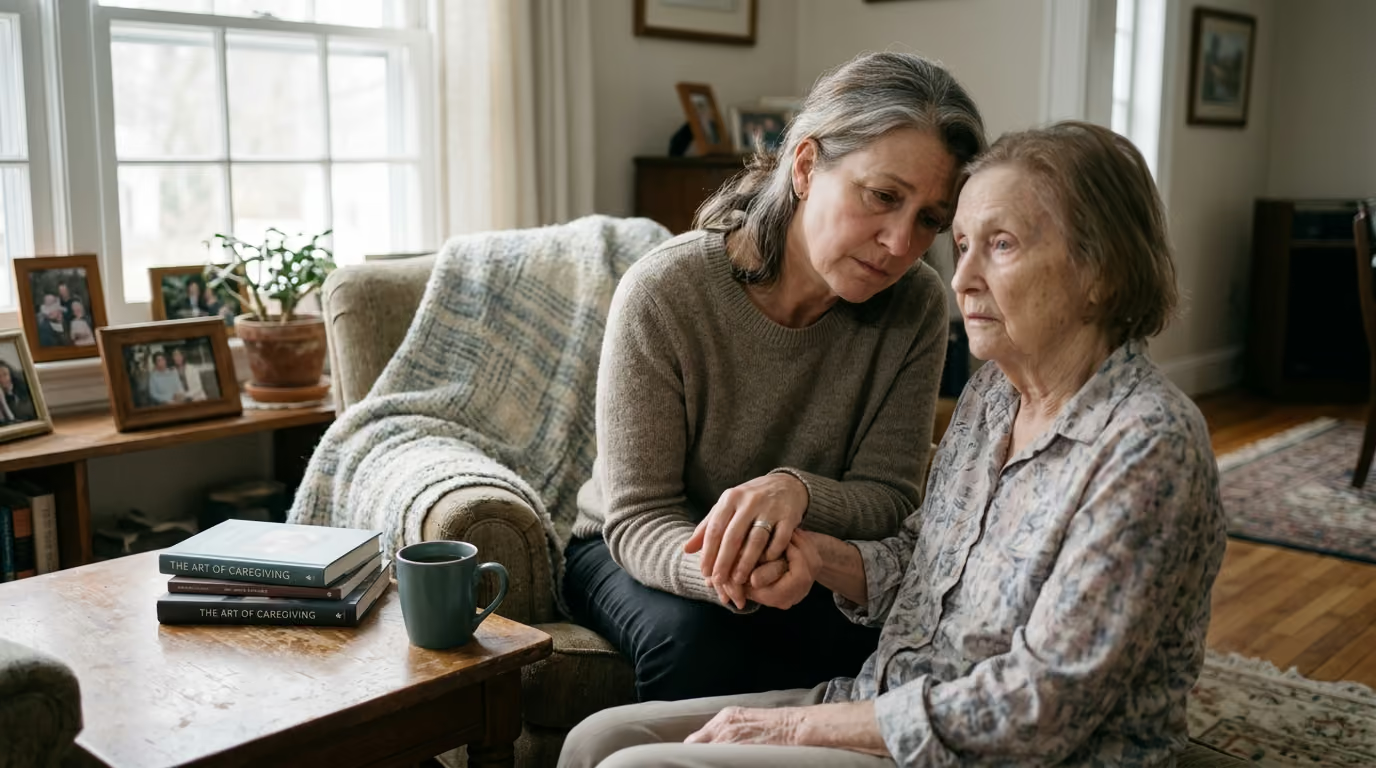

Frequent moments of confusion with daily routines make a personal cognitive health record essential for tracking subtle brain changes over time.





Many people search online for what to do when they notice memory lapses or difficulty concentrating. They want to know whether misplacing keys, missing a bill payment, or forgetting a name is a normal part of aging or the start of something serious.
Finding clear answers is difficult when symptoms are scattered across separate doctor visits, informal family observations, and personal worries. A personal cognitive health record provides a clear, organized method to track your baseline thinking abilities, daily functioning, health history, and future care preferences.
This guide delivers a definitive framework for creating, maintaining, and using a patient-controlled cognitive record. By documenting concrete observations over time, you can have more productive conversations with your healthcare providers and protect your independence.
Cognitive health involves much more than memory alone. The human brain relies on interconnected networks to manage different types of mental tasks. Neurologists and neuropsychologists divide cognitive processing into six core domains.
The first domain is complex attention. This includes your ability to maintain focus, track multiple streams of information, and process mental tasks without becoming easily distracted.
The second domain is executive function. This covers planning, organizing, making decisions, sequencing steps in a task, and adapting when circumstances change.
The third domain is learning and memory. This involves taking in new information, storing it, and retrieving it when needed. It includes short-term recall, long-term memory, and memory for events or procedural tasks.
The fourth domain is language. This area governs word retrieval, grammar, comprehension of spoken speech, reading, and writing.
The fifth domain is perceptual-motor and visuospatial function. This enables you to judge distances, navigate familiar environments, recognize faces, and use tools or household controls.
The sixth domain is social cognition and behavioral regulation. This governs how you interpret social cues, regulate emotional responses, and maintain empathy in personal interactions.
Normal age-related changes may cause slight slowing in processing speed or occasional pauses when recalling names. When cognitive changes begin to interfere with complex daily routines, clinicians look for systematic patterns across these specific domains.
A structured personal record documents how these networks perform in everyday life. It captures real-world observations that brief office tests may miss. You can read more about brain networks in our guide to brain aging and neuroplasticity.
Cognitive changes are a common experience as people age, but systematic tracking helps separate typical aging from clinical conditions. Data from the Centers for Disease Control and Prevention indicates that roughly one in ten adults aged 45 and older reports worsening memory loss or cognitive decline. In addition, one in four adults in that age bracket reports caring for someone with a cognitive impairment.
The Alzheimer's Association reports that 7.2 million Americans aged 65 and older were living with Alzheimer's dementia in 2025. That represents approximately 11 percent of that age population. Furthermore, 11.9 million family members and unpaid caregivers provided over 19 billion hours of assistance in 2024.
The World Health Organization notes that advanced age is the strongest known risk factor for cognitive decline. However, young-onset dementia, defined as symptoms starting before age 65, accounts for up to 9 percent of cases. Tracking baseline abilities is valuable across adulthood, not only in late life.
Medical screening guidelines distinguish between routine testing of healthy adults and the evaluation of specific concerns. The United States Preventive Services Task Force found insufficient evidence to recommend universal screening for cognitive impairment in asymptomatic older adults.
At the same time, clinical consensus statements advise physicians to evaluate cognitive concerns whenever a patient, family member, or care partner raises them. Maintaining a personal record provides the objective data clinicians need when evaluating these concerns.
Research from the Lancet Commission and the World Health Organization highlights several modifiable risk factors that influence cognitive health over the lifespan. These include blood pressure, physical activity, blood sugar management, hearing health, sleep patterns, and social engagement.
Tracking these health factors alongside cognitive observations allows you and your physician to address reversible causes of brain fog or fatigue. Learn more about lifestyle modifications in our lifestyle and brain resilience section.
A personal cognitive health record is not a replacement for an official medical chart. It is an organized dossier that you control, update, and share with your healthcare team. It bridges the gap between what happens at home and what a physician observes during a fifteen-minute appointment.
A comprehensive record is organized into ten distinct sections. Each section captures a specific dimension of your health, daily function, or future wishes.
This opening section contains essential identifying and logistical details. It establishes who you are, how you communicate, and who should be contacted if medical decisions are required.
The one-page summary is designed for rapid review by emergency medical technicians, hospital triage nurses, or covering physicians. It provides immediate context about your baseline capabilities.
This single sheet highlights current medical diagnoses, baseline cognitive status, and normal communication style. It lists known allergies, current prescription medications, fall risks, and sensory requirements.
It clearly states who holds your medical power of attorney. Keep this page on top of your physical binder and save a copy on your mobile device.
A baseline profile records your typical mental performance during a period of stable health. It serves as the benchmark against which future changes are measured.
This section documents your typical memory performance, orientation, and focus. It records your usual ability to follow conversations, manage complex projects, and navigate your surroundings.
Both your personal perspective and the perspective of a trusted friend or family member should be recorded here. Self-reports and family observations often complement each other. Explore tracking techniques further in our memory and cognitive performance resources.
Cognitive capability is best evaluated through everyday functioning. This section divides daily tasks into basic self-care and complex household management.
Basic activities of daily living include bathing, dressing, grooming, eating, toileting, and walking safely. Instrumental activities of daily living include managing medications, handling finances, cooking, shopping, driving, and using household technology.
For each task, record whether you perform it independently, with calendar reminders, under supervision, or with direct assistance. Document whether accommodations like automatic bill pay or pill organizers are currently used.
When new cognitive or behavioral symptoms appear, memory alone is unreliable for recalling when they started or how often they happen. The symptom log creates an objective, dated timeline.
Cardiovascular health, metabolic stability, and sensory function directly affect brain performance. This section tracks underlying health conditions that influence cognitive longevity.
Document blood pressure trends, cholesterol readings, blood glucose management, and cardiovascular diagnoses. Record your sleep quality, suspected sleep apnea, hearing test results, and vision prescriptions.
List your physical activity patterns, dietary habits, and social engagement levels. Treating this data as actionable health information empowers you to collaborate with your physician on brain protection.
Medication side effects are among the most common reversible causes of cognitive difficulties in older adults. A complete medication log goes beyond a simple list of prescriptions.
Record the brand and generic name, exact dose, schedule, and prescribing doctor for every medication. Include over-the-counter sleep aids, pain relievers, allergy pills, vitamins, and herbal supplements.
Note who organizes and dispenses the medications each week. Flag any recent dose adjustments or newly started drugs, as cognitive changes often follow medication alterations.
This section stores records from formal evaluations with medical providers. It prevents redundant testing and allows specialists to track objective trends.
Store copies of office screening tests, formal neuropsychological evaluation reports, and laboratory blood panels. Keep reports from brain imaging procedures, such as MRI or CT scans, along with sleep study results.
Record the date of each test, the provider who administered it, the interpretation provided, and recommended follow-up appointments.
Caring for cognitive health is a collaborative effort involving family, friends, and community services. This section outlines who provides practical support.
List your primary family caregiver, secondary backups, and individuals authorized to receive medical information. Note who helps with transportation, finances, grocery shopping, or meal preparation.
Document community services used, such as meal delivery programs, respite services, or senior center activities. This map of support helps healthcare teams understand your social safety net.
Your personal values must guide medical decisions if you ever experience temporary or long-term cognitive impairment. This section preserves your voice and personal autonomy.
Document your views on hospitalization, intensive care, feeding tubes, and artificial life support. Record your preferred living arrangements and what constitutes an acceptable quality of life for you.
Specify your designated healthcare proxy, financial power of attorney, and the storage location of official legal paperwork. Revisit this section after major life events or health updates.
Medical definitions of cognitive conditions rely heavily on functional independence. The diagnostic criteria for mild cognitive impairment describe measurable decline in cognitive tests while everyday independence remains intact.
Major neurocognitive disorders, also known as dementia, are defined by cognitive decline that significantly interferes with daily independence. Tracking specific tasks reveals these distinctions clearly.
Basic activities of daily living represent the fundamental physical tasks required for self-care. Changes in these tasks typically appear in later stages of progressive conditions or during acute physical illnesses.
Instrumental activities of daily living involve complex cognitive planning, organization, and problem-solving. These activities are usually the first to show subtle changes when cognitive difficulties emerge.
When recording these activities in your personal record, use precise functional descriptions. Rather than writing that financial management is impaired, note that two utility bills were missed in January and required family assistance to resolve. Specific descriptions provide clear clinical evidence.
Cognitive symptoms do not always indicate a progressive neurodegenerative disease. A central purpose of a personal record is identifying medical conditions, environmental factors, or medications that can cause cognitive impairment. Addressing these contributors often improves mental clarity.
Many medications carry anticholinergic properties that block acetylcholine, an essential brain neurotransmitter involved in memory and learning. Older adults are particularly vulnerable to these medications due to age-related changes in liver and kidney metabolism.
National Institute on Aging resources note that medications used for allergies, bladder control, muscle spasms, depression, and insomnia can induce confusion and memory problems. Research published in clinical journals shows that high anticholinergic burden is linked to increased risks of delirium and long-term cognitive decline.
Your record should prompt a comprehensive medication review with your physician or pharmacist. Never stop prescribed medications abruptly on your own, but ask your provider whether safer alternatives exist.
Untreated hearing and vision loss significantly increase cognitive load. When the brain must spend excessive energy straining to hear spoken words, fewer mental resources remain for processing, understanding, and storing that information.
A person with hearing loss may appear confused, inattentive, or forgetful in social settings simply because they did not receive the acoustic information. The World Health Organization identifies untreated hearing loss in midlife and late life as a major modifiable risk factor for cognitive decline.
Document your hearing aid use, recent audiograms, and eye exams in your record. Ensure that hearing aids are functioning and worn during any cognitive evaluation.
During deep sleep, the brain's glymphatic system clears metabolic waste products that accumulate throughout waking hours. Chronic sleep disruption impairs memory consolidation, attention, and executive function.
Obstructive sleep apnea causes repeated drops in blood oxygen levels throughout the night, causing daytime brain fog, morning headaches, and executive dysfunction. Tracking snoring, nighttime waking, and daytime sleepiness in your record helps identify sleep conditions that require diagnostic evaluation.
The brain depends on a steady supply of oxygen and glucose delivered through a vast network of blood vessels. Chronic hypertension, poorly managed diabetes, elevated cholesterol, and vascular disease can cause microvascular brain injury.
Tracking blood pressure and hemoglobin A1c levels helps your doctor optimize vascular protection. Managing cardiovascular risk factors protects brain tissue and reduces the risk of vascular cognitive impairment.
Delirium is an acute state of severe confusion characterized by sudden onset, fluctuating attention, and altered alertness. It is a medical emergency caused by underlying physical triggers, such as urinary tract infections, pneumonia, electrolyte imbalances, dehydration, surgery, or medication reactions.
Dementia, by contrast, develops gradually over months or years, with clear alertness in its early stages. Because people with mild cognitive impairment are at higher risk for delirium during acute illnesses, your personal record helps hospital staff distinguish your stable baseline from acute delirium.
A personal cognitive health record is only useful if it remains accurate, accessible, and easy to maintain. Establishing simple habits ensures your documentation stays current without becoming a burden.
Select a format that matches your comfort level and technological skills. A physical three-ring binder with labeled tab dividers works well for many individuals.
A paper binder allows you to punch holes in lab reports, insert business cards, and bring the entire file directly into exam rooms. It requires no passwords, charging cables, or internet access during appointments.
If you prefer digital organization, maintain a dedicated folder on your computer or cloud storage service. Save files as standardized PDF documents labeled by date and topic.
Keep a scanned PDF copy of your one-page summary on your smartphone for instant access during emergency room visits. Inform your healthcare surrogate where the physical binder or digital files are located.
Do not attempt to update every section every week. Set a predictable schedule to review and refresh your information.
When entering notes in your symptom log, avoid vague conclusions like "felt very confused today" or "bad memory day." Instead, record observable facts that describe exactly what happened.
Write down concrete statements: "Could not locate parked car in shopping mall lot for 35 minutes," or "Forgot steps while preparing standard family soup recipe." Objective details provide clinicians with practical evidence of specific cognitive domain challenges.
For additional strategies on supporting everyday mental clarity, read our guide on cognitive health and protection.
Navigating cognitive health information can be confusing due to widespread myths and alarmist media coverage. Clarifying these misconceptions helps you approach tracking with calm objectivity.
Occasional forgetfulness is a universal human experience. Misplacing reading glasses, momentarily forgetting an acquaintance's name, or walking into a room and forgetting why you entered are common lapses caused by distraction, stress, or fatigue.
Cognitive tracking looks for persistent patterns that disrupt daily competence, not isolated moments of absentmindedness. Documenting occurrences helps you see whether a real pattern exists.
Brief office tests, such as the Montreal Cognitive Assessment or Mini-Mental State Examination, are screening instruments, not definitive diagnostic tools. A score can be lowered by test anxiety, lack of sleep, sensory impairment, unfamiliarity with the language, or low formal education.
A diagnosis requires a comprehensive medical evaluation, clinical history, functional assessment, laboratory workups, and often formal neuropsychological testing. Your record provides the broader clinical context that screening tests lack.
While mental processing speed naturally slows with age, severe cognitive decline, personality disintegration, and loss of basic independence are not normal aspects of growing older. Many older adults maintain sharp reasoning, wisdom, and active engagement throughout their entire lives.
Proactive health tracking supports longevity by identifying manageable risk factors early. You can review more evidence-based perspectives in our dementia and cognitive protection resources.
Completing a healthcare proxy form is not the end of care planning. Advance care planning is an ongoing conversation about values, goals, and acceptable trade-offs as health circumstances evolve.
Your record should reflect your current wishes, which may change after major life transitions, retirement, or new medical diagnoses. Reviewing your preferences regularly ensures your surrogate understands your current choices.
Bringing focused questions to your doctor makes appointments more efficient and productive. Use your personal record to anchor these discussions.
Creating your personal cognitive health record does not require completing every section at once. Take these practical steps over the coming week to build a durable foundation.

Follow FitBrainLab for research-led insights on memory, focus, brain aging, nutrition and mental fitness after 60. Stay connected for new articles, practical guidance and ideas for a sharper, more engaged life.


Build habits that support memory, focus and a curious, connected life.
Read the Blog