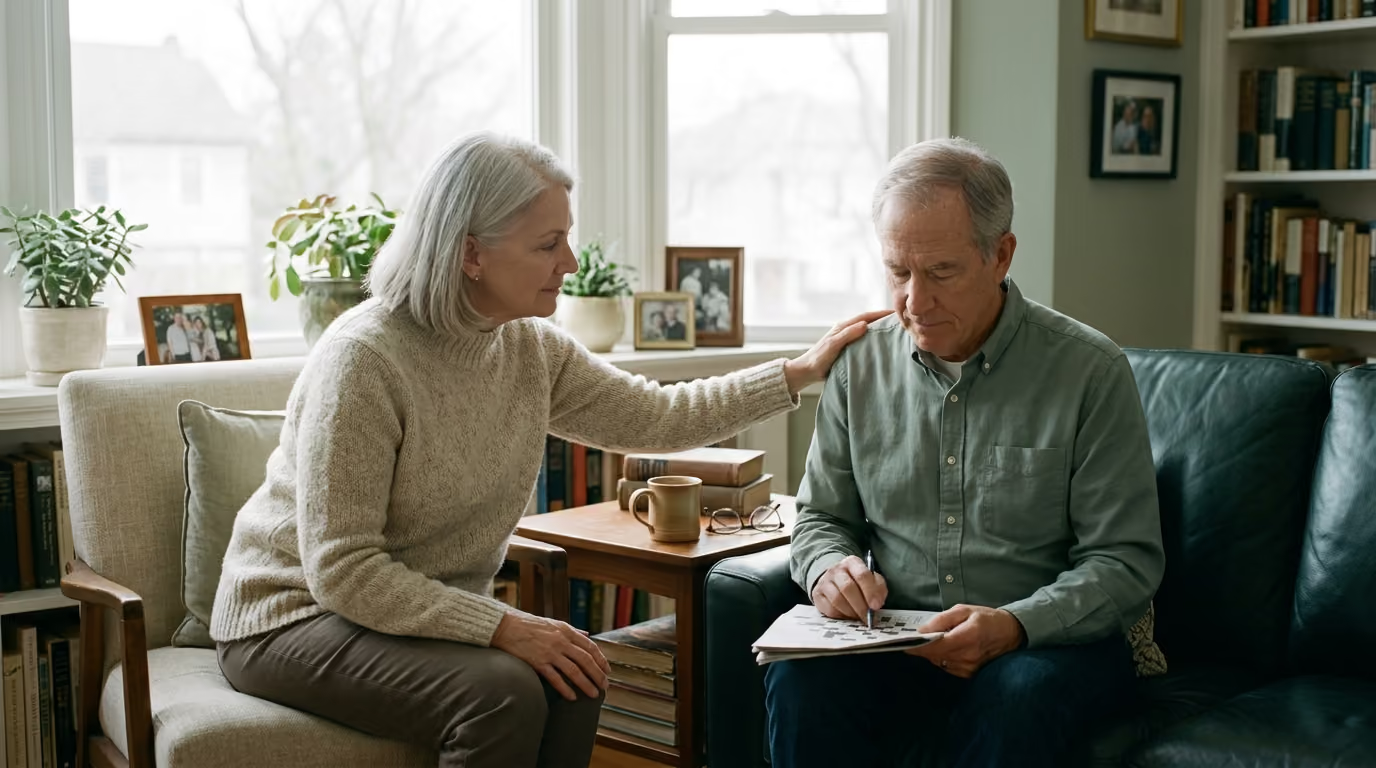

A lifestyle systems approach combines physical movement, restorative sleep, social engagement, and continuous mental challenge to protect long-term cognitive function after sixty.





Many adults search online for terms like "how to prevent memory loss naturally after 60" or "best brain habits for seniors." These searches usually return endless lists of disconnected tasks. You are told to solve crossword puzzles, walk ten thousand steps, drink green tea, and meditate every morning.
Trying to manage an unorganized list of wellness chores often leads to frustration and fatigue. When life gets busy, complicated routines fall apart quickly.
A systems approach offers a better path forward. Instead of viewing exercise, sleep, social connection, diet, and mental stimulation as separate obligations, you can link them together into simple routines that support one another. This guide provides a complete, evidence-based model to build a sustainable lifestyle system for your brain.
Brain health involves far more than simply remembering names or where you placed your keys. It encompasses executive function, processing speed, emotional balance, physical coordination, and the ability to solve everyday problems. When you manage your daily finances or learn a new software tool, your brain relies on complex networks working across multiple regions.
As the brain ages, biological changes naturally occur. Blood vessels experience gradual stiffening, nerve cell communication slows down slightly, and repair mechanisms become less efficient. These shifts do not mean significant memory loss is inevitable. The human brain retains neuroplasticity throughout life, meaning it can reorganize pathways and adapt to new challenges.
Two main concepts explain why lifestyle habits make a difference. The first concept is cognitive reserve. Cognitive reserve is your brain's capacity to improvise, find alternate neural pathways, and work around age-related changes. Education, complex work, regular learning, and social engagement help build this reserve over time.
The second concept is brain resilience. Resilience is the ability of your nervous system to withstand acute stressors like illness, surgery, sleep deprivation, or emotional grief without suffering prolonged functional decline. When you support your vascular health and physical strength, you provide your brain with the physical resources it needs to recover from life's inevitable disruptions.
Lifestyle modifications do not promise immunity from neurodegenerative disease, nor can they reverse existing brain pathology. Instead, they act as risk management tools that tilt the odds in your favor. By strengthening your bodily health, you support your daily independence and extend your cognitive healthspan.
Scientific research has shifted away from looking for single silver bullets. Researchers now study multidomain interventions that address multiple lifestyle factors simultaneously. Understanding this research helps separate proven strategies from commercial hype.
The 2024 Lancet Commission on dementia prevention identified 14 potentially modifiable risk factors across the life course. These factors include physical inactivity, high blood pressure, hearing loss, smoking, obesity, depression, diabetes, excessive alcohol intake, traumatic brain injury, air pollution, social isolation, untreated vision loss, and high LDL cholesterol.
The report calculated that modifying these 14 factors across the population could potentially prevent or delay up to 45 percent of dementia cases. This statistic is a population-level estimate rather than an individual promise. An individual can live a healthy life and still develop dementia due to genetics and unmodifiable factors. Addressing these 14 areas remains one of the best ways to protect long-term vitality.
The Finnish Geriatric Intervention Study to Prevent Cognitive Impairment and Disability, known as the FINGER trial, provided groundbreaking clinical evidence for lifestyle systems. This randomized controlled trial tracked older adults who were at an increased risk of cognitive decline.
Rather than testing one habit alone, the intervention combined five core elements:
After two years, participants in the multidomain program showed 25 percent greater overall cognitive improvement compared to the control group receiving standard health advice. The benefits were especially clear in processing speed and executive function. Later analyses showed that participants who stayed engaged with the program maintained better cognitive trajectories over several years.
The Advanced Cognitive Training for Independent and Vital Elderly (ACTIVE) trial evaluated specific mental training programs in older adults. Participants practiced memory strategies, inductive reasoning, or visual processing speed.
The trial found that participants improved significantly in the exact skill they trained. Many of these direct improvements lasted for up to ten years. The study also revealed a critical limitation in brain training. Training in one narrow mental domain did not automatically transfer to unrelated skills. Practicing memory puzzles did not improve processing speed, and practicing speed drills did not improve everyday memory recall.
Real-world cognitive stimulation requires variety. You need diverse mental challenges that require planning, attention, physical coordination, and sensory interpretation.
Research from the National Academies demonstrates strong links between social isolation, loneliness, and accelerated cognitive decline. Living alone without meaningful social support is associated with worse cardiovascular health, higher rates of depression, and reduced cognitive vitality.
The World Health Organization notes that social contact on its own has not been proven as a standalone medical cure for dementia. Social interaction serves as a primary delivery vehicle for mental stimulation, emotional regulation, and physical movement.
Having a clear sense of purpose also supports long-term brain health. Studies indexed in medical databases show that older adults who report a strong purpose in life have a lower risk of developing mild cognitive impairment. Having personal goals and daily direction provides the motivation required to maintain other healthy routines.
To learn more about evidence-based habits, review our detailed guide on lifestyle and brain resilience strategies.
A systems model divides healthy living into six distinct domains. None of these domains operates in a vacuum. Each area directly influences the other five.
Physical activity delivers oxygenated blood, glucose, and growth factors to brain tissue. Movement is not merely about burning calories or hitting a step target. It requires four distinct elements:
The Centers for Disease Control and Prevention recommends at least 150 minutes of moderate aerobic activity per week for adults over 65. It also advises two days of strength training and dedicated balance practice. Treat these numbers as general guides rather than strict rules. Any movement is better than sitting still.
Sleep is an active maintenance period for the central nervous system. During deep sleep, the glymphatic system clears metabolic waste products that accumulate between brain cells throughout the day. Rapid eye movement sleep helps consolidate new memories and process emotional events.
The National Institute on Aging recommends seven to nine hours of sleep per night for older adults. Achieving healthy sleep requires a steady circadian rhythm. Getting bright daylight exposure in the morning, going to bed at a regular time, and keeping the bedroom dark and cool help establish this rhythm.
Chronic sleep problems often signal medical issues such as obstructive sleep apnea, restless legs syndrome, or medication side effects. These issues require clinical evaluation rather than simple willpower.
Social interactions require intense brain processing. When you converse with someone, you must listen, interpret facial expressions, remember past conversations, regulate emotions, and formulate responses in real time.
It is helpful to distinguish between social isolation and loneliness:
Focus on the quality of your relationships rather than the total number of acquaintances. A few dependable, emotionally nourishing connections provide more cognitive and emotional protection than dozens of superficial interactions.
Your brain thrives on novel challenges that require sustained effort. Passive entertainment, such as watching television or repeating familiar puzzle games, does not demand new neural wiring.
Effective cognitive stimulation includes:
The activity must be challenging enough to require real concentration, enjoyable enough to sustain your interest, and progressive so that it grows more complex as you improve.
Explore our collection of articles on brain aging and neuroplasticity for deeper insights into how the brain adapts over time.
Unmanaged chronic stress elevates cortisol levels, disrupts sleep architecture, increases systemic inflammation, and impairs attention and working memory. While daily life always contains challenges, chronic emotional distress drains the physical energy needed for healthy habits.
Helpful stress regulation methods include:
Depression is recognized as a modifiable risk factor for cognitive decline. Persistent sadness, loss of pleasure in hobbies, and severe apathy should always be discussed with a doctor.
Retirement often disrupts long-standing routines, social networks, and personal identity. Without a clear daily purpose, individuals can slip into sedentary, unstructured habits.
Purpose does not require heroic achievements or commercial work. It means having intentional reasons to get out of bed each morning. Meaningful purpose might involve:
A solid sense of purpose serves as the anchor for the entire lifestyle system. It provides the motivation to exercise, sleep well, and stay socially connected.
For strategies on structuring your schedule after leaving the workforce, read our practical guide on retirement and mental fitness.
The true power of a systems model lies in the feedback loops between habits. Behaviors either support each other in positive loops or pull each other down in negative loops.
When you improve one habit, you make other healthy habits easier to maintain:
Negative feedback loops happen when a single unaddressed issue drags down the rest of your routine:
When your routine breaks down, do not blame a lack of willpower. Search for the underlying bottleneck. Treating joint pain, getting a hearing aid, or treating sleep apnea can instantly break a negative spiral and allow positive habits to function again.
If you are concerned about maintaining day-to-day focus, check our resource base on memory and focus management.
Setting up a lifestyle system does not mean overhauling your entire life overnight. It means building connected routines that fit your personal preferences, physical abilities, and daily schedule.
Before starting new activities, evaluate your current baseline across three areas:
An anchor is a stable habit you already do every day without thinking, such as drinking your morning coffee, eating lunch, or brushing your teeth. Piggybacking means attaching a new, beneficial habit directly to that existing anchor.
Consider these combined habit pairings:
Combining these actions saves time, lowers mental effort, and prevents you from feeling like you have an impossible to-do list.
A minimum viable routine is the smallest version of your healthy habits that you can maintain during difficult weeks. When you face illness, travel, family emergencies, or bad weather, switch to your minimum plan rather than quitting entirely.
For more evidence-based information on long-term cognitive care, explore our library on cognitive health and protection.
Every person has unique health needs, living situations, and physical limitations. Here are five examples showing how different people apply a systems approach to their daily routines.
A 72-year-old retired teacher dislikes formal fitness centers and finds solitary exercise boring. However, she loves conversation and neighborhood community life.
Her customized plan:
This system combines aerobic movement, social connection, and strength training into activities she naturally enjoys.
A 68-year-old man wants to keep his mind sharp by studying foreign languages and working on home projects. He finds himself falling asleep during study sessions, waking up with morning headaches, and feeling exhausted by midday.
His customized plan:
Fixing his sleep bottleneck resolved his cognitive issues and made his mental study sessions productive again.
A 64-year-old accountant recently retired from a demanding 40-year career. Within six months, he feels aimless, spends hours sitting on the couch, and notices his memory and concentration feel sluggish.
His customized plan:
This single volunteer role restored his daily structure, social interactions, physical movement, mental challenge, and sense of purpose.
A 78-year-old woman with severe knee osteoarthritis avoids exercise because she is afraid of falling or damaging her joints further.
Her customized plan:
Addressing her joint pain and fall anxiety rebuilt her physical confidence and helped her move safely.
A 66-year-old woman provides full-time care for her aging mother. She feels chronically exhausted, has zero free time for long workouts, and feels guilty whenever she tries to focus on herself.
Her customized plan:
Her system focuses on sustainable stress management and emotional support, fitting her actual life rather than an idealized schedule.
Sorting fact from fiction allows you to invest your time and energy in habits that genuinely support your health.
Many people believe that completing a daily crossword or digital puzzle is enough to keep their brain sharp. Research shows that puzzles primarily make you better at solving those specific puzzles. Puzzles do not build physical stamina, improve sleep, manage blood pressure, or replace social interaction. A well-rounded brain plan requires whole-body health, not just paper games.
Some believe that unless you are sweating heavily in high-intensity workouts, exercise does not benefit the brain. For older adults, excessively intense exercise can sometimes lead to orthopedic injuries, chronic fatigue, and burnout. Consistent, moderate physical activity like brisk walking, swimming, and basic strength training provides excellent cardiovascular and cognitive benefits safely.
Social interaction is important for mood and mental engagement. Some wellness articles claim that simply having friends prevents dementia. Scientific evidence shows that social connection works as part of a broader lifestyle network. It provides context, motivation, and emotional resilience, but it must be paired with vascular control, good sleep, and physical activity.
While sleep architecture naturally changes as we grow older, chronic insomnia, loud snoring, frequent nighttime gasping, and severe daytime exhaustion are not normal. These symptoms often point to treatable medical conditions like sleep apnea or restless legs syndrome. Ignoring sleep issues deprives the brain of vital restorative maintenance.
No diet, supplement, or exercise regimen offers a guarantee against dementia or Alzheimer's disease. Genetics, environmental exposures, and random biological factors play significant roles. Healthy lifestyle choices manage risk and optimize your current brain function, helping you live as well and independently as possible.
A lifestyle system works hand-in-hand with professional healthcare. Lifestyle habits cannot replace proper medical care for underlying chronic health conditions.
Schedule regular appointments with your primary care provider to check and manage your core health metrics:
Bring these questions to your next wellness checkup:
Building a lifestyle system is an ongoing practice, not an all-or-nothing challenge. Use this checklist to begin applying these principles this week:
Focus on building consistent, supportive connections between your daily habits. Over time, these small routines will work together to support your memory, focus, and overall vitality.

Follow FitBrainLab for research-led insights on memory, focus, brain aging, nutrition and mental fitness after 60. Stay connected for new articles, practical guidance and ideas for a sharper, more engaged life.


Build habits that support memory, focus and a curious, connected life.
Read the Blog