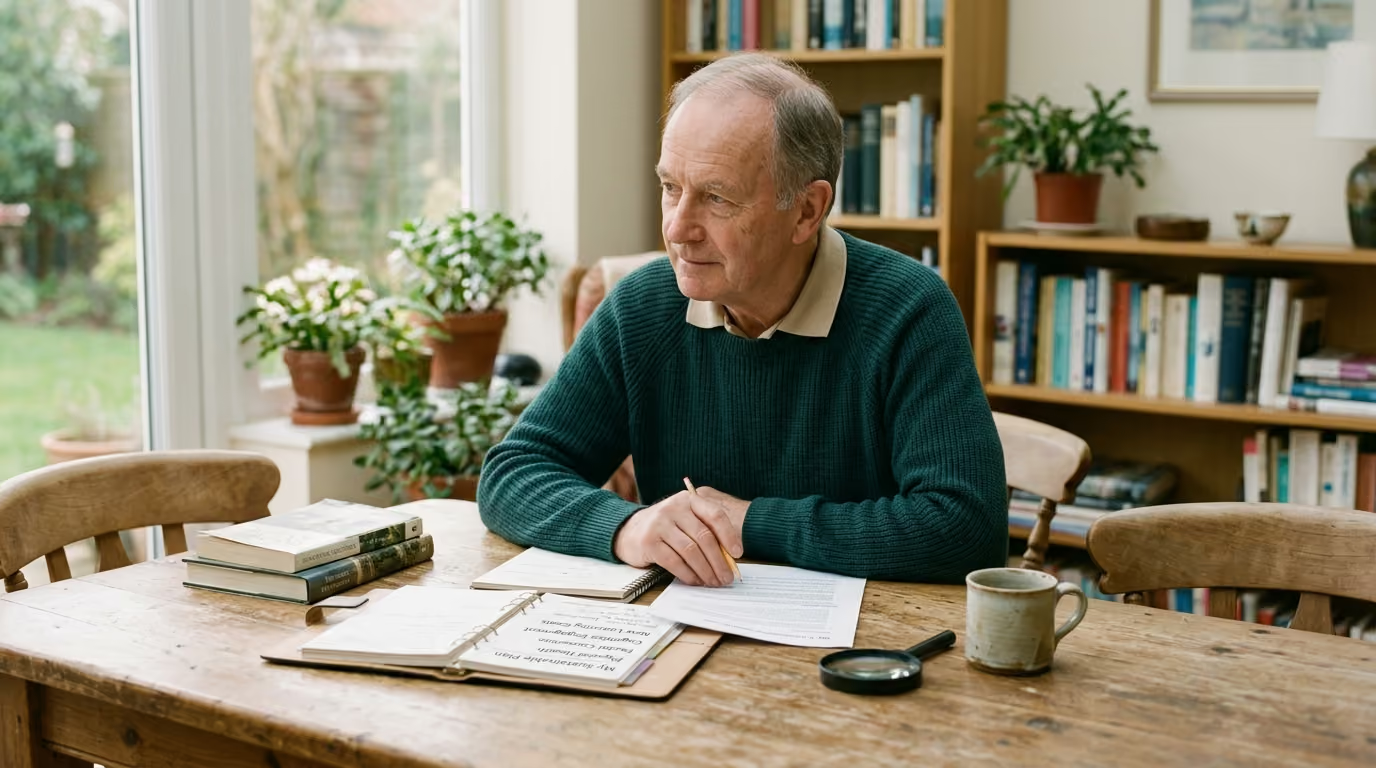

Choosing a weekly volunteer role after leaving the workforce gives adults a practical way to protect cognitive health and maintain social connections.





Many retirement guides treat volunteering as an automatic prescription for healthy aging. They suggest that simply signing up for any unpaid role will keep your mind sharp and protect your emotional health.
This view overlooks how volunteer roles actually function in daily life. An unstructured, chaotic, or overly demanding volunteer assignment can cause chronic stress and fatigue. It can leave you feeling depleted rather than fulfilled.
Volunteering is not a generic hobby or a medical cure. It is a structured social commitment that works best when carefully matched to your values, physical capacity, and cognitive goals.
Understanding the research behind community service helps you select opportunities that strengthen mental fitness while respecting your personal boundaries. When designed thoughtfully, unpaid service provides a valuable framework for lifelong learning, social connection, and renewed personal agency.
Mental fitness describes your brain's capacity to adapt, learn, manage emotions, and process complex information throughout life. It relies on regular cognitive challenge, social interaction, physical activity, and a strong sense of purpose.
When you participate in structured community work, your brain must coordinate multiple neural networks at once. Planning a project or teaching a skill activates executive function in the prefrontal cortex. Remembering procedures and volunteer schedules engages working memory and hippocampal pathways.
Navigating interpersonal relationships during service stimulates social cognition networks. Listening to others, cooperating with team members, and resolving unexpected problems require active self-regulation. These varied mental tasks support cognitive reserve, which helps your brain maintain performance despite normal age-related changes.
Volunteering also triggers behavioral activation. Having a scheduled commitment creates a clear reason to prepare, leave the house, and engage with the world. This regular behavioral rhythm stimulates dopamine and serotonin pathways, which help regulate mood, motivation, and positive emotional states.
Scientific literature reveals strong connections between formal volunteering and positive health outcomes in older adults. However, it is necessary to distinguish correlation from direct causation.
Much of the available evidence comes from observational studies. Healthier, more financially stable, and more socially active adults are naturally more likely to volunteer. When researchers adjust for these baseline advantages, some physical health outcomes show smaller direct effects.
An umbrella review analyzing 28 systematic reviews confirmed that volunteering correlates with higher psychological well-being, life satisfaction, and perceived social support. A 2024 study on older volunteers identified significantly lower rates of depression and loneliness compared to nonvolunteers. Yet, that same study found no major differences across most physical health markers, showing that service is not a universal physical remedy.
Longitudinal evidence highlights specific cognitive patterns over extended periods. Data from the Health and Retirement Study tracked adults across 14 years. It found that regular formal volunteering was independently linked to a lower risk of cognitive impairment.
A two-year longitudinal study similarly associated baseline volunteer activity with higher verbal fluency and word-list recall. Engaging with lifestyle and brain resilience strategies through active service provides consistent mental exercise.
The overall volume of service plays a distinct role in these outcomes. Research indicates that approximately 100 hours per year, or about two hours per week, offers a reliable balance. This level of participation correlates with greater optimism, stronger purpose, and lower mortality risk without causing physical exhaustion.
Motivation also influences emotional outcomes. Research published by the American Psychological Association found that mortality advantages appeared primarily among individuals volunteering for altruistic, other-oriented reasons. Those who volunteered solely for personal benefit did not demonstrate the same health patterns.
Personal motivations like seeking friendship or learning a skill are entirely healthy. Still, the greatest psychological rewards occur when you genuinely care about the people or causes you support.
Finding a sustainable volunteer position requires assessing your personal needs, physical energy, and cognitive goals. The FIT-Purpose framework offers a clear structure for evaluating prospective volunteer positions before making a formal commitment.
Start by identifying the specific community challenges that resonate with your principles. You might care deeply about youth literacy, local food security, environmental conservation, animal welfare, or historical preservation.
Consider whether you prefer helping individuals directly or improving organizational systems behind the scenes. Service that aligns with your core values provides stronger motivation during challenging days.
Examine the physical, cognitive, emotional, and sensory demands of the proposed role. An outdoor trail maintenance project requires significant physical stamina and joint stability. Tutoring children demands sustained attention and fast cognitive processing.
Crisis hotline work requires high emotional resilience and stress management. Research confirms that older adults experience the best psychological outcomes when the perceived intensity of their role feels manageable rather than overwhelming.
Decide whether you want to use skills from your previous career or develop completely new abilities. A retired accountant might enjoy running tax preparation clinics for low-income families. Conversely, that same accountant might feel refreshed by tending plants in a community greenhouse.
Take stock of your practical talents, such as writing, public speaking, carpentry, organizing files, or active listening. Choose whether using or stepping away from those skills serves your current life goals.
A fulfilling role provides a visible link between your individual effort and the final outcome. You should be able to see how your hours help an organization fulfill its broader mission.
Establish a predictable weekly or bi-weekly routine that fits your lifestyle. Set clear boundaries regarding your maximum available hours, task preferences, and personal contact availability.
Different volunteer roles engage distinct mental and physical capacities. Aligning your personal goals with specific volunteer tasks ensures a rewarding experience.
If your primary objective is reducing isolation, select roles with regular interpersonal contact. Options include telephone reassurance calls for homebound seniors, serving as a museum greeter, or facilitating community library book clubs.
These roles build weak ties that can grow into lasting friendships over time. Make sure the organization provides clear guidelines and staff support for managing emotionally heavy conversations.
If you want to exercise executive function and problem-solving, choose intellectually demanding tasks. Assisting with community tax preparation, teaching English as a second language, archiving local historical documents, or writing grant proposals require active learning.
These activities stimulate working memory and verbal fluency, supporting your broader cognitive health and protection goals.
For those seeking more daily physical movement, practical stewardship roles are an excellent choice. Assisting at a community garden, maintaining park trails, walking shelter dogs, or packing food boxes at a distribution center keep you on your feet.
Always match the physical intensity of these roles to your current joint health and cardiovascular capacity.
Retirement often removes the professional titles and social status built over decades. Volunteering provides an opportunity to explore completely new dimensions of your identity.
A former corporate manager might find deep satisfaction as a botanical garden docent or an animal shelter volunteer. Choose activities based on the daily lived experience rather than external prestige.
In-person volunteering is not always feasible due to transportation hurdles, caregiving responsibilities, or physical limitations. Virtual and hybrid volunteering offer flexible alternatives for meaningful community participation.
Remote assignments cover a wide spectrum of useful community work:
Virtual service removes commuting stress and bad-weather travel concerns. However, remote tasks require reliable internet, adequate digital devices, and a quiet workspace.
They also provide less physical movement and face-to-face social contact. A hybrid approach, combining occasional on-site gatherings with regular home-based tasks, often provides an ideal balance.
Commuting difficulties represent a primary reason older adults stop volunteering. Traveling to and from a volunteer site consumes physical energy and cognitive focus.
Treat transportation as an integral part of the total volunteer commitment rather than an afterthought. A thirty-minute drive in heavy traffic can make a simple one-hour shift feel exhausting.
Ask the volunteer coordinator detailed questions about site accessibility:
Conduct a trial journey before making a long-term commitment. Travel to the site at the exact time your shift would occur to evaluate traffic patterns, parking availability, and physical comfort.
Because non-profit organizations are frequently understaffed, dedicated volunteers often face pressure to take on extra responsibilities. Without firm personal boundaries, volunteering can quickly turn into a stressful, unpaid job.
Start with a modest time commitment, such as two hours once per week or every other week. You can always increase your hours later once you understand the physical and mental demands of the role.
Use clear language when establishing your availability:
Working directly with vulnerable populations requires thoughtful emotional safeguards. Volunteers are not trained therapists, case managers, or emergency medical responders.
Make sure the organization has clear protocols for handling emergencies, reporting concerns, and escalating complex issues to professional staff. Understand where your helpful role ends and staff responsibility begins.
Clear thinking about volunteering requires looking past common cultural myths. Evaluating these assumptions helps you protect your time and maintain realistic expectations.
Research shows that psychological and physical benefits generally stabilize around 100 hours per year, or two hours per week. Committing to twenty or thirty hours weekly can create chronic fatigue, crowd out exercise, and raise stress levels. Consistency and personal meaning matter far more than total hours logged.
A poorly managed volunteer role with chaotic organization, inadequate supplies, or interpersonal conflict can cause notable frustration. Meaningful mental health benefits require feeling valued, understanding your impact, and working within a supportive environment.
Observational studies link regular volunteering to preserved working memory and lower rates of cognitive impairment. However, service is not an absolute shield against neurodegenerative conditions. It functions as one part of a comprehensive lifestyle that supports overall brain resilience.
While organizations do not charge volunteers, participating carries real expenses. Transportation, vehicle wear, specialized clothing, meals, and time away from other pursuits represent tangible costs. Always calculate the true personal investment before committing.
You are under no obligation to duplicate your former career during retirement. An attorney is not required to provide pro bono legal aid, and a teacher does not have to tutor. You have complete freedom to choose tasks that feel refreshing and enjoyable.
Formal non-profit work represents only one way to contribute to your community. Checking on an ill neighbor, caring for grandchildren, or helping maintain a neighborhood garden offer rich social connection. National data shows that over half of adults participate in informal community helping.
Personal circumstances vary widely among older adults. Tailoring your volunteer commitments to match your specific life context ensures safety and continued enjoyment.
For adults living alone, volunteering offers structured social connection and a reliable weekly rhythm. Studies indicate that positive health associations are especially pronounced for individuals with fewer informal social contacts.
Select positions that involve working alongside consistent teammates rather than solitary assignments. Ensure your emergency contact details are on file with the volunteer coordinator.
Living with arthritis, back pain, or reduced stamina does not exclude you from community service. Redesign your participation around tasks you can perform comfortably from a seated position.
Explore online tutoring, phone outreach, seated administrative assembly, or virtual transcription. Research notes that physical health benefits from service are most consistent when activities do not cause physical strain.
Caregivers often desire outside social contact but cannot commit to rigid weekly schedules. Look for organizations offering micro-volunteering, drop-in shifts, or project-based tasks that you can finish at home. This approach allows you to contribute meaningfully without adding caregiving guilt.
Community service can restore routine and purpose after the loss of a spouse or close companion. However, taking on intense volunteer work too quickly can complicate the natural grieving process.
Choose low-pressure roles that do not involve emotionally heavy situations or crisis support. Gentle tasks, such as library organization or garden maintenance, offer peaceful environments for gradual healing.
Individuals experiencing mild memory changes can continue to contribute through well-structured volunteer positions. Focus on familiar, repetitive tasks with clear instructions, such as assembling materials, sorting non-perishable goods, or preparing mailings. A calm, supportive supervisor and a predictable schedule help maintain confidence and independence.
For deeper insights on maintaining purpose and routine after your career, explore our curated retirement and mental fitness resources.
Interview the organization thoroughly before accepting any volunteer assignment. A well-run non-profit will welcome your questions and provide clear, straightforward answers.
To make a confident choice, follow this systematic evaluation process when choosing a new volunteer role.
Determine what you want to gain from your service. Focus on one or two core goals, such as intellectual stimulation, gentle physical movement, or building local friendships.
Write down your personal boundaries before browsing opportunities. Note your maximum weekly hours, travel distance limits, physical restrictions, and preferred times of day.
Avoid signing up for the first opening you find. Identify three different options: one public-facing role, one behind-the-scenes role, and one remote or low-commitment role.
Contact each organization to discuss daily tasks, training, physical demands, and supervision. Notice whether the staff communicates clearly and values your time.
Agree to a four-week trial commitment. Keep a brief log of your physical energy, mood, and mental clarity before and after each shift.
If the position feels overly stressful or physically uncomfortable, discuss adjustments with the coordinator immediately. Reduce your hours, switch to seated tasks, or transition to a different department.
Every three months, review your volunteer commitments. Confirm that the work remains enjoyable, your boundaries are respected, and the experience continues to support your overall well-being.
Choosing a volunteer role with intention allows you to contribute your skills to the community while supporting your cognitive vitality, emotional health, and sense of meaning throughout retirement.

Follow FitBrainLab for research-led insights on memory, focus, brain aging, nutrition and mental fitness after 60. Stay connected for new articles, practical guidance and ideas for a sharper, more engaged life.


Build habits that support memory, focus and a curious, connected life.
Read the Blog