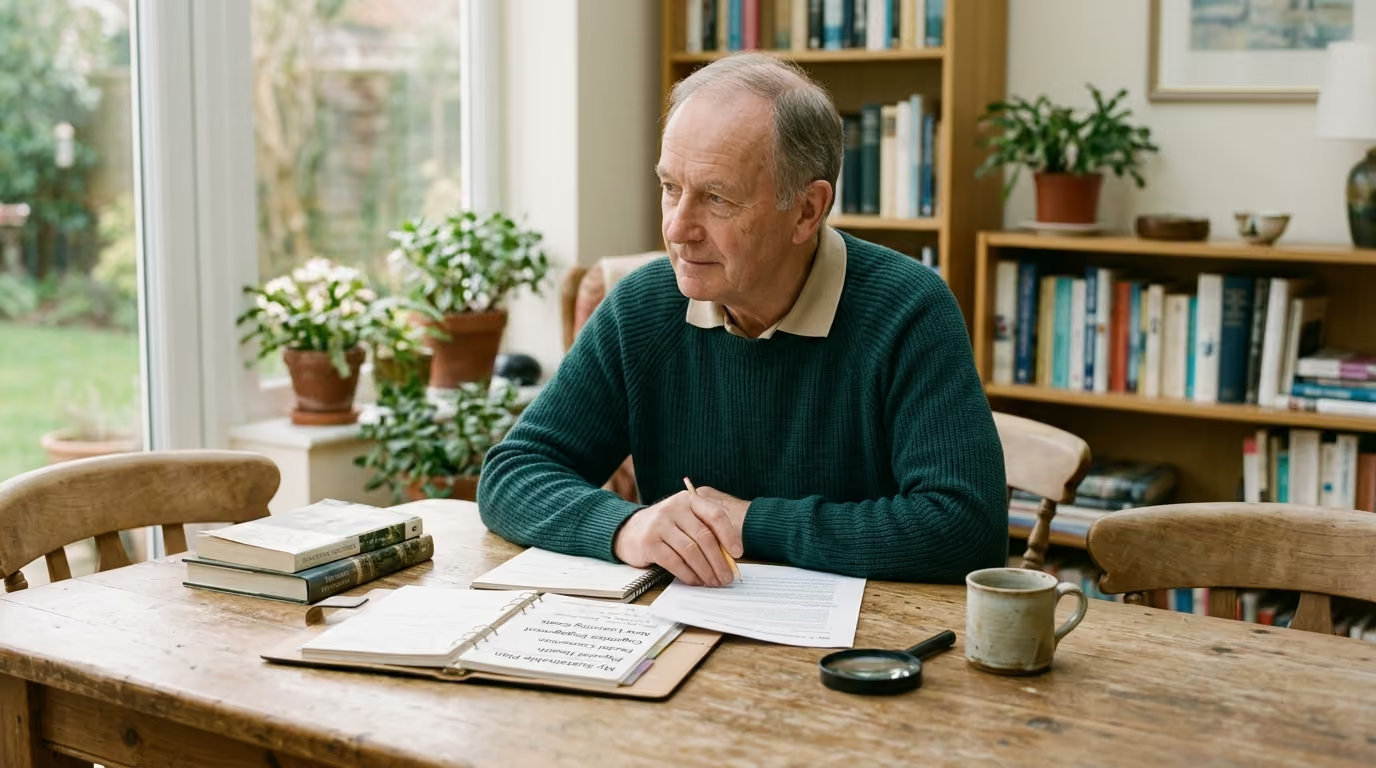

Greater emotional wellbeing and lasting cognitive health after retirement develop when you replace workplace structure with personally chosen goals and meaningful community roles.





Purposeful living after retirement is not about filling empty hours with busywork or finding a single dramatic calling. It is the deliberate process of building a daily life around chosen values, meaningful social roles, and ongoing contributions.
Retirement marks a major shift in how you spend time, how you view your identity, and how you relate to your community. Leaving full-time employment removes built-in schedules, daily problems to solve, and regular social contact. Without these workplace structures, many adults feel a temporary loss of direction.
Living with purpose means creating your own structure. It involves choosing activities that matter to you, staying connected to other people, and keeping your mind engaged with the world around you.
This guide examines the scientific research behind purpose and healthy aging. It provides practical frameworks, exercises, and daily routines to help you design an active, mentally stimulating life on your own terms.
Many discussions about retirement mix together meaning, purpose, and pleasure. While these three experiences support each other, they are distinct psychological concepts. Understanding how they differ helps you build a balanced daily routine.
Meaning in life refers to how you make sense of your existence. Psychological research defines meaning as the perceived coherence and significance of your life story. It answers questions about whether your past experiences matter, how your memories fit together, and how you belong to your family or community.
Meaning is reflective. It allows you to look back at your career, your family history, and your personal challenges with understanding. It also helps you appreciate simple, everyday moments. You might find meaning in family traditions, spiritual practices, or time spent in nature.
Purpose is forward-looking and action-oriented. While meaning asks what your life has represented, purpose asks what you intend to do next. Research defines purpose as having self-directed goals and intentions that organize your daily behavior.
Purpose gives you concrete reasons to get out of bed in the morning. It answers practical questions:
Purpose does not need to be public or ambitious. Caring for a home garden, organizing a neighborhood watch, mentoring a younger person, or preserving local history can provide clear direction.
Pleasure refers to immediate enjoyment and physical comfort. It includes resting, watching entertainment, enjoying a good meal, or taking a vacation. Pleasure is a healthy part of retirement, but it cannot sustain long-term life satisfaction on its own.
A schedule filled only with passive leisure often leads to boredom and restlessness over time. The National Institute on Aging recommends participating in activities that offer both personal enjoyment and deeper significance. A healthy retirement combines pleasure, meaning, and active purpose.
Contribution means using your skills, time, or attention to help something beyond yourself. It is one of the most reliable ways to build purpose after full-time work.
Contribution takes many forms:
Contribution does not require professional status or wealth. What matters is your personal perception that your efforts are useful to others.
Employment provides more than a paycheck. For decades, work offers built-in mental and social benefits that disappear upon retirement.
When you leave the workforce, you must deliberately replace these functions:
You can learn more about how cognitive habits support independence by reading about lifestyle and brain resilience.
Purposeful living changes how your brain processes daily challenges and regulates stress. When you pursue clear goals, you engage several neural networks that support mental fitness and emotional balance.
Purpose relies heavily on the prefrontal cortex, the region of the brain responsible for executive function. Executive function includes planning, working memory, mental flexibility, and sustained attention.
When you organize a volunteer project, practice a musical instrument, or manage a community garden, your brain must plan sequential steps. It must evaluate outcomes and adjust to unexpected obstacles. This mental effort creates cognitive demand, which helps keep neural circuits active.
Passive routines require little planning or problem-solving. By setting deliberate goals, you encourage the brain to maintain its organizational networks as you age.
Having a clear sense of direction helps buffer the physical effects of chronic stress. When people face difficulties without a sense of agency, the body often stays in a heightened state of stress arousal. This state releases stress hormones like cortisol.
Prolonged stress can damage memory pathways in the hippocampus and increase systemic inflammation. A strong sense of purpose helps you interpret daily frustrations as temporary obstacles rather than overwhelming threats. This balanced perspective supports healthier cardiovascular and immune responses.
Cognitive reserve refers to the brain's ability to cope with age-related changes or neuropathology by using alternative neural pathways. Engaging in complex, purposeful activities builds this reserve over time.
Learning new tasks, participating in group discussions, and solving practical problems create rich neural connections. While purpose does not guarantee the prevention of neurological conditions, it helps you function at your highest possible capacity.
Scientific interest in purpose in life has grown substantially over the last two decades. Researchers have examined how psychological direction connects with physical health, mortality risk, and cognitive function in older adults.
Large epidemiological studies show a consistent association between high purpose in life and longer survival.
A comprehensive 2026 meta-analysis analyzed data from 25 study samples across the United States, Europe, and Asia, representing 488,765 participants followed for up to 32 years. The researchers found that individuals with higher purpose had approximately a 30 percent lower risk of earlier all-cause mortality. The pooled hazard ratio was 0.76.
Earlier meta-analyses also found that high purpose was associated with lower rates of cardiovascular events. However, these findings come from observational studies. Observational research shows strong relationships, but it cannot prove that purpose alone causes longer life.
Methodological reviews highlight important nuances in this data. When researchers control for baseline physical health, mobility limitations, socioeconomic status, and depressive symptoms, the statistical link between purpose and mortality becomes smaller.
Healthier people may simply find it easier to maintain an active sense of purpose. Purpose should be viewed as a valuable behavioral and psychological asset, not as an absolute guarantee of longevity.
Systematic reviews of psychological aging report that higher purpose is linked to better cognitive outcomes in later life. Adults with strong life direction tend to show better memory retention, faster processing speed, and lower rates of disability.
The National Institute on Aging highlights research showing that high social engagement is associated with better cognitive health in adults aged 65 and older. Visiting neighbors, participating in community programs, and volunteering provide combined social and intellectual stimulation.
Longitudinal studies offer a nuanced look at cognitive trajectories during the retirement transition:
These findings show that staying engaged supports cognitive function at retirement, but it is not a standalone cure for age-related cognitive changes.
Purposeful living frequently involves social connections. The World Health Organization (WHO) reports that approximately 11.8 percent of older adults experience significant loneliness. Worldwide, roughly one in four older adults is socially isolated.
The WHO identifies chronic loneliness and social isolation as major risk factors for physical and mental health conditions in later life. Developing purposeful roles within your community provides a natural antidote to isolation by creating shared responsibilities and mutual support.
Volunteering is one of the most common ways retirees seek purpose. A systematic review on older adult volunteering found that regular voluntary work is associated with reduced mortality and higher life satisfaction.
These benefits are especially visible among retirees who live with others but have limited informal social circles. Volunteering replaces the structure, social accountability, and identity previously offered by a career.
However, research also shows that volunteering is not universally beneficial:
Volunteering works best when it matches your values, respects your energy limits, and gives you autonomy over your schedule. For more insights on meaningful daily habits, browse our retirement and mental fitness resources.
Relying on a single activity for all your purpose is risky. If an injury, illness, or organization closure interrupts that activity, you may face sudden disorientation.
A purpose portfolio distributes your time, attention, and energy across five distinct areas. This balanced approach protects your emotional stability and provides variety in your weekly routine.
Self-development involves expanding your knowledge, understanding, and personal skills. It keeps your mind curious and flexible.
Examples of self-development activities:
Relationships require active attention and shared experiences. Deep social connections provide emotional safety and shared laughter.
Examples of relationship commitments:
Contribution connects your daily efforts to the wellbeing of others. It gives you a clear sense of social value.
Examples of contribution:
Creativity and mastery involve making, repairing, or refining physical or intellectual objects. These activities require focus and produce visible progress.
Examples of creative pursuits:
Health practices provide the physical energy needed to pursue your other goals. Treating health habits as purposeful commitments makes them easier to maintain.
Examples of health routines:
By selecting at least one regular practice from each domain, you create a stable foundation for your retirement years. To read more about how lifestyle choices support healthy aging, visit our articles on retirement and mental fitness.
Translating abstract ideas about purpose into an everyday routine can be challenging. The VITAL framework offers a structured method for designing your post-retirement life.
Identify what matters most to you at this stage of your life. Do not assume your priorities are identical to what they were during your working years.
Ask yourself:
Common values include independence, family support, intellectual growth, artistic expression, community service, and environmental stewardship.
Retirement is an opportunity to reconstruct your personal identity. Rather than defining yourself by what you used to do, select new roles that reflect your current values.
Instead of adopting one massive replacement identity, build several small, clear roles:
Research on retirement adjustment shows that developing desirable new roles improves overall life satisfaction and eases the transition away from work.
Maintain dependable connections with groups and individuals. Group memberships provide social accountability, shared identity, and mutual assistance.
A study of 302 retirees showed that joining new social groups after leaving work predicted higher life satisfaction. Joining groups before you fully retire makes the adjustment smoother. Look for groups organized around shared learning, community tasks, or physical activity.
Turn your intentions into scheduled, observable actions. Unscheduled goals often fade when daily routines become unstructured.
Effective retirement activities meet several criteria:
Your goals and routines must adapt as your circumstances change. Changes in physical mobility, caregiving obligations, finances, or family locations require flexible planning.
The World Health Organization defines healthy aging around functional ability. Functional ability means having the capabilities that enable you to be and do what you value.
If joint pain prevents you from doing heavy trail maintenance, you can adapt. You might shift to teaching junior trail guides, managing logistics, or writing newsletters. Adapting your roles protects your sense of purpose even when physical health fluctuates.
Clarifying your direction requires structured reflection. The following four exercises help you evaluate your daily time, identify missing workplace functions, and build actionable habits.
This exercise helps you replace the hidden psychological benefits of employment.
Take a piece of paper and create two sections:
For two weeks, keep a pocket notebook or digital document. At the end of each afternoon and evening, record your primary activities.
Rate each activity on a scale from 1 to 5 across three markers:
Review your log at the end of fourteen days. Identify activities that score high in both meaning and energy. These represent your core sources of purpose. Reduce activities that drain your energy without offering meaning.
At the end of each month, set aside thirty minutes to answer four simple questions:
This regular check-in keeps your retirement routine dynamic and prevents you from settling into unrewarding habits.
Break large, abstract retirement dreams into practical, manageable behaviors using three operational levels:
This three-scale system keeps your daily actions connected to your deeper values while ensuring steady progress.
Misunderstandings about aging and purpose can create unnecessary anxiety. Separating evidence from popular myths helps you set realistic expectations for your retirement years.
Many popular books suggest that everyone has a single true passion waiting to be found. This idea causes frustration for people who have diverse interests rather than one defining mission.
Purpose is usually composed of several ordinary commitments. Caring for your family, maintaining your health, learning a craft, and helping your neighborhood provide plenty of direction. You do not need an extraordinary mission to live a deeply purposeful life.
Some retirees treat purpose as an obligation to stay continuously busy. They fill their calendars with meetings, classes, and travel, then feel guilty when they need rest.
Purpose is about significance, not volume. Quiet pursuits like reading, contemplation, gardening, and spending unhurried time with family are purposeful when they reflect your values. Rest and recovery are necessary components of a sustainable life.
Volunteering is a wonderful option for many people, but it is not the only path to purpose. If volunteer work feels disorganized, stressful, or unrewarding, it will not support your wellbeing.
You can contribute through informal helping, artistic work, teaching family members, or neighborhood care. Choose activities based on how well they fit your temperament, skills, and energy levels.
Staying active supports general health, but research does not support claims that specific activities guarantee complete protection against dementia. Cognitive aging is influenced by complex biological, vascular, genetic, and environmental factors.
Engage in activities because they bring genuine meaning, challenge, and social connection to your life today. Do not view them as a magical shield against all age-related changes. You can read more about evidence-based health guidance in our overview of brain health resources.
Retirement rarely follows a perfectly smooth path. Health changes, financial constraints, and family responsibilities require you to adjust your routines thoughtfully.
Retiring due to health limitations, organizational layoffs, or caregiving duties can trigger grief, anxiety, and anger. When retirement is forced, advice to simply look on the bright side feels dismissive.
If you faced involuntary retirement, prioritize your emotional and financial stability first:
Research shows that people retiring from stressful or dissatisfying jobs often experience a meaningful rebound in life satisfaction once they establish a stable routine.
Purpose does not require expensive travel, pricey club memberships, or costly hobby equipment. Many of the most meaningful post-retirement pursuits cost very little:
High-cost activities do not provide greater purpose than simple, dedicated community engagement.
Physical health changes may limit your ability to travel, perform heavy yard work, or participate in standing volunteer roles. However, functional limitations do not eliminate your ability to live purposefully.
The World Health Organization emphasizes that healthy aging is centered on doing what you have reason to value within your physical capacity.
Adapt your activities to fit your energy:
The death of a partner, close friend, or family member changes your daily life and social landscape. During early grief, maintaining a complex purpose portfolio is impossible.
In periods of bereavement:
Couples retiring together often face unexpected friction over daily territory, chore distribution, and personal schedules. Partners benefit from developing both shared projects and independent routines. Having independent roles gives each person space to grow while enriching shared conversations.
Single retirees face a different challenge: the risk of isolation without workplace interaction. Single adults should deliberately schedule recurring social commitments. Joining structured community groups, book clubs, and weekly volunteer teams builds a reliable social network.
To learn more about our educational philosophy and approach to healthy aging, read about FitBrainLab.
Your routine healthcare visits are an excellent time to discuss how your daily habits support long-term cognitive and emotional health.
Take these practical questions to your next appointment:
Retirement adjustment is a personal process that often takes between six months and two years. The transition involves distinct phases, from initial relief to a period of re-evaluating your daily routine. Building a stable purpose portfolio and establishing regular social ties helps smooth this adjustment period.
Couples often have contrasting visions for post-work life. One partner may seek quiet relaxation while the other wants travel and community projects. The most effective approach is to negotiate both shared and independent activities. Respect each other's individual need for space while scheduling regular times for shared meals and joint projects.
Yes. Careers provide social status, professional competence, intellectual challenge, and daily camaraderie for decades. Feeling a sense of grief when leaving that environment is completely normal. Acknowledging that loss allows you to deliberately build new roles that express those same skills in community, family, and creative settings.
Virtual activities can provide authentic learning, contribution, and connection, especially for individuals with limited transportation or mobility challenges. The key is to choose interactive online formats that require active participation, such as live discussions, cooperative projects, or one-on-one video mentoring, rather than passive video consumption.

Follow FitBrainLab for research-led insights on memory, focus, brain aging, nutrition and mental fitness after 60. Stay connected for new articles, practical guidance and ideas for a sharper, more engaged life.


Build habits that support memory, focus and a curious, connected life.
Read the Blog