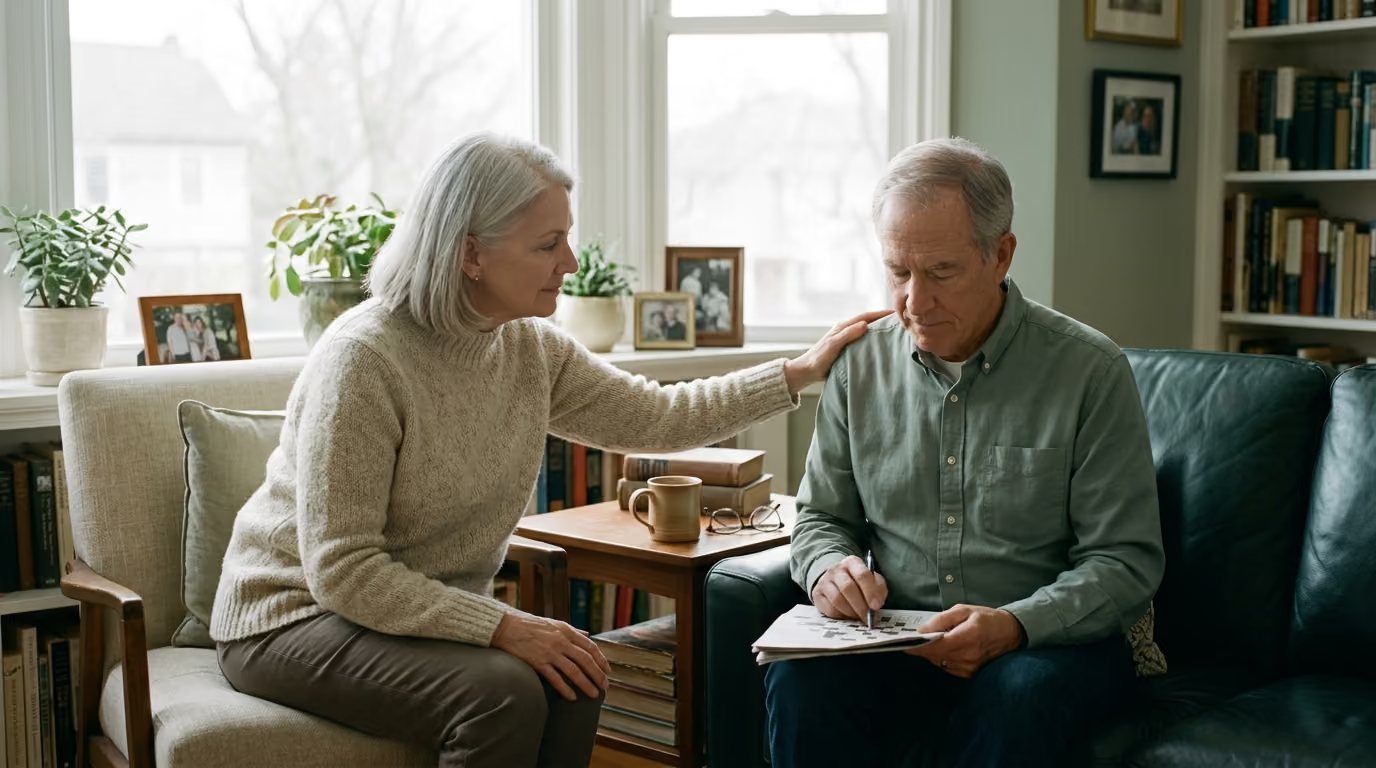

Sustained mental sharpness and protected cognitive function after sixty rely on a practical four-part exercise routine adapted to your personal fitness level.





Many people view exercise after 60 solely as a tool for managing body weight or protecting joints. The most profound benefit of physical activity occurs inside the brain. Movement stimulates blood circulation, supports neural networks, and preserves the cognitive control required to live independently.
Relying on a single activity like casual walking is not enough to protect long-term mental clarity and mobility. A complete physical routine challenges the heart, loads the muscles, refines nervous system coordination, and maintains joint freedom. This comprehensive guide details the research behind movement and cognitive aging, providing a realistic weekly framework designed for lasting independence.
Physical activity and structured exercise are related but distinct concepts. Physical activity includes any bodily movement that expends energy, such as climbing stairs, gardening, cleaning, or walking to the store. Structured exercise involves planned, repetitive routines intended to improve specific physical capacities. Both forms of movement provide measurable benefits for older adults.
When you move your body, several biological processes support brain tissue. Aerobic conditioning improves cardiac output and vessel elasticity, delivering oxygen and nutrients to regions involved in memory and decision-making. Muscle contractions release chemical messengers that support cellular health, while complex motor tasks challenge the nervous system to maintain neural connections.
Cognitive longevity relies on several distinct mental domains rather than a single general ability:
No single exercise mode addresses every domain equally. Aerobic workouts support global cognitive performance and attention by improving systemic blood flow. Resistance exercise provides distinct support for executive function, reasoning, and working memory. Balance and coordination drills demand active sensory processing, requiring the brain to calculate position, posture, and motor control in real time.
Maintaining these cognitive domains directly supports everyday functional capacity. Rising from a low chair, stepping over unexpected curbs, following complex recipes, and driving safely all require the coordination of strong muscles and rapid mental processing. To learn more about how physical habits preserve your independence, read our cognitive health and protection articles.
Scientific research provides a clear, balanced picture of how physical exercise affects cognitive decline. Physical activity is consistently associated with lower risk of cognitive impairment, but it is not an absolute shield against neurodegenerative conditions. The objective of regular exercise is to build physical and neurological reserve, keeping you capable and resilient for as long as possible.
The 2024 Lancet Commission on dementia prevention identified 14 modifiable risk factors across the lifespan, estimating that addressing these factors could prevent or delay up to 45 percent of dementia cases globally. A systematic review of 58 studies involving 257,983 participants found that physical activity was associated with a 20 percent lower risk of all-cause dementia (relative risk 0.80). The same analysis demonstrated a 14 percent lower risk of Alzheimer's disease (relative risk 0.86).
The Lancet analysis highlighted a vital principle: the most significant reduction in dementia risk occurs when individuals transition from extreme sedentary habits to modest physical activity. Adding manageable movement to a previously inactive life yields higher initial protection than adding extra miles to an already vigorous routine.
Randomized controlled trials offer detailed insights into specific cognitive domains:
Physical conditioning also dramatically lowers the incidence of falls, which are a major threat to physical autonomy. An updated systematic review showed that structured exercise programs reduce fall rates in community-dwelling older adults by 21 percent (rate ratio 0.79). When programs incorporated challenging balance drills and exceeded three total hours of weekly practice, fall rates dropped by 39 percent (rate ratio 0.61).
For adults diagnosed with mild cognitive impairment, physical training remains highly valuable. A 2025 network meta-analysis found that multicomponent exercise routines and moderate-intensity aerobic programs ranked among the most effective interventions for supporting global cognition and balance in this population. You can explore deeper research on these adaptive mechanisms in our guide to brain aging and neuroplasticity.
An effective movement program for older adults integrates four distinct elements: aerobic training, muscle strengthening, balance practice, and mobility work. Each pillar supports a unique neurological and mechanical pathway. Neglecting any one element leaves critical gaps in your physical and cognitive defense.
Aerobic exercise involves continuous, rhythmic movement of large muscle groups that elevates breathing and heart rate. Regular aerobic work preserves the health of small blood vessels in the brain, promotes metabolic regulation, and reduces systemic inflammation.
Moderate-intensity aerobic activity should feel comfortably challenging. You should be able to speak in short sentences, but singing would require too much breath.
Strength training forces muscle fibers to contract against external resistance. This builds muscle mass, preserves bone density, and creates physical reserve. Physical reserve is the buffer that allows you to catch yourself during a slip, carry heavy bags, or recover swiftly from an unexpected illness.
Studies reveal a clear connection between progressive resistance training and executive function. Challenging the muscular system demands cognitive effort, motor unit recruitment, and deliberate pacing.
Balance is an active skill managed by your brain. It requires the integration of visual input, inner-ear equilibrium, and proprioception (the body's awareness of its position in space). Without regular challenge, the sensory pathways that regulate balance can become sluggish.
Balance exercises train the nervous system to make rapid postural adjustments. These drills should always be performed near a sturdy support, such as a kitchen counter or heavy table, to maintain complete safety.
Mobility refers to the ability to move joints freely through their full, functional range of motion under active muscular control. Simple passive stretching increases flexibility, but active mobility ensures you can control your limbs safely at every angle.
Maintaining functional range in the ankles, hips, thoracic spine, and shoulders makes daily tasks easier. It helps you turn your head to check blind spots while driving, reach top shelves, and step over obstacles without tripping.
Public health organizations, including the Centers for Disease Control and Prevention and the World Health Organization, recommend clear weekly targets for adults 65 and older. These guidelines recommend at least 150 minutes of moderate-intensity aerobic activity per week, muscle-strengthening activities on two or more days, and balance training on three or more days.
Dividing these targets into manageable daily segments makes them achievable and sustainable. The following schedule illustrates how a balanced week can be organized.
If you are starting from a sedentary baseline or recovering from an illness, attempting 150 minutes immediately can cause excessive fatigue. The World Health Organization stresses that any amount of movement is better than none. Start with a foundational routine that builds confidence and physical capacity.
When progressing your training, follow the principle of consistency before intensity, and control before complexity. Make only one small change at a time:
Reducing uninterrupted sitting is just as valuable as completing planned exercise sessions. Prolonged sitting impairs blood flow regulation and glucose metabolism. Set a timer to stand, stretch, and walk around your living space for two minutes every hour throughout the day. For additional strategies on maintaining vitality, explore our lifestyle and brain resilience resources.
Living with chronic health conditions does not mean you must avoid exercise. The National Institute on Aging emphasizes that physical activity is safe and beneficial for most older adults with conditions such as osteoarthritis, high blood pressure, and heart disease, provided routines are adapted properly.
Joint pain can create a fear of movement, leading to muscle weakness that ultimately increases joint stress. The solution is finding low-impact exercises that strengthen surrounding muscles without causing flare-ups.
If standing causes rapid fatigue, spinal discomfort, or dizziness, you can perform effective cardiovascular and strength workouts from a seated position.
Peripheral neuropathy reduces tactile feedback from the feet, increasing fall risk. Adapting your environment and movement choices protects safety while training balance.
Cognitive changes can make learning complex movement sequences frustrating. Keeping routines predictable and visually supported builds confidence.
Cardiovascular, strength, and mobility benefits remain accessible if you use a wheelchair or mobility device full-time.
Misunderstandings about exercise can lead to frustration, injury, or unnecessary avoidance of movement. Examining the evidence clarifies what exercise can and cannot accomplish.
Walking is an exceptional aerobic habit that supports heart health, mood, and circulation. Walking alone does not provide sufficient resistance to prevent age-related muscle loss (sarcopenia), nor does it fully challenge dynamic balance. A complete routine requires progressive strength training and dedicated balance drills alongside your daily walks.
Physical activity significantly lowers the statistical risk of cognitive decline and builds neurological resilience. It is not an absolute cure or guarantee. Dementia is influenced by genetics, vascular factors, environment, and complex biological processes. Framing exercise as a protective reserve strategy rather than an infallible cure sets realistic expectations.
Some individuals believe that if they cannot achieve the full 150 minutes of weekly activity, their efforts are wasted. Research shows that the largest health gains occur when transitioning from zero activity to just 30 to 60 minutes of movement per week. Every single minute of movement contributes to better glucose control, blood flow, and mental clarity.
The outdated motto "no pain, no gain" is dangerous for older adults. High-intensity training that leaves you completely exhausted increases injury risk, prolongs recovery, and elevates fall risk later in the day. The National Institute on Aging advises that exercise should feel moderately challenging, leaving you energized rather than depleted.
Single-leg standing without support is an advanced drill that can cause falls if attempted prematurely. Effective balance training begins with wide-base weight shifts, tandem standing with fingertip support, and controlled heel raises. Safety and consistency are far more important than attempting risky balance stunts.
While acute injuries and unstable cardiac symptoms require rest and medical clearance, chronic conditions such as osteoarthritis, stable heart disease, and diabetes improve with tailored activity. Inactivity accelerates muscle loss and vascular stiffening. Safe, adapted movement remains one of the most effective non-pharmacological therapies available.
The following models illustrate how different individuals can design, adapt, and progress an exercise program tailored to their specific needs.
Arthur is 68. He recently retired and noticed he spends up to seven hours a day sitting at a computer or watching television. He experiences afternoon mental fog and feels unsteady when stepping off curbs.
Arthur begins by adding a 10-minute walk after breakfast and another 10-minute walk after lunch. On Tuesdays and Fridays, he performs two sets of six chair sit-to-stands, five wall push-ups, and ten supported heel raises. Every morning while waiting for his coffee to brew, he spends three minutes practicing weight shifts and tandem standing while lightly touching the counter. Over eight weeks, his mental energy improves, and he increases his daily walking time to 15 minutes per session.
Brenda is 72. She walks 30 minutes every morning at a steady pace. She recently tripped over an uneven sidewalk slab and had a near-fall, leaving her anxious about walking outside.
Brenda maintains her morning walk for cardiovascular health but adjusts her weekly schedule to address her strength and balance deficits. Three days a week after her walk, she performs five minutes of heel-to-toe walking along a hallway wall, supported single-leg stands, and lateral stepping drills. She adds two weekly 20-minute resistance band sessions focusing on hip abduction, calf strengthening, and seated rows. Her balance confidence returns, allowing her to navigate uneven terrain securely.
Charles is 65 and has moderate knee osteoarthritis. He wants to maintain his cognitive focus and physical stamina, but walking for more than 15 minutes causes knee soreness the next day.
Charles transitions two of his weekly walking days to a stationary recumbent bike, pedaling for 25 minutes at moderate resistance with zero knee impact. He joins a local water exercise class on Wednesday mornings. To strengthen the muscles supporting his knees, he performs straight leg raises, seated hamstring curls with a light elastic band, and bridges lying on a firm mat. His joint discomfort decreases while his cardiovascular capacity and cognitive energy increase.
Evelyn is 70 and dislikes conventional fitness centers or repetitive gym exercises. She values social connection and mental stimulation.
Evelyn enrolls in a community tai chi class on Mondays and Thursdays, which combines deliberate stepping, balance shifts, and focused concentration. On Wednesdays, she meets a neighbor for a brisk 30-minute walk in the park. On Saturday mornings, she attends a group music-based movement class that challenges rhythm and rapid foot placement. Her routine provides cardiovascular benefits, balance training, and rich social engagement, supporting her focus and memory. Discover more about balancing social and mental habits in our memory and focus articles.
David is 76 and was recently diagnosed with mild cognitive impairment. He wants to stay physically active to support his brain function, but he finds multi-step exercise videos confusing to follow.
David's family sets up a visual exercise station in his living room. A laminated sheet on the wall outlines four simple exercises with clear pictures: chair sit-to-stands, standing marching with counter support, wall push-ups, and seated ankle rotations. David exercises for 15 minutes every morning at 10:00 AM while listening to his favorite classical albums. In the afternoon, he takes a 20-minute walk around his neighborhood along a consistent, familiar path with his spouse. This structured routine keeps him physically capable and mentally engaged without causing frustration.
Before beginning a new exercise program or significantly advancing your current routine, discussing your plans with your physician, physical therapist, or healthcare team is an important safety step. A clinical assessment ensures that exercise intensity matches your cardiovascular, musculoskeletal, and neurological baseline.
Stop exercising immediately and seek prompt medical attention if you experience any of the warning signs above during or after physical activity.
Take these specific questions to your next healthcare appointment to guide your exercise choices:
Maintaining open communication with your clinical team allows you to build physical strength and cognitive stamina safely.
Making physical activity a regular, enjoyable part of your everyday life protects your cognitive vitality and preserves your independence for years to come.

Follow FitBrainLab for research-led insights on memory, focus, brain aging, nutrition and mental fitness after 60. Stay connected for new articles, practical guidance and ideas for a sharper, more engaged life.


Build habits that support memory, focus and a curious, connected life.
Read the Blog