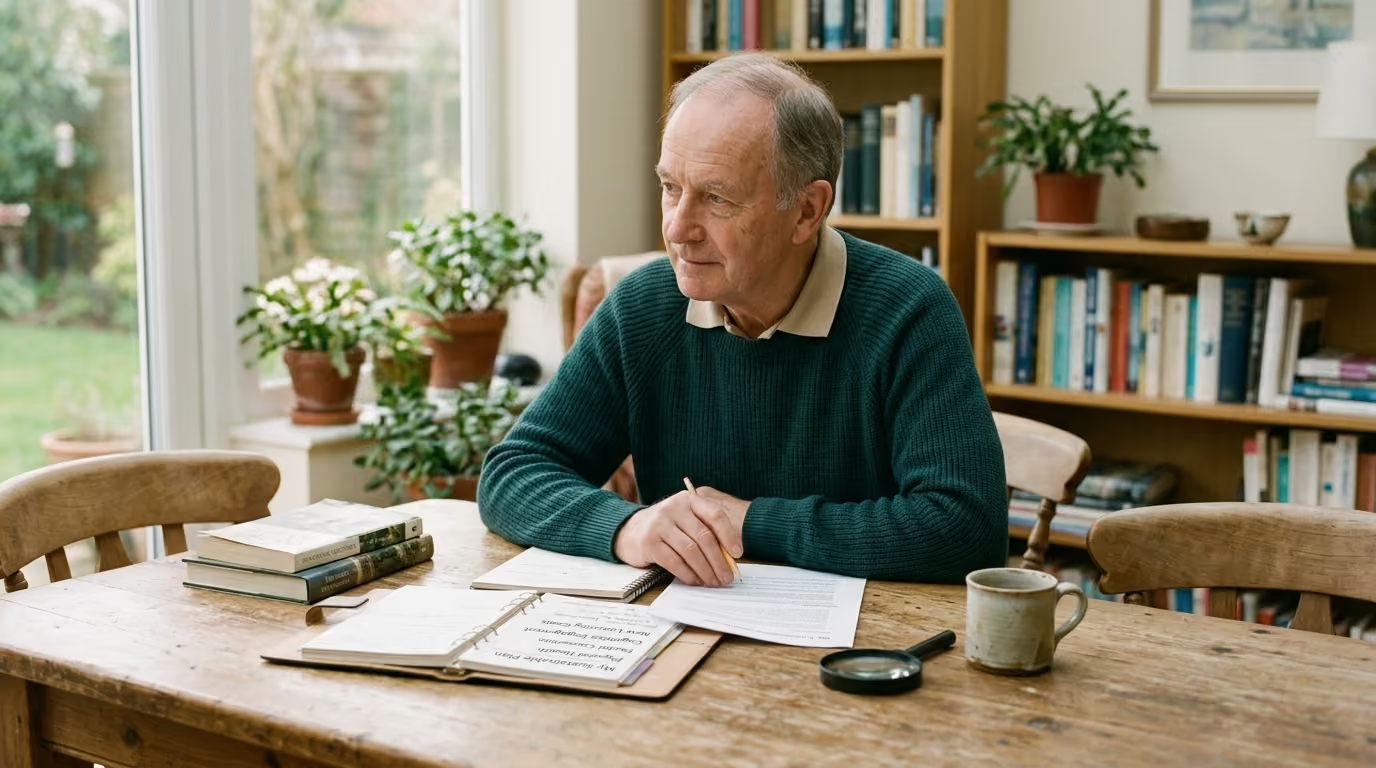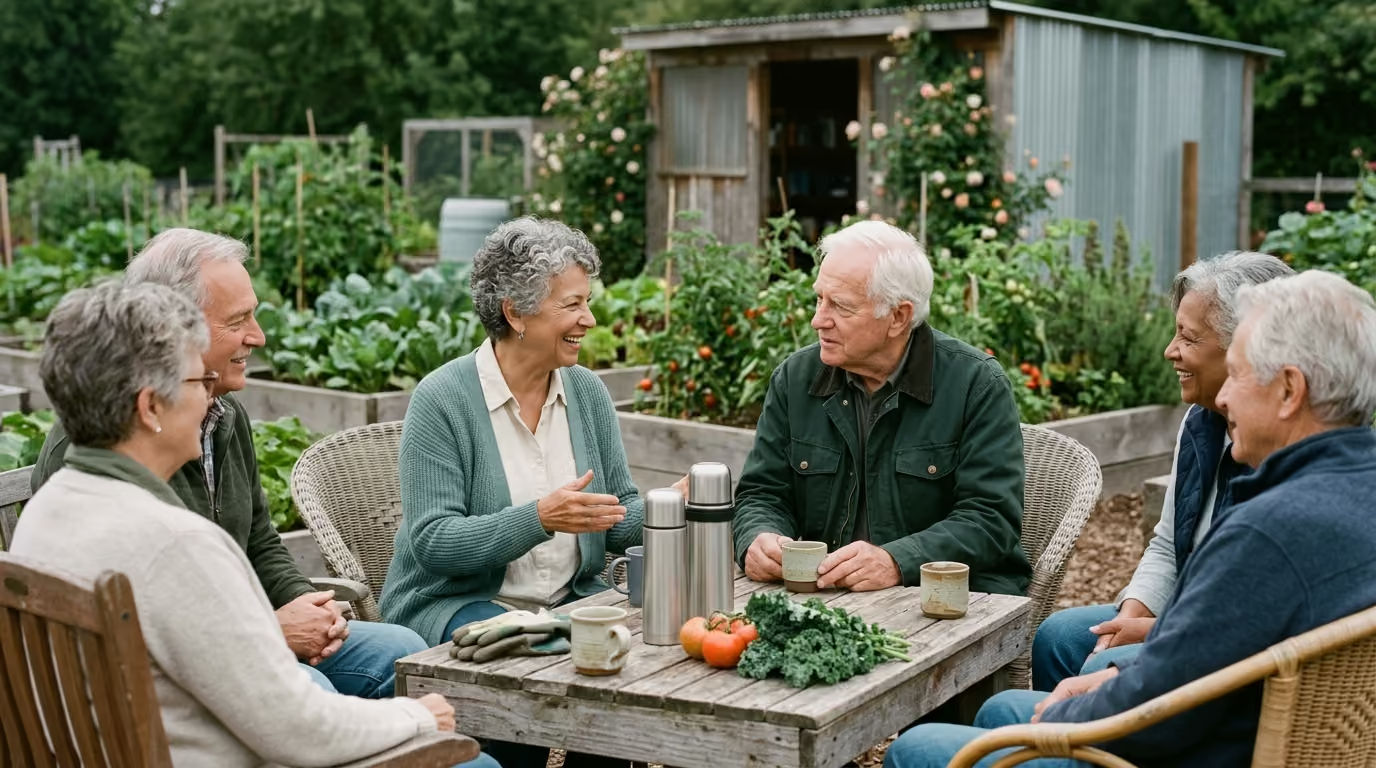

A quiet home on a Tuesday morning signals the right moment to rebuild daily social connections through volunteering, local clubs, and shared hobbies.





Many retirees type the same question into a search engine: "How do I make friends and find community after retirement?" When regular workplace interactions end, daily schedules and social networks change quickly. This guide provides a clear roadmap for creating meaningful connections, establishing predictable routines, and maintaining cognitive health across your retirement years.
Human brains remain responsive to experience throughout life. When you interact with other people, your brain processes complex sensory cues, interprets facial expressions, and tracks verbal nuances. These tasks activate networks involved in working memory, language processing, and executive function.
Regular social engagement stimulates brain plasticity, which is the ability of neurons to adapt to new demands. Conversations require real-time problem-solving, perspective-taking, and emotional regulation. These mental demands help maintain neural pathways. In contrast, prolonged social isolation can lead to higher baseline cortisol levels, which can negatively affect brain structures like the hippocampus over time.
Shared group activities offer double benefits when they pair physical movement or learning with social interaction. Walking with a neighbor, learning a language in a small group, or coordinating a volunteer project engages multiple brain areas at once. For more guidance on cognitive maintenance, review our brain aging and neuroplasticity resources.
Meaningful connection also triggers the release of oxytocin and dopamine. These neurochemicals promote emotional stability and reduce psychological stress. By lowering chronic stress, strong social ties support vascular health and general cognitive resilience.
Scientific research distinguishes between social isolation and loneliness. Social isolation is an objective lack of regular contact with other people. Loneliness is the subjective feeling of distress caused by perceived gaps in connection. An individual can live alone without feeling lonely, or feel lonely in a crowded room.
The National Academies of Sciences, Engineering, and Medicine identified social isolation as a major public health risk linked to poor physical and mental health outcomes. Data from the Centers for Disease Control and Prevention associates social isolation with higher risks of cardiovascular disease, depression, and cognitive decline. Approximately 24 percent of community-dwelling older adults in the United States meet the criteria for social isolation.
Longitudinal findings show clear patterns between purposeful activity and cognitive longevity. Data from the Health and Retirement Study indicates that regular volunteering correlates with a lower risk of cognitive impairment over a 14-year period. A randomized controlled trial of retired adults found that formal volunteering produced measurable gains in life satisfaction, personal purpose, and perceived growth over 12 months.
Studies also caution against assuming that retirement automatically creates isolation. Research indicates that retirement does not always increase short-term loneliness. For individuals leaving stressful, physically exhausting, or isolating jobs, retirement can reduce social isolation by freeing up time for local activities. You can read more about these lifestyle factors in our lifestyle and brain resilience articles.
Paid work provides hidden structural benefits beyond a regular paycheck. It establishes a daily timetable, places you in regular contact with peers, and defines a clear professional identity. It also offers routine problems to solve and shared goals with coworkers.
When you retire, those automatic structures disappear. Without intentional planning, the sudden loss of schedule can reduce physical activity and mental stimulation. The challenge of retirement is not just finding pastimes. It is building a reliable structure of roles, relationships, and purposeful goals.
Workplace friendships often rely on shared physical location. When that environment is gone, many work relationships fade naturally. Replacing those ties requires finding new settings where you see the same people regularly.
Building a sustainable social network means moving from casual acquaintances to dependable connections. A healthy social life includes casual greetings at a coffee shop, shared hobbies, and trusted confidants. Dividing your social network into specific categories makes community building manageable.
Building a social circle after 60 works best when approached methodically. The R.O.L.E.S. framework organizes your efforts into five practical components.
Choose activities that repeat on a predictable schedule rather than attending random, one-time events. Weekly library discussions, biweekly walking groups, or monthly neighborhood meetings create automatic consistency.
Predictable schedules remove the friction of deciding when and where to socialize. Over time, simply showing up at the same hour establishes familiarity with other regulars.
Move from passive observation to active contribution. Taking on a small, defined responsibility helps you transition from an attendee to a valued group member.
Simple tasks include setting out chairs, bringing refreshments, or managing an email contact list. These small commitments give you a clear reason to interact with others.
Avoid relying on a single group or organization for all your social needs. A resilient social life includes multiple layers, such as physical activity, intellectual study, and community service.
Spreading your activities across different settings protects your social routine if one group dissolves or becomes inaccessible. It also introduces you to people of diverse ages and backgrounds.
Select groups that offer low-pressure introductions. Joining an established group can feel intimidating if there is no clear way for newcomers to participate.
Effective entry points include short four-week workshops, orientation sessions, or single-task volunteer shifts. These structured settings let you evaluate the group dynamic before making a long-term commitment.
Ensure your chosen activities fit your physical capacity, transportation options, and financial budget. An activity that requires difficult night driving or expensive materials is hard to maintain long term.
Consider venue acoustics, accessible parking, seating comfort, and recurring costs. Choosing sustainable activities makes regular attendance realistic. You can find more frameworks on our retirement, purpose, and mental fitness page.
Rather than searching for one ideal club, build a balanced community portfolio across five key areas.
The first pillar centers on informal companionship and light conversation. These activities offer relaxed environments where you can talk without performance pressure.
Examples include walking clubs, neighborhood coffee meetups, community choirs, and informal crafting circles. The goal is regular, friendly interaction that breaks up solitary routines.
The second pillar focuses on intellectual curiosity and mental stimulation. Learning alongside peers creates an immediate topic of shared conversation and stimulates cognitive processing.
Options include community college extension classes, local history lectures, language study groups, and studio art workshops. A Canadian study of older adults in non-formal education programs showed significant improvements in psychological well-being.
The third pillar provides purpose through useful community work. Structured volunteer positions let you apply your professional and life skills to meaningful projects.
Useful settings include food pantries, school reading programs, hospital support desks, and community repair clinics. Studies show that regular volunteering predicts positive self-perceptions of aging and fewer depressive symptoms over time.
The fourth pillar centers on local advocacy, governance, and neighborhood stewardship. Civic work gives you a direct voice in local decisions that affect your neighborhood.
Activities include joining a town planning committee, participating in a tenant association, or organizing pedestrian safety initiatives. These roles replace workplace problem-solving with meaningful civic impact.
The fifth pillar offers moral, philosophical, or spiritual connection. These settings provide reflective spaces, shared rituals, and mutual care during challenging life stages.
Examples include congregational study groups, secular philosophy discussion circles, mindfulness groups, and grief support networks. These groups offer deeper emotional support when you navigate major life changes.
Finding local groups is straightforward when you know where to look. Several civic institutions serve as practical starting points for building community.
Modern public libraries serve as major community hubs rather than quiet book repositories. Most public library systems offer free programs designed for adults and retirees.
Typical library offerings include:
Libraries are welcoming, neutral spaces with no membership fees. They provide an easy way to try new activities without financial commitment.
Municipal recreation departments offer structured classes and outdoor programs for older adults. These programs emphasize physical movement, accessible sports, and outdoor appreciation.
Standard offerings include:
Participating in outdoor recreation combines cardiovascular exercise with natural conversation. Physical movement also supports neurovascular health, which you can read about in our memory and focus resource collection.
Local community colleges and universities frequently offer low-cost or tuition-free audits for older adults. Lifelong learning institutes provide structured courses without grades, papers, or exams.
Typical learning formats include:
Academic settings offer a built-in schedule that encourages regular attendance. Class breaks and group assignments provide easy opportunities to start conversations with classmates.
Nonprofit organizations and conservation groups rely heavily on the organizational skills of retirees. These groups offer project-based work with tangible results.
Opportunities include:
Environmental and civic projects provide visible results. Working alongside others toward a tangible goal builds camaraderie faster than unstructured socializing.
Simply showing up at a meeting does not guarantee meaningful connection. True belonging develops through a predictable six-stage process.
You discover an organization, check the meeting time, and attend for the first time. In this early stage, you observe the group culture, physical space, and overall tone.
After two or three visits, other attendees begin to recognize your face. A regular member greets you by name and recalls a detail from a past conversation.
You start joining discussions, asking questions, and contributing your perspective. You feel comfortable sharing thoughts during group activities.
You volunteer for a specific task that supports the group. You might help set up audiovisual equipment, manage registration, or coordinate refreshments.
The connection becomes bidirectional. You offer practical or emotional support to other members, and they reach out when you miss a session or face a personal challenge.
You feel accepted and valued as an integral member of the group. Attending requires little mental effort because you have established a clear role within the community.
You can accelerate the transition from attendee to friend by using specific, intentional behaviors:
Many people believe that retiring automatically leads to loneliness and isolation. Research shows that retirement affects individuals differently based on their health, finances, and prior work environments.
Data indicates that some people experience lower social isolation after retirement because they have more time for family, friends, and community projects. Retirement removes workplace stress and allows you to build a social schedule on your own terms.
Living alone is a household arrangement, while social isolation is a lack of social contact. Many adults living alone maintain active, supportive social networks.
Conversely, living with a partner or family member does not prevent loneliness. Emotional closeness and mutual understanding matter far more than physical proximity under one roof.
Joining a poorly organized or hostile group can increase stress rather than reduce it. Groups that demand too much unpaid labor or create interpersonal drama drain your energy.
Be selective about where you invest your time. A healthy community respects personal boundaries, welcomes new ideas, and values its members.
Studies link regular social and mental activity with lower risks of cognitive impairment over time. However, this correlation does not mean social engagement completely prevents neurodegenerative conditions.
Community participation is one part of a balanced lifestyle that includes physical exercise, quality sleep, and good nutrition. For additional strategies, explore our comprehensive brain health and lifestyle guides.
Introverts need meaningful social connection just as much as extroverts, though they prefer different formats. Large, noisy social gatherings can feel exhausting for an introverted person.
Introverted retirees often thrive in small groups with clear structures. Book clubs, repair workshops, conservation projects, and one-on-one mentoring provide deep connection without sensory overload.
Personal, physical, and logistical hurdles can make joining local groups challenging. Addressing these barriers directly helps you stay connected.
Many older adults stop driving after dark due to glare, slower reflexes, or reduced night vision. Transportation challenges can lead to accidental isolation if all group meetings happen in the evening.
Solutions include:
Age-related hearing changes can make conversations in noisy rooms exhausting. Straining to hear often leads people to withdraw quietly from group conversations.
Solutions include:
Membership fees, specialized gear, dining out, and travel costs can strain a retirement budget. Financial concerns should never prevent you from staying connected.
Solutions include:
Caring for a spouse, parent, or grandchild can limit your free time and make fixed weekly commitments difficult to maintain.
Solutions include:
Many community organizations organize schedules and discussions through websites, apps, and online forums. Lacking digital confidence can make finding these opportunities difficult.
Solutions include:
Building a community takes time, steady effort, and patience. This 90-day plan outlines practical steps to help you establish a sustainable routine.
Your physical and sensory health directly affects your ability to take part in community activities. Consider discussing these questions with your physician:
Taking small, consistent steps makes building community straightforward. You can begin expanding your local connections this week using these practical actions:

Follow FitBrainLab for research-led insights on memory, focus, brain aging, nutrition and mental fitness after 60. Stay connected for new articles, practical guidance and ideas for a sharper, more engaged life.


Build habits that support memory, focus and a curious, connected life.
Read the Blog