
Cognitive longevity after sixty depends on choosing mentally challenging hobbies that stimulate neural pathways, foster active creation, and promote sustained social engagement.





Many adults search online for the single best hobby to protect memory and prevent dementia. They wonder whether learning chess, playing the piano, solving crosswords, or studying a foreign language holds the secret to staying sharp.
The short answer is that no single activity acts as a magic shield against cognitive decline. What the evidence actually shows is that specific characteristics of activities, such as mental effort, novel learning, physical movement, and social contact, build resilience over time.
This guide provides a research-led framework to help you choose hobbies that match your personal goals. You will learn how to evaluate mentally demanding pastimes, integrate them into daily life, and balance challenge with genuine rest.
Cognitive longevity describes the ongoing effort to preserve memory, attention, language, reasoning, and processing speed as you age. It is not identical to avoiding disease. Two people can experience similar physical changes in brain tissue while showing very different levels of everyday functioning.
The concept of cognitive reserve helps explain this difference. Cognitive reserve refers to the brain's ability to improvise, find alternative neural pathways, and function effectively even when facing age-related changes or neuropathology. Formal education, complex work history, mentally stimulating leisure, and regular social engagement contribute to this reserve throughout life.
Neuroplasticity is the biological mechanism supporting this process. The brain retains the ability to remodel its neural connections and modify its networks in response to environmental demands and learning experiences at any age. Older adults can learn complex skills, master unfamiliar software, and acquire new languages.
The nature of the mental engagement matters greatly. Researchers divide activities into active engagement and receptive engagement:
Active learning forces neural circuits to adapt. When you practice an unfamiliar task, your brain must coordinate attention, working memory, and motor planning. Receptive pastimes can offer relaxation, but they do not demand the same structural adaptation from the brain.
The scientific literature on lifestyle and brain health includes randomized clinical trials, long-term observational studies, and systematic reviews. Examining these findings helps separate confirmed benefits from commercial marketing claims.
One of the most informative studies on leisure learning is the Synapse Project, conducted with adults aged 60 to 90. Researchers assigned participants to either high-challenge productive learning groups or low-challenge receptive engagement groups for 15 hours per week over three months.
The productive learning groups engaged in digital photography, quilting, or a combination of both. These activities required participants to master complex digital editing software, operate camera equipment, read technical manuals, and design intricate geometric patterns.
The receptive groups engaged in social activities, played games that relied on existing knowledge, or listened to classical music. At the end of the intervention, participants in the productive learning groups demonstrated significant improvements in episodic memory and processing speed compared to the receptive groups.
The study highlighted three critical factors:
The Advanced Cognitive Training for Independent and Vital Elderly (ACTIVE) trial evaluated structured computer and classroom exercises in older adults. The trial showed that training improved the specific cognitive domain targeted, such as processing speed or reasoning.
The improvements showed limited transfer to unrelated mental abilities. Becoming faster at a specific visual tracking task did not automatically improve unrelated verbal memory.
This finding suggests that relying exclusively on commercial digital brain games provides narrow benefits. A broad, real-world hobby that involves multiple cognitive systems offers a more practical approach to everyday mental fitness.
The 2024 report of the Lancet Standing Commission on dementia prevention, intervention, and care identified 14 potentially modifiable risk factors across the lifespan. The Commission estimated that addressing these modifiable factors could delay or prevent roughly 45 percent of dementia cases globally.
The report highlighted factors such as physical inactivity, social isolation, untreated hearing loss, untreated vision loss, hypertension, depression, and low cognitive stimulation. The Commission stressed that lifestyle interventions must be comprehensive. Choosing mentally stimulating hobbies supports brain health, but it works best alongside physical exercise, sensory management, and vascular care.
The World Health Organization (WHO) provides evidence-based recommendations on risk reduction for cognitive decline and dementia. The WHO guidelines recommend physical activity for cognitively healthy older adults to reduce the risk of cognitive decline.
The WHO also states that cognitive stimulation and cognitive training may be offered to adults with normal cognition or mild cognitive impairment. Updated guidance notes that social activity interventions may be recommended as part of an active lifestyle. The guidelines emphasize that leisure habits should be part of a broader health strategy rather than isolated treatments.
Long-term cohort studies offer additional perspectives on daily habits. A large longitudinal study of community-dwelling older Japanese adults found that non-participation in hobbies was independently associated with a higher risk of cognitive decline over time.
Another long-term study published in 2024 reported that regular participation in creative activities, including gardening and needlework, was associated with better daily functioning, physical fitness, and subjective health eight years later. These observational studies show positive associations, though they do not prove direct cause and effect. People who maintain active hobbies may also enjoy better baseline health, higher incomes, or stronger social support.
Research on passive entertainment shows mixed findings that depend heavily on duration and context. A two-year cohort study found that moderate television viewing had no measurable positive or negative effect on global cognition, verbal fluency, or memory.
An analysis from the English Longitudinal Study of Ageing found that watching more than 3.5 hours of television per day was associated with a decline in verbal memory over six years. The primary risk of excessive passive screen time is the displacement of physical movement, social conversation, sleep, and active mental tasks. Relaxation has legitimate value, but passive viewing should not crowd out engaging pursuits.
To evaluate whether an activity provides meaningful cognitive stimulation, you can use the CRAFT framework. This system examines five fundamental components of cognitive engagement.
A valuable hobby requires effort beyond automatic execution. It should ask you to process new information, retain instructions in working memory, plan sequential steps, and correct mistakes.
Low-challenge activities include rewatching familiar television programs, scrolling social media feeds, or repeatedly solving simple word searches using existing vocabulary. High-challenge activities include learning unfamiliar computer software, playing a new musical piece, or planning a complex itinerary for travel.
Calibrating the difficulty level is essential. If a hobby is too easy, your brain relies on established habits without building new connections. If it is excessively difficult, it causes anxiety, frustration, and eventual abandonment.
Progression means that the activity naturally becomes more complex as your competence grows. A constructive hobby provides clear feedback so you can adjust your actions and improve.
Examples of progression include:
Progression prevents a hobby from becoming routine. Once an activity becomes completely automatic, its cognitive demand drops.
Active creation requires you to design, build, write, perform, or organize something tangible. Generating original work requires executive function, abstract reasoning, and sustained attention.
Writing a memoir requires you to organize memories into a structured narrative. Cultivating a garden requires you to map out companion plantings, monitor soil moisture, and adapt to weather shifts. Both activities engage multiple brain regions simultaneously.
Consuming content about an art form is passive. Holding the paintbrush, mixing colors, and adjusting perspective is active creation.
Social connection provides cognitive stimulation through real-time communication, active listening, perspective taking, and emotional reciprocity. Combining mental challenge with social interaction creates a richer experience.
You can introduce social components to solitary pastimes:
Meaningful conversation exercises verbal fluency and working memory in a natural, spontaneous environment.
An activity must hold personal significance to remain sustainable over months and years. Mentally demanding tasks require patience and discipline, especially during the early stages of learning.
If an activity aligns with your values, family history, creative interests, or community goals, you are far more likely to stick with it through periods of fatigue or slow progress. Preserving heirloom recipes, restoring family photographs, or volunteering for a local cause provides an intrinsic sense of purpose.
You can read more about maintaining engagement and purpose across later life in our retirement and mental fitness guides.
When considering a new hobby, rate it from 0 to 2 points on each of the following questions:
A total score between 7 and 10 points indicates a strong activity for building cognitive reserve. A lower score does not mean you must stop the activity, especially if it provides valuable rest, joy, or emotional comfort.
Expecting a single hobby to fulfill every physical, mental, and social need is unrealistic. A more resilient strategy builds a four-part activity portfolio.
You can structure your weekly routine around these four distinct categories:
This component focuses on novel acquisition and deep cognitive effort. It should take you outside your comfort zone and require regular, focused practice.
Examples include:
This activity serves as your primary driver for learning new skills and building cognitive reserve.
Physical activity improves cardiovascular health, supports cerebral blood flow, and promotes neuroplasticity. The WHO physical activity guidelines recommend that older adults complete 150 to 300 minutes of moderate aerobic exercise weekly, alongside balance and muscle-strengthening work on two or more days.
Hobbies that combine movement with spatial navigation and coordination provide dual benefits:
To learn more about how physical habits influence brain structure, explore our guide on brain aging and neuroplasticity.
This component centers on connection, shared goals, and community contribution. Social engagement reduces isolation and exercises emotional and verbal communication skills.
Examples include:
Connecting with others regularly supports emotional health and motivation.
Cognitive health requires adequate recovery. Chronic mental fatigue and unmanaged stress can impair memory retrieval and executive attention.
Low-demand pastimes allow your nervous system to rest:
Restorative activities are not wasted time. They prevent burnout and ensure that you have the mental energy needed for demanding learning.
You can review our broader articles on lifestyle habits for brain resilience to see how rest, movement, and nutrition interact.
Different hobbies engage distinct combinations of neurological systems. Reviewing these profiles can help you select activities that fit your physical capabilities, personality, and interests.
Playing an instrument is one of the most comprehensive cognitive tasks available. It requires the simultaneous integration of visual input, motor control, auditory processing, and executive planning.
Cognitive demands include:
Beginners can start with instruments that allow rapid early feedback, such as the keyboard, ukulele, or electronic drums. Group music classes add a supportive social layer.
Learning a foreign language exercises working memory, verbal fluency, and executive task switching. It challenges the brain to suppress native language patterns while retrieving unfamiliar vocabulary and grammar rules.
To make language study cognitively effective:
The goal is functional communication and mental effort rather than flawless native accent.
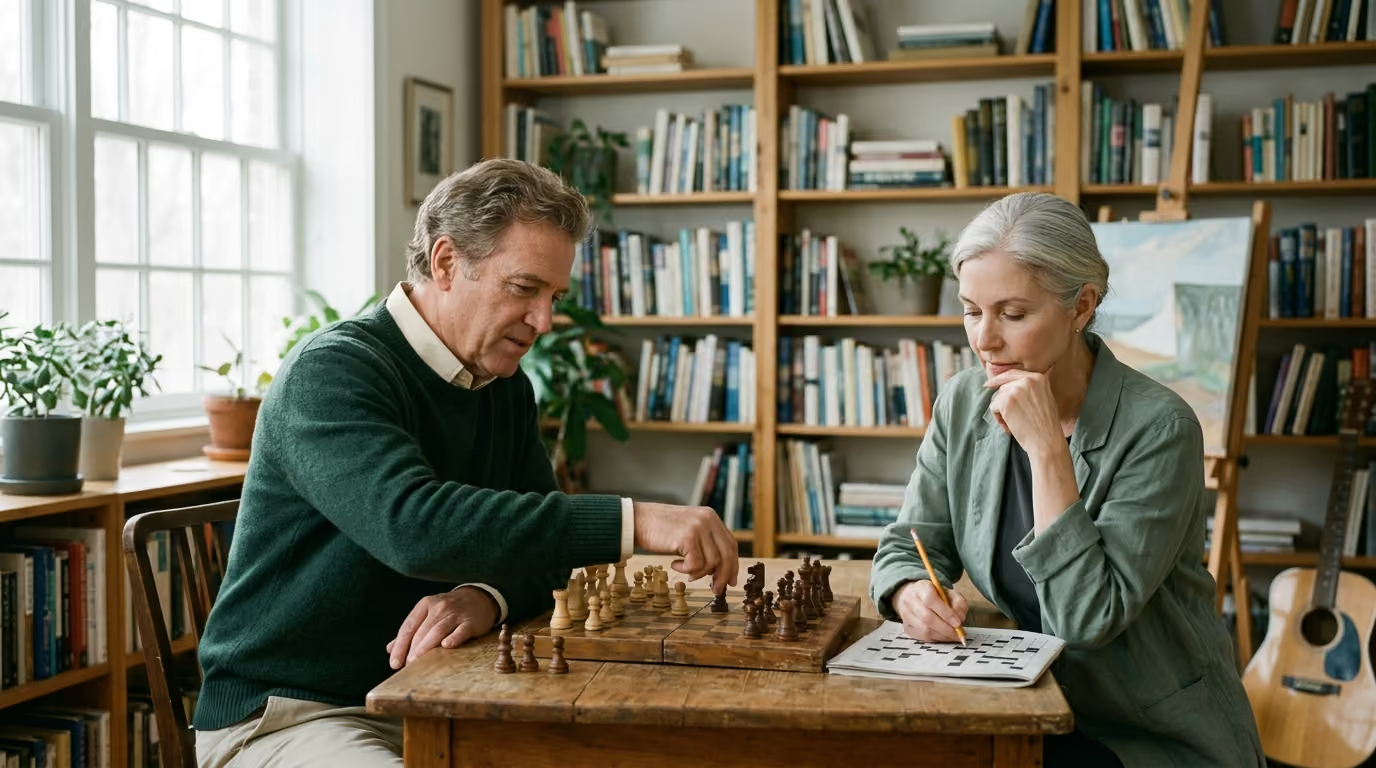
Strategic pastimes require players to anticipate opponents' moves, hold rules in working memory, and adapt to shifting conditions. They differ fundamentally from static, repetitive puzzles.
Strong choices include:
When a specific puzzle format becomes easy, switch to a new game to keep your problem-solving networks engaged.
Reading can be transformed from a passive pastime into an active cognitive exercise. By altering how you interact with texts, you engage deeper memory and comprehension circuits.
Effective techniques include:
Writing forces you to clarify your thoughts, structure arguments logically, and retrieve precise vocabulary.
Crafts that require spatial planning, mathematics, and fine motor execution offer significant cognitive demands. The physical nature of these hobbies also supports spatial awareness.
Rewarding craft hobbies include:
These tasks require you to plan multi-step processes, correct physical errors, and manage three-dimensional relationships.
Gardening combines physical activity, seasonal planning, and environmental problem solving. It requires knowledge acquisition regarding botany, soil chemistry, and local weather patterns.
Cognitive and physical elements include:
Gardening also provides sensory stimulation and regular outdoor light exposure, which supports circadian health.
You can find further actionable guidance in our collection of memory and focus strategies.
A sustainable hobby routine must fit your current physical capabilities, sensory health, and financial resources. Adaptations ensure that activities remain safe, engaging, and enjoyable.
For individuals living with mild cognitive impairment (MCI), the priority is sustained engagement without excessive frustration. Hobbies should build confidence and provide structured, repeatable success.
Helpful adaptations include:
The WHO recommendations support cognitive stimulation and social participation for adults with mild cognitive impairment. Medical guidance remains foundational.
Sensory health directly influences cognitive processing. Untreated hearing and vision loss increase cognitive load and are recognized modifiable dementia risk factors in the 2024 Lancet Commission report.
Consider these practical adjustments:
Addressing vision and hearing changes allows you to stay fully engaged in complex activities without unnecessary strain.
Cognitive longevity does not require expensive equipment or costly memberships. Many of the most demanding activities are free or low cost:
The value lies in your attention, consistency, and curiosity, not in the price of the tools.
Integrating new hobbies into a weekly routine requires deliberate planning. Starting too aggressively can lead to sore muscles, mental fatigue, and frustration.
To build a sustainable routine, test new activities over four structured weeks.
If the activity passes this review, keep it in your weekly schedule. If it caused chronic frustration or boredom, adjust the difficulty or try a different pursuit from your portfolio.
For more information on evidence-based lifestyle choices, visit our cognitive health protection resource hub.
Separating scientific reality from popular wellness claims helps you invest your time where it delivers genuine value.
Solving familiar crossword puzzles primarily retrieves words you already know from semantic memory. While doing crosswords is an enjoyable leisure activity, research does not show that it builds generalized cognitive resilience or prevents neurodegenerative disease.
To make word games more cognitively demanding, choose cryptic crosswords that require abstract lateral thinking, or switch to learning a new language.
Relaxing with a favorite television show, movie, or music album is not toxic to brain health. Rest, humor, and emotional recovery are necessary components of a balanced lifestyle.
The concern arises when passive screen viewing consumes multiple hours each day and displaces physical exercise, social meals, outdoor walks, and active creative pursuits. Balance and moderation are the true priorities.
Social interaction supports emotional health, reduces isolation, and exercises conversation skills. Casual socializing alone does not necessarily offer novel learning or progressive cognitive challenge.
The most effective approach pairs social connection with shared goals, physical movement, or structured learning, such as taking a group cooking class or participating in a community orchestra.
Solving complex puzzles or playing chess cannot replace the neurological and vascular benefits of physical activity. Aerobic exercise, resistance training, and balance work promote cardiovascular health and support neuroplasticity in ways that seated mental tasks cannot duplicate.
A robust routine includes both physical movement and cognitive stimulation.
While lifestyle choices support overall well-being, hobbies are not medical treatments. Knowing when to seek formal clinical guidance ensures that health issues are identified and managed promptly.
Occasional forgetfulness, such as misplacing keys or temporarily forgetting a familiar name, can be a normal part of aging. Certain changes warrant a thorough evaluation by a physician or neurologist:
These signs should prompt a medical appointment rather than simply adding more brain training games or puzzles to your routine.
Take this short list of questions to your next health checkup to discuss your cognitive health:
Use this practical checklist to review your current leisure habits and apply this framework over the next seven days:
Building cognitive reserve is a lifelong, cumulative process. By choosing hobbies that challenge your mind, move your body, connect you with others, and provide personal meaning, you support your independence and cognitive longevity across your retirement years.

Follow FitBrainLab for research-led insights on memory, focus, brain aging, nutrition and mental fitness after 60. Stay connected for new articles, practical guidance and ideas for a sharper, more engaged life.


Build habits that support memory, focus and a curious, connected life.
Read the Blog