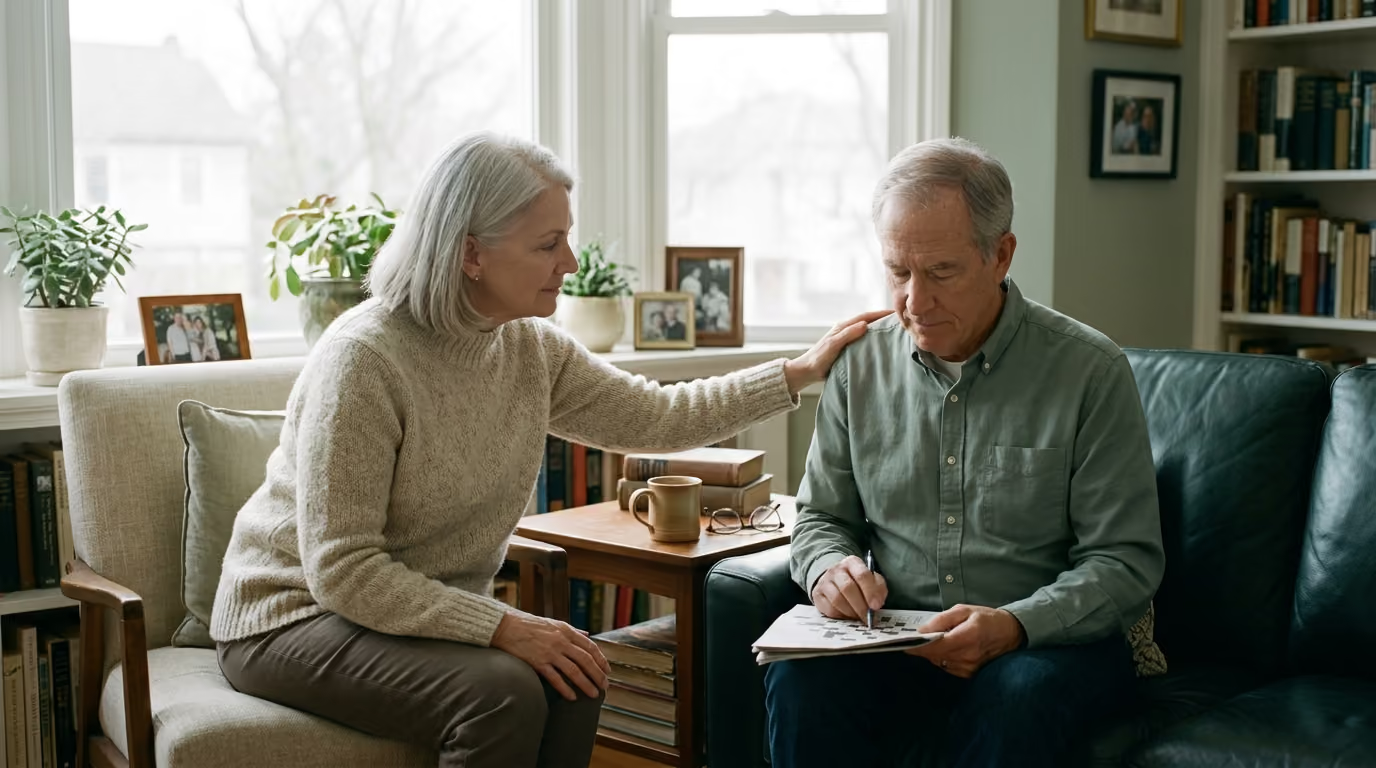

Struggling to follow dinner conversations or read small print often drains mental energy, making sensory care essential for protecting long-term cognitive function.





Many adults search for answers when group conversations suddenly feel exhausting or when following dinner table discussions becomes difficult. You might wonder if missing parts of a conversation or forgetting spoken instructions signals early memory loss. In most cases, these struggles do not originate in memory circuits at all. They often start with sensory changes that make receiving information far more difficult.
This comprehensive guide explains how hearing and vision changes affect daily cognitive function. You will learn the difference between true memory decline and sensory fatigue. You will also discover practical tools to preserve mental clarity, maintain social connections, and stay independent.
Understanding speech requires several distinct neurological steps. First, the ear detects sound waves and turns them into electrical signals. Next, the auditory nerve carries those signals to the brainstem and auditory cortex. The brain must then separate the speaker's voice from background noise. Once the words are isolated, the brain matches them against stored vocabulary. Finally, working memory holds the meaning long enough to formulate a reply.
When hearing loss degrades the incoming signal, the brain loses clear acoustic data. The auditory cortex receives a muffled or incomplete stream of information. Higher-level cognitive networks must step in to fill the gaps using context and probability. This process requires deliberate mental effort. Working memory becomes crowded with the task of figuring out what words were spoken. Because working memory has limited capacity, less room remains for storing facts, evaluating arguments, or organizing thoughts.
Vision operates under similar cognitive demands. Processing visual information requires light to pass clearly through the cornea and lens onto the retina. The optic nerve transmits this information to the visual cortex for edge detection, motion tracking, and pattern recognition. When cataracts cloud the lens or macular changes blur central vision, the visual cortex receives degraded data.
The brain must work harder to identify faces, read small type, or interpret nonverbal cues like smiles and frowns. This extra visual workload drains cognitive energy throughout the day. When older adults experience uncorrected sensory loss, they routinely spend significant mental energy on perception alone. The brain is not losing its underlying ability to think. Instead, it is forced to spend its cognitive budget on deciphering the physical world.
Major medical consensus panels have identified sensory health as a central factor in long-term cognitive well-being. The 2024 Lancet Commission report identified unaddressed hearing loss and late-life vision loss as modifiable risk factors for dementia. Population models suggest that hearing impairment accounts for roughly 7% of dementia cases worldwide. Untreated vision loss in later life contributes an estimated 2% of the global burden. These figures reflect broad population patterns rather than guarantees for any single person.
The landmark ACHIEVE randomized trial evaluated whether treating hearing loss protects cognitive function. Researchers tracked older adults across two different groups over a three-year period. In the combined study population, providing hearing aids and communication training did not significantly change three-year cognitive test trends compared to a health education control.
A prespecified subgroup analysis revealed a meaningful difference based on baseline risk. Among older adults who entered the study with higher baseline risks for cognitive decline, the hearing intervention reduced three-year cognitive decline by 48%. A subsequent secondary analysis showed that participants in the highest risk quartile experienced a 62% reduction in cognitive decline. These results indicate that hearing rehabilitation provides significant cognitive support for individuals facing elevated vulnerability.
Research on vision correction shows related protective patterns. A systematic review and meta-analysis of 24 studies examined data from more than 558,000 older adults. It found that individuals who underwent cataract surgery had a 25% lower risk of long-term cognitive decline compared to those with unoperated cataracts. Removing the visual obstruction restored natural sensory input and reduced the daily cognitive strain of navigating a blurry environment.
Combined hearing and vision impairment creates even greater challenges. The American Academy of Ophthalmology reports that adults living with both hearing and vision limitations experience higher rates of cognitive difficulty than those with a single impairment. When both systems decline, an individual cannot easily compensate for missed sounds by reading lips or watching facial cues.
Supporting sensory health is a vital component of lifestyle approaches to brain resilience. Treating sensory loss does not provide an absolute shield against neurodegenerative disease. However, correcting sensory barriers allows people to participate fully in life and use their existing cognitive abilities without needless strain.
Sensory loss frequently mimics neurodegenerative decline in everyday settings. When an older adult answers a question incorrectly, fails to follow spoken instructions, or appears distant at family dinners, family members often worry about dementia. Yet these behaviors frequently stem from incomplete sensory access rather than structural memory loss.
Consider what happens during a standard conversation in a busy setting:
Standard cognitive screenings can produce misleading results if sensory limitations are overlooked. If a clinician reads a list of words in a room with background noise, an older adult cannot remember terms they never heard accurately. If a visual test presents small print in low contrast, visual impairment will lower the score regardless of mental sharpness.
A thorough cognitive evaluation must always begin by verifying that the person can hear instructions clearly and read test materials without difficulty. Clinicians should document sensory accommodations directly on the evaluation report. Distinguishing between sensory access barriers and neurological impairment protects individuals from inaccurate labels and guides the right medical interventions.
Protecting your sensory systems requires looking beyond simple screening checks. A standard hearing test in a silent booth does not show how well you process speech in a crowded restaurant. Similarly, reading high-contrast black letters on a brightly lit eye chart does not capture your ability to spot obstacles in dim lighting.
A comprehensive functional evaluation should assess your ability to manage daily tasks, including:
Adults over 60 should arrange comprehensive sensory assessments on a predictable schedule. The American Academy of Ophthalmology and the American Optometric Association recommend regular eye exams every one to two years for older adults. These visits screen for refractive errors, cataracts, glaucoma, macular degeneration, and diabetic eye conditions.
Hearing checks with a licensed audiologist should occur whenever you notice changes in daily comprehension. Seeking timely testing is a practical step within broader cognitive health and protection strategies.
When evaluating sensory aids, usability matters just as much as ownership. A hearing aid left in a nightstand drawer provides zero sensory access. Devices must fit comfortably, match your specific prescription, and feature controls you can easily manage.
The World Health Organization emphasizes that hearing rehabilitation involves more than purchasing hardware. Comprehensive care includes device fitting, real-world adjustment periods, communication strategy coaching, and regular checkups.
Modifying your physical environment reduces unnecessary sensory strain. Thoughtful home design allows your brain to direct its energy toward conversation, learning, and daily tasks.
Hard surfaces like tile floors, bare walls, and large glass windows cause sound waves to bounce. This reverberation creates an acoustic haze that smears consonant sounds together.
To improve room acoustics, place area rugs over hard flooring and hang fabric draperies over large windows. Adding upholstered chairs and bookshelves breaks up sound reflections and makes spoken words much easier to isolate.
Always turn off background distractions. Running a television or radio during dinner forces the auditory cortex to filter competing sound streams simultaneously. Turning off background media instantly improves speech clarity for everyone in the room. When dining out, choose restaurants with sound-absorbing materials like carpets and soft booths. Sit along the perimeter of the room away from kitchens, bar areas, and ceiling speakers.
Lighting levels should remain even and bright across living spaces while avoiding harsh glare. Unshielded light bulbs and glossy tables create blinding reflections that obscure details for older eyes.
Use adjustable lamps that cast light directly onto books, craft projects, or food preparation areas. Place lamps slightly behind or beside your shoulder so light illuminates your work without shining into your eyes.
Increasing visual contrast makes everyday objects immediately recognizable. Place white dinner plates on dark placemats so food boundaries stand out clearly. Paint door frames a contrasting color from adjacent walls to assist spatial orientation. Mark the edges of stair treads with high-contrast safety strips to improve depth perception and prevent falls.
Keep walkways clear of clutter and maintain consistent storage locations for keys, eyeglasses, and medications. For more techniques to support daily function, read about memory and daily focus.
Successful communication involves cooperative effort between both conversational partners. Clear speech habits can reduce listening fatigue and prevent misunderstandings for individuals managing sensory changes.
When speaking with someone who has hearing limitations, use these practical steps:
When communicating with someone managing vision loss, state your name when entering a room. Describe any changes in the physical space, such as moved chairs or spilled liquids. Use precise verbal directions like "The water glass is two inches to the right of your plate" instead of vague words like "over there."
For individuals experiencing combined hearing and vision changes, communication requires extra patience. Combine spoken explanations with written materials printed in bold, large text. Provide ample time for responses and confirm plans using hands-on demonstrations whenever practical.
Sensory care works best when woven into daily habits and regular routines. Taking proactive control of your sensory health protects your independence and allows you to enjoy lifelong learning.
Begin each day with a consistent device check. Inspect hearing aid ports for wax accumulation and wipe them clean with a dry cloth. Ensure rechargeable devices have reached full power, or check disposable batteries with a battery tester. Place clean reading glasses in designated spots in the rooms where you spend the most time.
When planning your day, schedule demanding visual or auditory activities for times when your energy peaks. If you need to make important phone calls or review financial documents, do so in the morning rather than late at night. Building structured habits supports your cognitive goals, much like using dedicated brain aging and cognitive longevity resources.
Do not abandon hobbies or community groups because listening or seeing has become harder. Instead, adapt the environment to match your current needs. If book club meetings feel overwhelming in a large group, invite two members to discuss chapters over coffee in a quiet living room.
If reading printed pages causes eye fatigue, switch to digital e-readers where you can increase font size and adjust background contrast. You can also listen to audiobooks using comfortable over-ear headphones.
When attending lectures, religious services, or live performances, use venue-provided assistive listening devices. Many modern theaters and community centers offer personal FM receivers or hearing loop systems that send audio directly into compatible hearing aids. Utilizing these tools keeps your mind active while preventing the exhaustion that follows hours of strained listening.
Physical balance relies on an ongoing dialogue between your inner ears, your eyes, and sensory receptors in your joints. As vision and hearing change, adjusting your exercise habits maintains steady balance and physical confidence. Walk on smooth, well-lit paths rather than uneven trails in dim twilight.
Join low-impact balance classes like tai chi or gentle yoga to reinforce stability. Staying physically active and socially connected supports long-term independence and reinforces mental fitness in retirement.
Misunderstandings about sensory changes can delay treatment and cause unnecessary frustration for older adults and their families.
Eyeglasses correct refractive errors instantly by focusing light accurately onto the retina. Hearing aids work differently. They are sophisticated digital processors that amplify specific sound frequencies, manage background noise, and route audio signals through an altered auditory pathway.
The brain requires several weeks or months of consistent wear to adapt to amplified sounds. Footsteps, running water, and humming refrigerators will sound unnaturally loud at first. Speech comprehension improves gradually as the auditory cortex relearns how to organize this richer stream of acoustic information.
Raising your volume increases sound pressure, but it often distorts speech clarity. Shouting also raises the pitch of your voice, which pushes sounds into high-frequency registers where age-related hearing loss is usually most severe.
Shouting can also sound aggressive or condescending. The most effective approach is to face the person directly, slow your speech slightly, speak clearly, and reduce background noise.
When an older adult stops attending family dinners, book clubs, or community meetings, relatives often assume they are losing interest in socializing or developing depression. In many cases, social withdrawal is a direct response to listening fatigue.
Straining to follow fast-paced discussions in loud rooms requires intense concentration. After an hour of guessing words and missing jokes, an individual feels mentally exhausted. Providing quieter settings and appropriate assistive devices allows older adults to rejoin conversations with confidence.
Some sensory changes become more common as we grow older, but living with disabling sensory loss is not an inevitable fate. Refractive errors can be corrected with modern lenses. Cataracts can be surgically removed with routine outpatient procedures.
Age-related hearing loss can be managed with hearing aids, cochlear implants, remote microphones, and room adjustments. Treating sensory changes early prevents the secondary problems of isolation, physical inactivity, and cognitive fatigue.
Taking charge of your sensory health begins with focused conversations with your healthcare team. Use these questions at your next medical visit to evaluate your hearing and vision needs.
Apply these practical steps this week to improve your sensory environment:
Sensory health is an active gateway to clear thinking, vibrant relationships, and personal independence. By identifying sensory barriers early, adjusting your surroundings, and using effective assistive technologies, you protect your ability to participate fully in every part of life.

Follow FitBrainLab for research-led insights on memory, focus, brain aging, nutrition and mental fitness after 60. Stay connected for new articles, practical guidance and ideas for a sharper, more engaged life.


Build habits that support memory, focus and a curious, connected life.
Read the Blog