
Five core domains of cognitive resilience help adults over sixty protect brain health, maintain daily functioning, and navigate aging through purposeful routines.





Cognitive resilience after 60 is not the promise of an untouched brain or a guaranteed shield against aging. It is the practical ability to learn, solve problems, stay connected, and engage in meaningful roles when life changes. It is not an unbending shield against biology, nor is it a simple test score on a memory quiz. True cognitive resilience is an active, flexible system built from daily routines, social ties, physical habits, and adaptive behaviors.
This comprehensive guide presents an evidence-based approach to building your cognitive resilience portfolio. You will discover how purposeful living, manageable challenges, social integration, and practical backup systems protect daily independence as your health, routines, and life circumstances evolve.
Cognitive resilience is the brain's capacity to maintain functioning, recover from stressors, and adapt when faced with life transitions, illness, or sensory decline. The World Health Organization defines healthy aging as the process of developing and maintaining the functional ability that enables wellbeing in older age. Functional ability does not require the complete absence of physical or neurological ailments. Instead, it reflects what a person can accomplish within their environment, using available tools, relationships, and support systems.
Under this model, resilience involves three interacting elements:
Resilience is not fixed. It comprises four active capabilities that work together:
This functional perspective shifts the conversation away from unrealistic perfection. A person living with arthritis or mild sensory loss can maintain high functional resilience by adopting supportive habits and tools. Understanding these dynamics is central to cognitive health and protection, where lifestyle adaptations support long-term brain health.
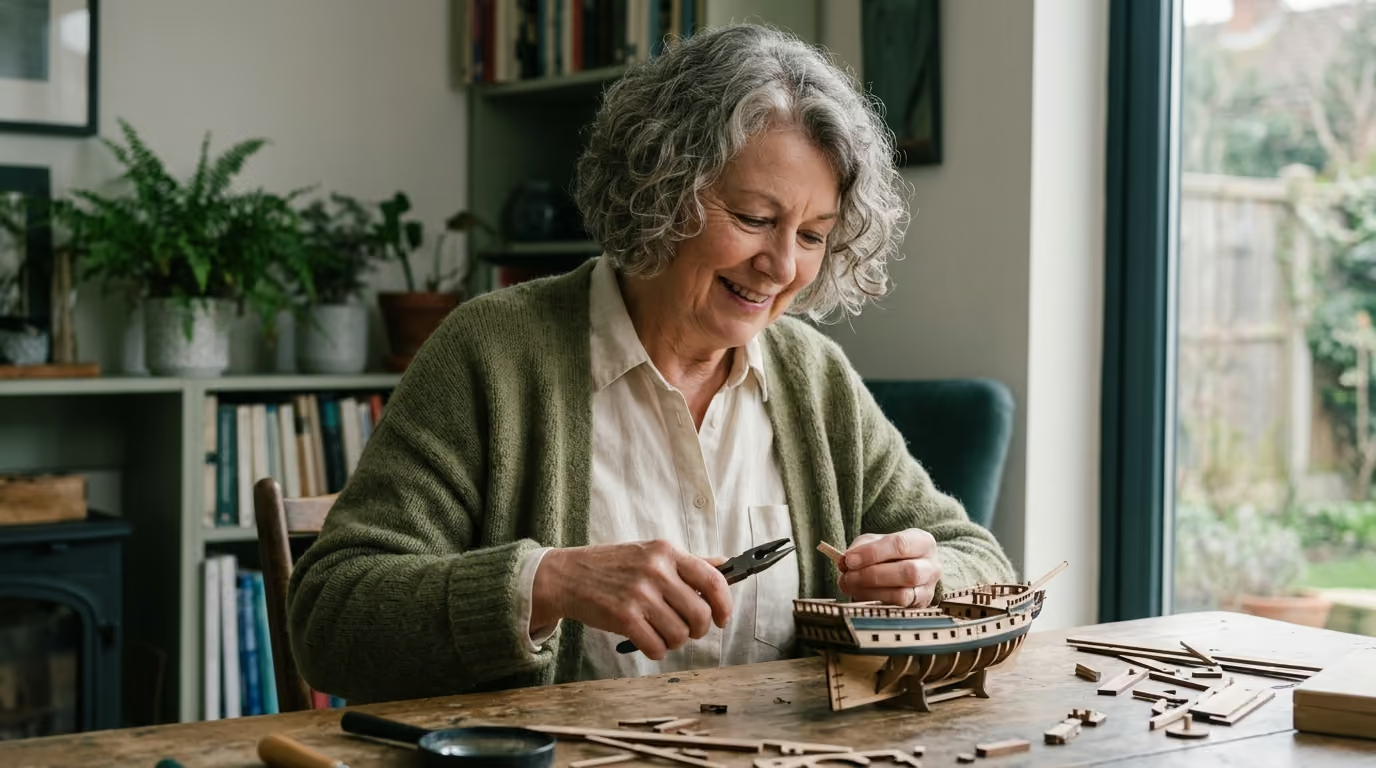
Purpose in life refers to the subjective sense that one's daily existence has direction, coherence, and significance. It does not require a high-profile career, public acclaim, or constant busyness. Purpose can be found in mentoring a younger person, cultivating a home garden, supporting family members, practicing a craft, or staying healthy to remain available for close friends.
Observational studies link a strong sense of purpose with measurable neurological and systemic benefits. A systematic review published in Current Opinion in Psychiatry reported that a higher sense of purpose in life is associated with a lower risk of cognitive decline, Alzheimer's disease, functional disability, and all-cause mortality in older adults. Furthermore, research on community-dwelling older adults shows that those with higher purpose scores demonstrate greater longevity.
Neurologists frequently evaluate purpose through the lens of cognitive reserve. Cognitive reserve is the brain's capacity to improvise, find alternative neural pathways, and work around age-related structural changes. A major British longitudinal study following older adults aged 56 to 99 evaluated cognitive reserve across education, occupational complexity, and regular leisure activities. The researchers found that individuals with higher reserve had a lower risk of developing dementia, with a hazard ratio of 0.65.
However, cognitive reserve is not an absolute barrier against disease. Recent research published in Age and Ageing revealed that while high cognitive reserve preserves independent function for longer, individuals may experience a steeper functional decline once underlying neuropathology passes a certain threshold. The practical takeaway is clear: purpose and mental activity help you stay functional and engaged for as long as possible, but they must be paired with flexible coping tools rather than the assumption of total immunity.
A clear purpose gives daily habits meaning. Walking 30 minutes every morning might feel tedious as an isolated task. If that walk maintains the stamina needed to lead a weekly volunteer group, it becomes a meaningful action. Purpose transforms basic self-care into a pathway for staying involved in what you value.
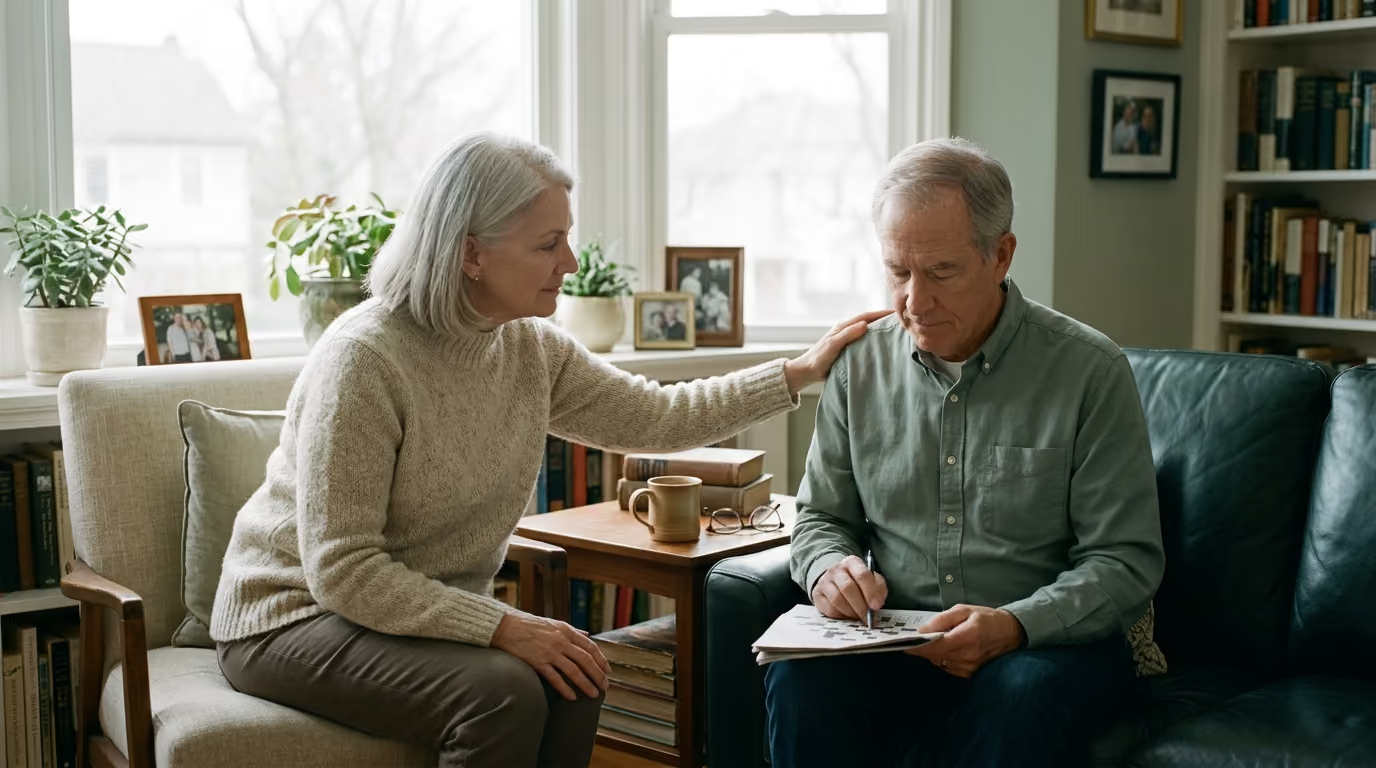
Human brains evolved to navigate intricate social landscapes. When you converse with another person, your brain works continuously. You must interpret tone, process vocabulary, read nonverbal cues, remember shared history, and formulate coherent responses. These spontaneous social interactions challenge memory, attention, and executive function far more than repetitive, solitary computer puzzles.
The health consequences of social disconnection are significant. A comprehensive review published in The Lancet Healthy Longevity found that social isolation and loneliness in older adults are associated with a 50 percent higher risk of developing dementia, a 30 percent higher risk of incident cardiovascular events, and a 26 percent higher risk of all-cause mortality. A large-scale 2024 longitudinal meta-analysis pooling data from over 600,000 individuals confirmed that chronic loneliness is linked to all-cause dementia, with a hazard ratio of 1.306.
Understanding the difference between social isolation and loneliness helps you address each one correctly:
Structured social roles give older adults an anchor for their identity. Retiring from full-time employment can remove a primary source of daily structure, intellectual challenge, and social interaction. Establishing constructive roles restores this balance. A systematic review published in BMC Geriatrics examining 17 studies found that 16 showed a positive relationship between regular volunteering and cognitive performance, particularly in verbal fluency and memory tests.
Engaging in retirement and mental fitness through civic contribution, tutoring, local clubs, or family projects maintains cognitive engagement. These activities build what psychologists call social scaffolding: a reliable support system that protects psychological wellbeing during periods of illness, grief, or personal stress.
Mental operations do not occur in isolation from the body. The brain depends on a steady blood supply, balanced neurochemistry, consistent cellular waste clearance, and clear sensory input. When your physical health declines, your cognitive resilience drops as well.
Physical activity is one of the most reliable ways to maintain cognitive function. According to the World Health Organization guidelines on physical activity, regular moderate-to-vigorous exercise supports processing speed, memory, executive function, and overall brain structure.
The WHO analysis indicates that the most substantial relative risk reductions for cognitive decline occur around 24 minutes of moderate activity per day, totaling roughly 168 minutes weekly. This matches the standard recommendation of 150 minutes of weekly activity. Aerobic exercise supports cerebral blood flow and stimulates neurotrophic factors, while resistance training preserves muscle mass, joint stability, and the ability to live independently.
The National Institute on Aging advises adults aged 60 and older to aim for seven to nine hours of quality sleep each night. During deep sleep, the brain's glymphatic system clears metabolic waste products, including amyloid proteins, while the hippocampus coordinates memory consolidation.
Chronic sleep issues, whether from untreated obstructive sleep apnea, insomnia, nocturia, or medication side effects, cause immediate problems with working memory and emotional control. Addressing sleep architecture is a foundational step in preserving daytime mental clarity.
Hearing and vision are direct pathways for cognitive stimulation. When sensory inputs fade, the brain must spend excessive mental energy simply deciphering muffled sounds or blurry shapes. This leaves fewer cognitive resources for memory storage, critical thinking, and conversation.
The 2024 Lancet Commission report on dementia prevention, intervention, and care identified 14 modifiable risk factors across the lifespan that account for nearly 45 percent of dementia cases worldwide. Hearing impairment alone contributes to roughly 7 percent of global dementia cases, while untreated vision loss accounts for about 2 percent.
Correcting hearing loss with properly fitted hearing aids and updating vision prescriptions restores sensory input, reduces fatigue, and prevents the social withdrawal that often follows sensory decline. Exploring resources on lifestyle and brain resilience provides practical approaches for managing these physical foundations.
Financial planners advise against placing all your savings into a single stock. The same logic applies to mental wellbeing. If your cognitive health and daily identity rely entirely on one activity, such as a high-stress job or playing tennis, any sudden disruption can destabilize your routine.
A resilience portfolio is a diversified collection of internal capacities, daily habits, supportive relationships, and backup systems. If an unexpected change affects one area, the other components keep you active, supported, and engaged.
To keep your portfolio flexible, organize your most valued activities around three operational levels:
When dealing with fatigue, acute stress, or illness, trying to maintain an ambitious daily schedule can lead to burnout or frustration. A Minimum Viable Routine (MVR) is a simplified version of your regular habits that keeps your baseline intact without demanding excessive energy.
Using an MVR keeps you moving forward during difficult weeks. By scaling back without stopping entirely, you protect your habits until you have the energy to resume your full routine.
Common myths about cognitive aging can hold people back from building effective habits. Looking at the evidence helps clear up these misunderstandings:
Many people believe a sense of purpose requires founding an organization, writing a book, or dedicating oneself to a sweeping philanthropic cause. In reality, purpose is personal, quiet, and grounded in your everyday environment. Preparing a shared meal, tending a local park, helping a neighbor, or learning a craft provides clear direction and psychological stability.
Commercial brain-training games often claim to keep your mind young. However, the evidence shows that these digital games mainly make you better at the specific game itself. They rarely translate to broader improvements in daily problem-solving, navigation, or working memory. Activities with real-world complexity, such as learning a musical instrument, managing a community budget, or studying a new language, build broader cognitive connections. You can find more details on these mechanisms in our guide to memory and focus.
Occasional forgetfulness, such as misplacing keys or taking a moment to recall a name, is a normal part of aging. However, progressive cognitive decline that disrupts independent living, financial management, navigation, or basic communication is not typical. Attributing significant cognitive difficulties strictly to age can delay treatment for reversible issues like thyroid imbalances, vitamin B12 deficiencies, depression, medication reactions, or sleep apnea.
Some view using assistive technology, large-print readers, walking poles, or medication organizers as a sign of decline. In truth, using helpful tools early protects your autonomy. Setting up automatic calendar alerts, organizing your home, and accepting community support lowers your daily cognitive burden. This frees up mental energy for learning, creative pursuits, and social connections.
Building resilience is especially valuable during major life changes. Here is how you can use the portfolio approach to navigate common transitions after 60:
Leaving a long career can disrupt your sense of competence, daily structure, and social circle. Simply filling your calendar with passive entertainment often leads to low motivation and a loss of direction.
Giving up driving due to vision changes or slower reflexes can challenge your mobility and sense of independence. Without a plan, it can quickly lead to spending too much time at home alone.
The death of a partner changes your daily emotional and social life, and can disrupt practical home routines like meal preparation, bill payments, and healthcare management.
Severe joint pain can make high-impact sports or long walks difficult, which may cause some individuals to stop exercising altogether.
Understanding the principles of brain aging and neuroplasticity shows that our neural networks can adapt to physical changes at any stage of life.
Taking a proactive role in your healthcare supports long-term cognitive resilience. Here are practical, targeted questions to discuss with your primary care physician during your next wellness visit:
Bringing these clear questions to your appointments helps you work together with your doctor to catch and treat reversible issues early.
Cognitive reserve describes the brain's physical and structural capacity to handle age-related changes, often built through early education and complex work. Cognitive resilience is a broader concept that includes reserve along with practical habits. It involves active behaviors, such as using calendars, leaning on social circles, staying physically active, and adjusting your goals when circumstances change.
Yes. Resilience is based on functional ability rather than physical perfection. A person who uses a wheelchair or lives with a chronic health condition can build a strong resilience portfolio. By staying socially connected, taking classes online, using helpful home modifications, and pursuing creative interests, you can keep your mind active and engaged.
Caregiving can provide a deep sense of purpose, but without adequate support, it can lead to physical exhaustion and burnout. To protect your wellbeing, schedule regular respite care, share tasks with family members, and build a Minimum Viable Routine. Even setting aside 15 minutes each day for quiet reading, light exercise, or a brief call with a friend can help you recharge.
It is never too late to take meaningful steps for your brain health. Research shows that neuroplasticity continues throughout our lives. Starting a walking routine, treating hearing loss, learning a new hobby, or joining a local community group can strengthen neural connections, improve mood, and support daily independence at any age.

Follow FitBrainLab for research-led insights on memory, focus, brain aging, nutrition and mental fitness after 60. Stay connected for new articles, practical guidance and ideas for a sharper, more engaged life.


Build habits that support memory, focus and a curious, connected life.
Read the Blog