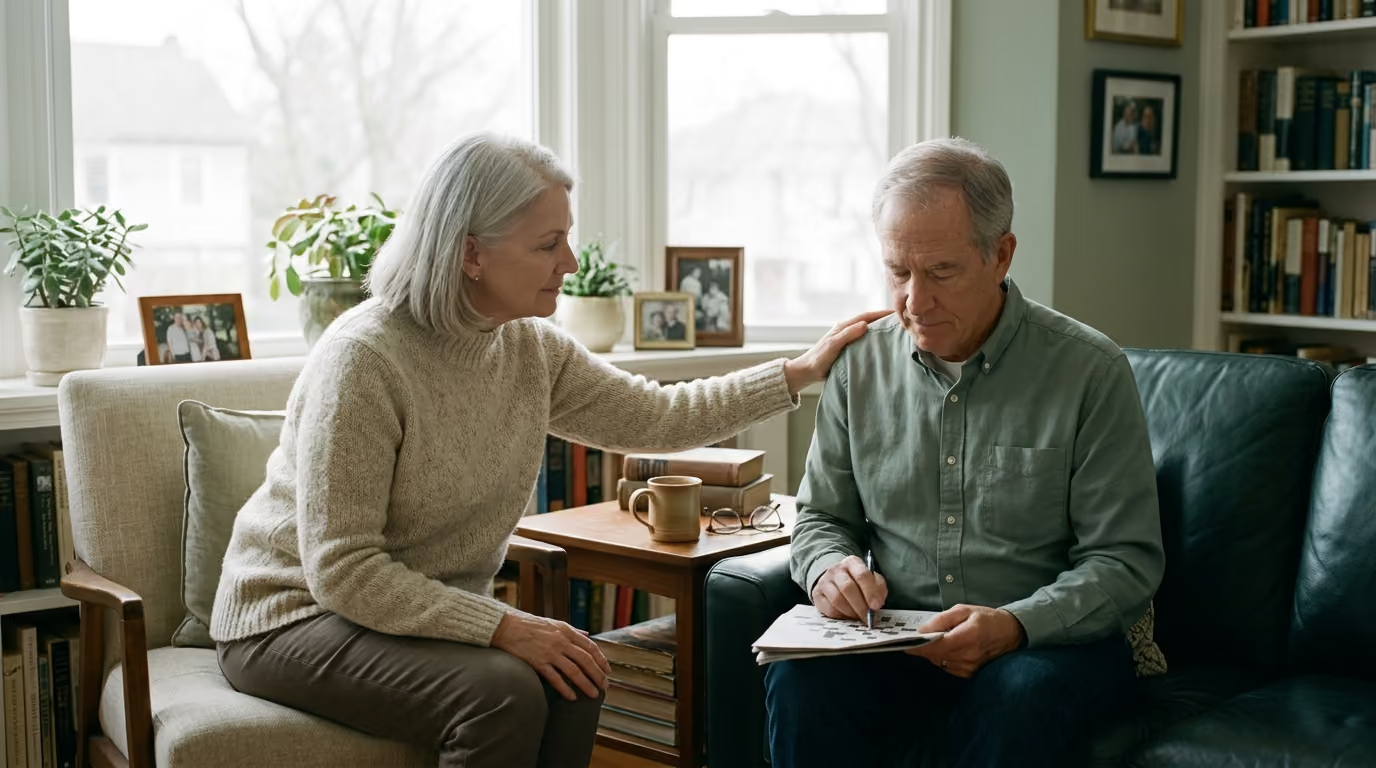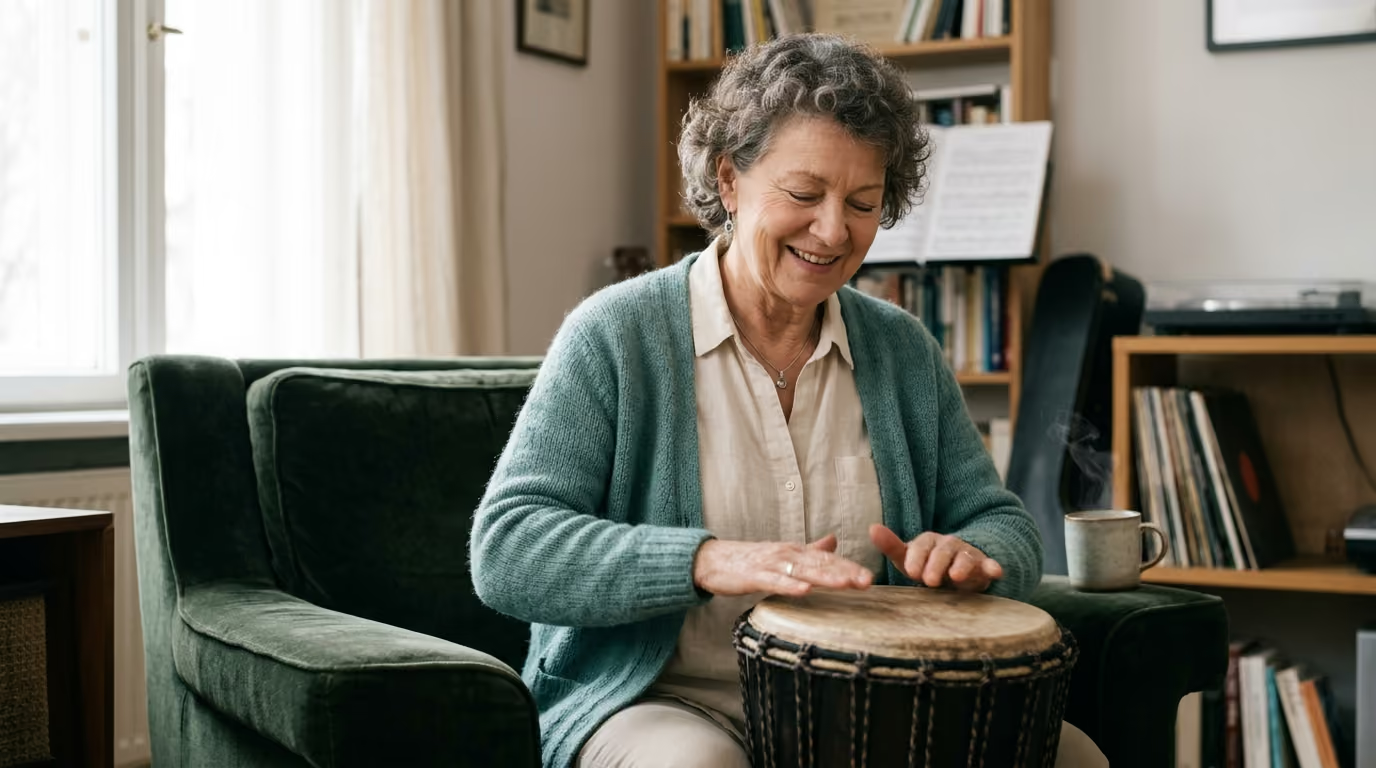

Musical engagement strengthens memory, attention, and motor coordination in adults over sixty by stimulating diverse neural pathways and supporting overall cognitive health.





Musical engagement after age 60 is a multidomain behavioral habit that combines sensory processing, physical movement, memory retrieval, and social connection. It is not a guaranteed medical cure for neurological conditions, nor is it a stand-alone shield against cognitive decline. When practiced with intention, musical activities offer structured mental stimulation that supports emotional well-being, motor coordination, and day-to-day quality of life. This guide examines the clinical research on music and rhythm, outlines accessible entry points for varied physical abilities, and provides a clear framework for building a sustainable practice.
Music stimulates multiple neurological networks at the same time. When you listen to, play, or move to music, your brain processes auditory signals, coordinates physical actions, reads visual cues, and accesses stored memories. This multisensory demand makes musical activity an effective way to stimulate cognitive reserve in older adulthood.
At a basic level, musical participation relies on four primary cognitive and motor systems:
The brain adapts to regular mental challenges through structural and functional changes. While early marketing claims often exaggerated these changes, rigorous research indicates that engaging with novel musical tasks challenges cognitive pathways in practical ways. You can read more about these adaptive mechanisms in our guide to brain aging and neuroplasticity.
To understand how music functions as a mental workout, it helps to examine the specific pathways through which sound and rhythm influence cognitive function.
Playing an instrument or singing requires distinct types of attentional control. Sustained attention allows you to follow a long piece of music from start to finish without losing your place. Selective attention lets you focus on your specific vocal part while other choir members sing different notes around you.
Divided attention comes into play when you perform two tasks at once. For example, a pianist must read sheet music with their eyes while their hands move across the keys. A singer must manage breath support while remembering lyrics and watching a conductor. These activities challenge executive function by requiring the brain to plan, monitor errors, and switch tasks quickly.
Passive listening to background music does not provide this same level of cognitive challenge. For music to stimulate executive control, the activity must require active concentration, problem-solving, and deliberate effort.
Music accesses several distinct memory networks within the brain. When you learn a new piece of music, your working memory temporarily holds note sequences and rhythmic patterns in mind. Over time, repeated physical practice transfers these movements into procedural memory, which handles automated motor skills.
Semantic memory stores your broader knowledge of musical concepts, song structures, and familiar lyrics. Meanwhile, autobiographical memory connects specific songs to personal life events, places, and relationships. Because autobiographical musical memories are distributed across multiple neural networks, they often remain accessible even when other forms of episodic memory decline.
Active music interventions help exercise these retrieval pathways. Remembering a melody or recalling lyrics requires the brain to search and reconstruct stored information. For older adults looking to maintain everyday mental sharpness, structured music practice serves as a practical way to support memory and focus exercises.
Rhythm acts as an external pacing cue for the motor system. When you hear a steady beat, your nervous system naturally begins to synchronize movement to that pulse through a process known as rhythmic entrainment. This mechanism links auditory perception directly to physical motion.
This rhythmic connection is especially valuable for gait, balance, and physical coordination. As we age, walking while talking or navigating obstacles becomes more demanding on cognitive resources. Practicing rhythmic movement helps train the brain to maintain steady physical pacing while managing other mental tasks.
Choreographed movement, rhythmic stepping, and seated drumming require precise timing and physical control. These exercises challenge both upper and lower body coordination, helping support mobility and fall prevention when practiced safely.
Music exerts a direct influence on the autonomic nervous system. Uplifting or soothing music can alter heart rate, respiration, and cortisol levels. Engaging with music you enjoy triggers the release of dopamine, a neurotransmitter linked to pleasure and motivation.
Mood regulation is a vital component of long-term cognitive health. Chronic psychological stress and persistent low mood can impair working memory and executive performance. Using music to reduce stress and improve daily emotional outlook creates a more supportive internal environment for mental clarity.
Music also provides a constructive emotional outlet. Singing or playing an instrument allows for creative expression without requiring complex verbal explanations. This makes music a valuable tool for processing complex feelings, reducing daily tension, and building emotional resilience.
Making music with other people introduces a powerful social element that solitary cognitive games lack. Group singing, ensemble playing, and community drumming require mutual attention, cooperative timing, and shared goals. These collective experiences foster a strong sense of belonging and mutual support.
Social isolation is one of the most significant modifiable risk factors for cognitive decline in older adults. Participating in a weekly musical group provides structured social contact, routine accountability, and shared achievement. These relational factors protect against loneliness and support overall mental vitality.
The social bond created by music often encourages better attendance and long-term consistency. People are far more likely to stick with an activity when they feel valued by a community of peers.
Singing is an athletic activity for the upper body and respiratory system. It requires deep diaphragmatic breathing, active posture, and precise vocal cord control. Singing regularly helps maintain lung capacity, strengthens the muscles involved in swallowing, and supports vocal clarity.
Controlled breathing patterns also stimulate the vagus nerve, which helps shift the nervous system into a relaxed state. This physiological response can lower blood pressure and reduce physical tension.
While singing should not replace formal respiratory or speech therapy, it serves as an accessible way to keep the vocal and respiratory systems active. Combining breath control with musical phrasing challenges both the body and the mind in a single practice.
Evaluating the scientific literature on music and brain health requires separating solid clinical findings from promotional hype. Researchers have examined music interventions across healthy older adults, individuals with mild cognitive impairment, and people living with dementia. The overall evidence demonstrates real, measurable benefits for specific cognitive and emotional domains, alongside clear limitations.
A 2025 systematic review published in PubMed examined the neurobiological effects of music-making in older adults. The authors concluded that while music interventions frequently produce positive behavioral outcomes, the underlying neurobiological evidence remains inconclusive. Many existing studies feature small sample sizes, brief intervention periods, and varying study designs. We cannot accurately claim that music rewires the aging brain in a permanent or universal way.
Instead, current evidence supports music as a multidomain lifestyle intervention that yields small to moderate improvements in selected areas of function.
Research on cognitively healthy older adults shows that active music interventions can improve specific mental faculties over the course of a study. A comprehensive meta-analysis found that music-based training produced statistically significant improvements in global cognition, memory performance, and executive function. The standardized mean differences were 0.31 for global cognition, 0.36 for memory, and 0.43 for executive function.
Interestingly, this same meta-analysis found no statistically significant improvement in visual or auditory attention. This distinction is important because it shows that music is not a generic booster for all mental skills. It strengthens specific operational networks, particularly those related to working memory and cognitive flexibility.
Another randomized trial examined a music-creativity intervention for older adults. Participants who completed the program showed gains in working memory and overall cognitive scores compared to non-participating controls. These improvements were most pronounced among individuals who demonstrated higher neural flexibility at the start of the study.
These findings show that learning musical skills can sharpen test performance during the active training period. However, they do not prove that music prevents the long-term onset of dementia decades later.
For older adults experiencing early-stage cognitive decline or mild cognitive impairment, active music-making demonstrates reliable therapeutic value. A meta-analysis of eight randomized controlled trials involving 460 participants found a modest positive effect on general cognitive function. The standardized mean difference was 0.26 with a confidence interval between 0.07 and 0.45.
A broader systematic review evaluated active music participation among 1,472 individuals with probable mild cognitive impairment or early dementia across 21 studies. The analysis identified a small but statistically significant cognitive benefit, showing a standardized mean difference of 0.30. Participants engaged in singing, percussion, and musical games performed better on memory and orientation tests than control groups receiving standard care.
A separate systematic review looked at 11 arts-based trials involving 817 older adults with mild cognitive impairment. Ten of the 13 evaluated interventions produced meaningful gains in at least one cognitive area, including memory, executive control, or perceptual-motor skills. However, researchers noted that variations in how studies defined cognitive impairment mean these results should be interpreted with balanced realism.
These studies indicate that active music participation helps maintain functional abilities and supports cognitive engagement. They do not demonstrate that music can halt the underlying biological progression of neurodegenerative disease.
The strongest and most consistent evidence for group singing centers on emotional well-being and social connection rather than pure memory expansion. Several well-designed randomized controlled trials provide clear data on these outcomes.
In the 34-session Sing4Health randomized trial, older adults assigned to community singing groups experienced significant improvements in positive affect and social well-being. These emotional gains remained stable during follow-up assessments. A secondary analysis of 149 participants aged 60 to 95 from the same trial revealed that singers experienced a smaller decline in perceived physical health over time. This physical preservation was directly mediated by the boost in positive mood.
Another large randomized trial investigated the impact of community choirs on diverse older adults. Choir participants reported substantial reductions in feelings of loneliness and a heightened interest in life compared to non-singers. The standardized effect sizes were 0.34 for loneliness reduction and 0.39 for increased interest in life. However, this study found no significant differences in standardized cognitive test scores or physical balance between the groups.
These findings highlight an important principle. An activity can be deeply valuable for mental health and quality of life even when it does not raise scores on a formal memory exam. Reducing isolation and improving daily mood are essential health outcomes on their own.
Rhythmic auditory stimulation has produced compelling results in physical mobility and fall risk reduction. When older adults walk or move to an intentional beat, the rhythmic cue helps regulate stride length, walking speed, and step symmetry.
A six-month randomized clinical trial evaluated a music-based multitask exercise program for community-dwelling older adults at high risk of falling. The program combined stepping exercises, rhythmic coordination, and divided-attention tasks set to live music. Participants in the music exercise group showed marked improvements in balance and walking stability during dual-task tests. Most importantly, the intervention resulted in a significant reduction in the overall rate of falls and lower individual fall risk.
These motor benefits occur because rhythm helps bypass damaged or sluggish internal timing mechanisms in the brain. External beats provide a reliable framework for physical action, making movement safer and more efficient.
The following summary outlines the primary research findings across different musical formats:
Different musical activities place distinct demands on the brain and body. There is no single best musical instrument or activity for everyone over 60. The ideal choice depends on your physical comfort, cognitive goals, past experience, and personal interests.
Choosing an activity that matches your current capabilities ensures you can practice consistently without frustration or physical strain.
Active listening involves giving music your complete, undivided attention. Instead of treating songs as background noise, you deliberately track specific instruments, follow harmonic changes, analyze lyrics, or identify recurring melodic themes.
Singing on your own allows you to explore melody, rhythm, and lyrical expression at your own pace. You can sing along with favorite recordings, learn new songs from sheet music, or practice simple vocal warm-ups at home.
Joining a community choir, church vocal group, or informal singing circle adds collaborative timing and social interaction to vocal practice. Participants blend their voices, follow a director, and work toward a shared performance.
Playing hand drums, tambourines, shakers, or rhythm sticks offers an immediate entry point into music-making. Percussion focuses primarily on pulse, pattern repetition, and dynamic control rather than complex pitch notation.
The keyboard provides a visual and spatial layout of musical notes, making it an excellent tool for structured cognitive learning. Playing requires independent hand movements and reading two lines of musical notation simultaneously.
The ukulele and acoustic guitar are popular choices for older adults due to their portability and rich harmonic capability. The ukulele is particularly accessible because its four nylon strings require less finger pressure than a steel-string guitar.
Seated rhythm exercises involve tapping thighs, clapping hands, clicking fingers, or stamping feet to a steady pulse while remaining safely seated in a sturdy chair.
This format combines musical timing with physical locomotion, stepping patterns, and spatial changes. It bridges the gap between music practice and functional balance training, making it a valuable addition to lifestyle habits for brain resilience.
Starting a musical habit after 60 should be an enjoyable, sustainable process. You do not need hours of daily practice to experience cognitive and emotional benefits. A consistent, progressive routine of 15 to 30 minutes several times per week provides meaningful stimulation while avoiding physical fatigue.
The following five-phase framework helps you build a rewarding practice tailored to your current lifestyle and abilities.
The primary goal of your first few weeks is building consistency and confidence. Choose an activity with a very low barrier to entry. If you are learning an instrument, focus on playing single notes, simple two-chord progressions, or familiar childhood melodies.
If you are joining a vocal group, focus on humming along or singing familiar verses rather than mastering complex harmonies immediately. Keep your practice sessions short, aiming for 10 to 15 minutes per session. Ending each session while you still feel energized helps build positive momentum and encourages regular participation.
Once basic routines feel comfortable, introduce one new variable to challenge your working memory and attention. Avoid changing multiple elements at the same time, as this can cause frustration.
You might choose one of these simple progressions:
Musical activities become far more resilient when connected to a weekly social routine. Look for opportunities to share your practice with others, whether through a formal class, an informal ensemble, or a regular family gathering.
Joining a local community choir, a beginner ukulele group, or a weekly music appreciation club provides structured scheduling and peer encouragement. If in-person groups are unavailable, consider scheduling a regular weekly video call with a friend where you practice a song together. Social commitment helps you maintain your practice during weeks when personal motivation dips.
To keep your brain engaged, your practice must continue to offer mild challenge. When an exercise becomes completely effortless, its cognitive stimulation declines. Gradually increase the complexity of your practice by adjusting one variable at a time.
You can progress by learning new repertoire from unfamiliar genres, working on faster finger transitions, or practicing dual-task combinations such as standing on one foot while singing. Always prioritize physical comfort and precision over raw speed. If your hands, vocal cords, or back begin to ache, step back to a simpler variation.
Assess the success of your musical practice by its broader impact on your daily life, rather than focusing solely on technical perfection. Keep a simple weekly log or journal to monitor changes in your overall well-being.
Look for positive shifts across these practical areas:
This structured progression can also serve as a rewarding pillar for mental fitness in retirement, offering a creative schedule and meaningful goals.
Every older adult approaches music with a unique set of physical strengths, health considerations, and personal goals. The following practical scenarios illustrate how musical activities can be adapted for common health conditions.
An older adult wants to learn an instrument but experiences joint stiffness and reduced grip strength in their fingers. Traditional acoustic guitars or violins cause discomfort within minutes of play.
An individual diagnosed with mild cognitive impairment wants to stay mentally active but feels intimidated by complex instructions and fears making embarrassing mistakes in public.
A passionate music lover wears hearing aids and finds that attending live choir rehearsals has become overwhelming due to room echo and competing background noise.
An older adult with a history of minor trips and unsteadiness wants to improve walking confidence through rhythmic movement classes.
An adult over 65 moves to a new community and experiences persistent loneliness and a loss of daily routine, leading to low motivation and mental fatigue.
A person living with moderate-to-advanced dementia struggles with spoken language and frequently feels disoriented in unfamiliar environments.
An older individual experiences high anxiety and sensory sensitivity in loud, crowded environments, making standard music venues unappealing.
Integrating musical engagement into your daily life does not require enrolling in a university conservatory. You can easily weave rhythm, song, and focused listening into the activities you already do each day.
Here are practical ways to make music a natural part of your cognitive wellness routine:
Begin your morning with 10 minutes of active listening and gentle rhythmic movement. Instead of watching the morning news, put on an upbeat instrumental track with a clear, steady rhythm.
Use rhythmic music to support pacing and enjoyment during daily physical activities. When walking outdoors or on a treadmill, choose a playlist with a tempo that matches your natural, safe stride rate.
Use slow, resonant vocal exercises to unwind before bedtime. Humming and slow singing help stimulate the parasympathetic nervous system, lowering heart rate and preparing the body for restful sleep.
Public discussions about music and the aging brain are frequently clouded by oversimplified headlines and commercial claims. Clearing away these misconceptions helps you set realistic goals and appreciate the genuine benefits that music provides.
Musical engagement delivers its greatest value when integrated into a comprehensive, healthy lifestyle. The landmark 2024 Lancet Commission on dementia prevention identified 14 modifiable risk factors across the lifespan that account for nearly half of all dementia cases worldwide. These factors include social isolation, depression, physical inactivity, hearing impairment, hypertension, diabetes, and cognitive inactivity.
The World Health Organization provides similar global recommendations for cognitive health, urging adults to combine physical activity, intellectual challenges, healthy nutrition, and regular social interaction.
Music complements these established medical guidelines across several key areas:
Music should never displace core medical care, such as managing blood pressure, eating a balanced diet, treating sleep apnea, or taking prescribed medications. Instead, view music as an engaging platform that makes other healthy habits easier, more social, and more enjoyable to maintain over time. You can learn more about combining these habits in our overview of lifestyle and brain resilience.
Before starting a new physical or musical routine, discussing your plans with your primary care physician or physical therapist can help you practice safely.
Here are specific, practical questions to take to your next medical appointment:
Yes. True congenital amusia, commonly known as tone-deafness, affects only a tiny percentage of the population. Most people who believe they are tone-deaf simply lack formal vocal training or confidence. Even if you struggle to match pitch accurately, your brain still processes rhythm, tempo, physical coordination, and emotional expression. Activities like percussion, seated rhythmic movement, active listening, and relaxed group singing provide full cognitive and emotional benefits regardless of your vocal precision.
Clinical studies show that consistency is far more important than long practice sessions. Practicing an instrument, singing, or doing rhythmic exercises for 15 to 30 minutes, four to five days per week, provides sufficient mental challenge without causing physical strain or mental burnout. Short, focused sessions allow your brain to consolidate new motor skills and memories more effectively than infrequent, exhausting two-hour sessions.
Active music-making engages a broader combination of sensory, motor, emotional, and social systems than most screen-based brain training games. Playing an instrument requires real-time physical coordination, auditory analysis, emotional expression, and often social interaction. While digital puzzles can train specific narrow skills like quick pattern recognition, music connects cognitive challenge directly to physical action and personal creativity.
Music has strong connections to autobiographical memory and can occasionally bring up feelings of grief, loss, or melancholy. If a particular song or genre causes distress, give yourself permission to step away and change the music. Focus your practice on uplifting, neutral, or newly composed music that carries no painful personal associations. If feelings of sadness or distress persist across all musical activities, consider speaking with a healthcare professional or counselor.

Follow FitBrainLab for research-led insights on memory, focus, brain aging, nutrition and mental fitness after 60. Stay connected for new articles, practical guidance and ideas for a sharper, more engaged life.


Build habits that support memory, focus and a curious, connected life.
Read the Blog