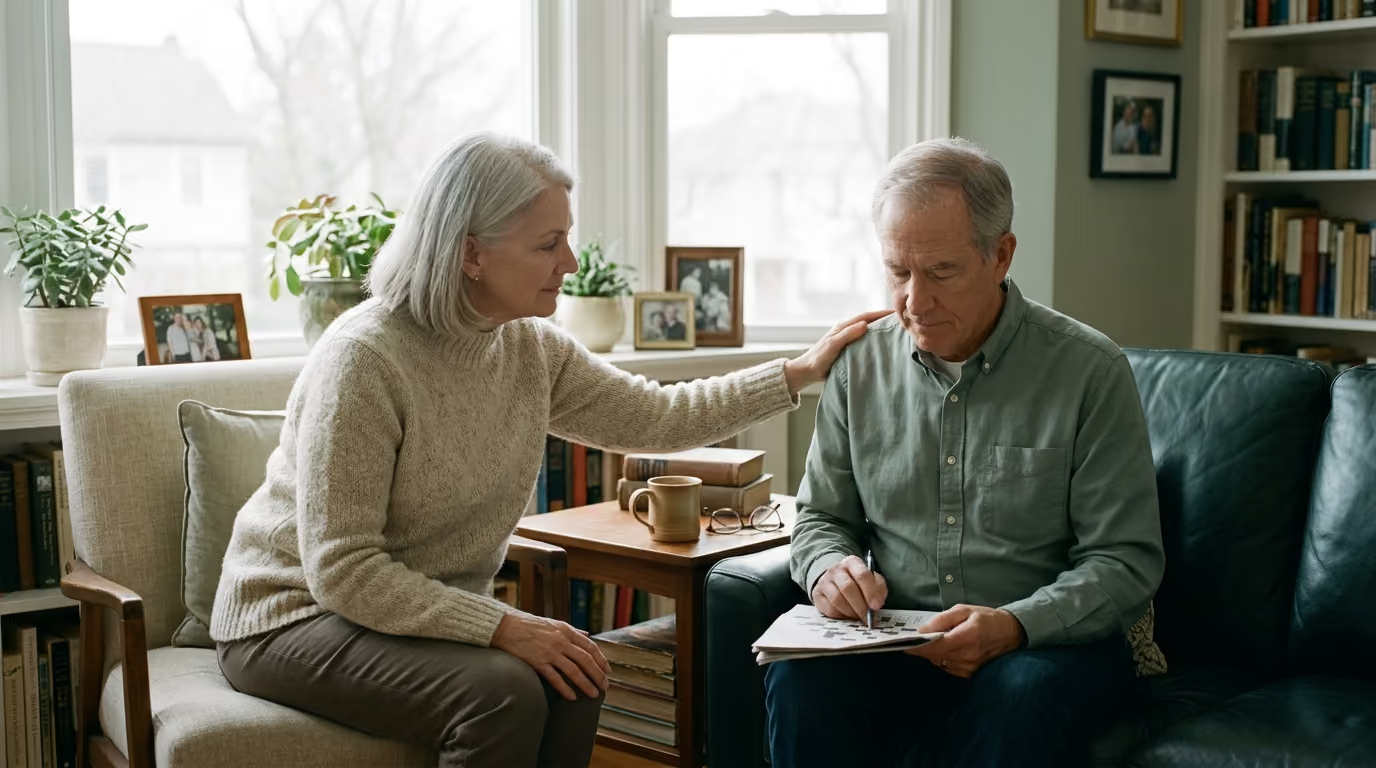

Memory lapses often stem from emotional strain rather than irreversible aging, making proactive behavioral routines and clinical support essential for long-term mental resilience.





Many older adults search online for why they feel mentally foggy, unmotivated, and unusually forgetful. They often worry whether these daily shifts point to early dementia or simply normal aging. This guide provides a clear, research-backed examination of how mood, daily drive, sleep quality, and brain health interact across later life.
Brain health after 60 does not operate in isolation from your emotional life. The brain regions responsible for regulating mood, such as the prefrontal cortex and hippocampus, are the same networks that manage working memory, attention, and executive function. When chronic stress, low mood, or anxiety takes hold, these neural circuits experience sustained strain. This shared neurobiology means emotional distress often presents as difficulty concentrating or slower recall.
Cognitive resilience is the brain's capacity to adapt to change, cope with challenges, and maintain function despite aging or neurological stress. It is not an unyielding shield against sadness or illness. Instead, resilience reflects an ongoing system of adaptation. When you experience grief, fatigue, or social disconnection, your cognitive performance may temporarily drop. Recognizing this relationship prevents unnecessary alarm when minor memory lapses occur during difficult emotional periods.
The relationship among your mood, daily behaviors, and mental performance functions as a continuous cycle:
When one part of this system struggles, other areas feel the impact. Poor sleep impairs concentration and drains emotional patience. Isolation dampens motivation and increases the risk of depressive symptoms. Physical inactivity reinforces lethargy and social withdrawal. Addressing these factors as an integrated network provides a practical path to sustaining mental independence.
Scientific research demonstrates that emotional health is tied to long-term brain preservation. The 2024 Lancet Commission on dementia prevention, intervention, and care identified 14 potentially modifiable risk factors across the lifespan. Addressing these factors could delay or prevent roughly 45 percent of dementia cases worldwide. Several of these factors become especially prominent after 60, including depression, social isolation, physical inactivity, untreated hearing loss, diabetes, and hypertension.
Population models from the World Health Organization also show that lifestyle behaviors and mental health conditions interact over time. The WHO guidelines for cognitive decline risk reduction highlight physical activity, social engagement, tobacco cessation, healthy nutrition, and the management of depression as key pillars. These models do not guarantee complete immunity from dementia for an individual. They show that managing vascular and emotional health reduces overall risk across populations.
Research from the National Institute on Aging shows that physical activity helps preserve executive function and memory in older adults. Federal guidelines recommend at least 150 minutes of moderate activity each week. An observational study analyzing daily time use found that replacing 30 minutes of sedentary time with moderate-to-vigorous movement was linked to better cognitive scores among older adults sleeping seven hours or less. Because this research is observational, it illustrates how daily habits work together rather than dictating a rigid exercise prescription.
Mental health conditions represent a meaningful public health priority in later life. World Health Organization estimates indicate that roughly 15 percent of adults aged 70 and older live with a mental disorder, most frequently anxiety or depression. A report from the Centers for Disease Control and Prevention found that approximately 20 percent of adults aged 55 and older experience mental health concerns. These statistics reflect different age groups and study methods, yet they clearly show that emotional struggles in later life are common and deserve clinical care.
Understanding your mental state begins with distinguishing ordinary emotional shifts from clinical conditions. Aging brings significant life transitions, including retirement, changes in physical stamina, and the loss of loved ones. Experiencing sadness during these times is entirely natural. Clinical depression, however, is a distinct medical condition that requires evaluation.
Depression in older adults often looks different from depression in younger people. Rather than expressing deep sadness, an older adult might report persistent fatigue, unexplained aches, or difficulty making simple decisions. Families may mistakenly view this as memory decline. A thorough evaluation helps identify whether memory complaints stem from an underlying mood disorder, medication effects, or primary cognitive changes.
Clinicians use specific criteria to distinguish between related emotional states:
Sadness is a temporary emotional reaction to disappointment, stress, or loss. It fluctuates throughout the day and does not permanently remove your capacity to experience pleasure, laughter, or connection.
Major depression is a persistent pattern of low mood, hopelessness, or loss of interest that lasts for weeks or months. It impairs daily functioning and is frequently accompanied by sleep disruption, appetite changes, slowed speech, and severe difficulties with attention.
Apathy is characterized by reduced initiation, lack of interest, and blunted emotional responsiveness. It can appear alongside depression, but it often occurs on its own following vascular changes or neurological conditions.
Demoralization is a state of helplessness, frustration, and loss of purpose. It often arises when a person faces chronic illness, disability, or sudden loss of independence without adequate coping strategies.
Anhedonia is the loss of ability to feel pleasure in activities that were once rewarding. It is a central symptom of clinical depression and should always prompt a conversation with a doctor.
Anxiety also requires careful attention after 60. Anxiety disorders involve excessive worry, physical tension, restlessness, and avoidance of routine activities. When an individual spends significant mental energy on persistent worry, working memory and concentration suffer. Anxiety can also lead to sleep disruption and social avoidance, indirectly limiting the cognitive stimulation necessary for long-term brain health.
Bereavement represents another critical area of emotional health. Grief after the death of a spouse, sibling, or close friend can disrupt sleep, appetite, and concentration. Research published in National Institutes of Health archives indicates that both standard and complicated grief are linked to shorter sleep duration and lower sleep quality. While normal grief gradually softens with time, complicated grief remains intense and disabling. Structured approaches like cognitive behavioral therapy can help individuals process persistent grief and rebuild functional daily routines.
A common misconception about motivation is that desire must precede action. People often wait to feel energetic, inspired, or confident before taking a walk, calling a friend, or starting a project. In reality, motivation is usually the result of action rather than its cause.
When mood drops, energy falls and avoidance increases. Staying home, canceling plans, and sitting for long periods feels protective in the short term. Over days and weeks, this withdrawal eliminates opportunities for accomplishment, connection, and pleasure. This lack of positive reinforcement causes mood and energy to sink further.
Behavioral activation is an evidence-based approach designed to reverse this downward spiral. Instead of waiting for motivation, you schedule small, manageable actions based on your core values. Completing these actions produces small bursts of mastery and social connection. This positive feedback gradually restores energy and internal motivation.
To build an active lifestyle that supports lifestyle and brain resilience, you can apply a structured six-step sequence:
Behavioral activation is practical, but it is not a cure-all for severe clinical crises. If an individual experiences major depressive paralysis, untreated sleep apnea, or severe physical pain, structured medical and psychological care must accompany behavioral adjustments.
Sleep is a cornerstone of neurological maintenance. During deep sleep, the brain clears metabolic waste products that accumulate throughout waking hours. Sleep also plays an active role in consolidating memories, stabilizing emotional responses, and refreshing executive attention.
Aging naturally alters sleep architecture. Older adults often spend less time in deep, slow-wave sleep and experience lighter, more fragmented sleep patterns. However, severe sleep deprivation and persistent insomnia are not unavoidable consequences of getting older. When sleep problems arise, they quickly degrade mood, increase irritability, and impair memory retrieval.
Common sleep challenges after 60 include:
The National Institute on Aging recommends that older adults aim for seven to nine hours of sleep per night, though individual needs vary. Sleep quality is just as critical as sleep duration. Spending nine hours in bed with frequent awakenings leaves a person feeling unrefreshed, while seven hours of continuous sleep supports optimal cognitive performance.
Managing sleep difficulties begins with non-pharmacological interventions. Long-term use of sedating sleep medications can increase fall risks, create dependency, and worsen daytime confusion. Cognitive behavioral therapy for insomnia is the primary clinical treatment for chronic sleep disruption. Research shows that this structured therapy offers lasting improvements in sleep efficiency with fewer risks than medication.
You can learn more about how everyday recovery habits support cognition by reading about cognitive health protection.
Human beings are wired for connection across every stage of life. Social engagement stimulates language processing, working memory, empathy, and executive planning. Meaningful interaction also provides emotional safety, buffering the neurological damage caused by chronic stress.
Public health organizations distinguish between two related concepts:
Social isolation is the objective lack of contact with other people, organizations, or support networks. An individual living alone with few visitors and limited transportation is socially isolated, regardless of their emotional state.
Loneliness is the subjective, distressing feeling that your personal connections do not meet your emotional needs. A person can live in a busy household or care facility and still feel deeply lonely.
The World Health Organization reports that roughly one in four older adults worldwide experiences social isolation. A WHO evidence review found that loneliness affects between 20 and 34 percent of older people across regions including Europe, Latin America, China, and the United States. Isolation and loneliness are linked to higher risks of stroke, cardiovascular disease, depression, cognitive decline, and premature death.
Loneliness should never be treated as a personal failing. Older adults face practical structural barriers to connection. These hurdles include the death of friends, retirement from workplace networks, reduced income, loss of driving privileges, and living in neighborhoods without accessible sidewalks. Physical changes, particularly untreated hearing and vision loss, make group conversations tiring and uncomfortable.
Addressing social connection requires practical, accessible solutions:
Sustaining cognitive resilience after 60 requires an integrated approach that combines lifestyle habits with formal medical care. When mood, sleep, or memory changes interfere with daily tasks, seeking guidance from a healthcare team provides clarity.
A comprehensive medical assessment evaluates the whole person. Primary care physicians can order blood work to rule out vitamin deficiencies, thyroid disorders, or underlying infections that mimic depression and dementia. They can also perform a medication review to check for drug interactions, anticholinergic burdens, or sedative side effects that cloud thinking.
Professional support often involves multiple coordinated therapies:
Evidence-based therapies, including cognitive behavioral therapy and interpersonal therapy, help older adults process life transitions, manage chronic illness, and reduce anxious thoughts. Therapy provides structured tools to reframe negative thinking patterns and rebuild healthy daily habits.
When depression or anxiety is moderate to severe, medications such as antidepressants can relieve symptoms. Prescribing for adults over 60 requires careful consideration of kidney function, liver metabolism, fall risks, and interactions with other medications. Medication is most effective when paired with lifestyle adjustments and psychological support.
If loud snoring, gasping, or morning headaches accompany daytime fatigue, an evaluation in a sleep clinic is indicated. Diagnosing and treating obstructive sleep apnea with continuous positive airway pressure supports cardiovascular health and protects brain tissue from intermittent oxygen deprivation.
Maintaining physical mobility, muscle strength, and balance reduces the fear of falling. Occupational therapists can evaluate the home environment, recommend adaptive tools, and help individuals preserve autonomy in meal preparation, bathing, and leisure activities.
Exploring resources on brain aging and neuroplasticity can provide additional perspective on how therapies support ongoing brain adaptation.
A complete guide to mental health after 60 must directly address safety and suicide prevention. Older adults face unique vulnerabilities related to serious illness, chronic pain, cognitive changes, bereavement, and the loss of independent living.
Statistics from the Centers for Disease Control and Prevention show that suicide caused 48,824 deaths in the United States in 2024. Adults aged 80 and older experienced the highest suicide rates of any age group that year. A CDC report examining mortality trends found that men aged 85 and older had a suicide rate of 45.23 per 100,000, compared to an average rate of 11.01 per 100,000 across the general population.
Older adults in crisis often do not fit common stereotypes. They may not openly express sadness or cry. Instead, they may quietly disengage from loved ones, refuse life-sustaining medications, or make sudden preparations for death.
Warning signs identified by the National Institute of Mental Health include:
If you observe these signs in a family member, ask direct, calm questions about their thoughts and safety. Do not leave a person in acute crisis alone, and remove access to firearms and excess medications immediately. In the United States, you can reach the Suicide and Crisis Lifeline by calling or texting 988. Readers outside the United States should contact their local hospital emergency room or regional crisis service without delay.
The following illustrative examples show how emotional, physical, and environmental factors interact in later life. They demonstrate how structured interventions address complex challenges.
A 67-year-old retired professional stays in bed later each morning, stops visiting former work colleagues, and reports feeling unmotivated and forgetful.
Clinical Context: The sudden loss of workplace routine, social recognition, and daily structure can trigger demoralization and mild depressive symptoms. Forgetfulness often reflects lack of mental engagement rather than neurodegeneration.
Support Approach: Create a predictable weekly schedule. The individual schedules a morning walk, volunteers at a neighborhood community garden twice a week, and joins a weekly discussion group. Rebuilding routine restores daily focus and emotional balance.
A 74-year-old experiences the loss of a spouse. Over the next six months, the individual struggles with early morning awakenings, appetite loss, and poor memory during daytime tasks.
Clinical Context: Grief naturally causes emotional distress and sleep disruption. However, persistent sleep fragmentation worsens concentration and increases the risk of complicated grief.
Support Approach: The individual visits their doctor to rule out nutritional deficits and begins grief-focused psychotherapy. They also join a weekly bereavement support group and establish a consistent sleep schedule. Over time, emotional stability and concentration improve.
A 72-year-old stops attending family dinners and community center activities, complaining that the events are boring. Family members worry that this withdrawal signals early apathy or cognitive decline.
Clinical Context: Age-related hearing loss makes it exhausting to follow multi-person conversations in noisy environments. The person withdraws to avoid embarrassment and frustration.
Support Approach: The individual completes a hearing assessment and receives fitted hearing aids. Family members agree to hold gatherings in quieter rooms with good lighting. With sensory access restored, the individual returns to regular social interactions.
A 69-year-old caring for a spouse with advancing cognitive impairment experiences severe irritability, frequent headaches, broken sleep, and low mood.
Clinical Context: Chronic caregiving demands create constant stress and emotional fatigue. Caregivers often sacrifice their own medical appointments, sleep, and friendships, leading to profound physical exhaustion.
Support Approach: The family arranges professional respite care two afternoons per week. The caregiver attends a caregiver support group, resumes a regular walking schedule, and meets with a therapist to address caregiver stress.
Common myths about aging can prevent older adults from seeking the care and community support they deserve.
While grief and physical transitions are common, persistent depression is not normal. Depressive disorders are treatable medical conditions. Seeking medical guidance and psychological care can restore daily functioning and emotional comfort at any age.
Occasional forgetfulness can result from stress, anxiety, medication side effects, poor sleep, or depression. These temporary cognitive lapses do not automatically point to progressive brain disease. A comprehensive clinical evaluation is the only reliable way to understand memory changes.
Optimism can help you cope with stress, but it cannot replace evidence-based medical treatment. Sustaining brain resilience requires managing blood pressure, treating hearing loss, getting restful sleep, exercising regularly, and maintaining real social ties.
Loneliness is heavily influenced by external factors like transportation access, physical mobility, sensory loss, and community infrastructure. Solving loneliness requires accessible public transit, welcoming community spaces, and hearing care alongside personal effort.
You do not need exhausting exercise routines to protect brain health. Walking, gentle swimming, seated strength exercises, balance routines, and gardening all stimulate blood flow and support cognitive maintenance. Consistency matters far more than intense exertion.
Brain games improve performance on the specific digital puzzles being practiced, but they do not automatically protect overall memory or executive function. Reading, learning new instruments, conversing with friends, and moving your body provide more meaningful cognitive stimulation.
When you visit your doctor to discuss changes in mood, memory, or daily motivation, preparing specific questions leads to a more productive evaluation.
Bring a written record of your symptoms, including when they began, how they affect your daily routine, and a complete list of your prescription and over-the-counter medications.
Questions to consider asking your healthcare provider include:
You can find more background on our approach to evidence-based health guidance by visiting the about FitBrainLab page.
Building an integrated routine for emotional and cognitive resilience is an ongoing process. Use this practical checklist to take small, sustainable steps over the coming week.

Follow FitBrainLab for research-led insights on memory, focus, brain aging, nutrition and mental fitness after 60. Stay connected for new articles, practical guidance and ideas for a sharper, more engaged life.


Build habits that support memory, focus and a curious, connected life.
Read the Blog