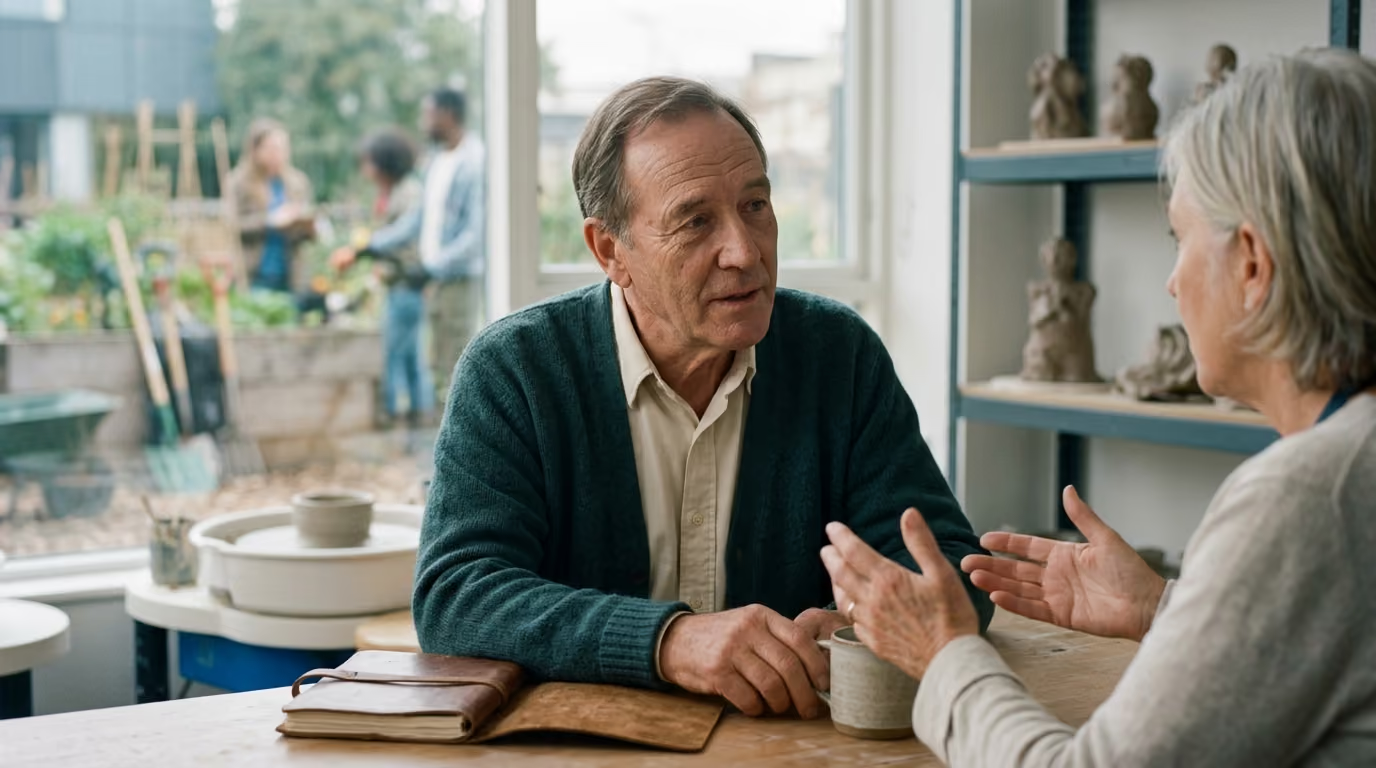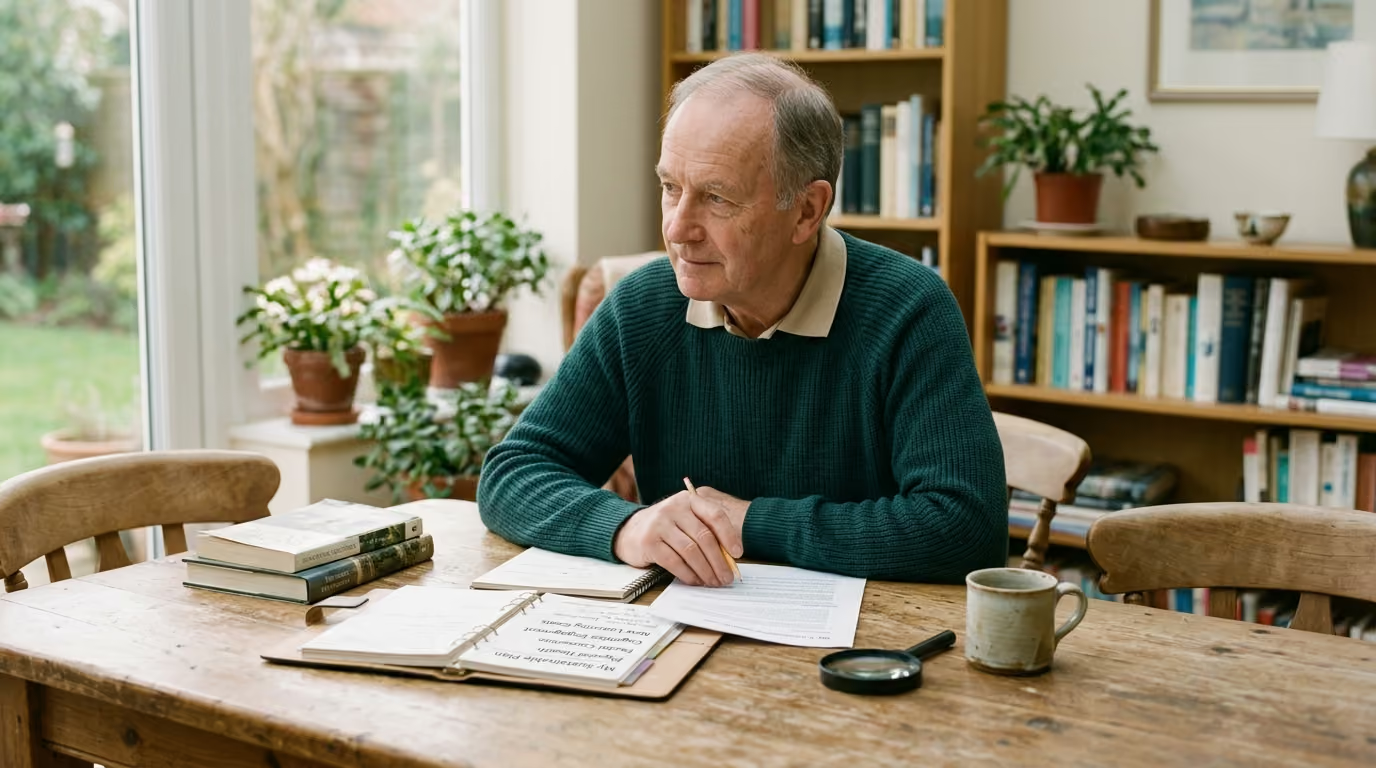

Mentoring after sixty provides older adults with a powerful way to share lifelong expertise, support younger generations, and maintain strong cognitive health in retirement.





You spend decades building professional judgment, solving complex problems, and learning how to navigate human friction. Then retirement arrives, and your daily calendar empties overnight. The loss of a structured career can feel disorienting, leaving a sudden vacuum where professional identity, social contact, and intellectual challenge once lived. Mentoring offers a practical way to repurpose that hard-earned perspective into meaningful service without recreating the pressure of full-time employment.
Human brains remain responsive to experience across the entire lifespan. When you leave the workforce, you lose daily cognitive challenges and structured social interactions. Neuroscientists describe this loss as a reduction in environmental complexity. Stepping into a regular mentoring role restores cognitive demand, social coordination, and purposeful problem-solving.
Psychologist Erik Erikson identified generativity as the central developmental task of mature adulthood. Generativity represents the desire to guide, teach, protect, and invest in younger generations or the wider community. When you engage in generative activities, you shift your daily focus outward. This psychological shift provides a clear sense of direction, continuity of identity, and an understanding that your knowledge outlasts your career.
Purpose is more than just staying busy. Engaging in purposeful activity stimulates neural reward pathways through sustained dopaminergic activity and reduces chronic stress responses. Purpose gives you a concrete reason to organize your schedule, prepare thoughts, and interact with others. Studies in brain aging and neuroplasticity indicate that complex social roles help maintain cognitive flexibility by exercising executive functions such as perspective-taking, working memory, and emotional regulation.
Mentoring also serves as an effective form of role substitution. Leaving paid employment abruptly removes titles, authority, and professional networks. Becoming a mentor allows you to build a healthy post-career identity based on contribution rather than status. You remain socially useful and intellectually engaged on terms you control.
The scientific literature on later-life contribution offers a balanced picture of benefits alongside clear methodological boundaries. Studies consistently show that purposeful engagement supports psychological health, but it is not an automatic cure for aging challenges.
An analysis of 5,887 participants from the Health and Retirement Study examined why volunteering helps older adults. The researchers found that a strong sense of purpose in life accounted for a large share of the link between volunteering and fewer depressive symptoms. Purpose was a stronger factor than any change in perceived social status. Contributing your time matters because it provides personal meaning, not because it confers prestige.
Longitudinal evidence highlights the importance of consistent engagement. A study of adults aged 65 and older found that volunteering at least 100 hours per year, which equals about two hours per week, was associated with more positive self-perceptions of aging four years later. These positive perceptions predicted lower depressive symptoms over time. Broader longitudinal research also shows that older adults volunteering at least 100 hours annually were 29 percent less likely to report a lack of contact with friends compared to non-volunteers.
Randomized trials provide deeper insight into how these benefits develop. In a randomized controlled trial of 445 fully retired Australian adults aged 60 and older, participants who maintained a regular volunteering placement showed significant improvements in life satisfaction, purpose in life, and personal growth over 12 months compared to non-volunteering controls. Another randomized trial noted that very short-term volunteer programs did not produce immediate psychological shifts. Benefits emerged over time as participants settled into consistent routines and formed genuine connections.
Intergenerational programs show promising results for both parties. In a study evaluating an older adult and student mentor initiative, older participants reported increased social engagement and lower social isolation scores. At the same time, between 85 percent and 93 percent of student mentors reported gains in patience, communication, and understanding how to help others. Another study examining retired men participating in an intergenerational Men's Shed program found marked improvements in mental health scores. That study found no measurable changes in physical health or generativity scores, demonstrating that benefits vary across specific health domains.
Participation rates show that older adults remain active contributors. Data from the Current Population Survey indicated that adults aged 65 and older had the highest average-day volunteering rates among all age groups, reaching 6.4 percent for men and 7.8 percent for women. A national health report using Census Bureau data showed that 26.3 percent of adults aged 65 and older participated in formal volunteer work over a 12-month period.
Social isolation remains a major public health issue. A 2024 report from the National Poll on Healthy Aging found that 33 percent of older adults felt lonely some of the time or often, while 29 percent felt isolated. While community participation supports lifestyle and brain resilience, systematic reviews caution that volunteering does not automatically eliminate frailty or loneliness. Mentoring should be viewed as one component of a broader, active lifestyle rather than a complete health shield.
Finding the right setting determines whether mentoring feels fulfilling or burdensome. You can choose from several distinct environments based on your personality, energy levels, and preferred goals.
Formal youth programs recruit, screen, match, and supervise participants within structured frameworks. These settings suit retirees who appreciate defined rules, clear background checks, and organizational oversight.
Career mentoring connects experienced professionals with vocational students, college graduates, mid-career workers, or new entrepreneurs.
Community settings involve local neighborhood groups, municipal boards, environmental organizations, historical societies, and public libraries.
Peer mentoring pairs individuals who share similar life stages, challenges, or health transitions.
Virtual mentoring uses video calls, phone check-ins, email exchanges, and shared documents to connect people across physical distances.
A fulfilling mentoring engagement starts with a realistic inventory of what you have to offer. Experience extends far beyond professional job titles or industry credentials.
To understand your assets, divide your life experience into five distinct categories:
Do not ask yourself what you want to teach. Ask who is trying to accomplish a goal and what obstacles stand in their way.
A sustainable mentoring role exists at the intersection of three factors: what you know how to offer, what someone genuinely needs, and what you can sustain without exhaustion. If you offer expertise that no one currently needs, the engagement becomes frustrating. If you commit to an intense schedule that drains your physical energy, you will quickly drop out. Balancing these three elements creates stability.
Before signing up for any formal or informal mentoring role, run through a practical checklist to confirm alignment:
The most difficult transition for a retired professional is shifting from a problem-solving authority to a supportive guide. In the workplace, managers are paid to evaluate, direct, and fix issues quickly. In mentoring, your job is to build the other person's capacity to think through problems independently.
Offering unsolicited advice often produces defensiveness or passive agreement. Always ask for permission before sharing your thoughts or past experiences:
When you share an example from your career, avoid presenting it as a universal law. Use a structured story sequence that highlights personal context:
This sequence invites the mentee to analyze your story rather than simply copy your past actions.
A principle is an enduring truth about human behavior, planning, or communication. A prescription is a specific action tailored to a particular time and place.
For example, a retired business owner understands the principle that cash flow stability matters more than top-line revenue during economic downturns. That owner may not understand the software tools, marketing channels, or regulatory requirements of a modern e-commerce startup. A skilled mentor shares the principle and asks the mentee to design the prescription.
Use a simple six-step operating model to structure your mentoring conversations:
Mentoring should enrich your retirement rather than drain your vitality. Structuring your commitments protects your schedule and prevents burnout.
Avoid signing open-ended commitments that have no clear finish line. Use a phased approach to build healthy relationships:
Mentoring requires more than the time spent sitting in a meeting. A one-hour conversation carries hidden energetic costs:
If you have two hours of free energy per week, choose a mentoring role that requires only 45 minutes of direct meeting time. Leaving a buffer preserves your enthusiasm and protects other retirement pursuits.
Looking at concrete models helps clarify how boundaries and structures operate in real settings:
Misunderstandings about later-life mentoring can lead to unrealistic expectations or early dropouts. Examining these ideas helps maintain perspective.
Living a long time provides experience, but experience can contain outdated practices, obsolete technical assumptions, or unexamined biases. True wisdom involves knowing what you do not know. A great mentor combines historical perspective with open curiosity about modern conditions.
Many retirees hesitate to mentor because they worry about encountering questions they cannot answer. Mentoring is not an oral exam. The most helpful mentors frequently say, "I do not know the answer to that, but let us discuss how you might find out."
While intergenerational mentoring offers wonderful mutual benefits, peer-to-peer mentoring is equally valuable. Older adults helping peers navigate retirement planning, widowhood, or digital literacy provide immense social value. You can explore structured transitions through our retirement, purpose and mental fitness resources.
Over-committing creates emotional dependence and exhausts the mentor. High-impact mentoring relies on consistent, well-bounded conversations that give the mentee room to act independently between meetings. A focused 45-minute monthly session is often far more productive than weekly rambling chats.
Online volunteering removes travel friction, but it introduces digital fatigue, connection hiccups, and subtle communication barriers. Successful remote mentoring requires reliable hardware, clear agendas, and explicit efforts to establish warmth across a screen.
Mentoring relationships can encounter challenging interpersonal situations. Clear boundaries keep both participants safe and focused.
You may encounter a mentee dealing with severe depression, domestic conflict, substance abuse, or acute financial distress. A mentor is not a licensed therapist, financial planner, or crisis counselor.
If a mentee reveals serious mental health distress or unsafe living conditions, express calm empathy and guide them toward professional services. Contact your sponsoring organization immediately to report the situation through established safeguarding channels. Never attempt to manage acute psychological crises on your own.
Mentoring adult children, nieces, nephews, or grandchildren carries emotional risks. Family dynamics, past conflicts, and unspoken expectations can make neutral advice difficult to deliver.
If you choose to mentor a relative, establish clear ground rules. Ask explicit permission before discussing career or financial matters, and agree to keep mentoring conversations separate from family social gatherings. If discussions cause friction, step back and return to your primary role as a supportive family member.
Later life brings unexpected health changes, energy fluctuations, or medical appointments. You do not need to abandon mentoring when health issues arise, but you should adjust your format.
Shift from in-person meetings to phone calls or shorter video check-ins. If necessary, arrange for a co-mentor who can share the schedule, or transition to a seasonal schedule that matches your healthiest months. Sponsoring organizations appreciate clear communication about your availability.
Retirees who held positions of high authority, such as corporate executives, military officers, school principals, or senior physicians, are accustomed to giving instructions. In mentoring, giving direct orders disempowers the mentee.
Consciously replace declarative statements with open-ended inquiries. Instead of saying, "You need to reorganize this workflow," try asking, "What parts of your current workflow feel least efficient to you?" You can read more about self-directed later-life roles on our about FitBrainLab page.
You do not have to wait for a formal volunteer placement to use generative mentoring principles. You can practice the core habits in daily life.
Spend an entire day focusing on your conversational habits with family, friends, and neighbors. Notice how quickly you feel the urge to interrupt, offer an opinion, or share a story about yourself.
Make a conscious effort to pause before replying. Ask at least two follow-up questions about the other person's perspective before offering your own thoughts. This exercise strengthens attention control, builds patience, and trains the exact interpersonal skills needed for effective mentoring.
At the end of each week, spend five minutes writing down one new concept, tool, or cultural perspective you learned from someone younger or from a different background.
Recording these insights reinforces an open mindset. It reminds you that learning flows in both directions at every stage of life. Maintaining curiosity about modern ideas protects mental flexibility and keeps your thinking adaptable. For additional frameworks on staying mentally engaged, review our guides in retirement and mental fitness.
Staying socially and cognitively active supports healthy aging, but balance remains important. Bring these questions to your next wellness checkup:
Review this guide whenever you experience a major schedule shift, feel signs of volunteer burnout, or prepare to take on a new mentee.
Mentoring after 60 allows you to transform decades of accumulated knowledge into lasting community purpose while keeping your mind sharp, curious, and deeply connected.

Follow FitBrainLab for research-led insights on memory, focus, brain aging, nutrition and mental fitness after 60. Stay connected for new articles, practical guidance and ideas for a sharper, more engaged life.


Build habits that support memory, focus and a curious, connected life.
Read the Blog