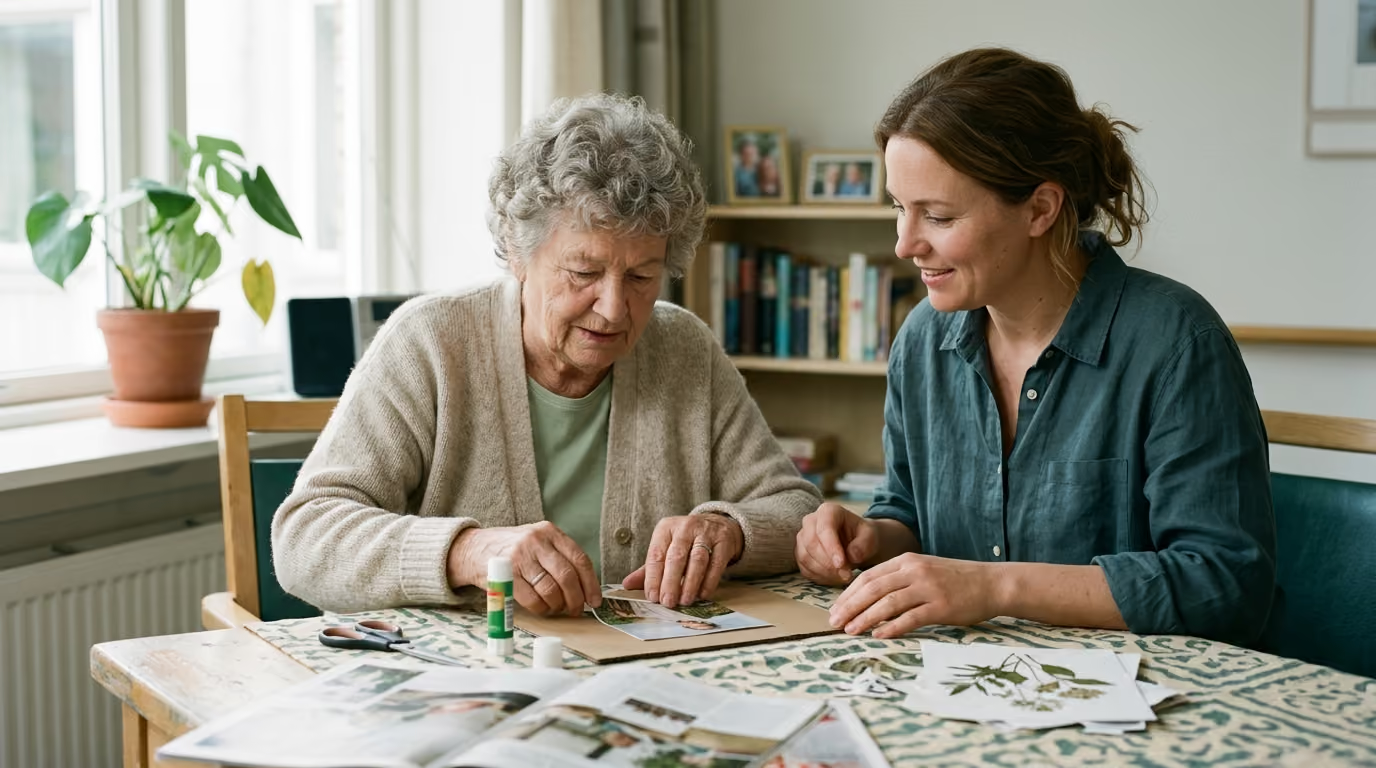
- Activities for individuals living with dementia serve to affirm identity and agency, not to test memory or restore lost cognitive skills.
- Successful engagement is defined by emotional comfort, curiosity, and connection rather than independent task completion.
- Tailoring experiences requires matching activities to personal history, simplifying step demands, and adjusting support as energy fluctuates.
The Science Simply
Cognitive changes from Alzheimer's disease and related conditions alter how the brain processes complex information, plans multi-step actions, and forms new short-term memories. These changes primarily impact areas like the hippocampus and frontal lobes.
Other neural networks remain responsive for much longer. Procedural memory, which governs well-practiced physical routines like sweeping or humming a tune, operates largely through subcortical structures that often remain intact during earlier and moderate stages.
The brain also continues to process emotional resonance, sensory stimulation, and relational safety. A person may forget a conversation within minutes yet retain the emotional comfort gained from the interaction.
Planning activities around these preserved brain pathways allows individuals to participate in daily life with dignity. By focusing on sensory input, rhythm, and familiar physical movements, we bypass damaged recall networks and engage the parts of the brain that still find joy and connection.
- PRESERVED VS. VULNERABLE BRAIN PATHWAYS IN COGNITIVE CHANGE
- Vulnerable Pathways (Frontal/Hippocampal)
- Complex sequencing and abstract planning
- Short-term memory and precise factual recall
- Multi-step verbal instructions
- Preserved Pathways (Subcortical/Sensory/Emotional)
- Procedural memory (motor habits, familiar physical tasks)
- Sensory processing (touch, music, rhythm, taste, smell)
- Emotional resonance and relational safety
Reframe Daily Engagement Around Identity Rather Than Task Completion
Many activity programs for cognitive impairment fail because they treat engagement as a method to keep someone busy. When activities are designed merely to fill empty hours, they often feel childish or patronizing.
A meaningful activity is not an exercise designed to test memory. It is an experience that connects with a person's history, interests, values, and sensory preferences.
- Meaningful Engagement
- Affirm Identity
- Preserve Agency
- Nurture Connection
- Connects to career, Offers real choice, Emphasizes shared
- hobbies, and values pacing, and refusal emotional presence
Meaningful engagement can support connection, self-worth, and a continuous sense of identity for people living with dementia. Meaningful tasks also help reduce periods of apathy, restlessness, and sadness.
Preserving agency remains central at every stage. Agency means having a say in what happens and how it happens.
Caregivers can preserve agency by offering small, structured choices throughout the day. Offering a choice between two shirts or two music albums gives an individual control without causing cognitive strain.
Choice also includes the right to decline an activity. When a person chooses to rest or step away, that decision is an expression of personal agency that deserves respect.
Success must be measured by the quality of the experience rather than the finished product. A task is successful if the person smiles, makes eye contact, hums along, or participates calmly for a few minutes.
Occupational therapy principles view success as the ability to participate in chosen occupations with the right support. When we let go of strict standards for speed or accuracy, we create space for genuine connection.
Understand What Current Evidence Shows About Cognitive Engagement
Global health data shows the widespread impact of cognitive conditions. The World Health Organization reports that approximately 57 million people were living with dementia worldwide in 2021.
Nearly 10 million new cases emerge each year. Alzheimer's disease represents the most common diagnosis, contributing to 60 to 70 percent of all cases.
- GLOBAL DEMENTIA CONTEXT (WORLD HEALTH ORGANIZATION DATA)
- Total Global Cases (2021) 57 Million
- Annual New Cases 10 Million
- Proportion from Alzheimer's 60% to 70%
- Informal Care Burden 5 Hours Daily per Caregiver
Informal caregivers provide an average of five hours of daily care and supervision. Research on non-drug interventions highlights approaches that support well-being for both individuals and caregivers.
Guidance from the National Institute for Health and Care Excellence highlights person-centered care as the standard for dementia support. Person-centered care tailors activities to the unique life history, abilities, and cultural background of the individual.
NICE guidelines recommend personalized activities to encourage engagement and interest, especially when an individual experiences restlessness or agitation.
Scientific investigations into specific activity types show varied outcomes:
Music Interventions
Music-based therapies can reduce depressive symptoms and help manage general behavioral distress in residential care settings. Evidence regarding the direct impact of music on memory or agitation remains mixed.
Music acts as a tool for emotional connection, mood balance, and relaxation, rather than a method for cognitive restoration.
Movement and Physical Activity
Physical exercise offers clear benefits for balance, muscle strength, mood, and sleep. A 2024 network meta-analysis of 27 studies found a non-linear relationship between exercise dose and cognitive function in Alzheimer's disease, pointing to an optimal range of around 650 to 660 metabolic equivalent minutes per week.
Other systematic reviews show less consistent cognitive outcomes among community-dwelling individuals. Exercise should be valued for physical health, functional independence, and emotional well-being rather than viewed as a cure for cognitive decline.
Reminiscence Approaches
Reminiscence therapy uses photographs, music, and physical objects from the past to encourage conversation and shared memories. NICE guidance recommends considering structured group reminiscence for individuals with mild to moderate dementia.
Research indicates that reminiscence can support mood and communication when handled with care.
To learn more about evidence-based methods, explore our dementia and cognitive protection resources and read our articles on cognitive health protection.
Apply the Match, Modify, and Monitor Framework to Daily Routines
The "Match, Modify, and Monitor" framework offers a practical method for planning daily activities. It helps caregivers tailor experiences to an individual's changing abilities and energy levels.
- THE MATCH, MODIFY, MONITOR CYCLE
- 1. MATCH Align task with personal history & current energy
- 2. MODIFY Simplify steps, adjust tools & environment
- 3. MONITOR Watch subtle cues, validate feelings & adapt
- Returns to Match for ongoing refinement
Match
Match the activity to the person's lifelong interests, current physical abilities, and daily rhythms. Learn about their former career, favorite hobbies, preferred music, and comforting routines.
Take note of the time of day when their energy is highest. An individual who worked as an accountant might enjoy sorting papers or organizing envelopes in the morning.
Modify
Modify the environment and the demands of the task to make participation manageable. Reduce background noise, turn off television screens, and clear unnecessary items from the workspace.
Break tasks into simple, single-step actions. Provide high-contrast materials, safe tools, and comfortable seating to support physical ease.
- PRACTICAL ENVIRONMENTAL & TASK MODIFICATIONS
- Step Volume Reduce complex jobs to 1 or 2 visible steps
- Clutter Level Clear the workspace of unneeded items
- Visual Contrast Use bright, contrasting colors for tools
- Instruction Style Demonstrate visually rather than explaining
- Safety Substitutes Use blunt utensils and lightweight tools
Monitor
Monitor the person's nonverbal reactions and emotional responses while they participate. Watch for signs of comfort, such as relaxed shoulders, smiles, or focused attention.
Look out for signs of fatigue or stress, including furrowed brows, sighing, or restlessness. If frustration occurs, pause the task, offer gentle reassurance, or shift to a simpler activity.
- ACTIVITY OBSERVATION RECORD (SAMPLE LOG FORMAT)
- Activity: Folding warm washcloths while listening to acoustic folk
- Time of Day: Mid-morning, right after breakfast
- Support Provided: Set out three items at a time; modeled folding
- Observed Response: Smiled, hummed along, folded items steadily
- Stress Triggers: Looked away and sighed after ten minutes
- Adjustment: Shortened activity to seven minutes for next session
Adapt Hobbies Across Early, Middle, and Late Stages of Cognitive Change
Cognitive abilities shift over time, which means activities must adapt along the way. While changes happen gradually, dividing plans into early, middle, and late stages provides a helpful foundation.
- STAGE-SENSITIVE ACTIVITY SPECTRUM
- EARLY STAGE
- Focus: Autonomy, meaningful challenge, preserved social roles
- Tasks: Planning garden plots, joint cooking, structured games
- MIDDLE STAGE
- Focus: Simplification, step-by-step cues, tactile routines
- Tasks: Sorting seed packets, washing produce, folding laundry
- LATE STAGE
- Focus: Sensory comfort, shared presence, gentle touch, rhythm
- Tasks: Smelling garden herbs, tasting purees, hand massage
Early Stage: Preserving Autonomy and Complex Roles
During the early stage, individuals can often continue their familiar hobbies with minor adaptations. The goal is to support autonomy and social connection without turning activities into stressful tests.
- Cooking and Baking: Choose familiar family recipes. Lay out ingredients in advance, use clear measuring cups, and work together on cooking steps.
- Gardening: Invite the person to select seeds from a catalog, plan garden beds, or pot new plants.
- Reading and Writing: Encourage participation in book clubs, read short stories together, or organize family photo albums with written notes.
- Games and Puzzles: Play familiar card games, complete word searches, or solve jigsaw puzzles with large, distinct pieces.
Middle Stage: Simplifying Steps and Providing Structure
In the middle stage, multi-step tasks become challenging. Activities need direct demonstrations, fewer physical materials, and a supportive presence. Repetitive tasks often provide comfort and a sense of accomplishment.
- Household Support: Invite the person to fold hand towels, sort socks by color, polish safe silverware, or set the table.
- Creative Arts: Provide watercolor paints, clay for shaping, or materials for simple paper collages.
- Nature and Outdoor Time: Take walks along level paths, water indoor plants with a small watering can, or fill a bird feeder.
- Music and Movement: Organize singalongs featuring well-known songs, use rhythm instruments like shakers, or try seated stretching.
Late Stage: Emphasizing Sensory Comfort and Relational Presence
In later stages, verbal communication and complex motor tasks decline. Engagement centers on sensory experiences, gentle touch, familiar sounds, and peaceful companionship.
- Sensory Stimulation: Provide soft blankets, velvet swatches, or textured comfort cushions for the person to hold.
- Aromatherapy and Nature: Offer the scent of fresh lavender, cut citrus, or familiar kitchen spices.
- Music and Voice: Play quiet, familiar music, sing gentle lullabies, or read poetry aloud in a calm tone.
- Personal Care Routines: Offer a gentle hand massage with lightly scented lotion or brush the person's hair slowly.
To learn more about neuroplasticity and the brain, read our guide on brain aging and neuroplasticity.
Structure Practical Activity Domains for Daily Life
Using diverse activity categories helps ensure a balanced daily routine. The National Institute on Aging recommends including creative arts, physical movement, household tasks, and social connection throughout the week.
- Balanced Daily Routine
- Movement
- Household Roles
- Sensory & Social
- Walking, stretching, Sorting, table setting, Music, reminiscence
- rhythmic chair dance folding, safe wiping nature, quiet presence
Household Tasks and Everyday Roles
Participating in everyday chores helps maintain a sense of purpose and belonging within the home.
- Table Setting: Hand the person cloth napkins and placemats one at a time to place on the table.
- Laundry Sorting: Place a basket of dry washcloths on a table and fold them together.
- Office Organization: Offer blank cards, envelopes, and paper folders for someone who spent years working in an office.
- Dusting and Polishing: Provide a soft microfiber cloth to wipe down safe wooden tables or chairs.
Creative Expression and Music
Creative activities encourage self-expression without requiring complex verbal skills.
- Simple Painting: Set up watercolor paints with broad brushes and thick textured paper.
- Rhythm and Song: Play classic recordings from the person's teenage and early adult years to encourage humming.
- Clay and Dough: Offer soft modeling clay to roll, press, and shape by hand.
- Arranging Flowers: Provide blunt-cut flowers and a stable plastic vase for arranging.
- CREATIVE DOMAIN ADAPTATIONS
- Domain Adapted Activity Primary Benefit
- Visual Arts Watercolor washes Freeform self-expression
- Music Familiar acoustic tracks Emotional relaxation
- Tactile Art Soft modeling dough Fine motor movement
- Floristry Arranging cut greens Olfactory & visual joy
Movement and Physical Vitality
Regular physical movement supports joint flexibility, circulation, and sleep quality.
- Seated Movement: Lead gentle arm raises, ankle rolls, and torso turns from a sturdy chair.
- Supported Walking: Walk short, familiar neighborhood paths or garden loops together.
- Balloon Play: Tap a lightweight balloon back and forth while seated to support hand-eye coordination.
- Rhythmic Swaying: Hold hands and sway gently to slow, familiar music.
To explore the connection between physical activity and brain resilience, visit our lifestyle and brain resilience section.
Examine Real-World Case Models of Adaptive Engagement
These models show how common hobbies can be adapted as cognitive needs change over time.
- CASE MODEL SUMMARY OVERVIEW
- Model 1: The Master Cook Shift from complex recipes to
- (Culinary Identity) vegetable prep and seasoning
- Model 2: The Lifelong Gardener Shift from seasonal plots to
- (Horticultural Identity) indoor potting and sensory soil
- Model 3: The Career Clerk Shift from administrative work
- (Professional Identity) to envelope sorting and folding
Case Model 1: Adapting Cooking for a Former Home Chef
A person who cooked family meals for decades finds multi-step recipes confusing and experiences frustration near hot burners.
- Goal: Preserve the person's culinary identity, sensory enjoyment, and role in meal preparation.
- Adaptation Plan: The caregiver sets up a quiet prep area at the kitchen table. Ingredients for a family salad are pre-washed and placed in small bowls. The individual slices cucumbers using an adapted safety knife, tears lettuce leaves, and stirs the dressing.
- Preserved Value: The person contributes to the family meal, enjoys familiar aromas, and takes pride in their role without safety risks.
Case Model 2: Adapting Gardening for an Outdoor Enthusiast
A lifelong gardener becomes disoriented in large garden centers and finds it difficult to manage complex tool sets.
- Goal: Maintain a direct connection to soil, plant care, and nature routines.
- Adaptation Plan: The caregiver prepares potting soil in a wide, shallow tub on an outdoor table. The person is handed a small trowel and pre-selected flowering plants to place into patio pots. During colder months, the routine shifts to watering indoor herbs and wiping plant leaves with a damp cloth.
- Preserved Value: The individual stays connected to nature and the tactile comfort of caring for living plants.
Case Model 3: Adapting Office Tasks for a Retired Administrator
An individual who worked in an office for decades feels restless in the afternoon and repeatedly searches for paperwork.
- Goal: Fulfill the desire for purposeful, organized work in a secure way.
- Adaptation Plan: The caregiver creates a dedicated desk space with safe office supplies. The individual receives stacks of clean paper, envelopes, file folders, and paper clips to sort and organize.
- Preserved Value: The familiar rhythm of office tasks brings order, purpose, and comfort to the afternoon hours.
Address Common Misconceptions About Dementia Activities
A clear understanding of cognitive change helps families avoid common caregiving pitfalls.
- MYTH VS. REALITY IN DEMENTIA ACTIVITY PLANNING
- Myth 1: Complex puzzles are required to keep the brain active.
- Reality: Demanding tasks often cause unnecessary anxiety and
- frustration. Emotional ease matters far more than difficulty.
- Myth 2: An activity is only successful if completed independently.
- Reality: Shared participation, observation, and single-step
- involvement represent meaningful success.
- Myth 3: Repetitive actions are unproductive and should be stopped.
- Reality: Rhythmic, repetitive tasks offer predictability, comfort
- and a genuine sense of purpose.
- Myth 4: Refusing an activity is a difficult behavioral symptom.
- Reality: Refusal is a valid form of communication that may signal
- fatigue, pain, or sensory overload.
Challenging Puzzles Are Necessary for Mental Fitness
Many people believe that keeping the brain active requires demanding brainteasers or complex puzzles. When a task exceeds a person's current cognitive abilities, it causes stress rather than benefit.
Meaningful engagement focuses on emotional comfort and personal relevance rather than mental difficulty.
Success Requires Finishing the Entire Task
Caregivers sometimes feel that an activity has failed if a project is left incomplete. Success in dementia care is defined by presence, connection, and interest.
If an individual enjoys folding two towels and then chooses to stop, those two minutes represent a successful experience.
Repetitive Actions Lack Meaning
Rhythmic, repetitive actions like smoothing paper, winding yarn, or polishing a surface are sometimes viewed as useless behaviors. In reality, repetition provides structure, sensory feedback, and comfort.
Caregivers can welcome safe, repetitive tasks as calming daily routines.
Declining an Activity Reflects Stubbornness
When an individual says no to an activity, it is often seen as a challenging behavior. Refusal is an expression of agency and communication.
The person may be experiencing physical discomfort, fatigue, environmental noise, or feeling overwhelmed by complex instructions.
Navigate Practical Challenges and Behavioral Shifts Calmly
Activity plans must adapt to common physical and behavioral changes that arise over time.
- STRATEGIES FOR SPECIFIC PRACTICAL CHALLENGES
- Challenge Primary Caregiver Response
- Fluctuating Energy Prepare three energy-tiered options
- Expressive Aphasia Use visual choices and modeling
- Sensory Impairments Increase lighting and eliminate glare
- Restlessness / Pacing Offer safe walking and sorting tasks
Fluctuating Energy and Ability Levels
A person's ability to participate can change significantly from morning to afternoon due to poor sleep, medication timing, or fatigue. Caregivers can prepare three flexible options for favorite pastimes:
- High Energy: Tending to outdoor garden beds with direct support.
- Moderate Energy: Potting an indoor plant at the kitchen table.
- Low Energy: Sitting together on a porch while smelling fresh mint leaves.
- THREE-TIERED ENERGY ADAPTATION MODEL (EXAMPLE: GARDENING)
- High-Energy Tier Walk outside, carry watering can, dig soil
- Mid-Energy Tier Sit at table, scoop potting mix, wipe leaves
- Low-Energy Tier Hold fresh cut herbs, enjoy outdoor breeze
Communication Changes and Aphasia
When words become difficult to find, verbal instructions can cause confusion. Caregivers can shift to nonverbal cues to guide activities:
- Visual Demonstrations: Begin folding a towel or holding a paintbrush to show the action visually.
- Two-Option Choices: Hold up two shirts or two books so the person can point to their preference.
- Tactile Prompts: Place a soft tool or object gently in the person's hand to invite engagement.
Sensory Changes and Overstimulation
Aging eyes and ears require thoughtful environmental adjustments. Glare on polished floors can look like water, while background noise from a television can make conversation hard to follow.
- Keep rooms well-lit with soft, indirect lighting to minimize shadows.
- Reduce background noise by turning off appliances and televisions before starting an activity.
- Use contrasting colors, such as placing a white plate on a dark placemat, to help items stand out clearly.
Addressing Restlessness and Agitation
Restlessness, wandering, or sudden agitation often signal an unmet need or an overstimulating environment. Before introducing an activity, check for physical comfort:
- PHYSICAL COMFORT CHECKLIST FOR RESTLESSNESS
When physical needs are met, offer a calming, rhythmic activity like a walk together or folding soft linens to help restore comfort.
For comprehensive information across all areas of healthy aging, visit our full collection of brain health resources.
Discuss Activity Planning With Healthcare Professionals
Medical appointments offer a valuable opportunity to review daily routines and activity plans. Healthcare providers can offer guidance on physical safety, sensory needs, and medication schedules.
Take these questions to your next healthcare visit:
- Physical Activity: Which types and intensity levels of movement are safe given the person's current balance, joint health, and heart status?
- Physical Therapy: Would a referral for physical or occupational therapy help us adapt daily home activities safely?
- Sensory Health: Are changes in vision or hearing affecting the person's ability to engage with their surroundings?
- Medication Timing: Do any prescribed medications cause fatigue or dizziness during the times we typically plan our activities?
- Swallowing Safety: Are there specific safety guidelines we should follow when preparing food-related or cooking activities?
Key Takeaways
- Plan activities around lifelong identity, personal values, and sensory preferences rather than cognitive testing.
- Adjust task steps, tools, and environments to match the person's energy and cognitive needs each day.
- Value emotional comfort, mutual enjoyment, and shared presence far above independent task completion.
Meaningful engagement is ultimately about honoring the person behind the diagnosis, ensuring every day includes moments of connection, dignity, and peace.
Sources
- Adapting Activities for People With Alzheimer's Disease
- Therapeutic Activities for 3 Main Stages of Alzheimer's ...
- The activities handbook: Supporting someone with ...
- Featured Review: Reminiscence Therapy for Dementia
- Activities - Alzheimer's Association
- Music-based therapeutic interventions for people with dementia
- Does music-based therapy help people with dementia?
- Activities to Enjoy if Someone Has Alzheimer's or Dementia ...
- Dementia
- Effective dosage and mode of exercise for enhancing cognitive function in Alzheimer's disease and dementia: a systematic review and Bayesian Model-Based Network Meta-analysis of RCTs - PubMed
- The effects of exercise programs on cognition, activities of daily living, and neuropsychiatric symptoms in community-dwelling people with dementia—a systematic review
- Person-centred care | Dementia: assessment, ...
- Dementia
- Recommendations | Dementia: assessment, management and support for people living with dementia and their carers | Guidance | NICE
- (PDF) Activities - Alzheimer Society of Canada
- (PDF) Palliative Care Guidelines in Dementia - NHS England
- Activities for dementia
- Exploring What Makes Activities Meaningful for Community ...