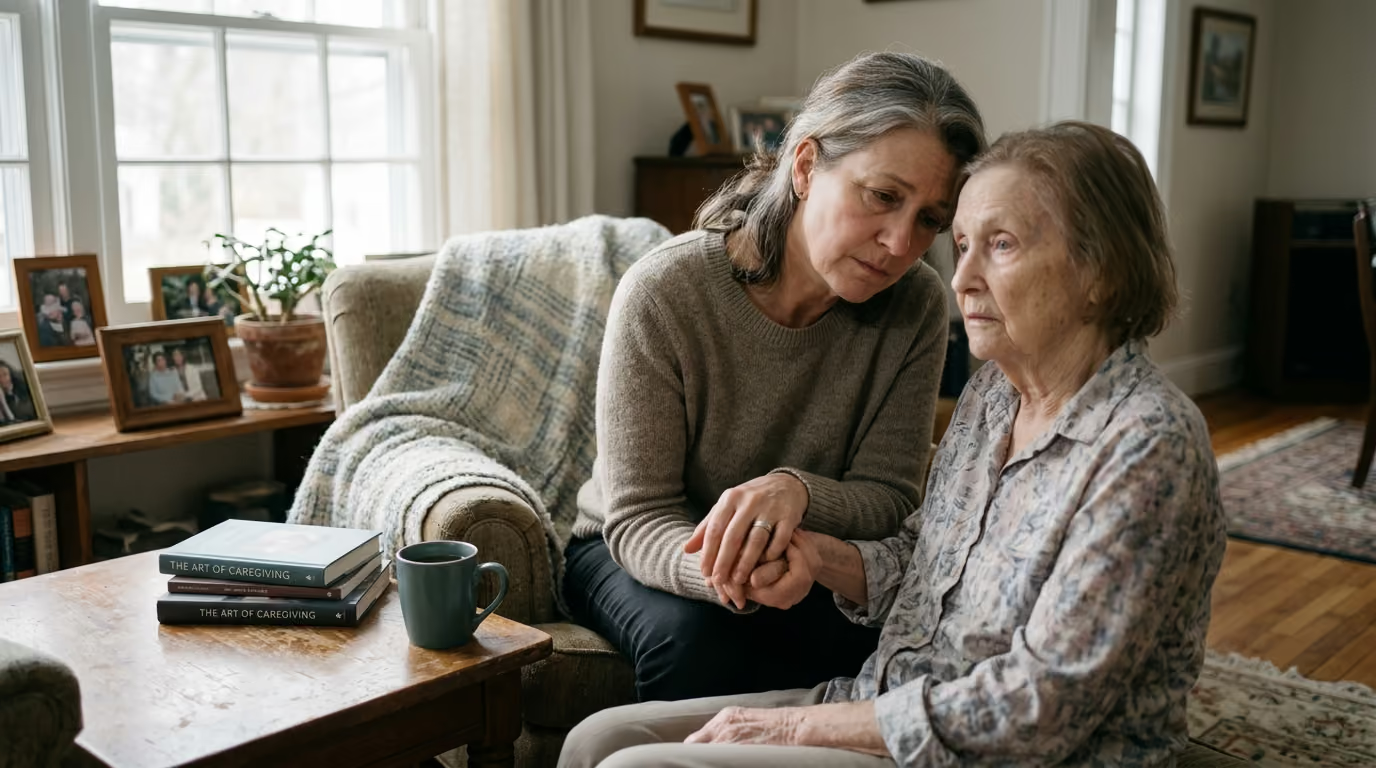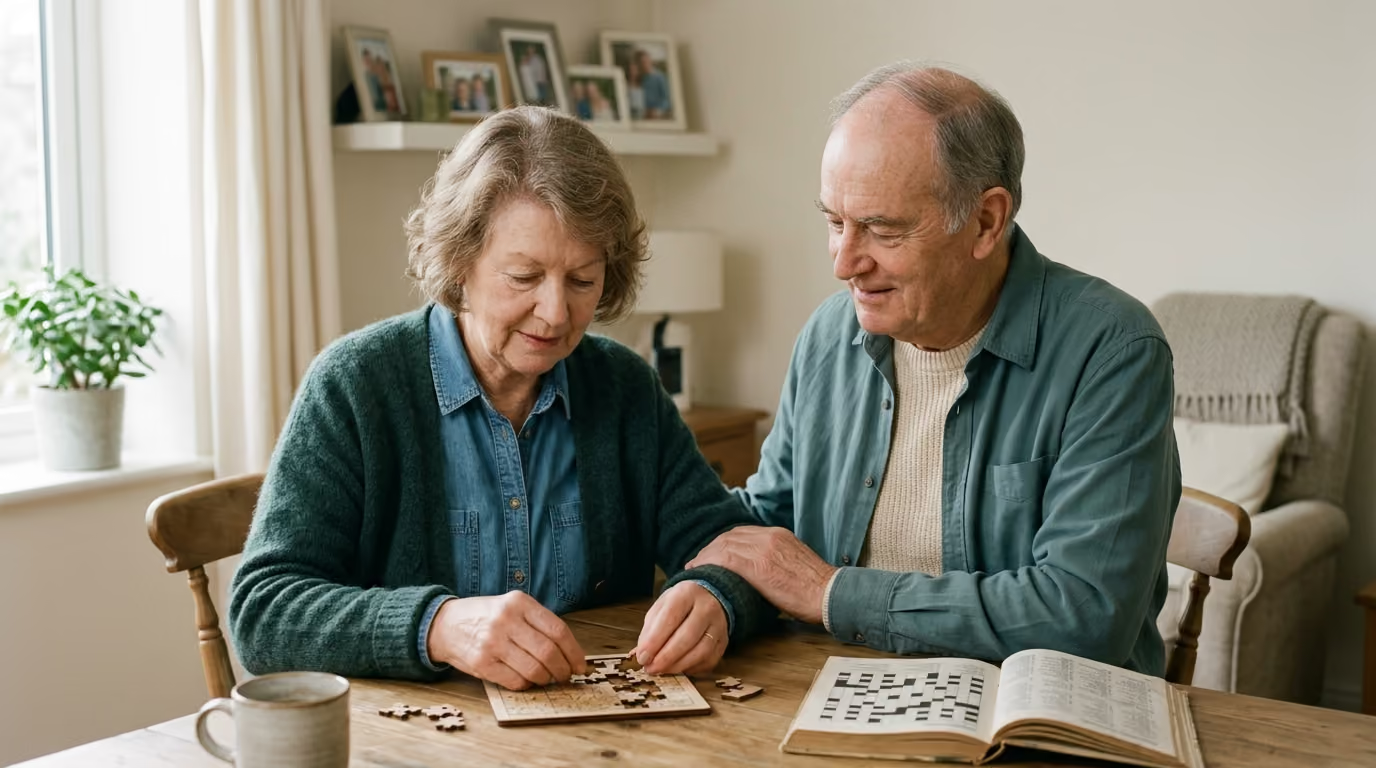

A dementia diagnosis does not automatically erase personal agency, and supportive daily routines empower individuals to maintain authentic purpose, identity, and safe autonomy.





Living well with dementia is not a contradiction. It is also not a claim that progressive cognitive change is easy or painless. A medical diagnosis alters memory, speed of processing, spatial awareness, and language. It does not erase a person's life history, core values, emotional depth, or human rights.
This guide examines what happens when we place the person, rather than the disease, at the center of daily life. It provides a detailed framework for protecting self-worth, supporting everyday choices, navigating changing relationships, and finding genuine purpose after cognitive changes begin.
To understand how a person can live well after a diagnosis, it helps to examine how the brain processes selfhood. The brain does not store identity in a single memory bank. Autobiographical recall, which involves remembering specific dates and facts from your past, relies heavily on the hippocampus and parts of the temporal lobe. These regions are often affected early in conditions like Alzheimer's disease.
Other systems support who we are. Procedural memory stores physical skills, habits, and familiar routines. This system relies on the basal ganglia and cerebellum, which often remain intact much longer. Emotional memory and relational responses depend on deep structures that continue to register warmth, humor, and reassurance.
Because of this neurological division, a person may forget what they ate for breakfast or the year they married, yet still feel like a parent, an artist, a gardener, or a trusted friend. Their core personality traits, musical preferences, and moral values often persist through physical habits and emotional reactions.
When families understand this distinction, their approach changes. The goal is no longer testing whether a person can recite facts from their life. The goal becomes creating an environment where their preserved skills, emotional memories, and bodily habits can surface naturally.
Current research challenges the traditional assumption that a cognitive diagnosis requires immediate, total supervision. The World Health Organization reports that 57 million people were living with dementia worldwide in 2021. More than 60 percent live in low- and middle-income countries. Nearly 10 million new cases emerge every year, making dementia a leading cause of disability among older adults globally.
WHO also estimates the global economic cost of dementia at 1.3 trillion dollars in 2019. About half of this cost comes from informal care provided by families and close friends. Informal caregivers provide an average of five hours of care and supervision every day. Women provide approximately 70 percent of these care hours worldwide.
In the United States, data from the Alzheimer's Association shows that nearly 12 million family members and friends provided 19.2 billion hours of unpaid care in 2024. That care is valued at roughly 413 billion dollars. The lifetime cost of care for an individual exceeds 400,000 dollars, with about 70 percent paid directly by family caregivers through out-of-pocket expenses and unpaid time.
These figures show that supporting an individual is a major collaborative effort. When caregivers become exhausted, they often take over every daily task simply to save time or manage anxiety. Studies on shared decision-making show that individuals with cognitive impairment frequently retain both the desire and the ability to participate in everyday care decisions. Unfortunately, care partners and healthcare staff regularly underestimate this remaining ability.
Recent research published in 2025 emphasizes relational autonomy. This model shows that independence does not mean doing everything alone without help. Instead, autonomy operates through three distinct layers:
This is the ability to express a preference, value, or choice. A person retains decisional autonomy when their supporters ask what they want, listen to their answers, and respect their perspective.
This means acting in alignment with lifelong values, personal taste, and self-expression. An authentic choice reflects what matters to the person, even if they cannot explain the detailed logic behind it.
This is the physical capacity to carry out a chosen plan. A person might lack the physical or cognitive ability to dial a telephone, but they can still clearly decide whom they wish to call.
Researchers emphasize that when supportive relationships are present, all three dimensions of autonomy can remain active throughout moderate stages of cognitive change. Guidance from the National Institute for Health and Care Excellence (NICE) highlights that person-centered care must respect individual life history, unique personalities, and the central role of relationships in maintaining wellbeing.
The 2024 Lancet Commission on dementia prevention, intervention, and care identified 14 potentially modifiable risk factors across the lifespan. The authors estimated that addressing these factors could theoretically prevent or delay around 45 percent of dementia cases globally. The report added high LDL cholesterol and untreated vision loss to earlier factors like hearing impairment, social isolation, and physical inactivity.
This 45 percent figure is a population-level model, not a personal promise. It does not mean an individual caused their condition, nor does it guarantee that lifestyle changes will halt progression. For those living with a diagnosis, addressing sensory issues like hearing loss and staying connected are simply practical ways to protect comfort, communication, and quality of life. Readers can learn more by reviewing our cognitive health and protection articles.
Maintaining identity requires deliberate effort from family, friends, and care partners. In medical settings, a person is often defined by their symptoms, scores, and deficits. At home and in the community, they need to be recognized as a whole human being.
One effective method is building a personal identity map. Unlike a rigid medical chart, an identity map captures what makes the individual feel grounded and capable. It should always be created with the person, rather than written about them in secret.
An identity map should remain flexible. People develop new interests, discard old habits, and change their minds as time passes. A preference recorded three years ago should never become an inflexible rule.
Preserving identity also means avoiding conversational traps. Family members often fall into the habit of testing recall. Asking questions like "Do you remember who came over yesterday?" or "What is my name?" causes anxiety and shame. It turns an ordinary visit into an exam.
Instead, provide the information gently within the conversation. Say, "It is so good to see you, Dad. It is your daughter, Sarah. I brought some fresh apples from the market." This approach removes pressure and allows the conversation to flow naturally.
Another key practice is protecting adult standing. Avoid using baby talk, simplified pet names, or sing-song voices. Speak at a normal pitch, using clear phrasing and natural adult vocabulary. Never talk about the person as if they are not in the room. Even when verbal comprehension appears limited, people readily pick up on tone, posture, and emotional exclusion.
Having a reason to get out of bed in the morning is a basic human need. When cognitive changes begin, well-meaning relatives often strip away all responsibilities in the name of safety or rest. They take over cooking, cleaning, yard work, shopping, and home maintenance.
This sudden removal of responsibility can lead to boredom, apathy, and depression. Purpose does not require running a company or managing a large project. It comes from contributing to the household, connecting with others, and experiencing small successes.
A participatory research model developed with individuals living in residential care highlights a clear guiding motto: "In my way, at my pace, with the help of you." This framework outlines six core elements for meaningful daily life:
To apply this model at home, look for ways to adapt lifelong roles rather than eliminating them entirely.
Consider an illustrative example of an older adult who worked as an elementary school teacher. When complex reading becomes tiring, family members might assume she can no longer participate in educational activities. Instead of stopping completely, she can sit with a grandchild to look through picture books, point out animals, or listen to the child practice reading aloud. The core identity of being an encouraging educator remains intact through an adapted activity.
Consider another illustrative model involving a retired mechanical engineer. He may no longer be able to safely repair home appliances or manage power tools. Handing him a set of sanded wooden pieces to assemble or asking him to organize hardware items by size allows him to use his spatial skills and tactile habits safely.
The goal of any activity is not productivity or perfection. The goal is engagement, enjoyment, and a felt sense of contribution. For more practical frameworks on maintaining purposeful habits, explore our lifestyle and brain resilience resources.
Human beings need connection, physical touch, and intimacy throughout their entire lives. A diagnosis of dementia does not eliminate the desire for warmth, companionship, or sexual expression. Yet this topic is often ignored by healthcare providers and treated with discomfort by families.
Guidance from Alzheimer Europe clarifies that a dementia diagnosis does not automatically mean a person lacks the capacity to consent to a sexual relationship. Decision-making capacity is specific to the exact situation. A person who can no longer balance a checkbook or drive a car may still be fully capable of consenting to affection, romance, and sexual intimacy.
Evaluating consent in the context of cognitive change requires careful, sensitive attention. Key questions include:
Relationships naturally shift when one partner develops cognitive symptoms. A spouse often finds themselves balancing the role of romantic partner with the duties of a daily caregiver. This shift can cause grief, guilt, and emotional strain.
When a partner spends the entire day supervising medications, meals, and appointments, romance often fades under managerial stress. Families can protect the primary relationship by bringing in outside help, adult day services, or respite support. This allows the care partner to step back from continuous supervision and spend meaningful time simply being a partner.
Complex social situations can also arise. A person living with dementia in a care community may form a close friendship or romantic attachment with another resident. When this occurs, family members may feel shocked, hurt, or protective.
The correct response is neither automatic panic nor careless neglect. Care teams and families must evaluate safety, consent, and mutual comfort. If both individuals find genuine happiness, comfort, and safety in each other's company, their emotional needs should be respected while ensuring both remain protected from harm.
Gender identity and sexual orientation also remain fundamental to who a person is. Members of the LGBTQ+ community living with dementia may experience unique vulnerabilities, such as past trauma or fear of discrimination in care settings. Professional teams must honor chosen names, pronouns, and relationship histories without imposing outdated assumptions.
Autonomy is built through small, ordinary decisions made throughout the day. It is practiced in the kitchen, the closet, the garden, and the living room.
When caregivers try to support independence, they sometimes offer broad, open-ended questions that overwhelm a changing brain. Asking "What do you want to wear today?" requires searching through dozens of shirts, pants, and weather considerations. This can trigger frustration or confusion.
A better approach uses structured choice architecture. This means simplifying the environment so the person can make clear, independent decisions without confusion.
Caregivers can also use an everyday autonomy audit to identify areas where independence can be restored safely.
List the activities that happen every day, including dressing, bathing, meal choices, physical exercise, and entertainment.
Look honestly at each routine. Is the person choosing their own clothes, or has a family member taken over the task to speed up the morning?
If selecting clothing from a crowded closet causes distress, do not remove choice entirely. Place two weather-appropriate outfits on the bed and let the individual select their preferred option.
Total safety is impossible, and pursuing it often destroys quality of life. Risk enablement means identifying the specific danger of an activity and reducing it while keeping the activity alive.
If an individual loves walking around the neighborhood, an immediate driving ban should not mean complete home confinement. A family can provide a comfortable pair of shoes, a simple identification card, a mobile phone with location sharing turned on with consent, and planned walking routes on quiet streets. This balances safety with mobility, fresh air, and personal freedom. To learn more about memory support, review our memory and focus articles.
Planning for the future is an expression of present autonomy. It ensures that an individual's personal values, spiritual beliefs, and medical preferences guide their care even if their communication changes later on.
NICE guidelines recommend that conversations about advance care planning occur early and continue over time. A single conversation is rarely enough. People should have regular opportunities to revisit and update their wishes during routine healthcare reviews.
Advance planning discussions should cover several practical areas:
Legal mechanisms such as lasting powers of attorney and advance directives vary across states, provinces, and countries. Families should consult qualified local legal and healthcare professionals to ensure all documents meet regional requirements.
Planning ahead is not a sign of giving up. It is a practical tool that relieves family members of future guesswork and ensures the person's voice remains central to every future decision. Readers seeking broader guidance can consult our collection of dementia and cognitive protection resources.
Misunderstandings about dementia create unnecessary fear and lead to premature loss of independence. Here are several widespread myths contrasted with current evidence:
Reality: Capacity is decision-specific and fluctuates over time. A person may lose the ability to manage an investment portfolio while remaining fully capable of choosing where to walk, what to eat, and who to spend time with. Supported decision-making should always be the first step.
Reality: Autobiographical recall often fades before emotional recognition. A person might not recall a child's name, age, or birthdate, yet they clearly recognize that person as a source of safety, love, and comfort.
Reality: While acquiring complex verbal facts becomes difficult, procedural learning and emotional adaptation continue. People can learn new walking paths, adapt to simplified tablets, enjoy new music, and develop fresh creative interests through repetition and sensory cues.
Reality: Eliminating all risk often leads to confinement, physical decline, and deep distress. High-quality care balances reasonable safety measures with the freedom to move, choose, and participate in everyday life.
Reality: The Lancet Commission's calculation that around 45 percent of dementia cases are theoretically preventable applies to global populations across entire lifespans. It is not a guarantee for any single person. Dementia is a complex medical condition, not a personal lifestyle failure.
When meeting with a physician, neurologist, or care coordinator, asking specific, practical questions can help maintain a focus on everyday function and quality of life:
For more perspectives on healthy aging and mental vitality, visit our retirement and mental fitness section.
Cognitive abilities often shift based on fatigue, pain, stress, and time of day. Many people experience greater clarity in the morning and increased fatigue or confusion in the late afternoon. Schedule important choices, social visits, and medical appointments during the person's best hours. If a person struggles to make a choice, do not force the issue. Simplify the options, reduce background noise, and return to the question after a period of rest.
Speech is only one form of human communication. People express preferences, agreement, and refusal through facial expressions, body tension, eye contact, gestures, vocal tones, and physical actions. Turning away, pushing an item aside, or crossing arms can indicate a clear "no" or "not right now." Caregivers should observe these nonverbal signals carefully and document them so all supporters interpret them consistently.
Disagreements between safety and personal wishes are common in dementia care. Instead of imposing an outright ban, break down the specific hazard and search for the least restrictive compromise. If an individual wants to continue cooking but forgets the stove burners, install an automatic stove shut-off device or prepare ingredients together so they can handle seasoning and mixing while a partner oversees heat.
Handling money is often one of the first areas where complex calculations become difficult. To prevent exploitation without removing all financial agency, establish a separate day-to-day checking account with a low balance and a preset spending limit. The individual can continue using a personal debit card or carrying modest cash for coffee, groceries, and small purchases while main assets remain secure under power-of-attorney oversight.

Follow FitBrainLab for research-led insights on memory, focus, brain aging, nutrition and mental fitness after 60. Stay connected for new articles, practical guidance and ideas for a sharper, more engaged life.


Build habits that support memory, focus and a curious, connected life.
Read the Blog