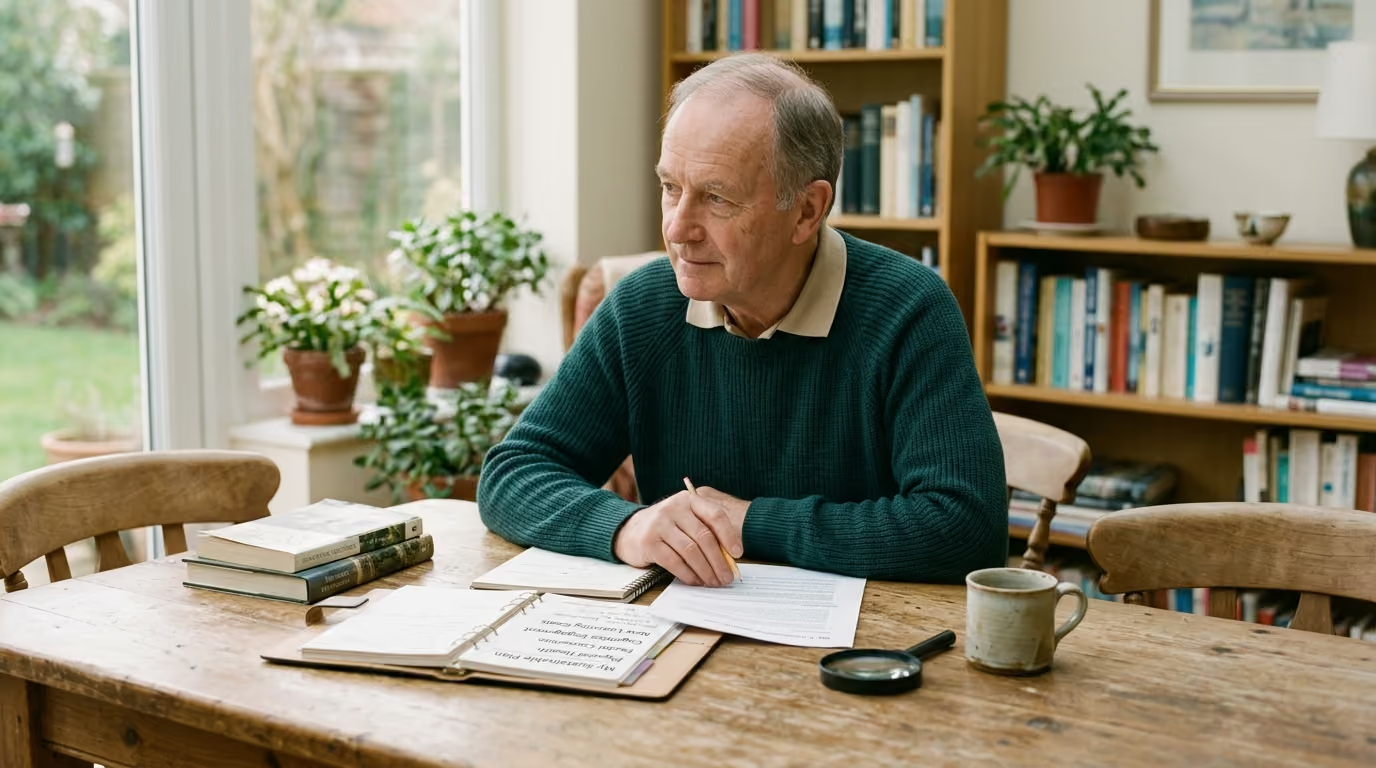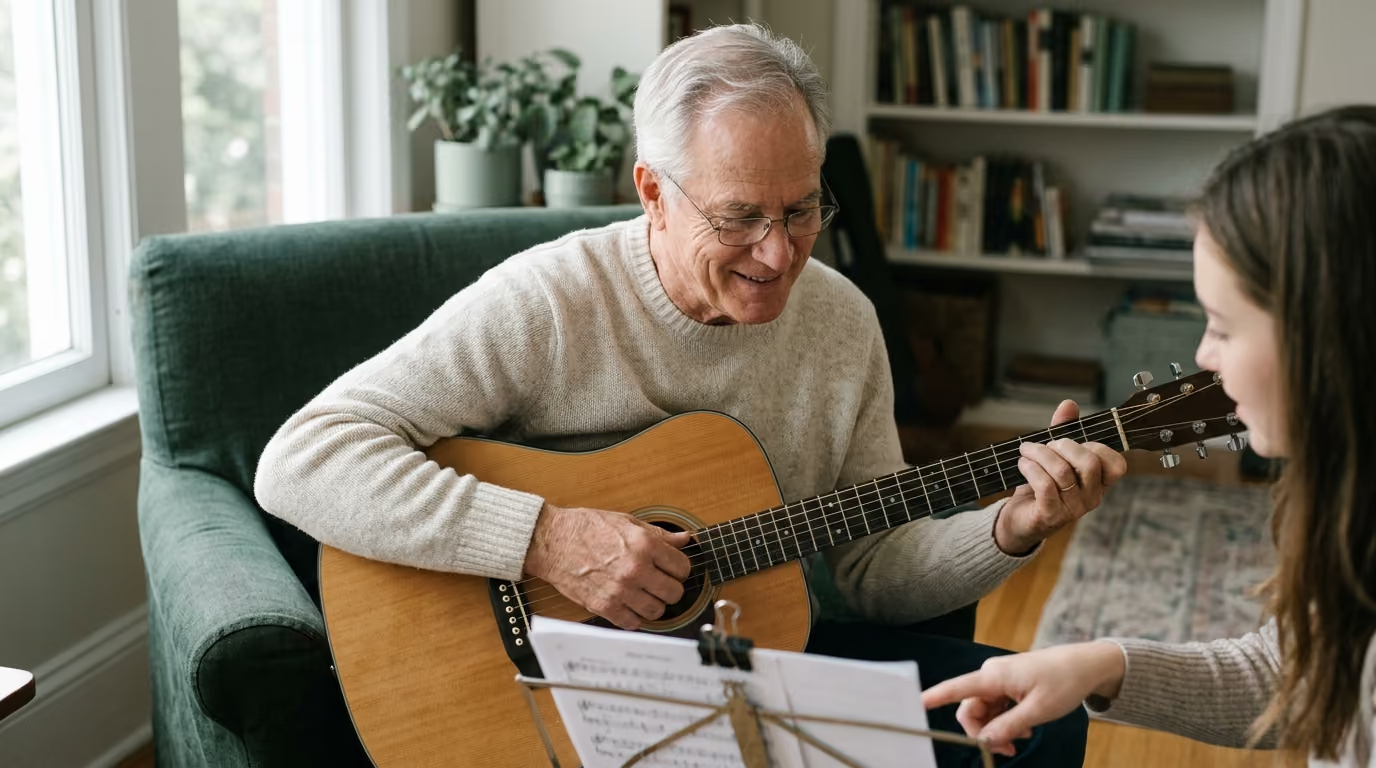

Six primary cognitive and physiological systems work together to strengthen brain health and motor coordination when older adults pick up an instrument.





Learning an instrument after age 60 is an active, structured form of cognitive engagement. It is not passive listening, and it is not a medical treatment for neurological disease. Acquiring instrumental or vocal skills requires you to translate visual symbols into physical motion, monitor sound with your ears, and adjust your fingers in real time. This complete guide provides an evidence-based roadmap for choosing an instrument, designing safe practice habits, navigating age-related physical changes, and building a rewarding musical routine.
When you play an instrument, your brain coordinates several major neurological networks at the same time. The visual cortex reads musical notation or chord charts from the page. The motor cortex and cerebellum translate those symbols into precise, timed finger movements. Simultaneously, the auditory cortex listens to the output, checking the pitch, volume, and rhythm against your intentions.
If a note sounds flat or arrives late, your brain registers an error signal. This feedback loop forces the frontal lobe to step in, adjust finger placement, and correct the next movement. Repeating this process creates stronger neural pathways for those specific motor sequences. In cognitive science, this continuous coordination across sensory and physical domains is known as multisensory processing.
For adults over 60, this multisensory demand provides an ideal way to challenge working memory and mental flexibility. Instead of exercising one isolated skill, you challenge perception, physical coordination, and real-time problem-solving together. Understanding this neurological feedback loop helps you practice with patience, knowing that small mistakes are simply data points your nervous system uses to adapt.
Active music-making engages six primary cognitive and physiological systems. Each system plays a distinct role in how you process, execute, and enjoy music.
Musical practice trains your brain to make fine distinctions between pitches, rhythms, and sound textures. You learn to listen critically to your own playing and adjust your touch. In group settings, your auditory system must track your own instrument while separating it from the sounds around you. This ability to isolate sounds can support general auditory processing, though it does not reverse physical hearing loss in the ear itself.
Playing an instrument requires fine motor control, bilateral hand coordination, balance, and physical stamina. You must regulate finger pressure while maintaining relaxed shoulders and steady breathing. When an older adult struggles with a passage, the root cause is rarely a lack of ability. The difficulty usually stems from limited joint range of motion, muscle tension, poor posture, or an instrument that needs physical adjustment.
Executive function includes planning, working memory, mental flexibility, and the ability to ignore distractions. When practicing, you must break complex musical pieces into small parts, keep a steady tempo, and suppress the urge to rush. Research shows that managing these simultaneous demands can strengthen cognitive control in older learners. You can read more about how sustained mental effort supports long-term independence through lifestyle and brain resilience strategies.
Music practice draws on nearly every known memory system in the human brain:
Music directly engages brain areas responsible for emotion, including the amygdala and the reward pathway. Playing a familiar melody produces real-time satisfaction and sensory pleasure. This immediate feedback helps sustain motivation, which makes music practice easier to maintain than abstract mental drills. Creating music also offers a reliable way to manage stress, express personal feelings, and unwind.
Leaving the workforce often removes daily structure, social interaction, and clear measures of personal achievement. Learning an instrument restores a structured routine and creates a clear sense of forward progress. Joining a community band, choir, or local strumming group helps you meet peers who share your interests. For deeper insights on building structured routines after leaving work, see our resources on retirement, purpose, and mental fitness.
Scientific interest in music and cognitive aging has grown rapidly over the past two decades. However, separating sound clinical trials from exaggerated media headlines is necessary.
Rigorous trials show that active music training can produce measurable benefits in specific cognitive areas. A 2025 systematic review and meta-analysis evaluated nine randomized controlled trials involving 625 cognitively normal older adults. The researchers found small-to-moderate improvements in global cognition, working memory, and executive function. Attention scores did not show significant change, which indicates that music targets specific cognitive domains rather than improving mental speed across the board.
Piano instruction has received significant attention in clinical literature. In one randomized study, musically untrained adults aged 60 to 85 received individualized piano lessons for six months. Compared to non-playing controls, the piano students showed significant gains on the Trail Making Test and Digit Symbol tests. These standard tests measure mental processing speed, visual scanning, and cognitive flexibility.
Another randomized controlled trial compared individualized piano training against computer-based brain games and a passive control group. Both the piano and computer training groups showed improvements in working memory and processing speed. However, only the piano group showed significant improvements in verbal fluency during category-switching tasks. This suggests that the combined motor, visual, and auditory demands of an instrument offer unique benefits that software drills cannot match.
Music-based movement also shows positive physical outcomes. In a study of 134 community-dwelling adults aged 65 and older with elevated fall risk, participants attended weekly music-based multitask classes for six months. The participants moved rhythmically to changing musical cues while completing physical balance tasks. The intervention group demonstrated better resistance to cognitive interference and lower anxiety levels compared to delayed-treatment controls.
For older adults facing cognitive changes, active music-making remains valuable. A systematic review and meta-analysis focused on older adults with probable mild cognitive impairment or dementia found small but statistically significant improvements in general cognitive functioning after active music interventions. Group singing and keyboard playing provided structured mental stimulation without causing excessive frustration.
Despite these encouraging findings, several common claims about music and the aging brain lack scientific proof. First, research on brain structure changes in older adults remains preliminary. A systematic review evaluating brain imaging in older music learners found that only one study showed a clear link between neural changes and executive function gains. Methodological variations and small sample sizes make it impossible to state that learning music rebuilds lost brain tissue.
Second, observational studies must not be mistaken for proof of cause and effect. A large prospective cohort study tracking 10,893 participants found that frequent instrument playing was linked to a 35% lower risk of dementia. A separate meta-analysis calculated a reduced dementia hazard ratio of 0.64 for instrument players.
While these statistics sound impressive, they do not prove that playing an instrument stops dementia. People who play instruments often have higher education levels, greater financial resources, better baseline health, and richer social lives. These underlying factors might explain the lower risk.
Learning an instrument is a valuable, low-cost activity that supports mental sharpness, mood, and hand coordination. It should be pursued for personal joy, creative expression, and healthy mental challenge, not viewed as a guaranteed shield against disease. To understand the science behind lifelong cognitive health, explore our guide on brain aging and neuroplasticity.
Selecting an instrument is the most important decision you will make as an older beginner. Prestige matters far less than physical comfort, hearing profile, living space, and personal musical taste.
Keyboards offer an organized visual layout of musical notes. Black and white keys lay out pitches in a straight line, which makes music theory easier to understand. Digital keyboards let you adjust the volume and practice with headphones. They also eliminate the maintenance costs of tuning acoustic pianos.
Guitars are portable, social instruments that fit many genres, including folk, rock, blues, and country. Classical guitars use nylon strings, which place less stress on older fingertips than steel-string acoustic models.
The ukulele has four nylon strings, a small wooden body, and a light frame. Its compact size makes it one of the most accessible stringed instruments for older adults.
Your vocal cords require no equipment purchase, and singing provides a built-in community through local choirs. Singing strengthens respiratory muscles, encourages deep diaphragmatic breathing, and trains pitch perception.
Percussion instruments, including djembe drums, bongos, and electronic drum pads, emphasize rhythm over pitch recognition. Drumming provides an engaging upper-body workout and trains your internal sense of time.
Instruments such as the recorder, flute, clarinet, and saxophone offer rich musical repertoires. They require focused breath control and direct finger contact with keys or tone holes.
Effective practice is built on quality and consistency rather than long, exhausting sessions. As we age, our brains consolidate physical skills better through distributed practice.
Motor-learning research shows that older adults retain movements better when practice is split into short, frequent sessions rather than one weekly marathon. Practicing for 20 minutes five days a week produces better retention and less physical strain than practicing for two hours on Saturday. Short sessions prevent muscle fatigue, reduce the risk of joint inflammation, and allow sleep to consolidate new motor patterns.
A structured 25-minute practice session prevents aimless playing and builds solid habits:
Playing too quickly is the most common practice mistake. When you play fast and make mistakes, your brain records those incorrect finger movements into procedural memory. Slow practice forces you to listen actively, release unnecessary muscle tension, and place fingers accurately.
When you make a mistake, stop playing immediately. Do not start the song over from the beginning. Instead, isolate the exact two-beat or one-measure section where the error happened. Play that micro-section slowly and correctly three times in a row before putting it back into the full piece.
This progressive schedule helps you build confidence and avoid physical burnout over your first three months:
For more techniques on improving daily focus during practice sessions, review our practical guide on memory and cognitive performance.
Misconceptions about age and musical talent can create unnecessary self-doubt. Let us address the most common myths directly.
Many adults believe that musical ability is an inborn trait set in childhood. In reality, musical skill is a collection of learnable habits, including pitch matching, timing, and finger dexterity. An adult beginner who practices deliberately for 20 minutes a day will consistently outperform a talented beginner who practices erratically.
The old saying "no pain, no gain" is dangerous for older musicians. While mild fingertip tenderness is normal when starting stringed instruments, sharp, burning, or aching joint pain is a clear warning sign. Pain indicates bad posture, poor instrument setup, or excessive muscle tension. Stop immediately if you feel pain, and adjust your physical approach.
While children absorb languages and musical patterns rapidly, neuroplasticity continues throughout your entire life. Older adults possess advantages that young children lack, including better self-discipline, advanced analytical thinking, and a lifetime of listening experience. You can learn new motor skills well into your 80s and 90s with consistent practice.
Long practice sessions often lead to wandering attention, sloppy technique, and physical fatigue. Short, focused sessions yield better retention and protect your joints. Twenty minutes of attentive practice provides far more cognitive and musical value than an hour of mindless repetition.
Modern technology offers excellent tools for older learners, provided you use apps to solve specific problems rather than collecting them as distractions.
Software and mobile apps let you slow down recorded audio tracks without changing their pitch. This allows you to listen to complex musical passages at half speed, hear every note clearly, and play along comfortably.
Traditional clicking metronomes can be harsh, irritating, or difficult to hear alongside an instrument. Modern metronome apps offer silent flashing visual pulses, adjustable color cues, and gentle tapping sounds that keep your timing steady without auditory fatigue.
Tablet computers have transformed how musicians read notation. Apps allow you to enlarge sheet music, increase visual contrast, and use Bluetooth foot pedals to turn pages without taking your hands off your instrument.
Protecting your hearing is vital when practicing amplified or acoustic instruments. The World Health Organization recommends keeping personal listening devices at or below 60% of maximum volume. When playing in loud community bands or drum circles, wear high-fidelity musician earplugs that lower overall volume evenly without muffling pitch clarity.
Physical and cognitive changes are a normal part of aging. Making sensible adjustments keeps musical practice enjoyable, safe, and sustainable over time.
Joint stiffness in the hands, wrists, or shoulders requires thoughtful physical adaptations:
Age-related hearing changes often reduce your sensitivity to higher frequencies and make it harder to separate sounds in noisy rooms. You can adapt by:
For older adults living with mild cognitive impairment or early memory loss, music provides meaningful engagement, emotional grounding, and sensory joy. To keep the experience positive:
To learn more about our mission and research-backed editorial standards, visit our about page.
Before starting a new instrument, discuss your musical plans with your doctor or physical therapist, especially if you manage chronic health conditions.
It is never too late to learn standard music notation. Reading music is simply learning a visual alphabet of pitches and durations. Many adult beginners find that learning notation step-by-step is an enjoyable mental exercise that adds structure to their daily practice.
With consistent, focused practice of 15 to 20 minutes a day, most adult beginners can play a simple, recognizable melody within two to three weeks. Choosing an accessible instrument like the ukulele or keyboard often produces recognizable tunes within the first few sessions.
Online tutorials offer flexibility and low cost, but private lessons provide critical real-time feedback. An experienced teacher can spot poor posture, hand tension, and mechanical errors before they turn into hard-to-break physical habits or cause joint discomfort.
Always begin with a gentle physical warm-up. Play slow, simple patterns for three minutes before attempting difficult material. If stiffness persists, check the room temperature, take a short break, and ensure your wrists remain relaxed and neutral while playing.

Follow FitBrainLab for research-led insights on memory, focus, brain aging, nutrition and mental fitness after 60. Stay connected for new articles, practical guidance and ideas for a sharper, more engaged life.


Build habits that support memory, focus and a curious, connected life.
Read the Blog