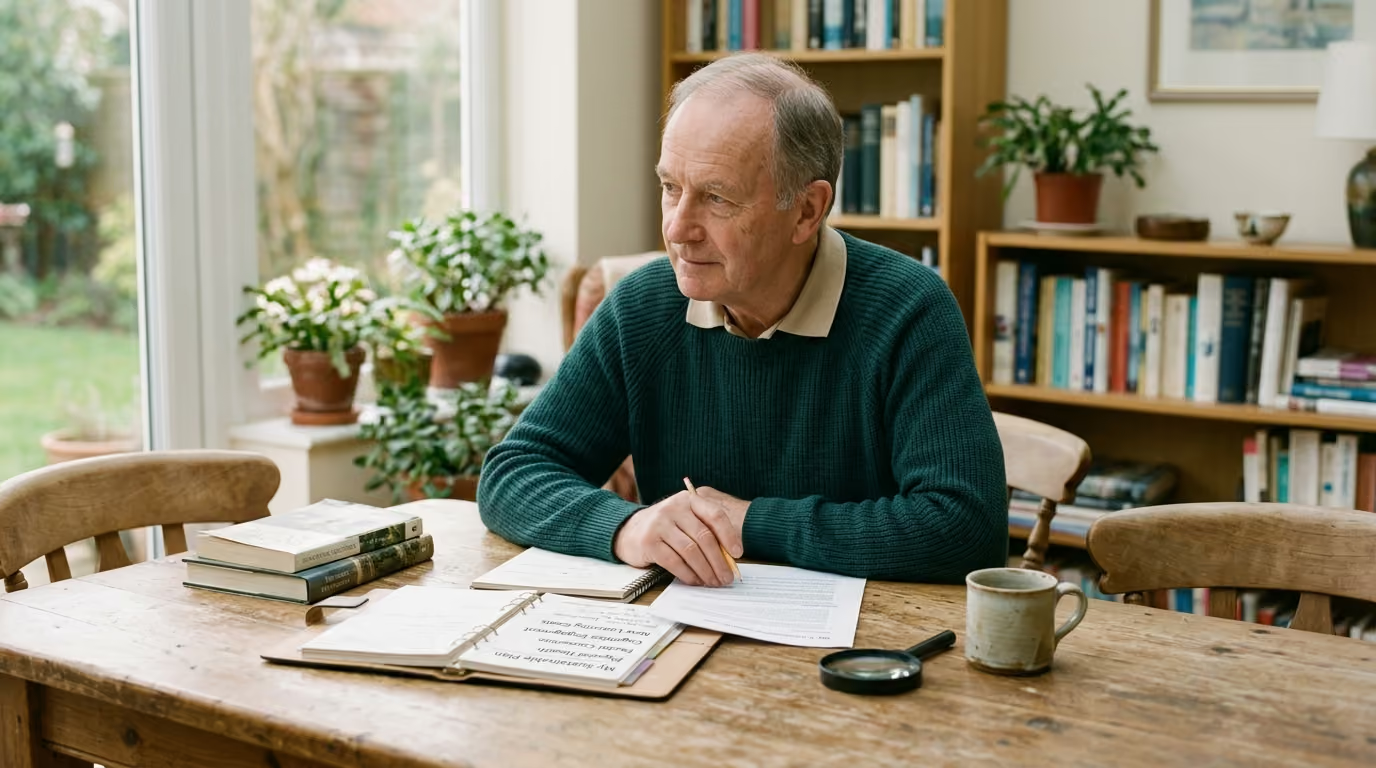

Stronger social bonds and sharper cognitive health come from building intentional relationship routines and engaging in purposeful shared activities throughout retirement.





Arthur woke up on a Tuesday morning six months into retirement. He had a supportive marriage, a comfortable house, and complete control over his schedule. Yet as he drank his coffee, he realized he had not spoken with anyone outside his family in nearly a month. The daily greetings, light workplace banter, and casual lunches that defined his previous four decades had vanished. His situation is common. Leaving work often strips away an entire social ecosystem without warning.
The human brain remains responsive to experience across every stage of life. Engaging in social interaction calls upon multiple cognitive systems at the same time. When you hold a conversation, your brain must process spoken words, interpret tone of voice, read facial expressions, and retrieve memories. You also hold new information in mind while preparing a thoughtful response.
This complex mental activity engages the prefrontal cortex, the temporal lobes, and the neural networks responsible for executive control. Regular mental stimulation supports brain aging and neuroplasticity by keeping neural pathways active. Meaningful relationships also help regulate the biological stress response. Chronic social distress elevates cortisol levels, which can disrupt sleep, increase systemic inflammation, and impair memory processing.
Social engagement also supports mental fitness through emotional co-regulation. Sharing experiences, humor, and mutual concerns helps moderate anxiety. Feeling connected provides a sense of security that allows the nervous system to settle. This physiological stability creates favorable conditions for maintaining focus and emotional balance.
Conversations that challenge your perspective offer particular value. When you evaluate an idea, recall a relevant fact, or follow a complex story, you practice active mental retrieval. These interactions exercise your working memory and language processing. Pairing social engagement with other positive habits strengthens overall lifestyle and brain resilience.
Leaving the workforce changes how daily contact occurs. A longitudinal study of Finnish public-sector employees observed that total social network size dropped by roughly one person during the retirement transition. This reduction occurred primarily in less-close relationships rather than close ties. After the transition period ended, network size stabilized without further decline.
Data from the Survey of Health, Ageing and Retirement in Europe found a similar pattern. Retirement shifted the composition of social networks by raising the proportion of family members while lowering the share of friends and colleagues. The overall network count remained steady, but the variety of social contacts diminished. This shift shows that retirement changes the structure of daily interactions even when family ties remain solid.
The broader health consequences of social isolation have drawn significant scientific attention. The World Health Organization reports that roughly one in four older adults experiences social isolation, while about 11.8 percent experience loneliness. The WHO Commission on Social Connection notes that loneliness is associated with hundreds of thousands of deaths globally each year. Research links persistent isolation and loneliness to elevated risks of cardiovascular disease, stroke, type 2 diabetes, depression, and cognitive decline.
Friendship quality plays a defining role in these outcomes. In an international study spanning 97 countries, valuing friendships showed a clear relationship with better physical functioning in later life. Longitudinal findings revealed that strain within friendships predicted an increase in chronic illnesses over a six-year period. Supportive relationships with partners, children, and friends predicted higher well-being across eight years. Research on relationship trajectories shows that sustained positive friendship quality provides lasting health benefits, whereas merely maintaining a large number of strained connections does not.
Intervention studies provide additional insight. Systematic reviews of community-dwelling older adults indicate that structured group activities, cognitive behavioral approaches, exercise programs, and multicomponent interventions reliably reduce loneliness. The evidence shows that both group programs and one-to-one connections can succeed. The best approach depends on individual preferences, physical mobility, sensory capabilities, and practical circumstances.
Researchers have also examined the link between social ties and personal meaning. A study of 2,869 older adults in New Zealand found that social network type and social support explained over 33 percent of the variance in purpose in life. Specific forms of support, including reassurance of worth and reliable alliances, helped explain how strong networks fostered a sense of direction. This research indicates that social ties provide more than basic companionship. They reinforce personal value and shared contribution.
Navigating relationships in later life requires precise definitions. People often mix together three distinct social states that have very different effects on well-being.
Social isolation represents an objective state. It means having few relationships, infrequent interactions, and minimal community support. An individual living alone in an area without transportation may be socially isolated regardless of their emotional state.
Loneliness represents a subjective, distressing experience. It occurs when a person feels a painful gap between their desired relationships and their actual relationships. A person can live with others, attend community events, and still experience profound loneliness if those interactions lack warmth or understanding.
Solitude represents a chosen, restorative state of being alone. Time spent in solitude allows for reflection, creative hobbies, reading, or quiet rest. Solitude does not harm health when it is deliberate and balanced with meaningful connection.
Evaluating your social life involves looking beyond raw numbers. A large network filled with conflict or superficial conversation can leave you feeling drained and disconnected. A compact circle of three reliable contacts can provide complete emotional security.
Understanding these differences protects you from feeling personal shame about social changes. Experiencing loneliness after retirement does not signal personal failure. It reflects a structural change in how your daily time is organized.
Healthy social ecosystems rely on different layers of connection. Sociologists separate these connections into strong ties and weak ties.
Strong ties consist of your closest relationships. These include a spouse, a sibling, an adult child, or a lifelong friend. You turn to strong ties during medical emergencies, financial crises, or periods of intense grief. These relationships provide deep emotional security, but they can sometimes become insular.
Weak ties consist of casual acquaintances. These include former coworkers, neighbors, the local postal worker, fellow gym members, or people in a community garden. Weak ties provide novel information, diverse viewpoints, and spontaneous conversation. They anchor you to the wider neighborhood and provide a sense of belonging to a shared public world.
Retirement disproportionately removes weak ties. When you leave a job, you lose dozens of casual daily interactions without losing your closest loved ones. The absence of these casual encounters flattens daily experience. You may feel a subtle emptiness even if your marriage or family life is strong.
Building a resilient social portfolio requires investing across three distinct rings:
This ring includes confidants who offer emotional safety and unconditional support. Most adults maintain between one and four people in this tier. Maintaining this ring requires vulnerability, regular contact, and mutual trust.
This ring includes activity partners and reliable friends. You might share a weekly round of golf, attend concerts, discuss literature, or cook together with these individuals. These friendships provide companionship and intellectual engagement without requiring constant emotional processing.
This ring includes acquaintances, community members, and familiar faces. You interact through volunteer groups, hobby clubs, faith communities, or neighborhood associations. These ties bring novelty and keep you engaged with your immediate surroundings.
Spreading your social energy across all three rings creates stability. If an inner-ring friend moves away or experiences health issues, your middle and outer rings continue to provide structure and engagement.
Rebuilding a social routine requires deliberate action. The following ten-step framework provides a structured approach to cultivating reliable relationships after 60.
Begin by diagnosing your specific social needs. Ask yourself what changed most after leaving work or experiencing a major life change. Determine whether you miss intellectual debate, physical activity partners, emotional intimacy, or a sense of professional purpose.
Identifying your specific gap prevents you from pursuing activities that do not satisfy your actual needs. If you miss structured problem-solving, an open-ended coffee morning might feel unsatisfactory. A committee role or a mentoring project could serve you better. Exploring options in retirement, purpose and mental fitness can help identify activities that match your goals.
Review the relationships you already have. Make a simple list of people you have known over the years, including former colleagues, neighbors, and old friends from school or past hobbies.
Group these contacts into people you wish to see more often, people you want to keep at a casual distance, and relationships that feel consistently draining. This exercise shows that you are rarely starting from zero. You often have promising ties waiting to be renewed.
Practice turning casual encounters into warm connections. Greet neighbors by name, ask a regular store clerk a friendly question, or arrive ten minutes early to a fitness class to chat with other participants.
These brief exchanges require low emotional investment but yield immediate mood benefits. Over time, familiar weak ties often develop into deeper middle-ring friendships.
Spontaneous get-togethers become harder to organize as people develop independent retirement routines. Relying on vague promises to meet soon usually leads to months of inaction.
Establish fixed, predictable appointments. A standing Tuesday morning walk, a first-Thursday book club, or a monthly breakfast group creates automatic contact. Predictable rhythms remove the mental effort of constant scheduling.
Joining a group centered on an activity reduces social pressure. When you garden, sing in a choir, or repair tools in a community workshop, your attention rests on the task.
Shared tasks give you an immediate subject of conversation. You do not need to invent small talk because the activity provides an ongoing topic. Shared projects also allow friendships to develop naturally over several weeks.
Healthy relationships function on mutual effort. Pay attention to how conversations flow. Ensure you ask thoughtful follow-up questions rather than speaking exclusively about your own experiences.
Reciprocity also involves practical balance. If a friend drives you to an event, offer to buy their coffee or host the next visit. If a friend experiences an illness, drop off a meal or send a supportive note. Reliable mutual investment builds long-term security.
Adult friendships take time to mature. Expecting an acquaintance to become a close confidant after two meetings creates unrealistic pressure.
Allow connections to move through natural stages. Move from casual greeting to shared activity, then to a focused one-to-one conversation, and finally to deeper personal disclosure. Respecting this timeline prevents discomfort and lets trust build steadily.
Geographic separation does not mean a valued friendship must end. Use communication tools to maintain regular contact with friends living in other cities.
Scheduled telephone calls, video check-ins, voice notes, and shared digital photo albums bridge physical gaps. Technology should support your social life rather than replace direct human warmth.
Periodically assess how your social routines make you feel. Notice which gatherings leave you energized and which leave you exhausted.
Do not hesitate to step back from groups that foster negativity or constant conflict. Reallocate your time toward connections that encourage curiosity, laughter, and mutual respect.
Distinguish between normal social adjustments and clinical conditions. If you experience persistent sadness, an inability to enjoy hobbies, severe fatigue, or a desire to withdraw from all human contact, consult a healthcare professional.
These experiences may point to underlying depression or an unaddressed medical issue. Professional support can restore the energy needed to re-engage with your community.
Putting social principles into practice requires clear communication. Many adults feel awkward reaching out after months or years of silence. Using direct, low-pressure language makes connecting simple.
When inviting an acquaintance to spend time together, keep the invitation specific, time-limited, and tied to an activity. Vague invitations create hesitation, while open-ended commitments can feel overwhelming.
If someone does not respond to an invitation or declines due to a busy schedule, remain calm and polite. People manage caregiving duties, medical visits, and family commitments that you may know nothing about.
Send a single courteous follow-up after a week or two. If they remain unavailable, step back without taking offense and direct your energy toward other contacts.
Reaching out to an old friend after years of quiet does not require an elaborate apology. Acknowledge the passage of time warmly and express genuine curiosity about their life.
Friendships naturally evolve as physical stamina, financial priorities, and personal interests shift. A friend who once loved strenuous mountain hikes may now manage only gentle flat walks.
Adapt the activity rather than abandoning the relationship. If dining out becomes expensive or difficult due to dietary needs, shift to home tea or a quiet park bench. If a friend develops hearing challenges, choose quiet living rooms instead of noisy restaurants.
Practical challenges can complicate social connection after 60. Addressing these barriers directly helps maintain an active social routine.
Age-related hearing loss represents one of the most common drivers of social withdrawal. Straining to hear conversation in loud venues causes cognitive fatigue and leads many older adults to stay home.
Schedule meetings in quiet environments with minimal background noise, such as private homes or quiet community centers. Position yourself with your back to the wall to reduce ambient sound. The National Institute on Aging emphasizes that treating sensory impairments with hearing aids or corrective lenses protects cognitive function and supports everyday communication.
Reduced mobility can make standard social outings difficult. When driving becomes stressful or public transit is inaccessible, adjust the format of your interactions.
Establish a regular home-based gathering, such as a monthly board game group or a weekly tea visit. Utilize community transportation services offered by senior centers or local non-profit groups. Digital book clubs, structured online courses, and telephone circles provide rich cognitive stimulation without requiring physical travel.
The loss of a spouse, partner, or lifelong friend alters daily social reality. Grieving individuals often find large social gatherings overwhelming, yet complete isolation deepens distress.
Seek out specialized grief support groups where you can speak openly without feeling pressure to appear cheerful. Allow trusted friends to assist with practical errands or accompany you on quiet walks. Maintain comforting shared rituals while slowly introducing new community activities when you feel ready.
Providing care for a spouse or relative can severely restrict personal free time. Caregivers often experience profound loneliness because their daily routines revolve entirely around another person's medical needs.
If you are caregiving, look for local respite programs or adult day services that provide a few hours of coverage. If you have a friend who is caregiving, offer specific, practical support. Bring a prepared meal, sit with their family member for two hours, or offer a brief 15-minute phone check-in.
Several widespread myths create unnecessary friction for older adults seeking to expand their social circles.
Family ties provide invaluable generational continuity and practical support during illnesses. Relying exclusively on family for social fulfillment, however, can strain those relationships.
Friends offer voluntary companionship based on shared contemporary interests, mutual humor, and similar life stages. Having peer relationships outside the family circle protects personal autonomy and enriches emotional life.
Meaningful connection does not require an outgoing or highly expressive personality. Quiet, thoughtful individuals often build deep relationships through attentive listening, reliability, and steady participation in small groups.
Structured activities with clear goals, such as community archiving, chess clubs, or volunteer restoration projects, suit introverted adults exceptionally well. Consistency matters far more than charisma.
Maintaining an active social life provides valuable cognitive engagement, but it is not a standalone shield against dementia. Brain longevity depends on a broader system of health behaviors.
Social activity should be paired with regular physical exercise, adequate sleep, blood pressure management, and a balanced diet. Protecting memory and executive control requires attention to your complete physical and cognitive environment.
Taking a systematic inventory of your relationships can highlight strengths and reveal areas that need attention. Review the following questions every few months to guide your social planning:
If you notice gaps in practical support or local acquaintances, select one specific step from the CONNECTION framework to address that area over the coming month.
Your primary care physician can offer practical guidance on health factors that influence social connection and cognitive vitality.
Return to this guide whenever you experience a significant life transition. Major events like moving to a new home, recovering from an illness, experiencing the loss of a close friend, or stepping down from a volunteer role can alter your daily social patterns. Reviewing the CONNECTION framework during these moments will help you rebuild your routines, maintain your independence, and keep your cognitive health strong.
Cultivating meaningful friendship after 60 is an active, ongoing practice that supports your mental clarity, emotional resilience, and sense of purpose throughout your life.

Follow FitBrainLab for research-led insights on memory, focus, brain aging, nutrition and mental fitness after 60. Stay connected for new articles, practical guidance and ideas for a sharper, more engaged life.


Build habits that support memory, focus and a curious, connected life.
Read the Blog