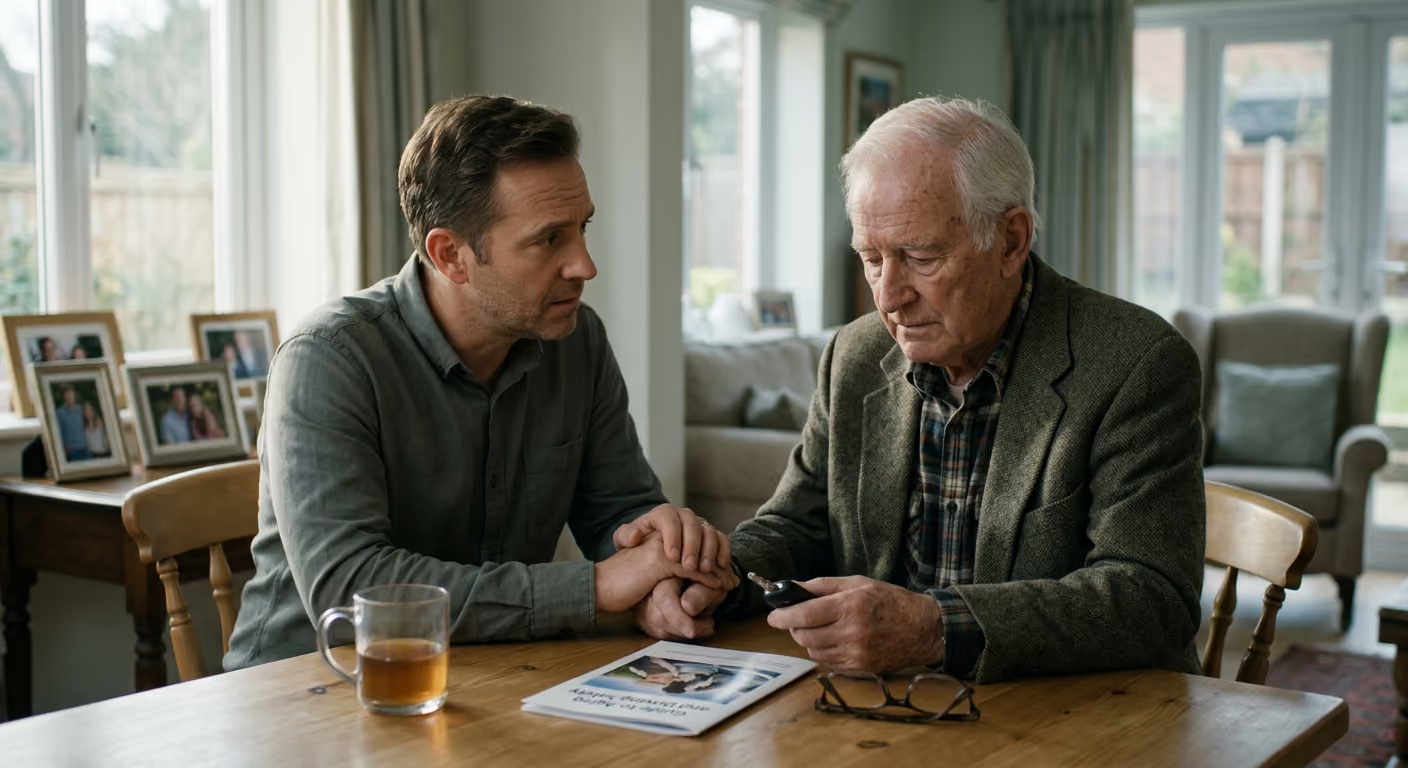

A dementia diagnosis involves far more than simple memory loss, making comprehensive evaluations of reaction speed, visuospatial skills, and clinical risk essential for driving safety.





Most people assume that receiving a dementia diagnosis requires handing over the car keys immediately. This view is understandable, yet clinical reality is more nuanced. A diagnosis marks the beginning of a deliberate safety process, not an instant loss of all capability. Because driving sits at the center of personal freedom, dignity, and daily routine, evaluating safety requires deep, objective assessment rather than hasty assumptions.
Operating a motor vehicle is one of the most complex cognitive tasks an adult performs. Driving requires continuous coordination between multiple brain networks. When we drive, the brain must process rapid streams of visual and sensory data, predict the behavior of other motorists, and make split-second physical adjustments.
Memory is only a small part of this neurological equation. The frontal lobes manage executive function, which governs judgment, hazard recognition, and impulse control. Meanwhile, the parietal lobes process visuospatial information, helping drivers judge distances, maintain lane position, and track moving objects. At the same time, motor pathways coordinate physical responses between the hands and feet.
When progressive neurological changes occur, these interconnected systems experience strain. Slower processing speed means a driver needs more time to recognize a red light or a braking vehicle. Reduced attention makes it hard to divide focus between mirrors, dashboard dials, and pedestrians. Because these changes often develop gradually, an individual may not notice how much harder their brain is working to manage ordinary traffic.
Our dedicated dementia and cognitive protection resources explain how neurodegenerative changes alter daily processing. Recognizing these underlying shifts allows families and clinicians to evaluate driving through a factual lens rather than an emotional argument.
Clinical research presents a balanced picture of driving risk in older adults experiencing cognitive changes. The American Academy of Neurology created practice parameters to help physicians evaluate driving risk in dementia. Their guidelines indicate that standard screening tools provide valuable risk markers, though no single office test offers absolute certainty.
The American Academy of Neurology identifies the Clinical Dementia Rating scale as an established tool for identifying increased crash risk. The guideline notes that individuals with mild dementia, classified as a Clinical Dementia Rating score of 1, face a substantially elevated risk of unsafe driving. However, on-road driving test pass rates among individuals with mild dementia ranged from 41 percent to 76 percent across reviewed studies. This wide range demonstrates why blanket assumptions fail, showing that individuals decline at different rates across specific driving skills.
Population-based studies provide further clarity on collision patterns. A prospective study published in clinical research demonstrated that drivers with a pronounced one-year decline in cognitive screening scores were 1.64 times more likely to experience a future at-fault crash. When analyzing crash involvement per mile driven, drivers with cognitive impairment showed a crude relative risk of 2.33 for all crashes and 3.45 for at-fault collisions. These figures confirm that cognitive decline increases vulnerability behind the wheel, particularly when complex decisions are required.
Longitudinal research tracking older motorists recorded an overall crash rate of 23.4 collisions per 1,000 participant-years. Some historical studies of selected drivers with very mild dementia observed crash rates similar to healthy controls over short observation periods. Researchers caution that these cohorts often consisted of drivers who drove fewer miles and avoided difficult driving environments. The broad body of evidence confirms that while early-stage decline does not cause immediate failure for every driver, risk grows steadily as the underlying condition progresses.
Evaluating safety begins with a factual review of real-world habits. Families should examine concrete driving behaviors rather than relying on general impressions or defensive reassurances. Tracking specific changes helps separate lifelong driving habits from new cognitive difficulties.
A significant drop in weekly driving exposure is often the first visible sign of declining confidence. The American Academy of Neurology identifies driving fewer than 60 miles per week as a meaningful risk marker. While low mileage reduces total time on the road, it does not eliminate risk. It often indicates that the driver feels overwhelmed by standard traffic conditions.
Situational avoidance occurs when a driver voluntarily stops driving at night, avoids highways, or refuses to drive in heavy rain. When someone begins avoiding left-hand turns or busy intersections, they are often compensating for slower processing speed. These self-imposed restrictions show useful caution, but they also signal that driving competence is narrowing.
Active warning signs require prompt attention. Families should watch for specific driving errors during routine trips:
Unexplained vehicle damage is another objective warning sign. Scrapes on side mirrors, dents on bumpers, or damaged garage doors often point to visuospatial errors. When passengers find themselves feeling nervous or acting as unofficial co-pilots by giving constant directions, the driving dynamic has changed.
Getting lost in familiar surroundings is a serious indicator of cognitive change. A driver might miss their usual neighborhood exit, struggle to find their way home from the local grocery store, or become disoriented in familiar parking structures. Memory lapses can also lead to confusion over vehicle controls, such as mixing up the windshield wipers with turn signals.
You can learn more by reading about cognitive health protection strategies to understand how everyday spatial orientation connects with long-term brain health.
A complete driving evaluation looks far beyond memory scores. Driving requires vision, physical coordination, intact reflexes, and clear executive judgment. A comprehensive evaluation examines how these diverse physical and cognitive factors interact in daily life.
Executive function allows a driver to plan efficient routes, adapt to road construction, and respond to sudden hazards. A driver with impaired executive abilities may remember the rules of the road perfectly during a conversation. Yet, when faced with an unexpected detour, they may make dangerous, impulsive choices.
Attention must be sustained and divided simultaneously. A safe driver checks the rearview mirror, tracks the speedometer, observes pedestrians on the curb, and watches the lead vehicle. When attention networks decline, the brain filters out peripheral events, leaving the driver vulnerable to side-impact collisions and pedestrian accidents.
Visuospatial processing enables accurate depth perception and spatial judgment. Impairment in this domain makes it hard to gauge the speed of oncoming vehicles when making an unprotected left turn. It also creates challenges with staying centered within lane lines and judging stopping distances behind other cars.
Processing speed naturally changes as we age, but significant slowing creates hazardous delays. When traffic comes to a sudden halt, a fraction of a second determines whether a vehicle stops safely or collides with the car ahead. Slower physical reaction times compound cognitive delays, making fast emergency maneuvers difficult.
Physical health plays a direct role in driving safety. A clinical assessment must evaluate:
Medications also influence driving competence. Sedating pharmaceuticals, sleep aids, anticholinergic drugs, and blood pressure medications can induce daytime drowsiness or dizziness. Untreated sleep apnea causes severe daytime fatigue, further impairing attention and reaction speed.
Our publication covers these interactions in detail across our brain aging and neuroplasticity articles, showing how physical health influences daily brain performance.
To make rational, objective decisions, clinicians and families can use a four-tier risk-stratification framework. This structure organizes clinical test results, historical observations, and real-world behaviors into clear safety categories.
A driver in this category demonstrates stable, incident-free vehicle operation. There are no recent collisions, moving violations, or unexplained scratches on the automobile. The individual retains clear insight into their abilities, manages daily household tasks independently, and drives without causing passenger anxiety.
Even in this stable tier, ongoing monitoring is necessary. The American Academy of Neurology recommends that any individual with a diagnosed cognitive condition who continues driving undergo reassessment every six months.
This stage is defined by subtle declines in performance and increasing compensation. The driver may voluntarily restrict trips to daylight hours, avoid unfamiliar routes, or show slight hesitation at complex intersections. Family members may begin noticing minor navigation errors, delayed braking, or rising passenger tension.
Appropriate actions for emerging risk include:
High concern is marked by clear patterns of compromised safety. Warning signs include moving citations, near collisions, missed traffic signals, confusing the gas and brake pedals, or getting lost in familiar neighborhoods. Caregivers express clear worry, and the driver often lacks insight into these errors, becoming defensive when concerns are raised.
The American Academy of Neurology guidelines state that clinicians should strongly recommend driving cessation for patients in this risk category. Continued driving poses an active hazard to the driver, passengers, and the general public.
Immediate danger involves acute, critical safety threats. Examples include driving on the wrong side of the road, experiencing severe confusion behind the wheel, or suffering a serious collision. Immediate intervention is required to secure the vehicle and protect public safety. Family members must act decisively, coordinating with medical professionals and licensing authorities when necessary.
Discussing driving retirement is one of the most emotionally charged conversations a family can have. Driving represents adulthood, freedom, privacy, and personal competence. Approaching the topic with empathy, patience, and clear structure prevents unnecessary conflict and protects the relationship.
Conversations about driving should start shortly after an initial diagnosis, rather than waiting for a dangerous road incident. Early discussions allow the driver to participate actively in decisions while their communication and analytical skills are intact. They can express personal travel priorities, select preferred alternatives, and help establish clear boundaries for future driving cessation.
General accusations such as "You are getting dangerous" trigger immediate defensiveness and denial. Families should instead discuss specific, observable events calmly and neutrally:
Discussing objective facts keeps the focus on safety rather than personal competence.
Surrendering a driver's license can trigger profound grief, feelings of uselessness, and fears of social isolation. Family members must acknowledge these emotions openly rather than brushing them aside. Reassure the individual that retiring from driving does not mean giving up their social connections, hobbies, or community involvement.
When disagreements persist, involving an objective third party can help preserve family relationships. Primary care physicians, neurologists, and occupational therapy driving specialists can deliver clear medical recommendations, removing the burden of enforcement from spouses or adult children.
Driving cessation should never mean being stranded at home. A successful transition requires creating a complete mobility network that replaces every service the personal vehicle once provided. Building this network early prevents the isolation and depression that can follow driving retirement.
The Alzheimer Society of Canada recommends setting up a organized driving pool among family members, friends, and neighbors well before driving stops completely. Rather than placing the entire driving responsibility on a single caregiver, distribute trips across a broader support circle.
One relative can manage Tuesday morning grocery shopping, a neighbor can provide rides to Thursday community events, and an adult child can handle weekend family visits. Using a shared digital calendar or a simple written weekly schedule ensures all essential trips are covered reliably without overwhelming any single person.
A practical way to reduce the need for driving is bringing routine services directly to the home. Setting up automated delivery systems eliminates the stress of driving for routine errands:
Practicing these services while the individual is still driving allows them to become familiar and comfortable with each alternative.
You can review our library of practical brain health resources to find additional frameworks for managing daily independence and family care planning.
Misunderstandings about dementia and driving safety are widespread among patients, caregivers, and the general public. Clearing away these myths helps families make rational choices based on evidence.
The absence of an insurance claim or a police accident report does not prove that a driver remains safe. Many individuals with early cognitive decline drive very few miles each week, choose quiet neighborhood streets, or rely on passengers to give directions. A clean driving record is reassuring, but it must be evaluated alongside caregiver observations and objective functional measures.
A standard office memory screening is an informative tool, not a driver's test. The American Academy of Neurology classifies a Mini-Mental State Examination score of 24 or lower as a possible risk indicator, but assigns it weak evidence on its own. An individual can perform reasonably well on basic memory recall tests while struggling with visual divided attention, distance estimation, and rapid hazard response behind the wheel.
Restricting driving to familiar neighborhood streets reduces navigation demands, but it does not remove real-world traffic risks. Local residential areas feature unpredictable hazards, including playing children, crossing pedestrians, cyclists, backing vehicles, and complex four-way stops. A driver must still react instantly when another motorist makes a sudden mistake.
A comprehensive on-road driving evaluation is an excellent snapshot of current driving skills. However, neurodegenerative conditions change over time. Passing a formal driving evaluation confirms safety for that specific period, but it does not grant permanent clearance. Regular clinical reassessments every six months remain essential.
Explore our memory and focus articles to understand how different cognitive domains interact during real-world tasks.
When meeting with a physician, neurologist, or geriatric specialist, bringing structured questions ensures a focused, productive conversation. Take these questions to your next clinical appointment:
Evaluating driving safety in the context of dementia requires a careful balance between safety and personal dignity. By relying on objective clinical guidelines, family observations, and comprehensive mobility planning, families can navigate this transition smoothly without resorting to sudden, hostile confrontations.
Maintaining open, respectful communication allows older adults to transition from driving while staying connected, socially active, and deeply respected throughout their community.

Follow FitBrainLab for research-led insights on memory, focus, brain aging, nutrition and mental fitness after 60. Stay connected for new articles, practical guidance and ideas for a sharper, more engaged life.


Build habits that support memory, focus and a curious, connected life.
Read the Blog