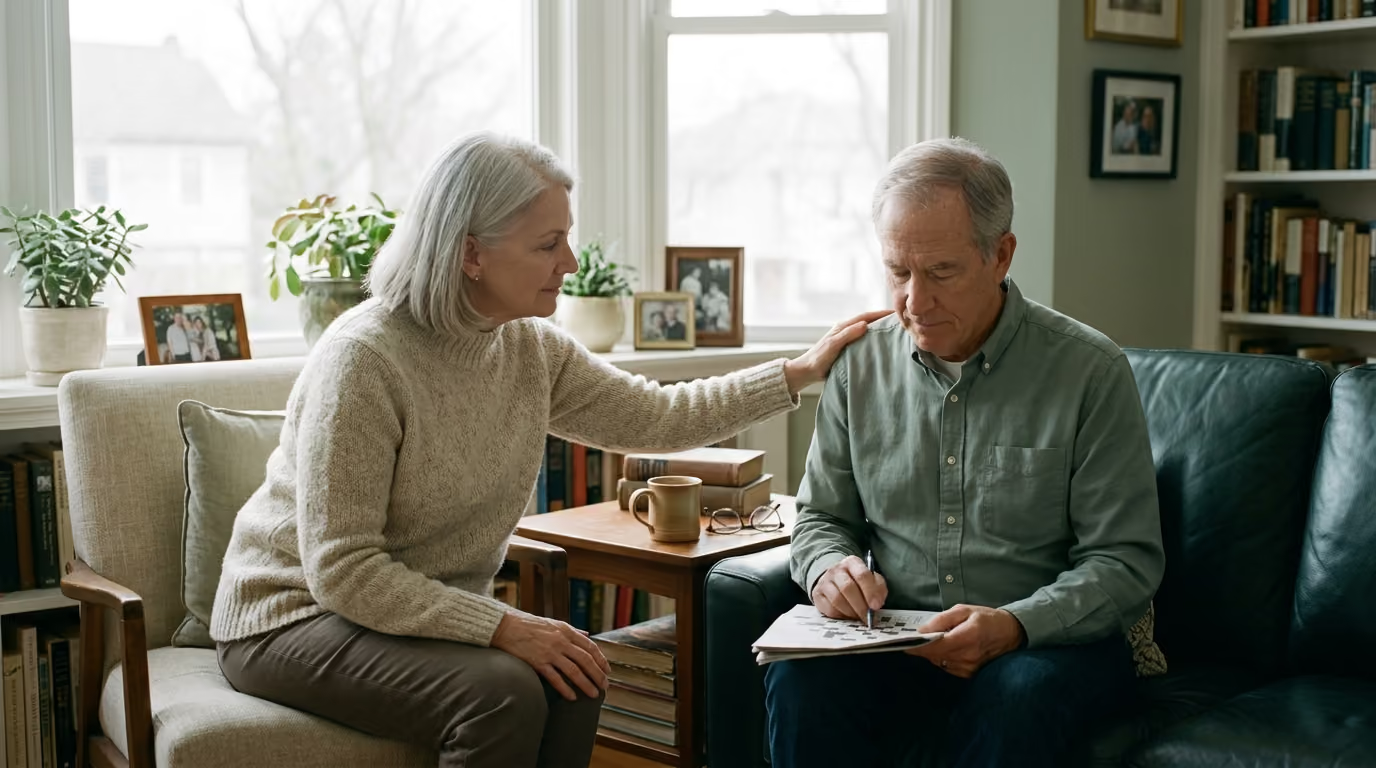

Long-term cognitive vitality and daily independence improve significantly when you adapt your home layout to support working memory, safe movement, and restorative routines.





Environmental design for brain health is the deliberate arrangement of your physical surroundings, daily cues, and community access to support long-term thinking skills. It is not an interior decorating trend, nor is it a medical retrofit reserved only for advanced illness. It is a practical strategy that makes movement, deep sleep, focused attention, social contact, and continuous learning convenient and repeatable.
By shaping your home and daily routines with intention, you lower the effort required to practice healthy habits every day. This guide examines the neurological reasons your surroundings matter, reviews the latest public health evidence, and provides step-by-step layout strategies for every room in your home.
Your brain responds continuously to the signals, demands, and obstacles in your physical surroundings. In cognitive neurology, two related concepts explain how your brain navigates aging: cognitive reserve and cognitive resilience. Cognitive reserve refers to your brain's capacity to improvise and find alternate ways of getting a job done when facing normal age-related changes. Cognitive resilience describes your brain's ability to adapt, recover, and maintain function after illness, injury, or sensory strain.
When your living space is disorganized, poorly lit, or hazardous, your brain must spend significant mental energy on basic navigation. Searching for lost reading glasses, straining to hear conversation over household appliances, or constantly worrying about balance taxes your executive function. Executive function is the suite of mental skills that includes working memory, flexible thinking, and self-control. When basic navigation drains these resources, less mental energy remains for complex learning, emotional connection, and memory retention.
Environmental design applies the friction model to everyday behavior. This model states that the frequency of any behavior equals your motivation multiplied by your opportunity, divided by the friction in your way. If walking around your neighborhood requires navigating a cluttered hallway, searching for shoes in a dark closet, and descending poorly lit stairs, the friction is high. High friction stops beneficial behaviors before they start.
By setting up what behavioral scientists call choice architecture, you make healthy habits the path of least resistance. You can arrange furniture, lighting, storage, and visual cues so that physical movement, continuous learning, and restorative rest happen naturally. This approach respects your autonomy by designing spaces that serve your personal goals rather than demanding constant willpower.
Public health research shows that cognitive health is multidimensional. The 2024 Lancet Commission on dementia prevention, intervention, and care identified 14 modifiable risk factors across the life course. These factors include physical inactivity, hearing loss, untreated vision loss, social isolation, air pollution, and traumatic brain injury. The Commission estimated that addressing these factors across populations could prevent or delay roughly 45 percent of dementia cases.
This population-level estimate is not a guarantee for any single individual. Modifying risk factors changes probabilities rather than offering absolute prevention. Even so, the findings show that your physical environment directly touches several of these risk factors. Keeping walkways safe prevents head injuries, improving room acoustics supports hearing, and maintaining safe outdoor access reduces social isolation.
Physical activity offers a clear example of environmental impact. Meta-analyses of randomized controlled trials demonstrate that regular walking interventions support global cognition, processing speed, and working memory in older adults. A 2023 systematic review noted meaningful improvements in global cognitive performance among walking groups compared to inactive controls. While some studies in adults with mild cognitive impairment show smaller direct cognitive gains, walking reliably improves physical endurance, balance, and functional confidence.
World Health Organization guidelines recommend 150 to 300 minutes of moderate aerobic activity per week for older adults, combined with muscle-strengthening exercises on two or more days. A home environment that makes exercise equipment visible and accessible helps you meet these targets without extra stress. You can learn more about these lifestyle connections in our guide to lifestyle and brain resilience resources.
Sensory inputs also play a major role in long-term cognitive function. The ACHIEVE randomized trial examined whether treating hearing loss in older adults slowed cognitive decline over three years. In the total study population, cognitive decline did not differ significantly between the hearing aid group and the health education group. However, in a prespecified subgroup of participants with higher baseline risk for cognitive decline, hearing intervention reduced three-year cognitive change by 48 percent.
Treating hearing loss and designing quiet conversation spaces reduces cognitive fatigue. When speech is clear, your brain does not have to divert working memory simply to decode sounds. Similarly, correcting vision and providing glare-free task lighting helps you read, cook, and move confidently, reducing the risk of cognitive disengagement and falls.
Falls represent a severe threat to brain health. Data from the Centers for Disease Control and Prevention indicates that more than one in four older adults falls each year, resulting in millions of injuries. Falls are a primary cause of traumatic brain injury, which is an established risk factor for accelerated cognitive decline. Fall prevention is therefore a foundational pillar of cognitive longevity design.
Your home can be organized room by room to promote physical activity, cognitive ease, and personal safety. You do not need to convert your home into a clinical facility. Simple, thoughtful changes to layout and storage can protect your independence and keep your mind active.
The front entrance sets the tone for your daily routine. It should provide immediate answers to three practical questions: where your daily items belong, where outdoor gear rests, and whether the exit path is completely clear.
This launch pad reduces the mental friction of leaving home. When your outdoor gear is organized, spontaneous walks and social outings become effortless choices rather than stressful searches.
Living rooms are often arranged around a large television screen. This default layout makes passive sitting the easiest activity in the room. Rearranging furniture can support face-to-face communication, focused reading, and light physical movement.
Arrange seating in an L-shape or facing pairs to encourage conversation and eye contact. Make sure chairs have firm cushions and solid armrests, which make standing up easier on your joints. Keep wide, clear paths between all furniture pieces so you can walk through the room without turning sideways or dodging low coffee tables.
Create an active corner in the living room. Place a basket with light resistance bands, a foam roller, or stretching mats next to your favorite chair. Keep books, writing notebooks, and puzzle boards on a side table within arm's reach. When engaging alternatives are just as visible as the television remote, your brain receives natural prompts to stay active.
Preparing healthy meals requires complex executive function, fine motor control, and focused attention. A disorganized kitchen increases mental fatigue and raises the risk of burns or cuts. A supportive kitchen layout simplifies meal preparation and protects your focus.
Store your most frequently used ingredients, pans, and dishes between waist height and shoulder height. This setup eliminates the need to bend down deeply or climb onto step stools. Use transparent storage containers with large, high-contrast labels for pantry staples like oats, beans, nuts, and spices. Clear containers allow you to assess your supplies at a glance without taxing your memory.
Set up a dedicated preparation station on a clear counter surface with excellent task lighting. Keep sharp knives in a visible block rather than a loose drawer, and use contrasting cutting boards, such as a dark board for light vegetables, to improve visual precision. If standing for long periods causes fatigue, place a sturdy, high stool at the counter so you can chop vegetables and prepare food while comfortably seated.
High-quality sleep allows your brain to clear metabolic waste products through the glymphatic system and consolidate daily memories. Your bedroom environment should protect uninterrupted rest while allowing safe movement during nighttime awakenings.
Keep your bedroom dark, quiet, and cool, ideally between 60 and 67 degrees Fahrenheit. Install blackout curtains or heavy shades to block early morning light and street lamps. Keep electronic screens, work papers, and intense reading lamps away from the immediate sleeping area to strengthen the mental association between bed and sleep.
Nighttime trips to the bathroom require careful safety planning. Install motion-activated, low-wattage night lights along the baseboards between your bed and the bathroom. These lights guide your steps without shining directly into your eyes or disrupting your melatonin production. Make sure the walking route is completely free of loose rugs, slippers, furniture corners, and electrical cords.
Bathrooms present significant safety risks because hard, wet surfaces meet tight spaces. Installing proper safety supports preserves your privacy and independence while protecting your brain against traumatic fall injuries.
Staircases require precise balance, depth perception, and focused attention. A single misstep can lead to severe injury. Modifying your stairs ensures that moving between levels remains safe and confident.
Ensure that stairways have sturdy, continuous handrails on both sides that extend slightly past the top and bottom steps. Install high-contrast adhesive strips or paint along the edges of each step tread so you can easily judge depth, especially in dim conditions. Keep overhead lighting bright and switch-controlled from both the top and bottom of the staircase. Never use stair landings as temporary storage for laundry baskets, packages, or shoes.
Designing your physical space is only half the equation; you also need to design frictionless behavioral systems. By using external cues and structured routines, you free your working memory for creative thought, reading, and meaningful conversation. You can review more strategies on building cognitive reserves in our overview of brain aging and neuroplasticity articles.
Many adults view using checklists, pill organizers, and calendars as a sign of declining memory. In reality, externalizing memory is an intelligent cognitive strategy used by pilots, surgeons, and professionals of all ages. Relying on reliable external systems frees your mind from the stress of holding onto basic logistical details.
Set up a central household command center in a high-traffic area, such as the kitchen wall or hallway desk. Mount a large dry-erase calendar to track medical appointments, social visits, and community classes. Use a divided weekly pill organizer paired with a daily phone alarm or a visible checklist to manage your supplements and medications accurately. Keep a notepad and pen in every room so you can write down thoughts, questions for your doctor, or shopping needs immediately.
Vague intentions like "I should exercise more" rarely lead to consistent action. Psychological research shows that using implementation intentions dramatically increases habit consistency. An implementation intention links a specific environmental cue to an immediate action using an "if-then" or "after-when" format.
When you anchor a new habit to an established part of your daily routine, your physical surroundings prompt the action automatically. You no longer have to debate whether you feel like exercising; the cue triggers the movement.
Habit bundling pairs an activity that requires mild effort with an activity you genuinely enjoy. This pairing reduces perceived effort and makes daily habits enjoyable.
For example, you might reserve your favorite educational podcast or audiobook exclusively for your daily neighborhood walk. If you enjoy calling an old friend or family member, you can bundle that call with a stationary bike session or a series of living room stretches. You can also bundle solving a challenging crossword puzzle with sitting in a sunny garden spot each morning. By connecting healthy habits with immediate rewards, you reinforce daily practice.
Making dozens of small choices every day about what to eat, when to exercise, and when to run errands drains your mental stamina. Establishing a predictable weekly template organizes your schedule and preserves mental clarity for learning and creative projects.
A weekly template might assign specific themes to different days. Monday could be designated for grocery shopping and meal preparation, Tuesday for a community fitness class, Wednesday for library visits and reading, Thursday for social calls and walking groups, and Friday for household projects. A structured template provides a reassuring framework while remaining flexible enough to adapt to doctor appointments, bad weather, or family visits.
Sensory inputs and indoor environmental quality directly influence cognitive performance, focus, and fatigue. Addressing lighting, acoustics, and air quality helps protect your brain from unnecessary daily strain.
Aging eyes experience natural changes, including yellowing of the crystalline lens and narrowing of the pupils. These changes mean that a 65-year-old eye receives significantly less light at the retina than a 20-year-old eye. Older adults require higher overall light levels for reading and close work, but they are also much more sensitive to harsh glare.
Apply a layered lighting strategy throughout your home. Use diffused ambient lighting from ceiling fixtures or uplighting floor lamps to create balanced overall illumination without bright spots. Add focused task lighting, such as adjustable gooseneck lamps with warm-white LED bulbs, right over reading chairs, desks, kitchen counters, and hobby benches. Use matte finishes on floors and countertops to eliminate reflective glare, which can distort depth perception and cause headaches.
Natural sunlight is your brain's primary tool for setting its internal 24-hour clock. Spend at least 20 to 30 minutes outside in natural daylight each morning, or sit directly beside a bright window while eating breakfast. Morning sunlight exposure suppresses daytime melatonin, boosts daytime alertness, and sets a timer for deeper sleep the following night.
Unmanaged background noise forces your brain to work much harder to process spoken language. Hard flooring, bare walls, high ceilings, and large glass windows cause sound waves to bounce around the room, creating an echo that muddles consonants. This acoustic distortion makes conversations exhausting and frequently leads to social withdrawal.
Improve the acoustic comfort of your living spaces by adding sound-absorbing materials. Lay down dense, well-secured area rugs over hardwood or tile floors, making sure all edges are firmly taped down to prevent tripping. Hang fabric curtains over windows and choose upholstered sofas and fabric-covered chairs rather than smooth leather or plastic seating.
When hosting friends or family for a meal, turn off the television and background music so conversation remains clear and distinct. If you use hearing aids, keep their drying and charging station in a dedicated, visible spot on your nightstand or desk. Consistent charging routines ensure your devices are always available to keep you connected to the world around you.
Emerging environmental research highlights the connection between air pollution and neurodegenerative conditions. Fine particulate matter (PM2.5) and indoor combustion pollutants can pass into the bloodstream, contributing to systemic inflammation and vascular strain. Protecting your indoor air is a practical step toward long-term brain health.
Use high-efficiency particulate air (HEPA) purifiers in your primary living spaces and bedroom to filter out dust, pollen, and airborne particles. Make sure your kitchen exhaust fan vents directly to the outdoors, and run it consistently whenever cooking on a gas or electric range. Avoid burning paraffin candles, incense, or unvented indoor space heaters. On days when regional air pollution or wildfire smoke is high, keep windows closed and run indoor filtration systems.
Cognitive longevity extends beyond your front door. Your neighborhood layout, access to green spaces, and local transportation options determine how easily you can stay socially engaged and mentally active as the years advance.
The World Health Organization established the Age-Friendly Cities framework, which outlines eight key community domains: outdoor spaces and buildings, transportation, housing, social participation, respect and social inclusion, civic participation and employment, communication and information, and community support and health services. When communities invest in these domains, older adults experience lower rates of social isolation and maintain higher levels of physical activity.
Walkable neighborhoods that feature smooth sidewalks, pedestrian crosswalks with extended crossing timers, curb ramps, and frequent resting benches allow residents to complete daily errands on foot. Walking to the post office, pharmacy, or neighborhood grocer provides spontaneous physical exercise while creating opportunities for casual social interactions with neighbors, shopkeepers, and friends.
Access to reliable transportation is a vital lifeline for cognitive longevity. When driving becomes uncomfortable or is discontinued, having access to public transit, neighborhood shuttles, or community rideshare programs prevents social isolation. Staying connected to local libraries, senior centers, volunteer organizations, places of worship, and arts centers provides rich mental stimulation and a lasting sense of purpose. You can discover more evidence on memory protection in our cognitive health and protection articles.
If your current neighborhood lacks walkability or public transit, you can build a personal transportation plan. Identify family members, friends, or community volunteer networks who can provide regular rides to weekly classes, book clubs, and fitness groups. Structuring your transportation in advance ensures that lifestyle changes do not lead to unintentional isolation.
Several misconceptions prevent people from optimizing their surroundings for brain health. Examining these assumptions helps clarify why thoughtful design is a proactive, empowering choice.
Many people associate grab bars, stair rails, and memory aids with physical frailty or loss of autonomy. They delay making practical updates because they worry their home will look like a nursing home.
The reality is that proactive environmental modifications protect and extend your independence. Installing a sturdy grab bar in the shower does not mean you are frail; it means you are taking practical steps to prevent a fall that could disrupt your active lifestyle. Athletes use specialized equipment to optimize performance and prevent injury; you are doing the exact same thing for your home. Simple, high-quality design features keep you living safely in your chosen home for years to come.
Commercial marketing often claims that computer-based brain training games are the best way to maintain sharp mental function. People may spend hours sitting at a tablet solving abstract digital puzzles while living in a poorly lit, isolating, or cluttered home.
Clinical research shows that digital brain games generally improve performance only on the specific tasks practiced in the game, with limited transfer to real-world memory or daily function. In contrast, an environment that supports daily physical walking, restorative sleep, nutritious cooking, and rich social conversation addresses proven, modifiable risk factors for cognitive decline. Structuring your real-world living space provides far more comprehensive support for your brain than any single digital app.
A widespread, fatalistic belief suggests that brain health is entirely determined by genetics, making home modifications pointless.
While genetics do influence susceptibility, the Lancet Commission research confirms that up to 45 percent of dementia risk across populations is linked to modifiable factors. Environmental design directly helps manage several of these factors, including cardiovascular fitness through movement, sensory health through lighting and acoustics, and emotional wellbeing through social connection. Shaping your environment is a practical, powerful investment in your cognitive future.
Your primary healthcare team can offer personalized guidance on tailoring your home and daily habits to your medical history, balance, and sensory needs. Take these specific questions to your next appointment:
Renting does not prevent you from optimizing your living space for brain health. Focus on non-invasive modifications that require no structural changes. Use tension-mounted grab bars, free-standing shower chairs, plug-in motion-sensing nightlights, and heavy sound-absorbing curtains on existing rods. Place anti-fatigue mats with beveled edges at kitchen counters, add portable task lamps to your work desks, and set up a launch pad table by the entrance. Most landlords are also legally required to permit reasonable accessibility modifications, such as professionally installed bathroom grab bars, when requested.
You can achieve significant cognitive and safety benefits with minimal spending. Start by reorganizing your existing furniture to create wide, unobstructed walking paths through every room. Remove loose throw rugs or secure them firmly with inexpensive double-sided rug tape. Replace dim or harsh light bulbs with warm, high-lumen LED bulbs, and add inexpensive battery-powered motion lights along the path to the bathroom. Create a centralized command center using a basic dry-erase whiteboard and a weekly pill planner. These simple changes cost very little but immediately reduce daily friction and fall risks.
Supporting your brain health does not mean sacrificing personal style or warmth. Many contemporary home safety products feature elegant, modern designs. You can find designer grab bars that double as stylish towel rails or toilet paper holders with brushed nickel, matte black, or brass finishes. Use attractive woven storage baskets to store exercise bands and hobby supplies in the living room. Choose handsome framed art acoustic panels or heavy velvet drapes to reduce room echo while enriching your decor. Thoughtful design seamlessly integrates safety and comfort into your personal aesthetic.
If navigating stairs causes joint pain, fatigue, or balance concerns, you can reorganize your home layout to create main-level living. Move your primary bedroom or sleeping area to the ground floor if space allows. Ensure that your daily necessities, including cooking, bathing, laundry, and relaxation spaces, are accessible on a single level. If moving your bedroom downstairs is not feasible, install sturdy, continuous handrails on both sides of the staircase, add high-contrast tread edging, and make sure lighting is exceptionally bright from top to bottom. You can also consult an occupational therapist to explore whether a stairlift or other accessibility tool is appropriate for your home.

Follow FitBrainLab for research-led insights on memory, focus, brain aging, nutrition and mental fitness after 60. Stay connected for new articles, practical guidance and ideas for a sharper, more engaged life.


Build habits that support memory, focus and a curious, connected life.
Read the Blog