Many families turn to search engines with an urgent question: how do you keep someone safe with dementia without taking away their independence? It is a common worry, and simple answers rarely help. Stripping away all daily responsibility often leads to frustration, depression, and faster physical decline. At the same time, ignoring genuine hazards can lead to preventable injury, financial loss, or worse.
This resource offers a definitive, graduated approach to dementia safety. You will find practical strategies to assess specific hazards, adapt the living environment, provide proportionate support, and protect dignity at home and in the community.
Key Takeaways
- Safety in dementia is not all-or-nothing. A graduated approach preserves independence by adapting tasks and environments before considering restrictions.
- Environmental cues, clear sightlines, automated shutoffs, and decluttering prevent common hazards like falls, burns, and medication errors without isolating the individual.
- Transportation, financial management, and kitchen use require regular reassessment because cognitive capacity fluctuates based on time of day, fatigue, and illness.
Cognitive Foundations of Daily Safety
Everyday tasks rely on complex brain networks that coordinate memory, sensory perception, spatial awareness, and executive function. Executive function acts as the control center of the brain. It manages planning, working memory, mental flexibility, and problem-solving. When dementia affects these networks, a person may struggle to sequence steps in a recipe or react quickly to unexpected road hazards.
Sensory processing also changes with cognitive decline. The brain may misinterpret shadows, glossy floors, or visual patterns, turning an ordinary hallway into an obstacle. Depth perception often narrows, reducing peripheral vision and making it hard to judge step heights or curb edges. Insight and judgment can decline at different rates than social conversation skills. A person may speak clearly and confidently about their daily routine while lacking the working memory needed to turn off a gas burner safely.
Understanding these neurological shifts helps caregivers replace blame with practical design. When an individual forgets a medication dose or takes a wrong turn, it is not stubbornness or carelessness. It is the result of damaged neurological pathways that require external structures, physical cues, and reliable safeguards.
Current Research on Risk and Safety
Research from the National Institute on Aging and the Alzheimer's Association demonstrates that safety risks evolve across different stages of cognitive impairment. A systematic review of accidental injury patterns found that wandering and medication self-administration errors occur more frequently among people living with dementia. However, researchers emphasize that removing all activity carries its own clinical risks. Physical inactivity accelerates muscle loss, balance problems, and cardiovascular decline.
Studies on fall prevention published by the Centers for Disease Control and Prevention show that one in four older adults falls each year. For adults with cognitive impairment, the risk is higher because of altered gait mechanics, balance changes, and medication side effects. Clinical evidence confirms that falling once doubles the chance of falling again. Yet strict physical restriction often increases agitation and worsens motor function.
Guidance from the National Institute for Health and Care Excellence highlights the value of risk enablement. This approach balances potential harm against the mental and physical benefits of daily activity. Research indicates that structured, written safety plans created with the individual lead to better emotional outcomes and reduce caregiver burnout. You can explore broader strategies in our dementia and cognitive protection resources.
The Graduated Risk Management Framework
Safety planning works best when approached as an ongoing process rather than a single emergency reaction. The framework follows five clear steps: assess, adapt, support, monitor, and escalate.
- Assess the Task - Adapt the Environment - Support the Routine - Monitor Changes - Escalate Proportionately
Assess the Task and the Individual
Begin by looking closely at how the person performs specific activities in their actual living space. Distinguish between theoretical worries and established patterns. Leaving a pan on the stove once during an unusual disruption is different from repeatedly forgetting active burners.
Evaluate the individual across seven distinct areas:
- Ability: Can they physically and mentally execute the mechanics of the task?
- Consistency: Can they perform the task reliably across multiple days and varying conditions?
- Insight: Do they recognize when an error occurs or when an item is unsafe?
- Judgment: Can they react appropriately if an unexpected problem arises, such as a boiling pot?
- Context: Does performance change with fatigue, background noise, poor lighting, or time of day?
- Consequence: What is the severity of harm if the task fails?
- Support: Can simple prompts, labels, or physical assistance restore acceptable safety?
Adapt the Environment and Support Routines
Once you identify a hazard, modify the surroundings before removing the activity. If cutting vegetables is risky, provide pre-cut produce or a guarded chopper rather than banning the person from the kitchen. If navigating stairs in the dark causes stumbling, install motion-activated lighting and dual handrails.
Pair environmental adaptations with verbal, visual, and physical support. Keep routines predictable. Perform demanding tasks at times of day when mental clarity is highest, which is often mid-morning. Use large-print checklists, visual signs, and contrasting colors to guide movement.
Monitor and Escalate Proportionately
Safety capacity is dynamic. A mild urinary tract infection, a poor night of sleep, or a new medication can cause sudden confusion. Set up a regular schedule to review how well your adaptations are working.
Escalation should occur in small, measured steps. Move from independent execution to visual prompts, then to shared activity, followed by direct supervision. Restrict an activity or transfer full responsibility only when evidence shows that supportive adaptations no longer protect the person from serious harm.
Room-by-Room Home Safety Modifications
A home should be legible, predictable, and forgiving. Conducting a structured walkthrough across different rooms helps identify hidden hazards. Test changes with the person to confirm that safety additions do not cause confusion or distress.
Entranceways and Hallways
Entryways set the tone for home mobility and security. Poor lighting and cluttered walkways are common triggers for trips and disorientation.
- Install high-lumen, glare-free LED lighting along all main corridors and entry doors.
- Remove loose throw rugs, decorative runners, and exposed extension cords.
- Apply contrasting paint or high-visibility tape to threshold transitions and door frames.
- Keep everyday footwear, umbrellas, and walking aids stored in dedicated, unobstructed spots.
- Place exit keys, coats, and outdoor bags out of direct sight if they trigger an urge to leave unsafely.
Living Areas
Living rooms should encourage calm relaxation and social engagement while minimizing physical obstacles.
- Arrange stable furniture to create wide, direct walking paths between rooms.
- Select firm chairs with solid armrests that make sitting down and standing up easy.
- Secure tall bookcases, floor lamps, and television stands to the wall to prevent tipping.
- Keep remote controls, reading materials, and glasses in consistent, labeled locations.
- Cover unused electrical outlets and secure loose lamp cords along baseboards.
Kitchen Areas
The kitchen contains the highest concentration of heat, sharp tools, and complex appliances in the home.
- Install stove-knob covers, remove knobs between meals, or use an automatic shutoff device.
- Switch to an electric kettle with an automatic shutoff mechanism instead of a stovetop kettle.
- Place sharp knives, heavy cookware, and cleaning chemicals in secured or latched cabinets.
- Set the hot-water heater to a maximum of 120 degrees Fahrenheit to prevent scald burns.
- Organize the refrigerator weekly to remove expired food, moldy items, and spoiled leftovers.
- Disconnect the garbage disposal switch or cover it with a safety guard to prevent accidental activation.
- Remove artificial fruit, decorative magnets, and toxic house plants that could be mistaken for food.
Bathrooms
Bathrooms present high fall risks due to wet, hard surfaces and awkward body movements.
- Secure professional grab bars beside the toilet and inside the shower stall. Avoid suction-cup bars.
- Place non-slip textured mats inside the tub and flat, rubber-backed mats on dry floor areas.
- Install a raised toilet seat with contrasting color trim to assist with visibility and transfers.
- Use a handheld showerhead and a stable, non-slip shower bench for seated bathing.
- Remove interior door locks to prevent the person from accidentally locking themselves inside.
- Store razors, prescription medicines, and harsh cleaning solutions in locked storage.
Bedrooms
Bedrooms must balance comfort with night-time orientation to support safe, independent sleep routines.
- Install low-level, motion-activated night-lights along the path from the bed to the bathroom.
- Adjust bed height so the person's feet touch the floor firmly when sitting on the edge.
- Keep a clear, wide pathway between the bed, the closet, and the bedroom doorway.
- Place a stable bedside table with a touch-lamp and a glass of water within easy reach.
- Keep spare blankets and clothing visible in open shelving to reduce rummaging in the dark.
Falls Prevention and Physical Mobility Protection
Falls represent the leading cause of accidental injury among older adults. In people with cognitive impairment, fall prevention requires a balanced approach. Restricting a person to a chair or bed causes muscle wasting, weakens bones, and increases confusion. Safe mobility must be protected through active risk reduction.
- MULTIFACTORIAL FALL PREVENTION PLAN
- Medical & Physical Review Environmental & Daily Action
- Review sedatives & meds - Motion-activated night-lights
- Check orthostatic blood press. - Non-slip bathroom grab bars
- Annual vision & hearing exams - Supportive, closed-heel shoes
- Physical therapy for balance - Clear, wide walking paths
Medical and Physical Risk Factors
A thorough fall prevention plan addresses both internal and external factors:
- Medication Side Effects: Sedatives, sleep aids, antidepressants, and blood pressure drugs can cause dizziness and slow reflexes. Request a regular medication review with a healthcare provider.
- Orthostatic Hypotension: A sudden drop in blood pressure upon standing can trigger lightheadedness. Encourage the person to sit on the edge of the bed for one minute before standing.
- Vision and Hearing: Changes in visual contrast, depth perception, and auditory orientation increase missteps. Schedule annual eye and ear examinations.
- Footwear: Slippers, loose slip-ons, and smooth-soled socks cause slipping. Provide supportive shoes with non-skid rubber soles and secure closures.
- Incontinence and Rushing: Urgency to reach the toilet often leads to rapid, unstable movement. Establish a regular, relaxed toileting schedule during the day and before sleep.
Physical therapy and structured balance exercises help maintain motor strength. For evidence-based ways to maintain daily vitality, review our guide on lifestyle habits and brain resilience.
Immediate Post-Fall Assessment Protocol
When a fall occurs, remain calm and follow a systematic evaluation process before attempting to move the person:
- Check for Pain and Injury: Look for visible swelling, bruising, cuts, or abnormal limb rotation. Ask the person where they feel discomfort.
- Assess Consciousness and Alertness: Check if the person hit their head, lost consciousness, or shows sudden changes in speech or orientation.
- Do Not Rush Movement: If the person complains of severe neck, back, or hip pain, keep them still and call emergency services immediately.
- Assist Safely: If there is no apparent injury, help them roll onto their hands and knees. Place a sturdy chair in front of them and support them as they step up onto one knee and sit.
- Document and Investigate: Record what the person was doing, the time of day, lighting conditions, and footwear. Schedule a clinical review to check for underlying infections or heart rhythm issues.
Kitchen Management, Cooking, and Fire Safety
Food preparation is deeply tied to identity, culture, and personal routine. Abruptly locking someone out of their kitchen can cause severe emotional distress. By breaking food preparation into distinct stages, you can preserve culinary enjoyment while securing high-risk appliances.
Graduated Kitchen Participation Levels
A person's ability to prepare meals changes over time. Match their participation to their current cognitive strengths:
- Independent Meal Assembly: The individual prepares cold meals, washes fruit, makes sandwiches, and pours beverages using pre-portioned containers.
- Assisted Appliance Cooking: The individual operates simple appliances, such as a microwave or toaster oven with pre-set buttons, while a family member remains nearby.
- Shared Stovetop Cooking: The individual chops soft ingredients, stirs pots, and measures spices under direct, continuous supervision.
- Parallel Culinary Activity: The individual sets the table, folds napkins, and washes produce at the kitchen counter while another person handles heat, knives, and appliances.
Fire and Heat Protection Measures
Kitchen fires often occur when cooking is left unattended. Use these specific safeguards:
- Install an automatic stove shutoff sensor that cuts electricity or gas if motion is not detected near the cooktop for a set period.
- Use induction hotplates that heat only compatible cookware and cool down quickly after use.
- Place bright visual reminders on cabinets containing high-use items, reducing aimless searching.
- Keep a working fire extinguisher mounted near the kitchen exit, and test smoke detectors every six months.
- Eliminate loose sleeves, loose scarves, and combustible dish towels from cooking zones.
Medication Safety and Self-Administration Systems
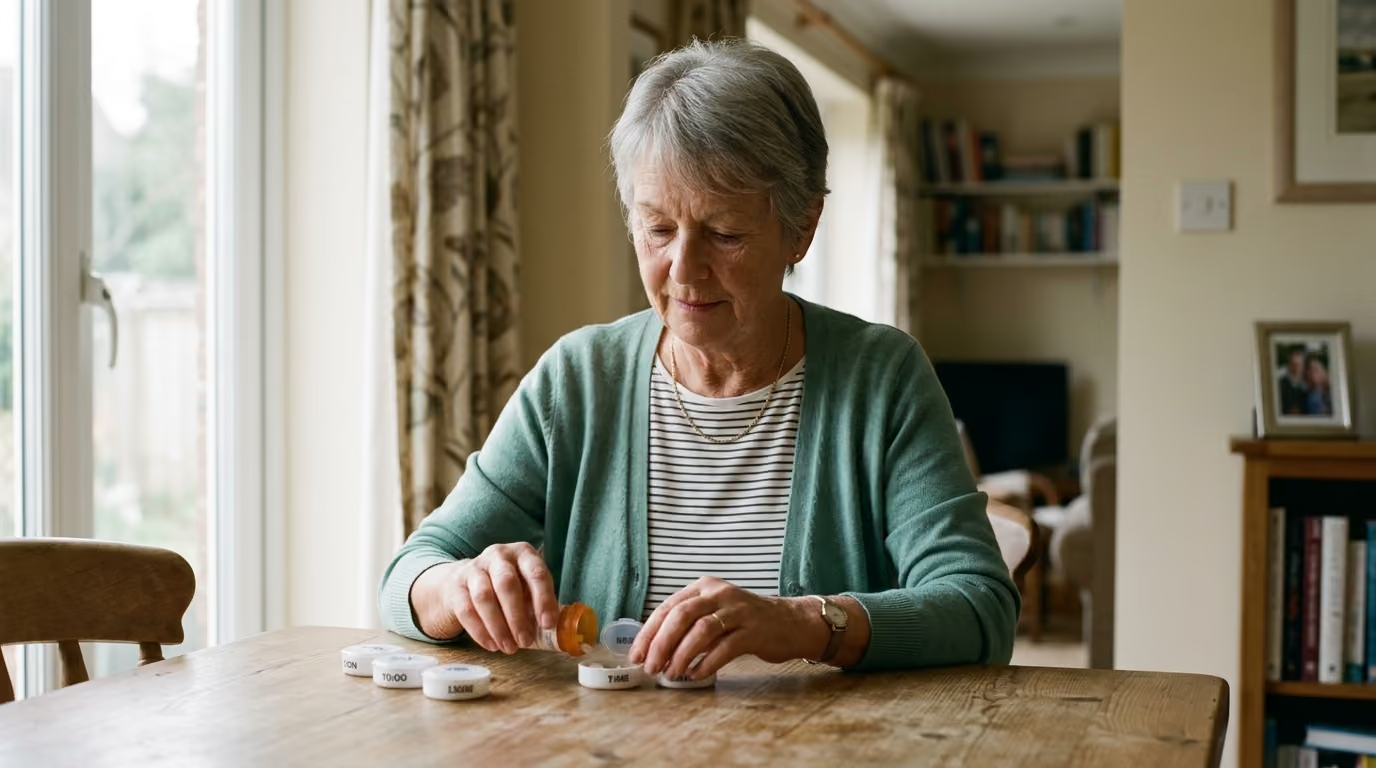
Medication mistakes are among the most serious hazards facing older adults living with cognitive decline. Errors include skipping doses, taking double doses, confusing morning and evening pills, and taking discontinued prescriptions.
Establishing a Reliable Medication Progression
Medication management should follow a structured progression as cognitive support needs increase:
- Step 1: Single Updated Medication List
- Step 2: Regimen Simplification with Pharmacist
- Step 3: Visual Prompts & Blister Packs
- Step 4: Caregiver Verification & Pill Organizers
- Step 5: Locked Storage & Direct Administration
- Create a Single Master List: Maintain a comprehensive record of all prescriptions, over-the-counter drugs, vitamins, and supplements. Include dosages, schedules, prescribing physicians, and specific indications.
- Simplify the Regimen: Ask the prescribing doctor or pharmacist to consolidate dosing times to once or twice daily and eliminate unnecessary supplements.
- Use Visual and Mechanical Organizers: Transition from standard pill bottles to multi-compartment pill organizers, pre-sorted pharmacy blister packs, or automated medication dispensers that unlock only at scheduled times.
- Supervise and Confirm: Have a family member or caregiver observe the person taking the medication. Checking off a calendar box confirms that pills were swallowed rather than set aside and forgotten.
- Secure Stored Supplies: When independent access becomes unsafe, place all medications in a locked drawer or lockbox. Keep only the current single dose accessible under direct guidance.
For additional strategies on cognitive preservation, explore our insights on memory and focus techniques.
Wandering, Purposeful Walking, and Wayfinding
Walking is a healthy, natural activity that supports circulation, mood, and sleep. However, purposeful walking can become dangerous if an individual loses spatial orientation, becomes exhausted, or wanders into severe weather or heavy traffic.
Understanding the Reasons for Wandering
People living with dementia rarely walk without a reason. The behavior is often an attempt to solve a problem:
- Searching for Familiar Routines: The person may believe they need to report for a former job, pick up children from school, or return to a childhood home.
- Unmet Physical Needs: Walking may signal hunger, thirst, physical pain, a full bladder, or restlessness from sitting too long.
- Environmental Overstimulation: Excessive noise, bright lights, or chaotic crowds can trigger an urge to escape to a quieter setting.
- Boredom and Restlessness: A lack of meaningful daily occupation often leads to aimless pacing.
Environmental and Behavioral Adaptations
Reduce the risk of disorientation while respecting the need for physical movement:
- Create a safe, looped walking path through the home and secure backyard garden with clear sightlines and resting benches.
- Place visual camouflage, such as full-door murals or curtains, over exit doors if seeing the handle triggers an exit urge.
- Install discreet door chimes or motion sensors that alert household members when an exterior door opens.
- Establish structured daily walking routines at consistent times to satisfy the physical need for movement.
- Never lock an individual inside a home without an accessible, code-compliant emergency exit.
Community Safety and Emergency Search Readiness
Prepare community safeguards well before an individual shows signs of getting lost:
- Enroll in a local community return program or provide a discreet identification bracelet displaying an emergency contact number.
- Use wearable location-sharing devices, such as GPS watches or discreet shoe inserts, ensuring the device remains charged and comfortable.
- Maintain an updated digital file containing recent clear photographs, physical descriptions, medical conditions, and familiar past destinations.
- Introduce the individual to trusted neighbors, local shopkeepers, and community safety officers, explaining communication preferences.
- If the person goes missing, search the immediate property for 15 minutes, then call emergency services immediately without delay.
Driving Decisions and Transportation Transitions
Driving represents freedom, identity, and personal control. Deciding when to stop driving is often one of the most emotional challenges facing families. Cognitive impairment directly undermines the visual processing, reaction time, divided attention, and spatial judgment required to operate a motor vehicle safely.
- DRIVING RISK ASSESSMENT INDICATORS
- Critical Warning Signs Objective Clinical Measures
- Unexplained dents or scrapes - Clinical Dementia Rating 1
- Getting lost on known routes - MMSE score of 24 or lower
- Slow braking or missed signs - Caregiver rated as unsafe
- Near misses at intersections - Professional OT drive failure
Warning Signs of Driving Risk
According to guidelines from the American Academy of Neurology, a Clinical Dementia Rating score of 1 or greater is associated with a high risk of unsafe driving. Look for these practical warning signs during regular trips:
- Becoming lost or disoriented on familiar routes to the grocery store or church.
- Failing to observe traffic signals, stop signs, or lane markings.
- Reacting slowly to unexpected actions by other motorists or pedestrians.
- Confusing the accelerator and brake pedals or braking abruptly without cause.
- Accumulating unexplained scrapes, dents, or paint transfers on the vehicle body.
- Showing increased agitation, frustration, or indecision at busy intersections.
- Family members feeling uncomfortable or fearful when riding as passengers.
Managing the Transition Away from Driving
A sudden loss of driving privileges without alternative transportation leads to isolation and depression. Transition gradually using these steps:
- Begin with Driving Restrictions: Restrict driving to daylight hours, familiar local roads, good weather conditions, and non-peak traffic times.
- Obtain an Objective Assessment: Schedule a formal driving evaluation with an occupational therapy driving specialist to remove family conflict from the decision.
- Involve the Physician: Ask the individual's doctor to write a formal medical recommendation to stop driving, placing responsibility on medical authority.
- Build a Transportation Plan: Set up alternative transit options, including family ride schedules, local senior transit vans, trusted taxi services, and volunteer drivers.
- Secure the Vehicle: If the person continues attempting to drive despite restrictions, relocate the car, park it out of sight, or disable the battery.
Learn more about cognitive health evaluation options on our cognitive health and protection page.
Financial Safeguards and Exploitation Prevention
Financial management requires high-level abstract reasoning, working memory, and social judgment. These skills are often among the first to decline. Data from the Federal Reserve indicate that older adults lose billions of dollars each year to financial exploitation, aggressive sales tactics, and online fraud.
Warning Signs of Financial Vulnerability
Caregivers and family members should watch for early signs of financial difficulty:
- Unopened bills, final notice letters, or utility shutoff warnings piling up on counters.
- Frequent, unusual donations to unfamiliar charities or political campaigns.
- Multiple magazine subscriptions, sweepstakes entries, or packages from television shopping networks.
- Difficulty balancing a checkbook, calculating a tip, or understanding basic bank statements.
- Unexplained cash withdrawals or sudden wire transfers to unfamiliar individuals.
- New acquaintances offering home repairs or financial advice who demand immediate payment.
Proportionate Financial Safeguards
Protect financial assets while preserving the dignity of personal spending:
- Automate Fixed Payments: Set up automatic bank debits for utility bills, mortgages, insurance premiums, and regular household expenses.
- Establish Daily Spending Accounts: Open a separate checking account with a low balance and a linked debit card with a strict daily transaction limit.
- Implement Bank Monitoring: Enroll in account alerts that notify designated family members of large transactions, low balances, or unusual activity.
- Name a Trusted Contact: File trusted contact authorization forms with banks and investment firms, allowing them to raise concerns without surrendering asset control.
- Complete Legal Planning Early: Work with an elder law attorney to establish durable financial powers of attorney, healthcare directives, and revocable living trusts while the individual retains capacity.
- Block Solicitation Channels: Register landlines and mobile numbers on national do-not-call registries, remove mail names from direct marketing lists, and screen incoming phone calls.
Community Engagement and Emergency Preparedness
Safety planning extends beyond the home into neighborhood spaces, community centers, retail stores, and public transit. Staying active in the community helps maintain cognitive vitality, provides social connection, and prevents isolation.
Community Safety Strategies
Support safe, confident participation in neighborhood settings:
- Carry Identification Cards: Provide a wallet card stating the individual's name, preferred contact person, and any relevant communication needs.
- Simplify Public Transit: Accompany the person on public transportation routes until you verify their confidence in managing transfers and stops.
- Plan for Sensory Triggers: Choose quiet shopping hours at grocery stores and restaurants to prevent sensory overload and disorientation.
- Establish a Weather Plan: Check that the person wears appropriate clothing for extreme heat or cold, and carry water to prevent dehydration.
- Support Social Connections: Coordinate regular outings with community centers, faith organizations, and specialized day programs that understand cognitive care.
Emergency and Disaster Planning
Natural disasters, severe winter storms, and power outages present acute challenges for households managing dementia. Build a comprehensive emergency response plan:
- Keep a dedicated emergency go-bag containing a five-day supply of medications, copies of medical records, emergency contacts, comfortable clothing, and familiar comfort items.
- Register with local utility providers as a medically vulnerable household to receive priority power restoration during outages.
- Establish a clear evacuation destination with family members or accessible emergency shelters that accommodate cognitive needs.
- Store spare medical equipment, such as walkers, cane tips, hearing aid batteries, and eyeglasses, in an easily accessible storage tub.
- Create a detailed communication sheet listing the individual's medical conditions, calming techniques, and wandering risk for emergency personnel.
Daily Application Routines
Safety strategies succeed when they are built into predictable daily routines rather than treated as occasional checks. The following morning and evening checklists help families maintain a safe living environment without adding friction.
Morning Safety and Orientation Checklist
- Open window blinds and turn on ambient lighting to reinforce natural circadian rhythms and reduce morning disorientation.
- Confirm that the individual puts on supportive, non-skid footwear before walking around the home.
- Provide scheduled morning medications in a single, pre-filled organizer under direct, supportive observation.
- Check that main walking corridors, stairs, and bathroom floors remain free of tripping hazards, clothing, or clutter.
- Review the daily visual calendar together, discussing scheduled appointments, meals, and planned activities.
Evening Safety and Wind-Down Checklist
- Turn on hallway and bathroom night-lights before darkness sets in to prevent twilight disorientation and evening wandering.
- Verify that stovetop burners, ovens, space heaters, and small kitchen appliances are turned off and properly secured.
- Check that exterior doors and windows are closed, secured, and connected to household notification chimes.
- Ensure a full glass of water and necessary nighttime mobility aids are placed securely within reach of the bedside.
- Encourage a quiet, predictable wind-down routine with low lighting, soft music, and no stimulating television screens.
Common Misconceptions About Dementia Safety
Misunderstandings about dementia safety often lead to either dangerous neglect or excessive, demoralizing restrictions.
Myth: A dementia diagnosis requires immediate loss of all independence.
A diagnosis indicates the start of a progressive condition, not the instant loss of all functional capability. Many individuals continue managing simple cooking, local walking, and personal care safely for years with environmental modifications and light support. Safety should be adjusted gradually based on current functional assessment rather than diagnostic labels.
Myth: High scores on cognitive screening tests guarantee safe everyday performance.
Brief clinical screening tests measure specific memory and language recall, but they do not evaluate real-time reaction speed, visual contrast sensitivity, or crisis judgment. An individual may score well in a quiet exam room while struggling to navigate a busy intersection or manage a multi-step financial transaction at home.
Myth: Locking someone inside the home is the safest way to prevent wandering.
Locking an individual in a house creates severe safety and legal hazards, including the risk of smoke entrapment during a residential fire. Safe wandering management relies on purposeful daily exercise, door chimes, visual camouflage, secure courtyard spaces, and wearable identification rather than harmful physical confinement.
Myth: Smart home technology can completely replace human supervision.
Automated shutoff valves, video doorbells, and GPS trackers are helpful safety tools, but they cannot replace human judgment and care. Technology can fail, lose battery power, or generate alerts that require immediate physical intervention. Devices should support human caregiving networks rather than serve as standalone replacements.
Myth: Any sudden increase in confusion is a natural progression of dementia.
A rapid drop in cognitive clarity, sudden stumbling, or new incontinence often points to an acute medical issue rather than gradual dementia decline. Urinary tract infections, dehydration, medication reactions, pneumonia, and silent strokes frequently trigger acute delirium. Any sudden change in safety capacity requires immediate medical evaluation.
Questions to Ask Your Doctor
Take these specific questions to your next appointment with a primary care physician, neurologist, or geriatric specialist:
- Which of our current medications could cause dizziness, balance problems, daytime drowsiness, or fall risks?
- Can you refer us to an occupational therapist for a professional home-safety and daily-living assessment?
- What objective indicators or clinical tests should we use to evaluate our family member's driving ability?
- How can we distinguish normal cognitive fluctuations from an acute medical issue like delirium or infection?
- Are there physical therapy or balance-training programs suitable for our current mobility level?
- What documentation do we need to establish healthcare and financial decision-making authority under local law?
Practical Action Steps for This Week
- Conduct a Room-by-Room Walkthrough: Walk through the home with a notepad, checking lighting, removing throw rugs, clearing pathway clutter, and verifying smoke detectors.
- Review the Complete Medication Routine: Consolidate all prescription and over-the-counter medications onto a single written list and transition to a secure organizer.
- Secure Kitchen and Hot-Water Systems: Set the water heater to 120 degrees Fahrenheit, install an automatic stove shutoff device, and remove broken or spoiled food.
- Establish Emergency Wayfinding Tools: Take a current digital photograph of your family member, update an emergency contact card, and evaluate comfortable wearable GPS options.
- Schedule a Professional Consultation: Contact a primary care physician or occupational therapist to review fall risks, driving safety, and community support resources.
For more evidence-based guidance on supporting cognitive health across every stage of aging, visit our FitBrainLab main resource index.
Sources
- Update: Evaluation and Management of Driving Risk in Dementia
- Protecting Older Adults from Fraud and Financial Exploitation
- (PDF) Update: evalUation and ManageMent of driving risk in deMentia
- CDC Brief: Addressing Financial Exploitation among People Living with Cognitive Impairment and their Caregivers: Role of the Public Health and Aging Services Networks
- Dementia— Driving-Related Fact Sheet For Medical Professionals
- (PDF) Guidance for Safeguarding Concerns
- Risk factors associated with home care safety for older people ...
- Alzheimer's and Dementia Home Safety Tips
- Alzheimer's & Dementia Safety
- A systematic review of accidental injury from fire, wandering and medication self-administration errors for older adults with and without dementia
- A systematic review of accidental injury from fire, wandering and medication self-administration errors for older adults with and without dementia - PubMed
- Alzheimer's Caregiving: Home Safety Tips | National Institute on Aging
- Approach to Management of Wandering in Dementia - PMC - NIH
- Dementia: assessment, management and support for ...
- (PDF) delivering personal care and practical support to older people living ...
- 2026 Alzheimer's disease facts and figures - PMC - NIH